A geographically diverse week: we began in Ethiopia, took a brief sojourn to Morocco, and ended in Goa. And that’s without taking into account the canter through the wine regions of the globe as part of our Level 1 WSET wine certificate. Another fun and stretching week learning yet more new skills (hello mackerel gutting) and consolidating existing skills (Creme Anglais, meringues and drinking wine).
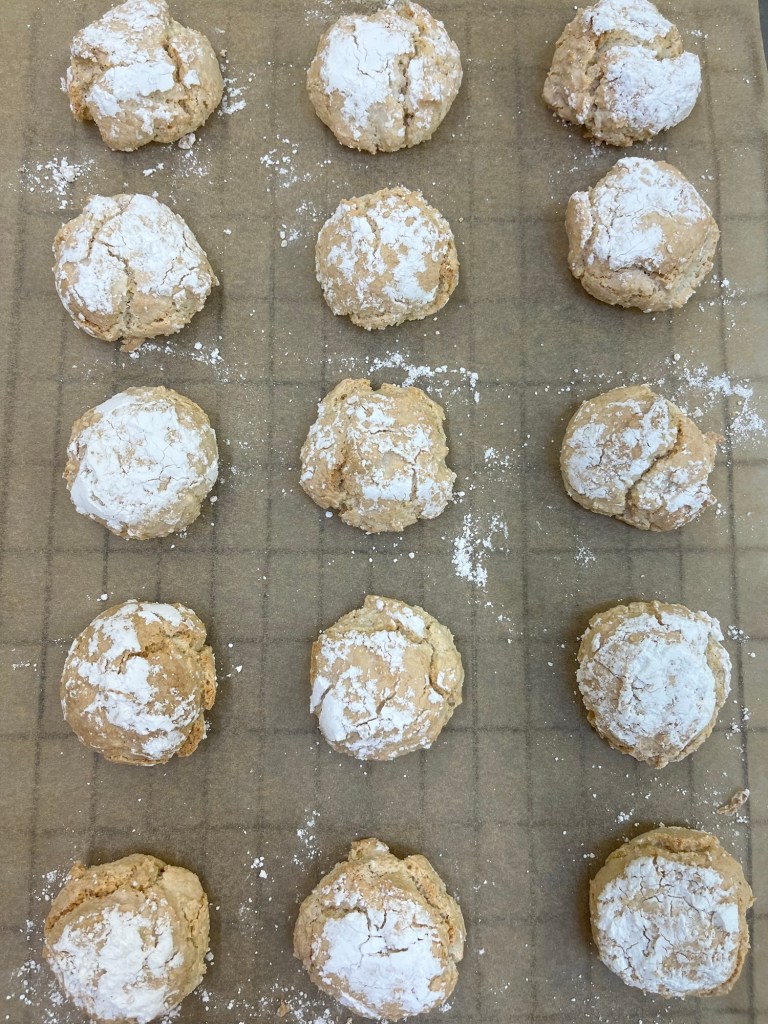
Our first foray into Ethiopian cuisine came in the form of a minced beef stew: Minchet Abish. We learned that the secret to soft and tender mincemeat is to treat it the same as you would a cut of meat i.e. the same rules apply for the browning process. Allow the mince to sit still in a hot oiled pan to take on colour, and therefore flavour, quickly rather than moving it around constantly. Just as I had finished browning and the meat was draining in my sieve, I was tapped on the shoulder by my tutor and given a surprise ‘short order’ to make Creme Anglais with a 20 minute deadline. The dirty sieve is of note here as a key step of mise en place for Creme Anglais is to have a clean sieve for the just-ready custard to be poured through ahead of service. Thus before I could even start I was back over to the spa bath (washing up bowl – see week 2 blog). Thankfully I had revised the method over the weekend and the ‘test’ turned out to be confidence-boosting. My custard was of good coating consistency and got the thumbs up from my tutor (and from my family who enjoyed it for dinner with raspberries and crushed Ameretti). Back to the stew, and having added various exotic spices and previously made stock to our browned mince, we left the assembled Minchet Abish to develop in flavour overnight.
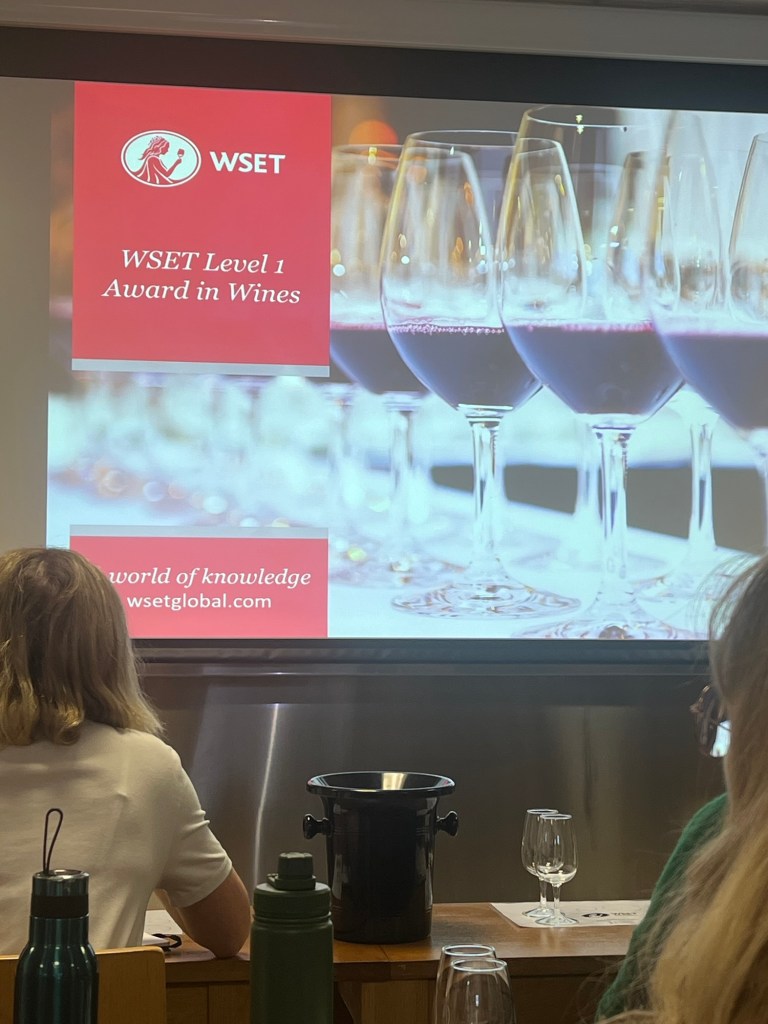
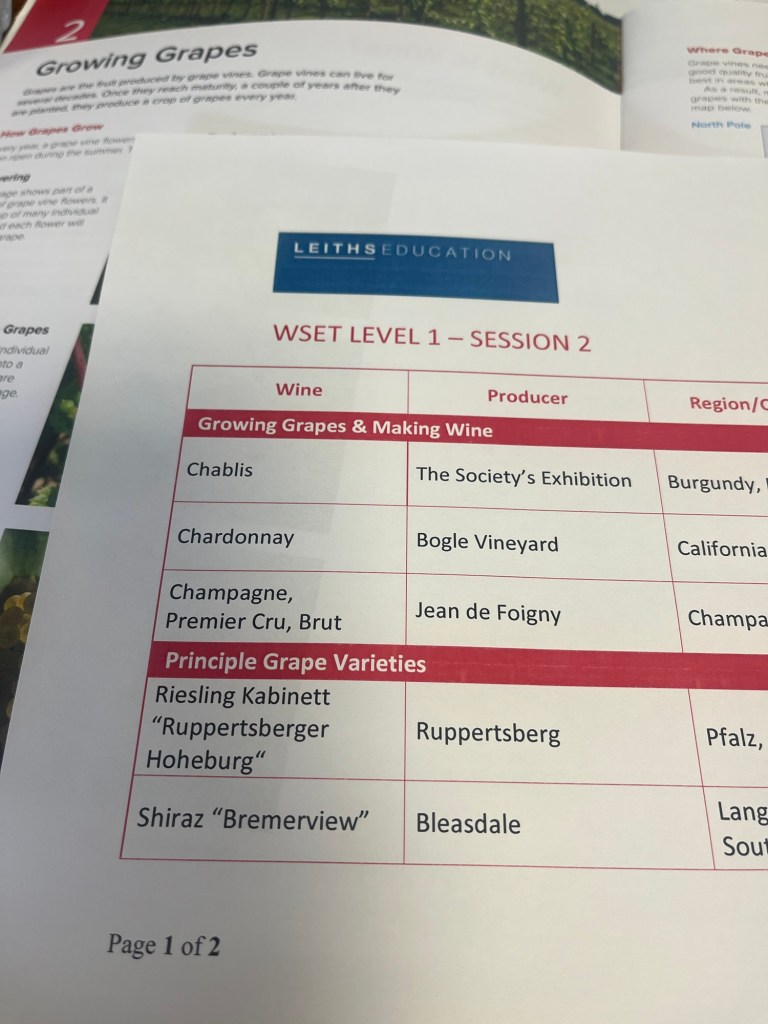
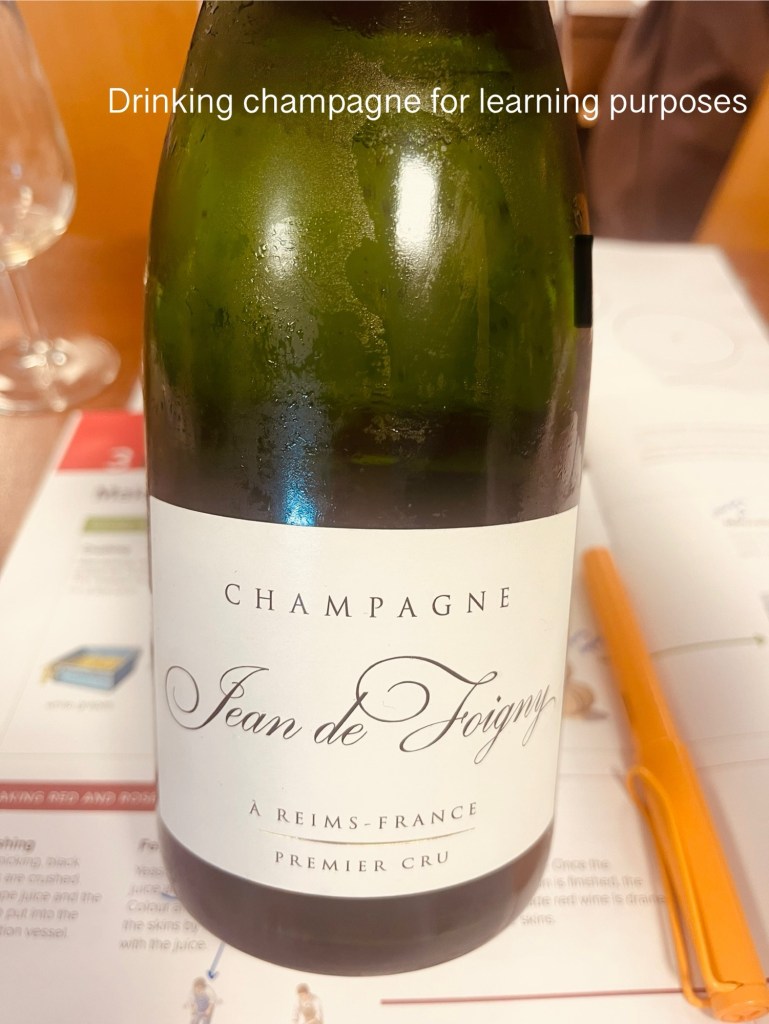
Monday afternoon marked the start of our Level 1 wine certificate. Our teacher, Marjorie, was a fabulous French woman who was an engaging teacher and has been a sommelier at Michelin starred restaurants for over 20 years. Over the course of the week we learned about growing grapes, how wine is made, wine growing regions, principal wine varieties, types and styles of wine, storage and service and food and wine interactions. We also drank quite a few examples, for learning purposes of course. A spittoon was available and indeed necessary for the Gallo White Zinfandel we tasted on the first afternoon. The exam looms large for Monday morning, and thankfully doesn’t include tasting the Zinfandel or anything else.
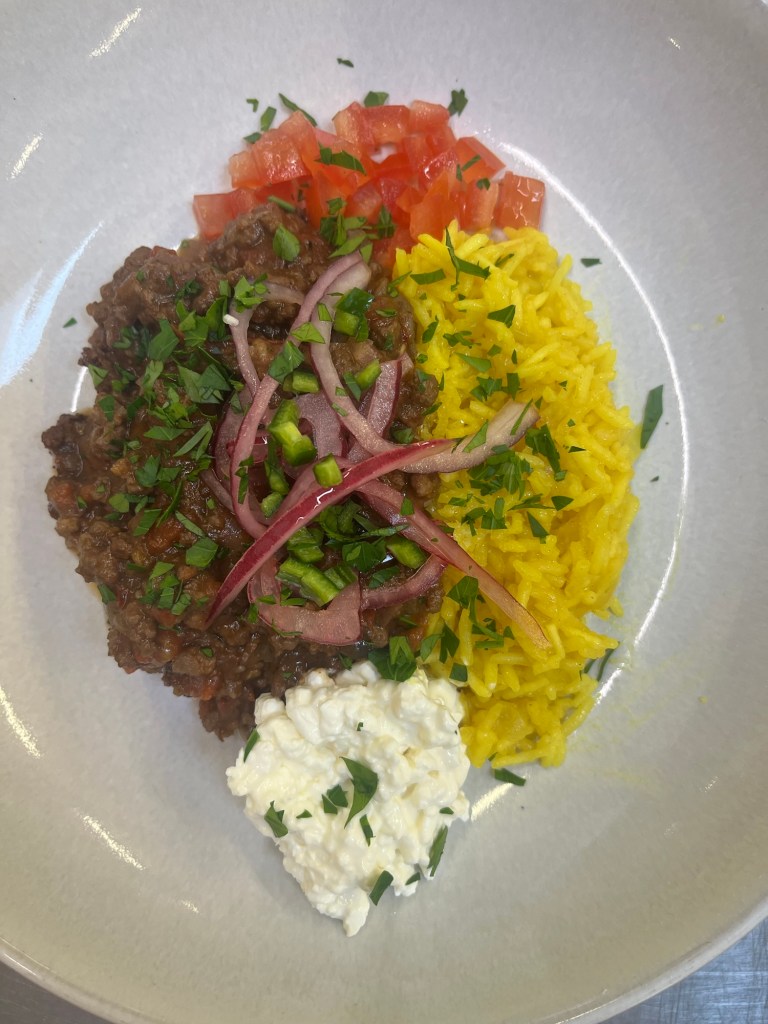
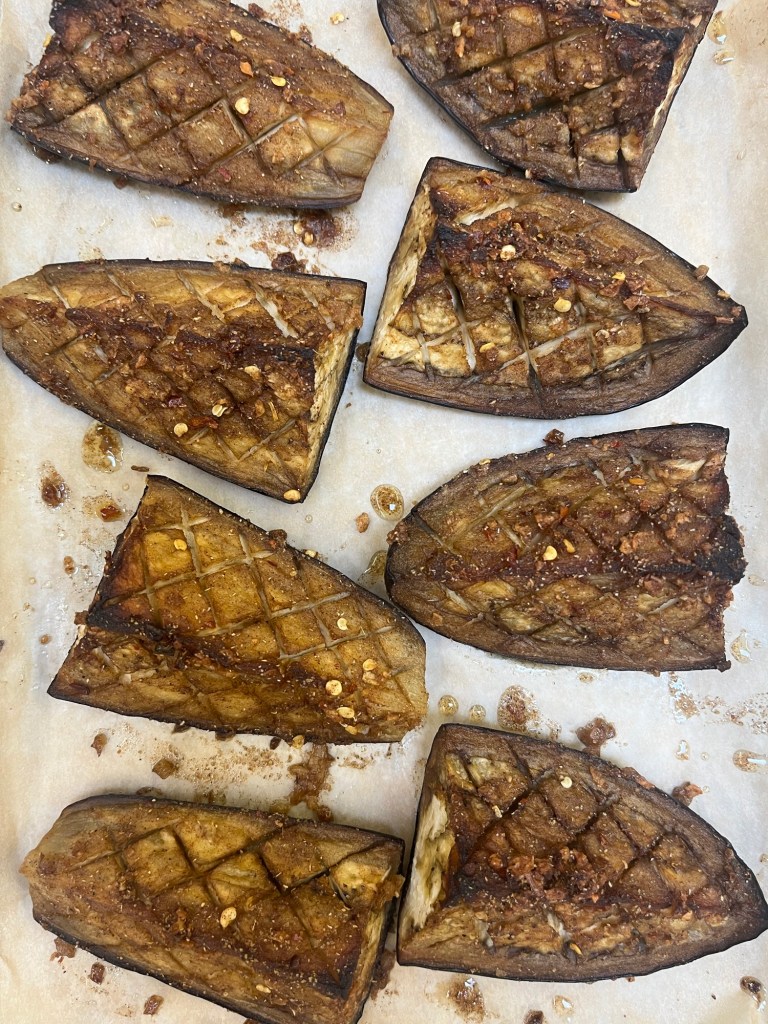
With some of us feeling fresher than others post wine, we finished our Minchet Abish on Tuesday morning. This deliciously warm and spicy stew is traditionally served with an array of accompaniments and a golden turmeric rice. The toppings include an unexpected dollop of cottage cheese, and less surprisingly pickled red onion, green chilli, and parsley. A toothsome combination! Our second service that day was a Chermoula aubergine with a freekah salad. My bench partner and I regretted not leaving the aubergine longer in the oven for the flesh to become soft and yielding. But the freekah salad was a delight, spiked as it was with toasted almonds, green olives, sultanas, lemon and herbs.
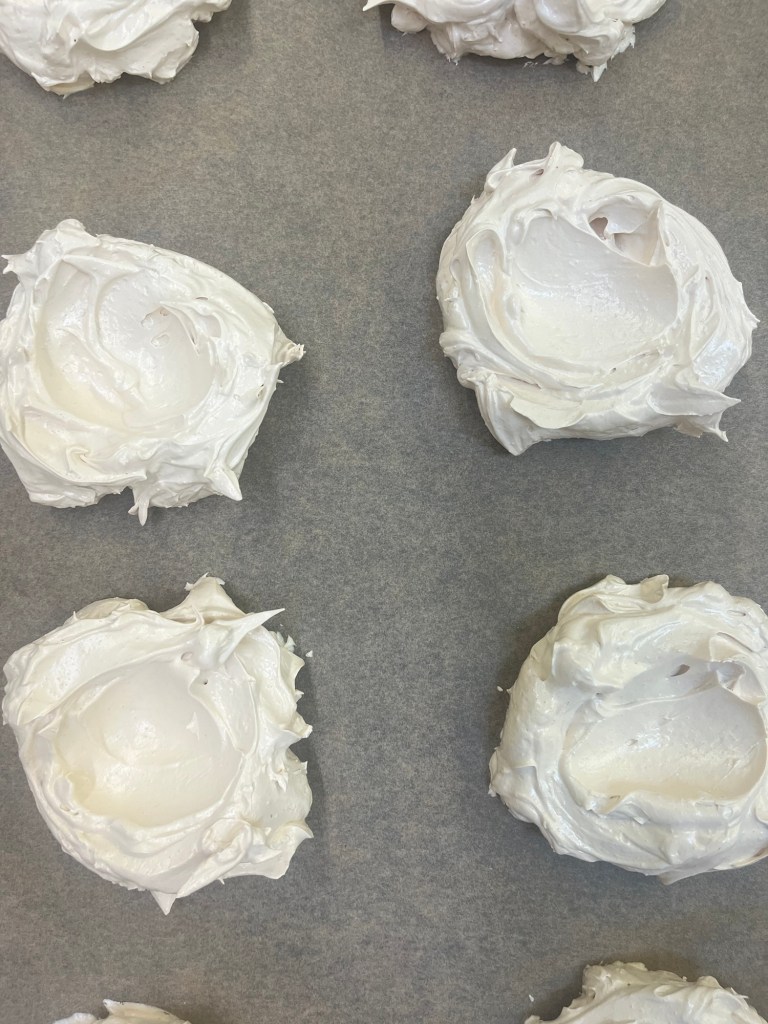
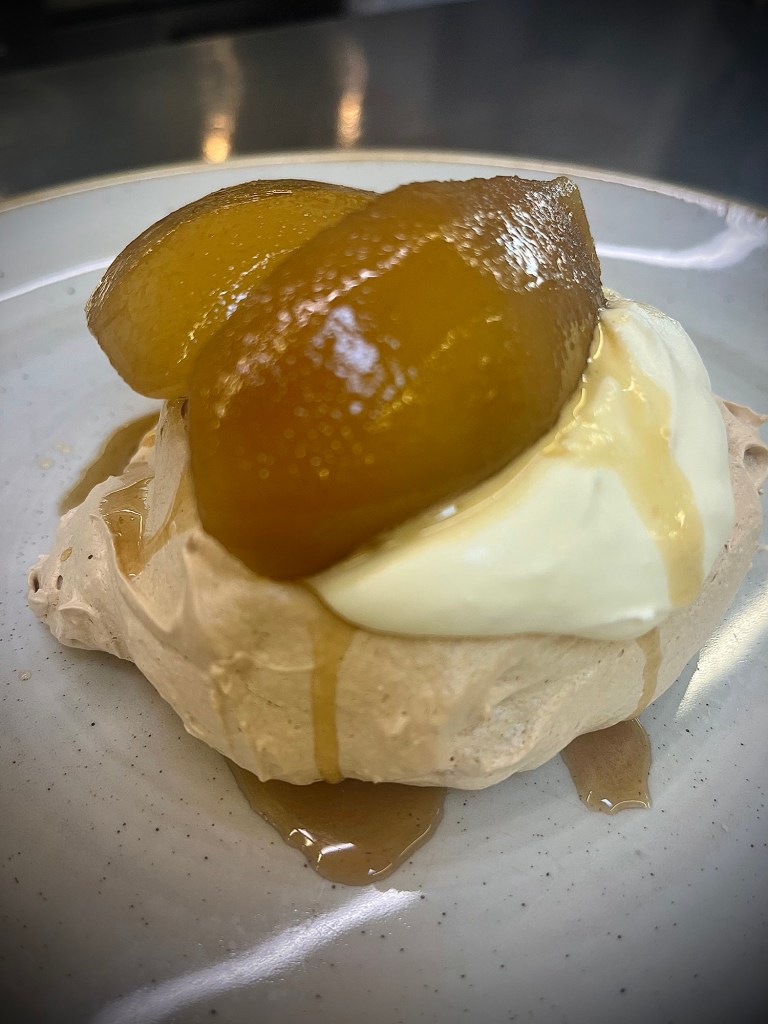
Wednesday gave us the opportunity to practice and consolidate any of the skills we have learned so far alongside the guidance of Lou, Head of School. She assessed my meringue technique and provided the light-bulb moment that I needed to be more aggressive in my whipping. This was a well-timed discovery for Thursday’s recipe of brown sugar pavlova, poached pears, whiskey caramel glaze and lightly whipped cream. My whipped eggs were incredible. Expanding enormously in volume, they almost came over the edge of the bowl. Once in the oven, we got on with the pears. The poaching liquor was the smell of Christmas: cloves, orange, whiskey and ginger (the left-overs will be perfect for a cocktail!). Once the cooled pavlova had been adorned with floppy double cream and a couple of poached pear pieces, the liquor was reduced to a sticky glaze to drizzle over the top. Gooey, aromatic, and with the cream providing a welcome freshness to cut through the sweetness. Absolutely delicious. A further consolidation of Creme Anglais completed a joyous morning of cooking.
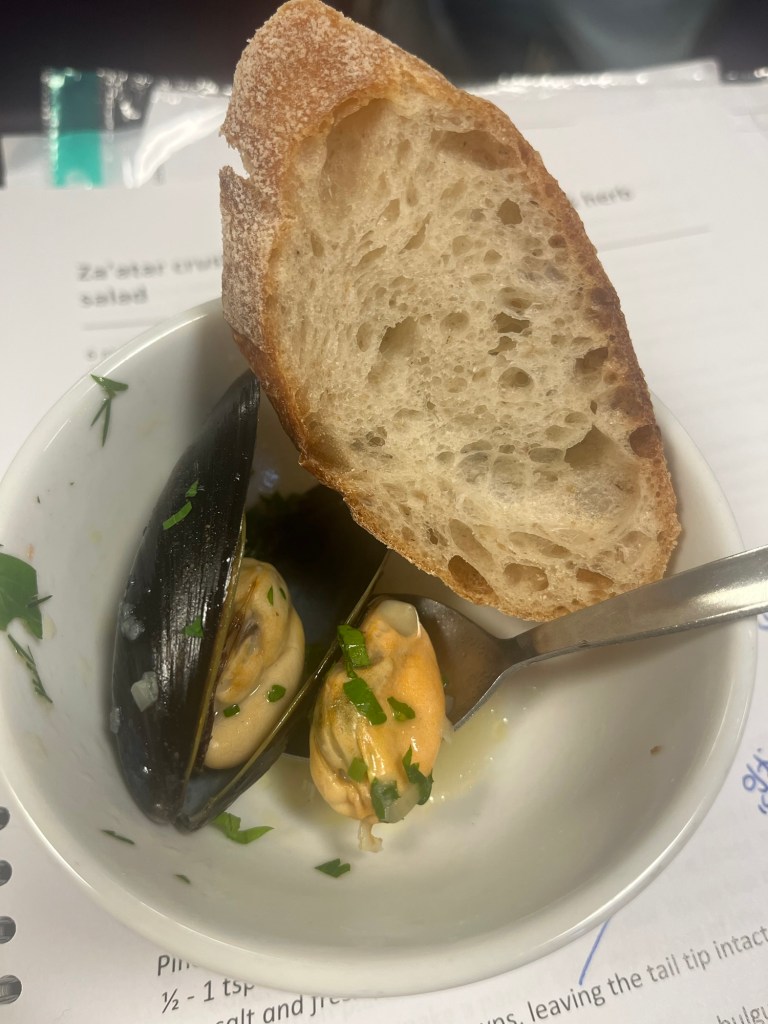
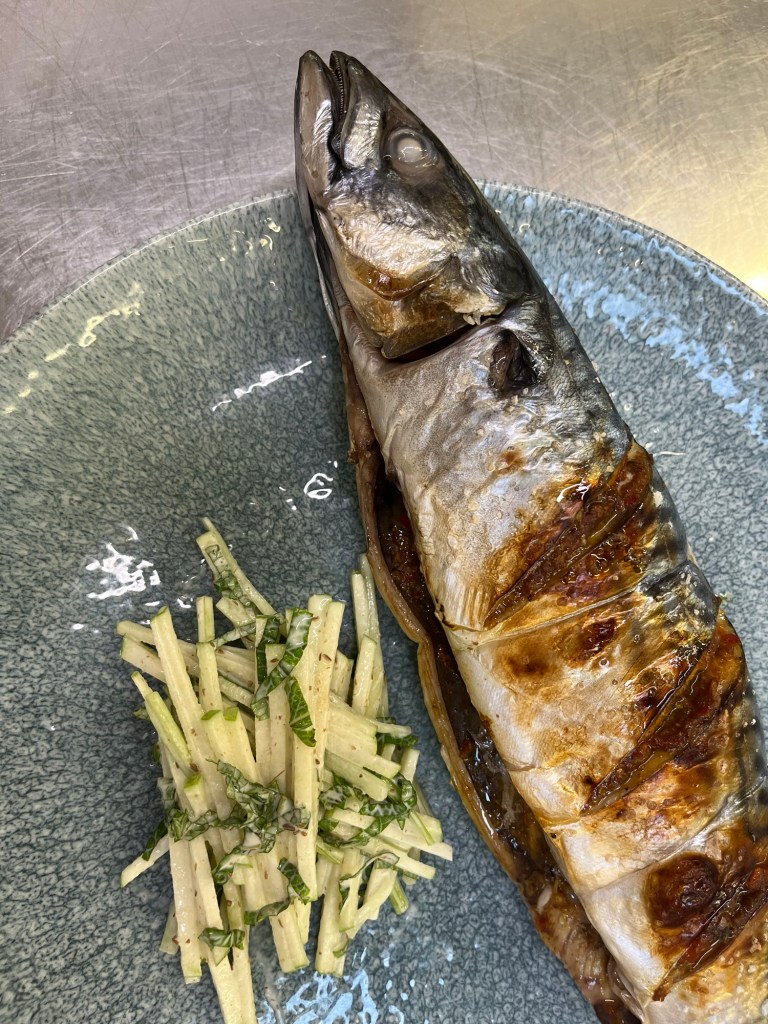
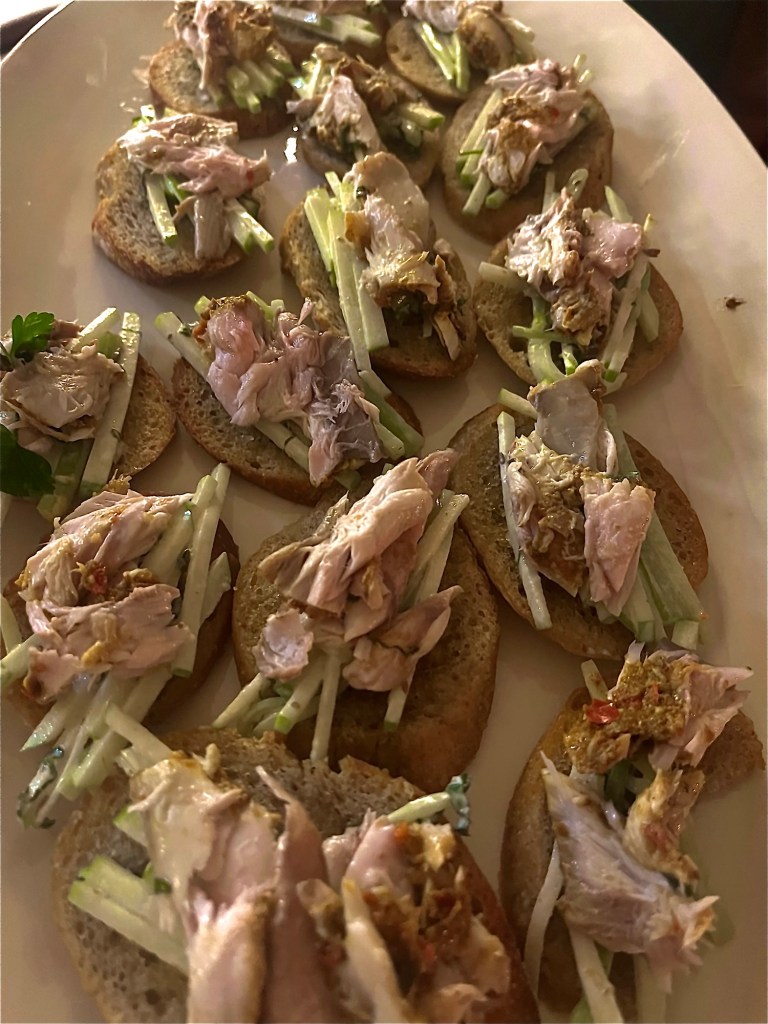
In the afternoon we were introduced to several fish and shellfish recipes and techniques: preparing and de-veining prawns; moules prep and cooking; en papilotte cooking; and gutting and cooking mackerel. On Friday morning we got to grips with the mackerel. Removing the gills, guts and bloodline before stuffing it with a Goan spice paste. An accompanying apple and celery remoulade provided the opportunity for more knife skills practice. And further consolidation of mayonnaise making, this time by machine. Those still scarred by mayonnaise by hand had assumed machine making would be a breeze. How wrong we were! Somehow (and I honestly think success or otherwise was in the hands of God) mine didn’t split; others took up to four attempts and still weren’t successful. Best to put it behind us and hope for it not to be repeated again on this term’s curriculum. The cooked mackerel, blistered from an initial flash under the grill and richly spiced from the paste, was soft, flaking and flavoursome. The light remoulade was the perfect foil to the oiliness of the flesh. I stripped the flesh from the frame and piled both the remoulade and fish on to crostini that evening for a tasty canapé.
Much nervousness and apprehension for week 8, with two formal cooking assessments to add to the wine exam. The remainder of the weekend will be spent practicing and revising!
 @Shelovescake
Leave a comment