

You should be able to make scones in the time it takes to boil a kettle. This edict, oft cited by my mother, presumably originated from a time of whistling kettles on gas hobs. Still, it is certainly one of the joys of eating a scone that you can desire it, smell it, and have gobbled up at least two in not much more than half an hour!
Cheese scones in particular create an aroma when baking which instinctively causes my tummy to rumble. Watching them in the oven, they develop from pale dough to burnished, bubbling treasure in just 10 minutes. You can’t feel sad at the sight of a freshly baked scone – they are the epitomy of comfort. Slicing open a warm scone elicits a puff of steam, the aroma of which only increases your desire to consume. A deeply savoury combination of carbohydrate and fat, slathered with cold butter melting immediately into the soft pillow of dough, leaving a glistening, salty moistness.
The first bite of a well-baked scone feels light. Then transfors to a luxurious, savoury richness filling the mouth and nose. The umami warmth lingering until the next taste.
Scones are incredibly easy to make. Have a go at the recipe below, experimenting with different types of cheese and accompaniments.
Cheese Scones – makes 8
Ingredients
8oz flour
2oz butter
3 oz cheese, grated
approx. 1/4 pint milk or buttermilk
Add handful of chopped chives or sage, chopped wild garlic, teaspoon of Marmite; half a grated apple etc
Method
Pre-heat the oven to 200 degrees (fan) or 220 degrees; butter a large baking sheet.
In a medium size bowl, rub the butter into the flour until it resembles breadcrumbs. Shake the bowl and any large bits of butter will come to the surface ensuring you don’t miss any. Stir in 2/3rds of your cheese and any other accompaniments with a knife. Add the milk gradually, stirring with a knife until it starts to come together. You want the mixture to be slightly sticky but not wet. You may not need all the milk.
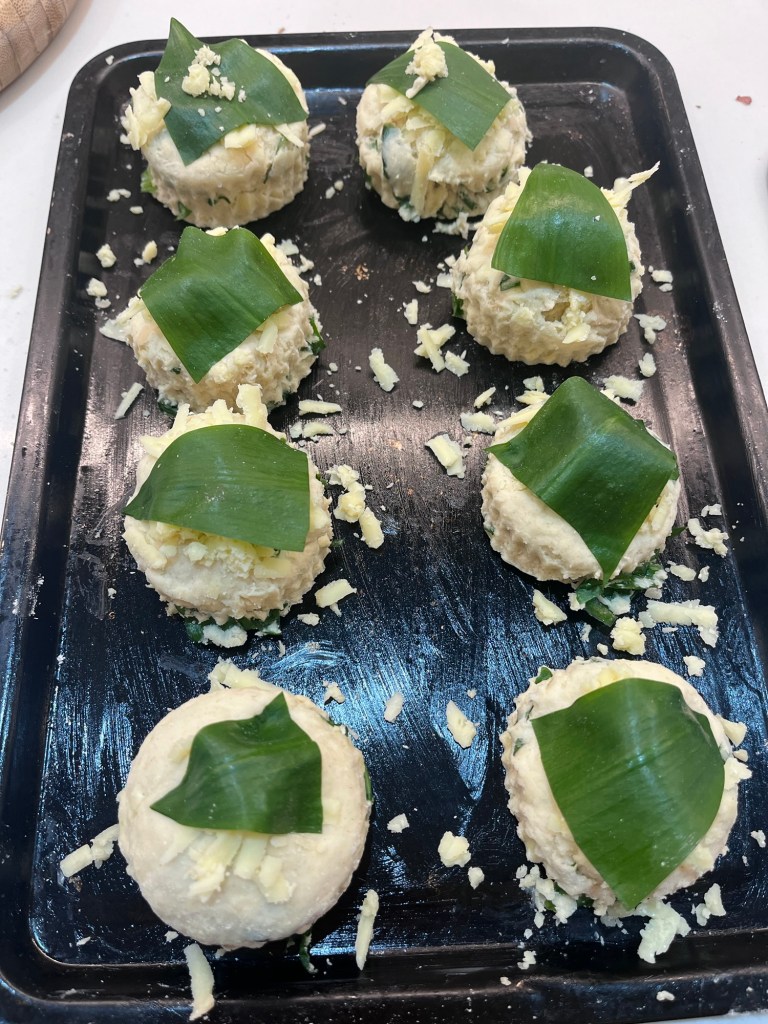
Bring the dough together on a lightly flour surface. Knead quickly and gently into a smooth ball. Pat the ball down into a flat disc about 1.5cm high. Use a 5-6cm cutter and transferring the raw scones to your buttered baking sheet. You’ll need to re-knead the off cuts to another smooth ball and pat down as before. Cut again; and re-knead as required to use up all the dough. Top each scones with a good pinch of the remaining grated cheese. If you added wild garlic, sage or chives you could also put a pinch of that on top. Place the tray in a hot oven; set a timer for 10 mins and await your treasure! Once cooked they will be golden brown on top and will sound hollow when you tap their bottoms! Transfer to a cooling rack; eat immediately if you can’t wait for that kettle to boil 🙂
 @Shelovescake
Leave a comment