Two words to describe advanced term at the end of week one: complexity, refinement. The tone was set by the head of school on our first day back: the final term will require all our energy, commitment and focus if we are to achieve our potential. In the kitchens, the complexity of the recipes has ramped up with a considerable number of skills both newly and previously learnt to be executed with precision. Alongside the ratcheting up in difficulty, the teachers are pushing for us to work more quickly and efficiently with punchier service times. And to add to the vibe of producing fine dining restaurant quality food, the kitchens have been completely rearranged over the Easter break so they are more akin to a professional kitchen. Gone are our own drawers with the utensils close to hand, and the bowls, jugs and juicers within easy reach under our benches. Everything has a new home somewhere in the kitchen. Every day is like a treasure hunt as we figure out the new configuration.
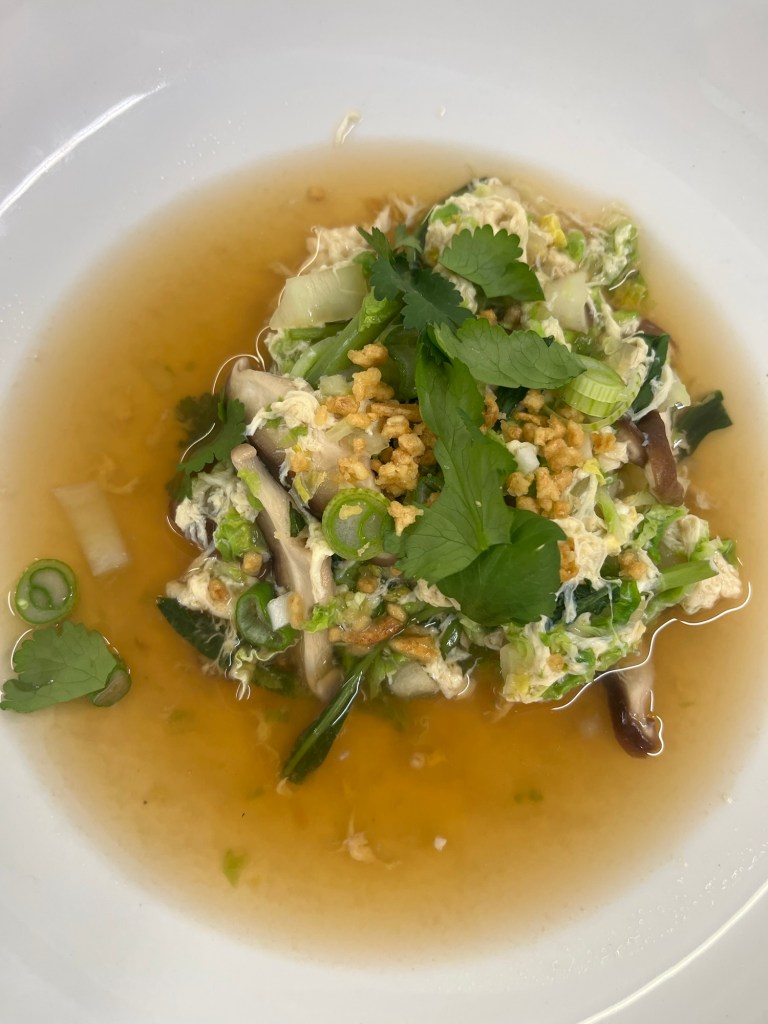
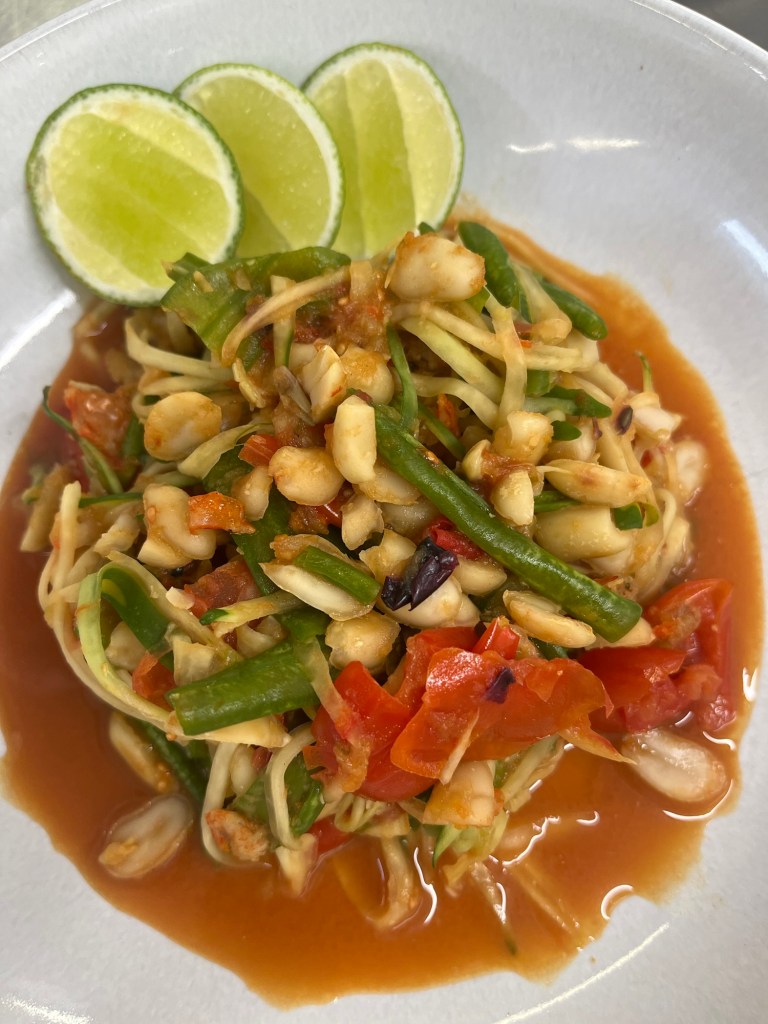
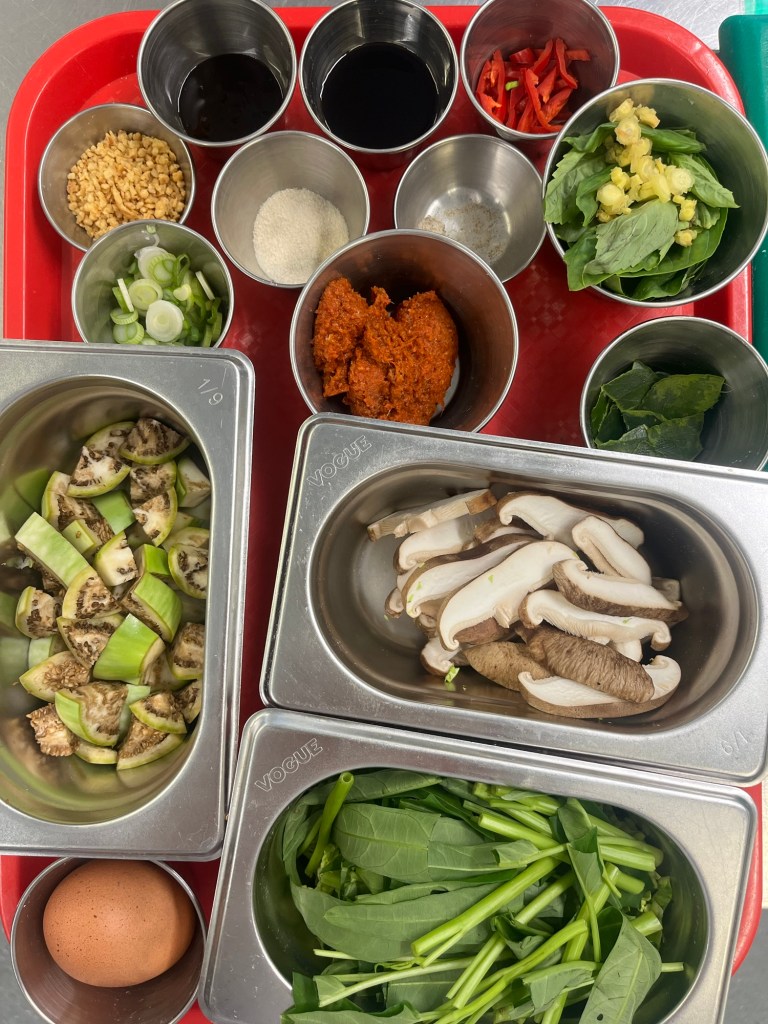
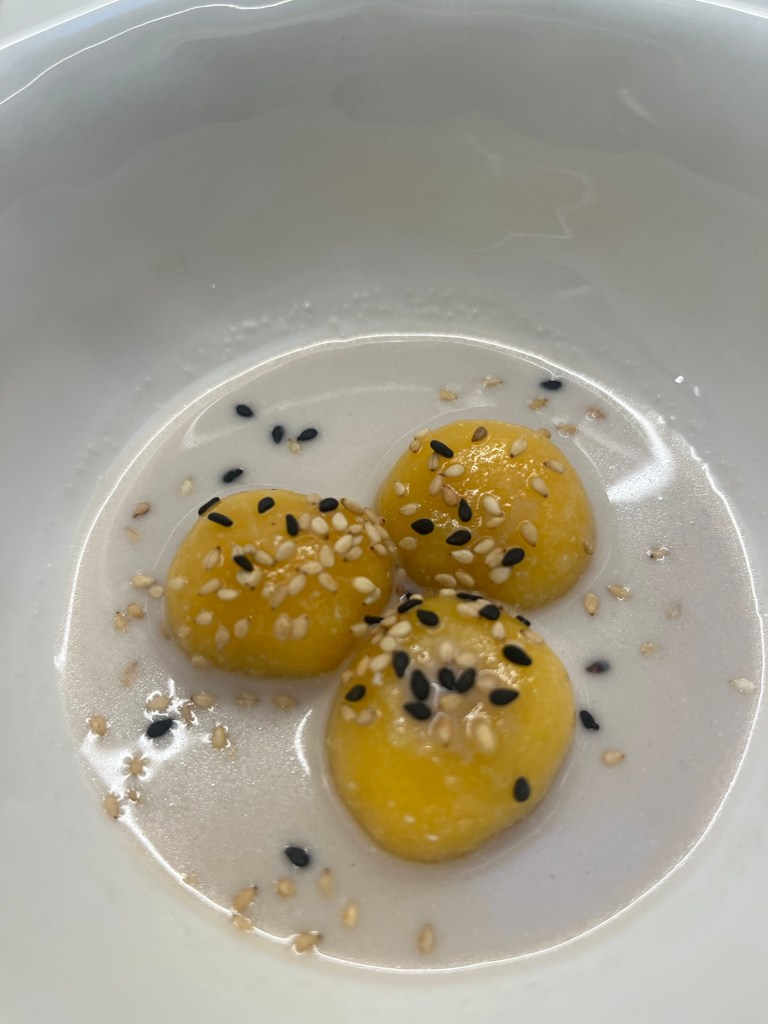
But what about the food, I hear you ask! For week one there were a range of delicious recipes and cuisines starting with Thai. Day one was an all day group cooking exercise recreating dishes shown to us by Andy Oliver from Som Saa at the end of last term. A simple soup of greens and shiitake with an egg dropped in just as the soup boils to create strings of cooked egg amongst the clear broth. Incredibly comforting – this is what you need at the end of a tough day. Next, a green papaya salad Bangkok style. This was prepared in a Thai pestle and mortar – high-sided and deep with a rolling pin sized pestle with which to muddle and bruise. For main course, Som Saa’s famous crispy fish green curry with Thai aubergines and wild ginger. Served with jasmine rice, it was the perfect balance of salty, sweet, spicy and tangy. We made the base of the curry from our own coconut cream which required some muscle work to crack into coconuts and separate the flesh from the hairy shell. To finish, we created delicious baby dumplings from a squash purée dough, poached in water with a pandan leaf and then warmed through and served with more of the coconut cream flavoured with sea salt and sugar. Each dumpling encase a surprise nugget of palm sugar which oozed into the cream on eating.
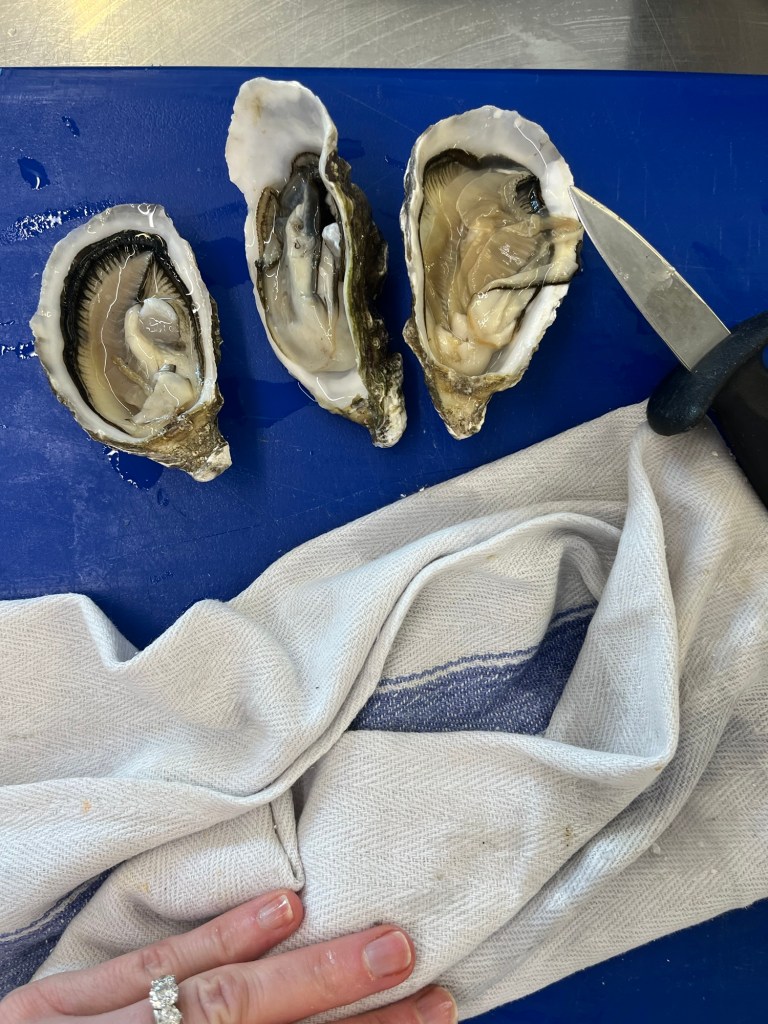
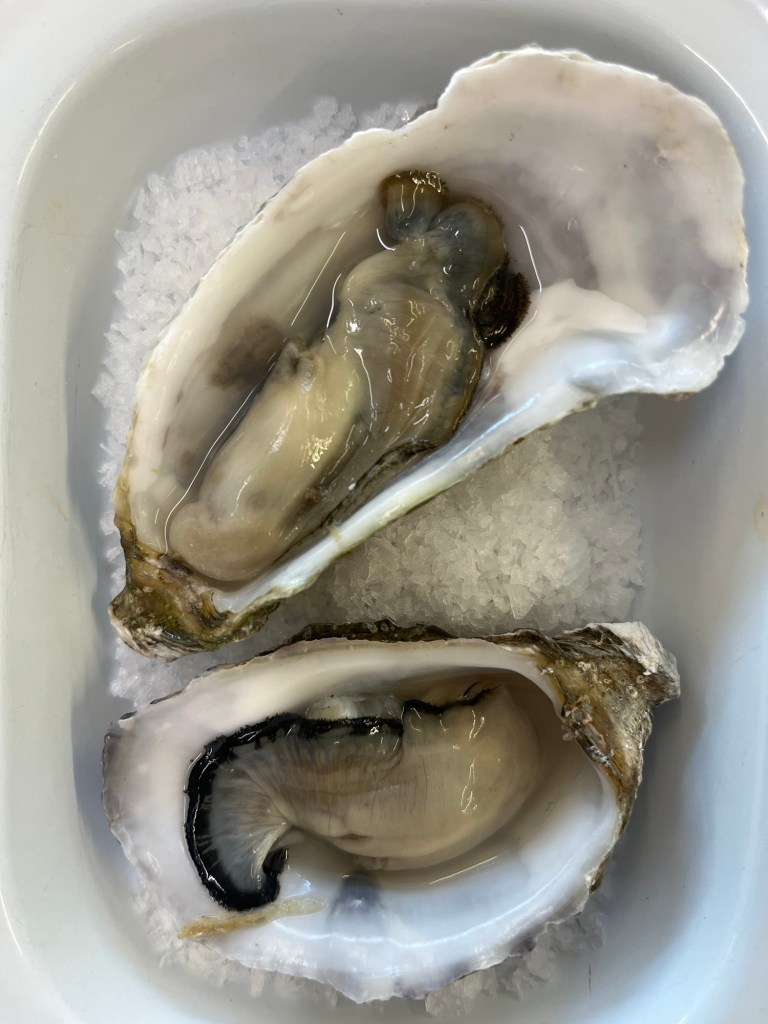
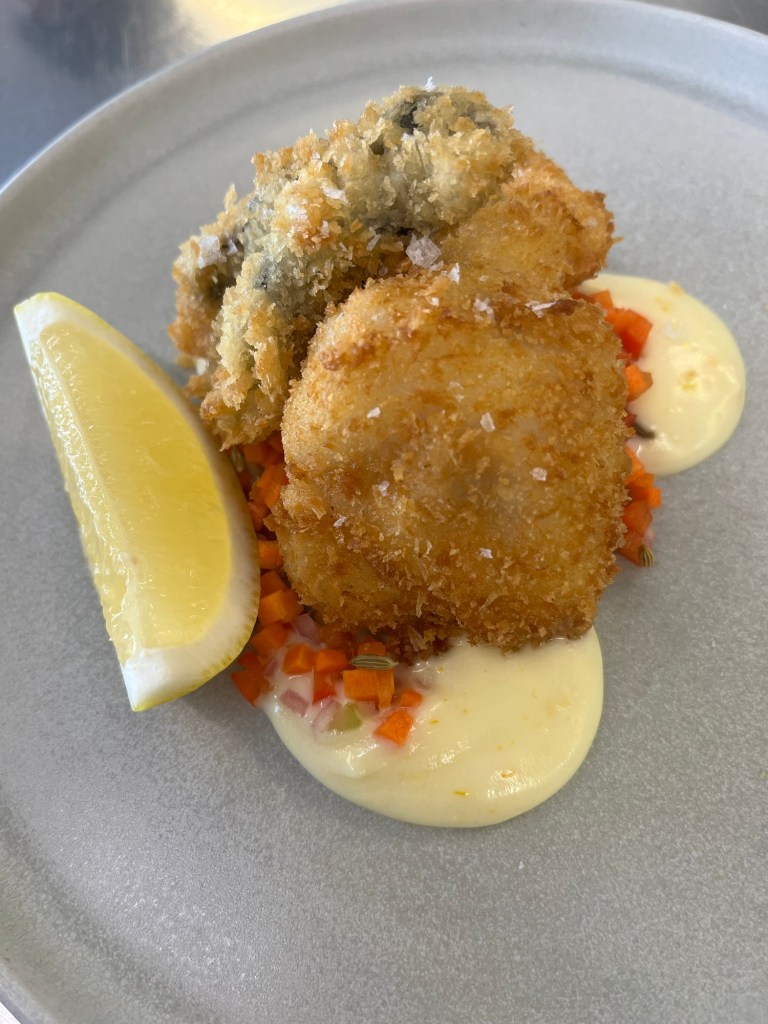
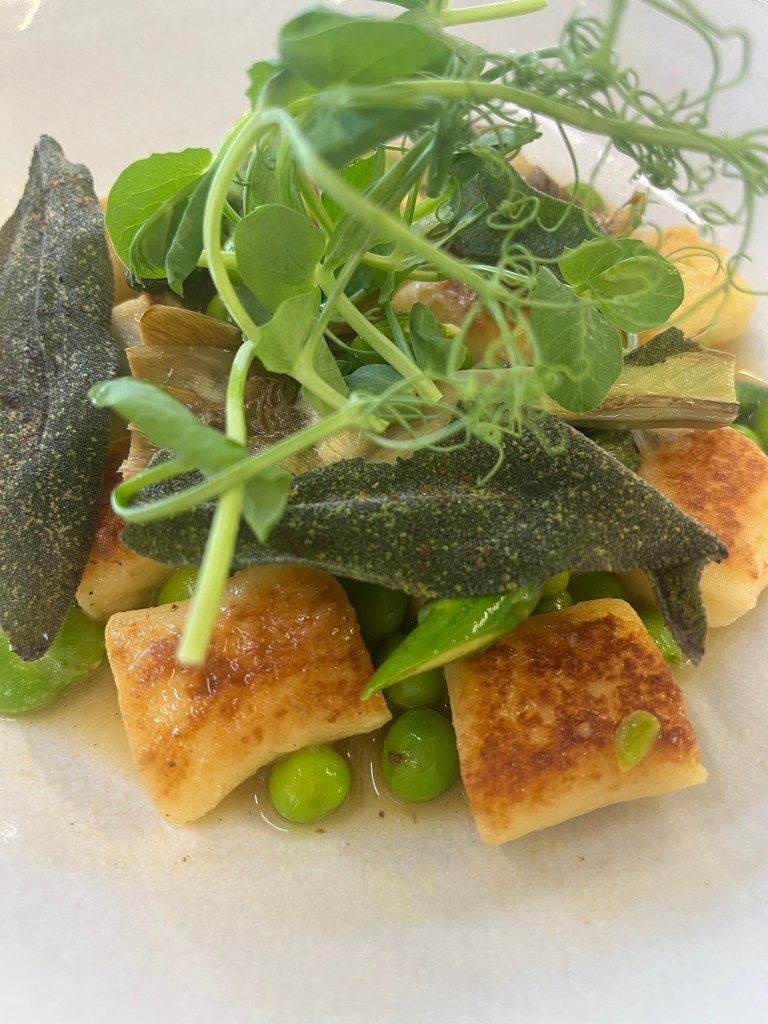
On day two we got to grips with oyster shucking. An instructive in-kitchen dem and we were away serving them on a deep bed of sea salt and a twist of lemon. But, of course, this wasn’t all we had to do. We also prepared cod cheeks, pane’d and deep-fried them. They were served alongside a citrus mayonnaise (made by machine, not hand, woohoo!) and a sharp and crunchy pickled veg salad with fennel and chilli. It made for a holiday-worthy lunch in the spring sunshine. In the afternoon, we had a ‘vegetable-led’ dem. Grace cooked us pillowy soft and light potato gnocchi with braised artichokes, asparagus and freshly podded peas and broad beans: spring on a plate. The following day we recreated it ourselves including braising the artichokes. Quite a bit of effort is required to get to the tasty heart of the flower and ensure they don’t lose their vibrant colour (acidulated water is a must).
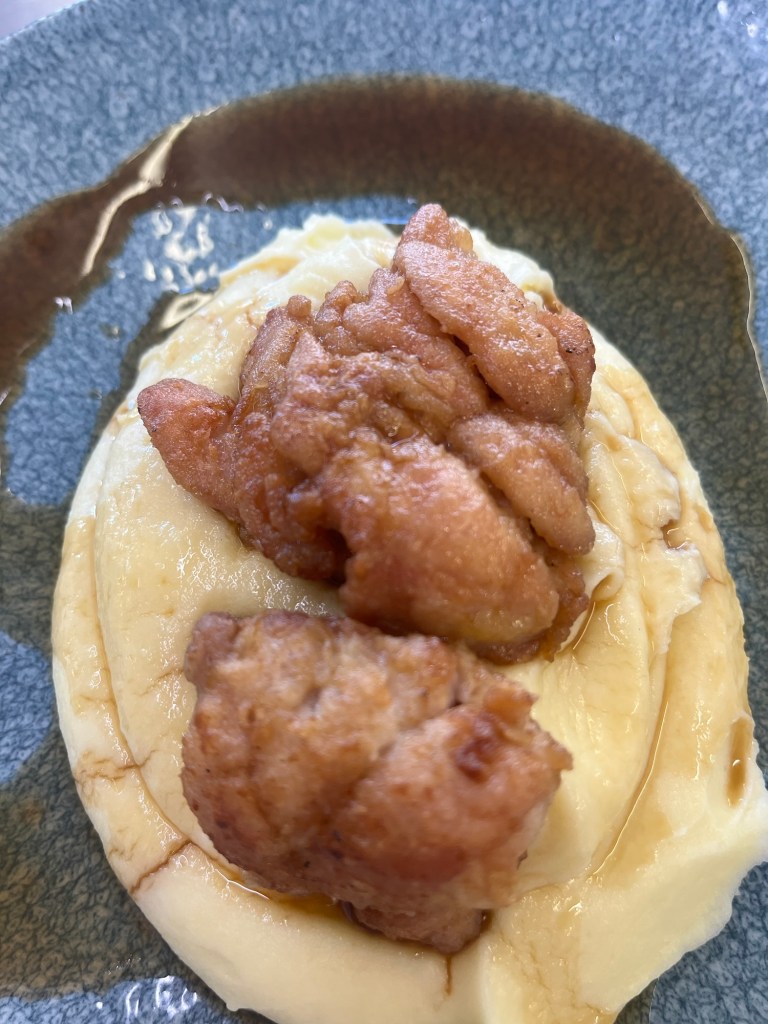
The most complex dems of the week were the salt-baked celeriac, with hen of the woods, smoked emulsion, mushroom foam and smoked almond migas; and the beef fillet with red wine jus, potato terrine, wild garlic emulsion, baby carrots and white asparagus. An abundance of technical skills and it was these recipes which really gave me the signal of the change in level for advanced term. We’ll be taking our turn at the celeriac and accompanying foams and emulsions next week. But before that, our final cook of week one was a very beige dish of sweetbreads (the pancreas of a veal), Madeira jus and pommes purée. The latter is more refined than simple mash. The French-named version is made by scooping out the flesh of baked potatoes (rather than boiled), passing through a sieve before emulsifying with warm butter, cream and milk. The baked potato can absorb more of the unctuous dairy mix than boiled potatoes resulting in a richer, smoother finish. Sweetbreads aren’t my cup of tea but it was good to learn how to prepare and cook them; plus continue to elevate our jus-making skills with a Marco Pierre-White recipe.
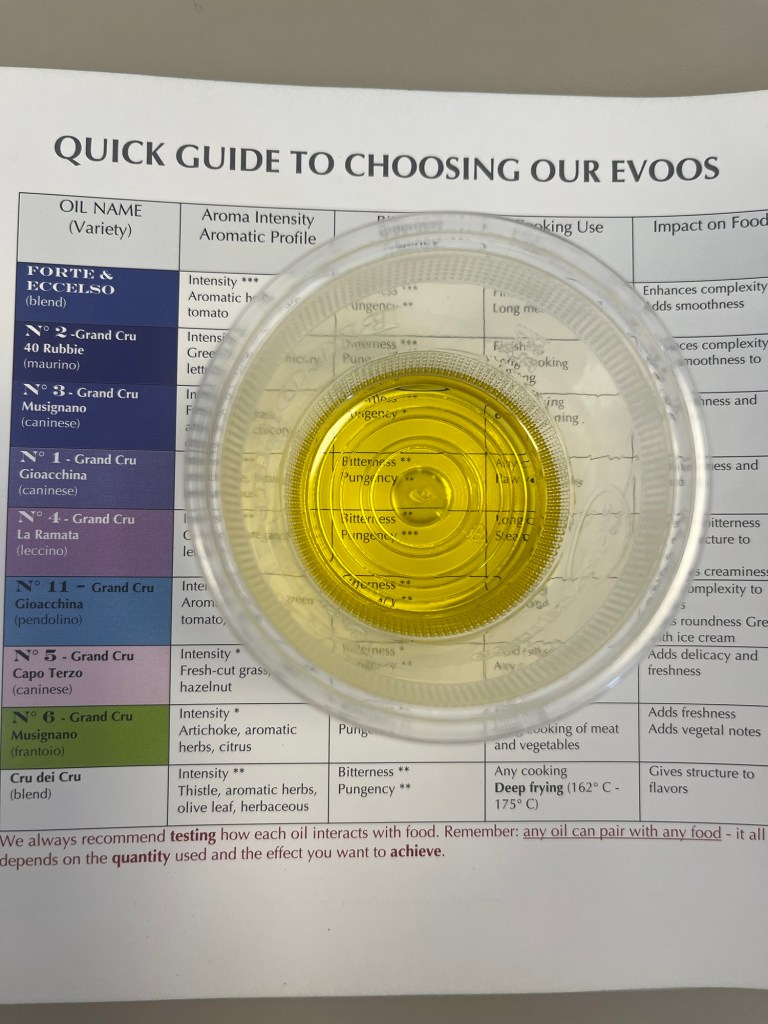
The week ended with an extra virgin olive oil tasting. Our guide, Paolo, was a delight and an inspiration. Having been a consultant corporate strategist all his life, he and his wife chose to retire to Italy in a Roman villa of their own design and making. The grounds of said villa were blessed with olive trees and at some point those trees became acres and a big business. Sadly, his wife died but the memory of her is kept alive in the name of the business: I&P – Ianna (her name) and Paolo (his). Paolo taught us how to make olive oil by hissing through our teeth to ensure even distribution across our taste buds. Much coughing ensured but not enough to mar the fruity, peppery flavour. Paolo informed us he was somewhere between 80 and 90. He looked fantastic which he assured us was down to drinking a spoonful of extra virgin every day on waking. Simple as that! Remove your bottle from the kitchen and pop it on your bedside table for a long and prosperous life.
 @Shelovescake
Leave a comment