@Shelovescake

Founder of Rosey's Village Table, Leith's Diploma Student, small-event catering, cakes, desserts and nibbles for every occasion, recipes and dinner party ideas

May 2026
M T W T F S S
 123
45678910
11121314151617
18192021222324
25262728293031
  • Two firsts for intermediate term this week: our first formal assessment and our first all day cook. But before that a welcome change of pace with a home study day. A chance to catch up with admin, do coursework for the Certificate in Hospitality and Tourism, and prepare time plans for the week. For me it was also well-timed having catered for a retreat on Sunday so had spend a large part of the weekend on my feet cooking.
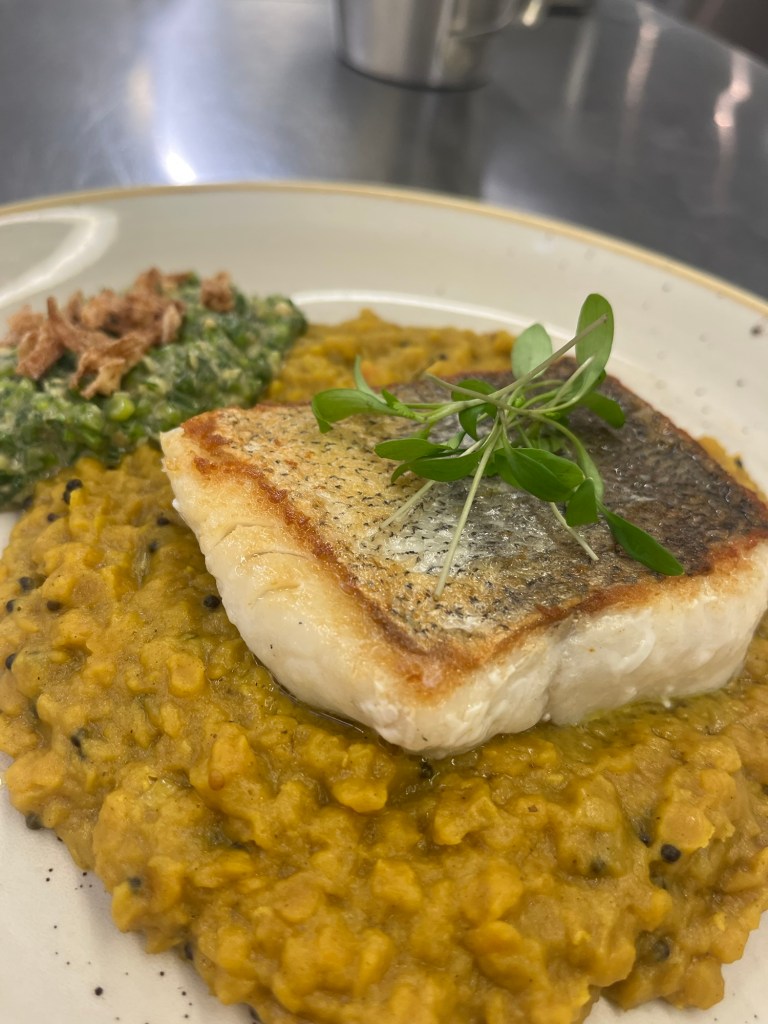
    The first assessment appeared easy: hake but already-filleted; a spiced lentil dhal; and a coriander chutney. But this is Leith’s so it needed to be cooked perfectly to intermediate rather than foundation standards. The fish flesh needed to be moist but with a crisp skin; the lentils cooked to the correct consistency with no chalkiness and well seasoned; and the chutney needed to show refined knife skills and ability to balance flavours. I’m delighted to say I achieved a distinction for my dish 🙂
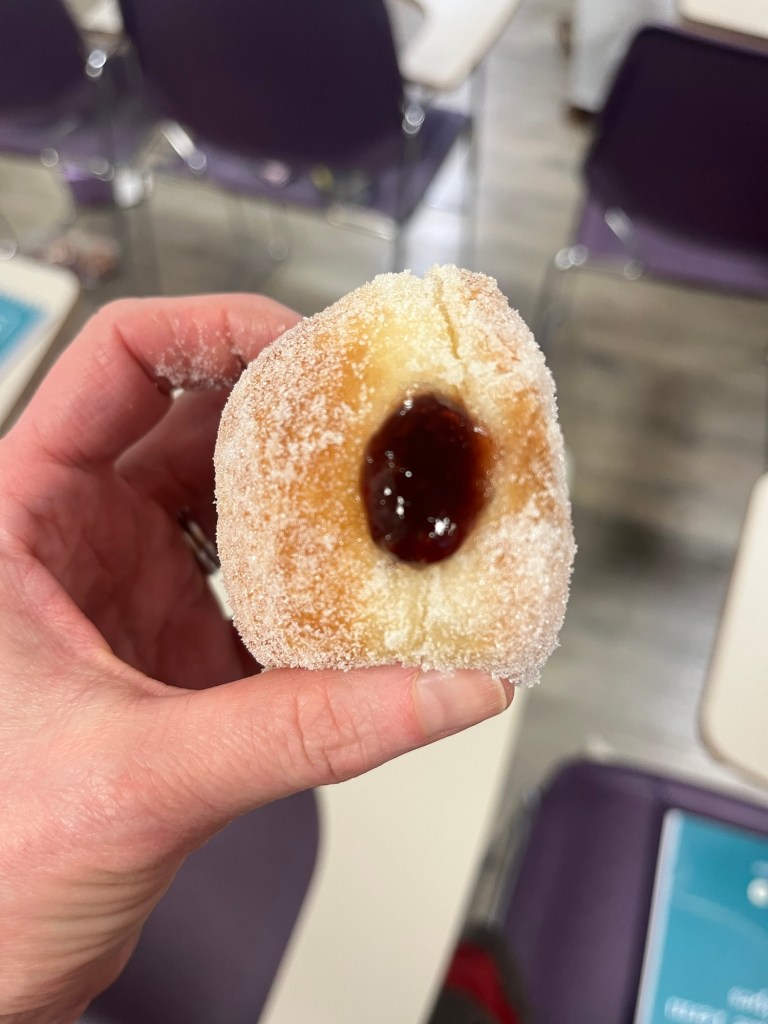
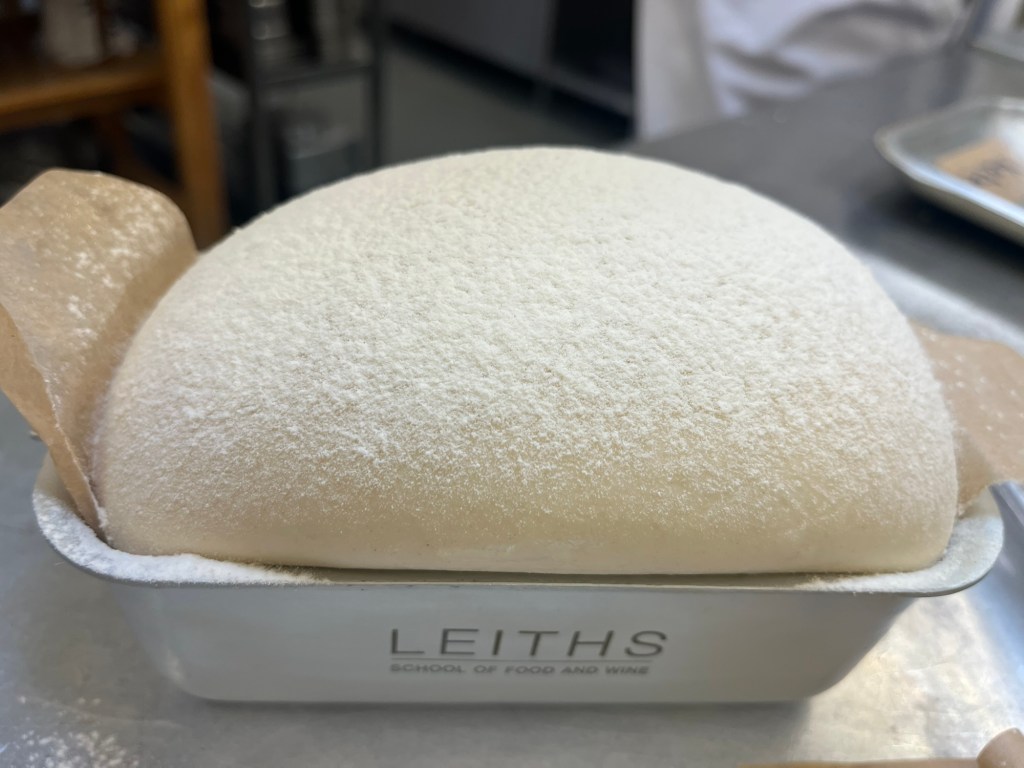
    Reward for our assessment efforts came the following day in the form of doughnuts. And also spiced raisin and pecan buns. And the buttery-ist, softest brioche loaf. The enriched dough dem with Caz was a total treat; and we can’t wait to repeat it for ourselves in the kitchen.

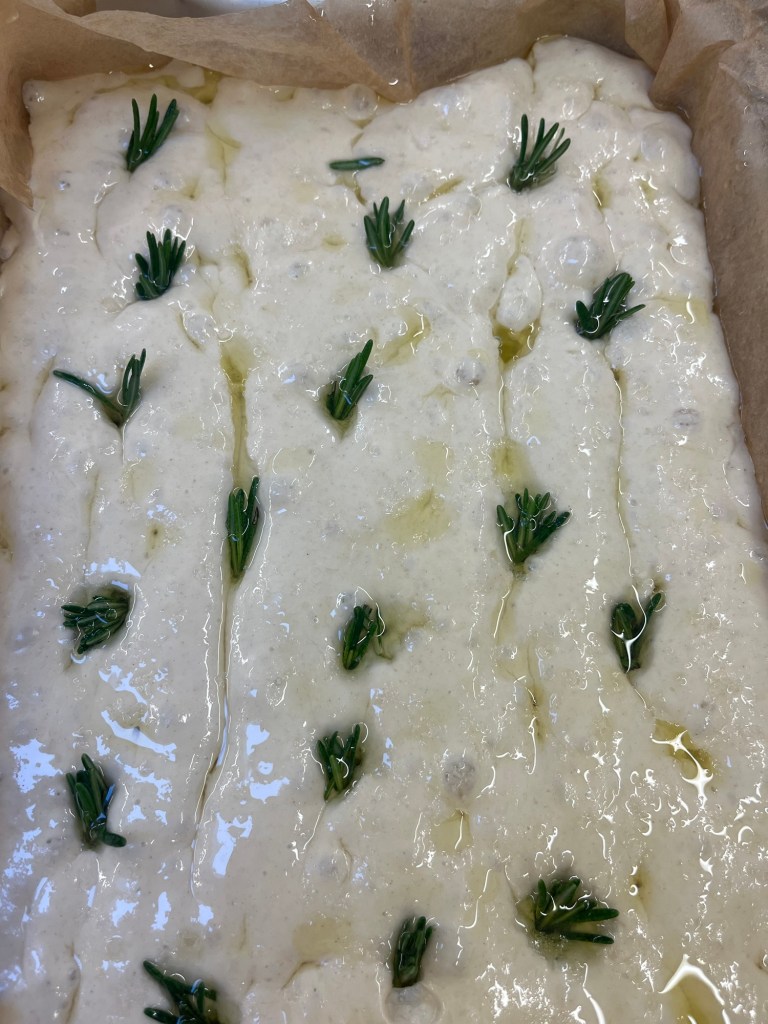
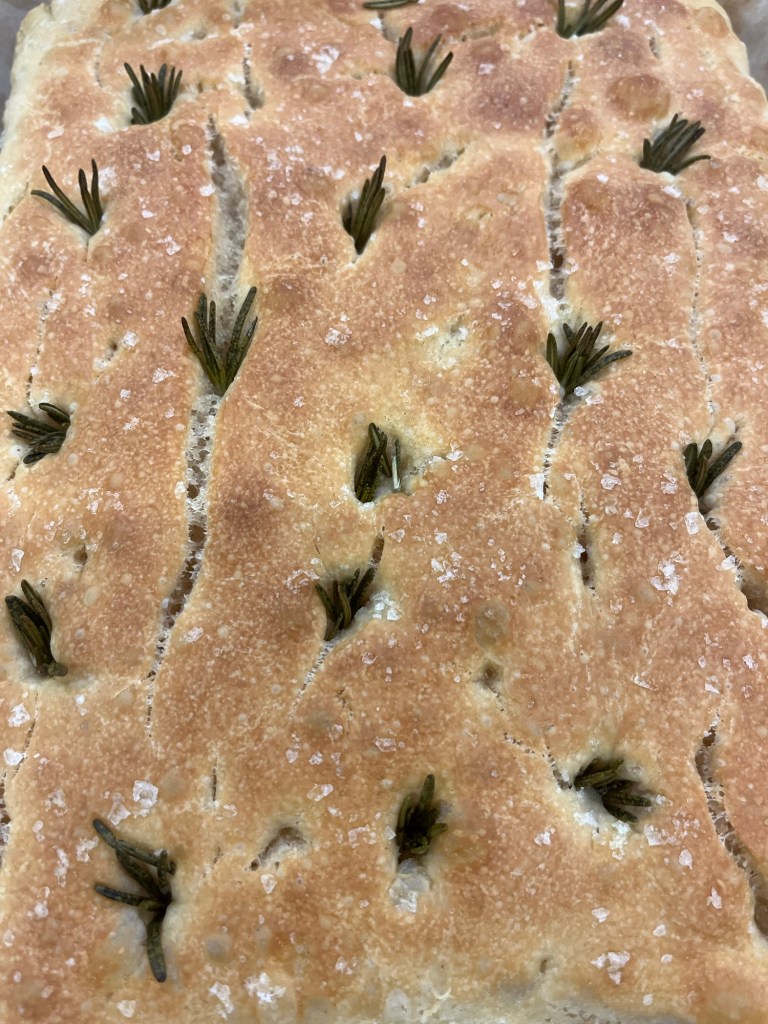
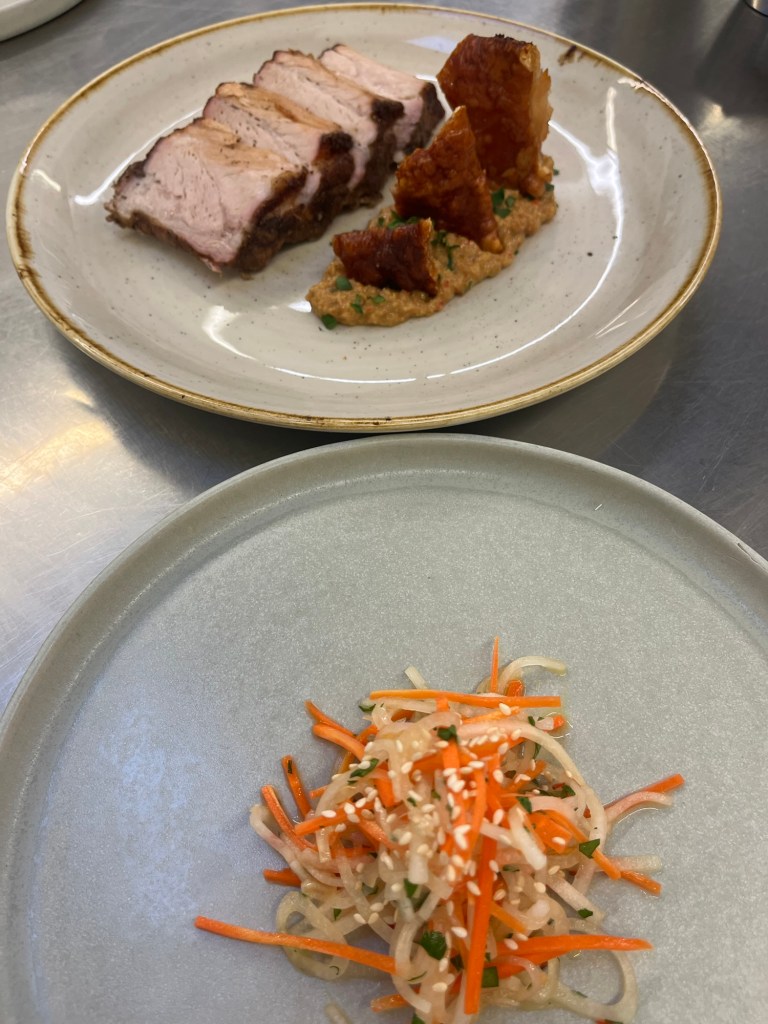
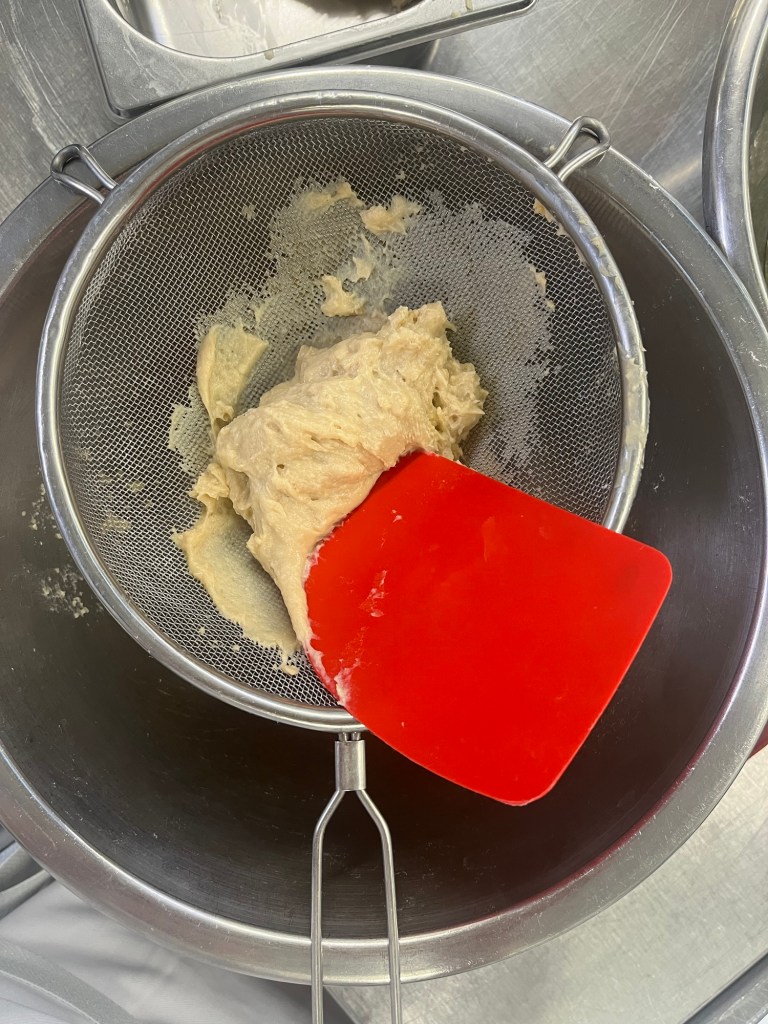
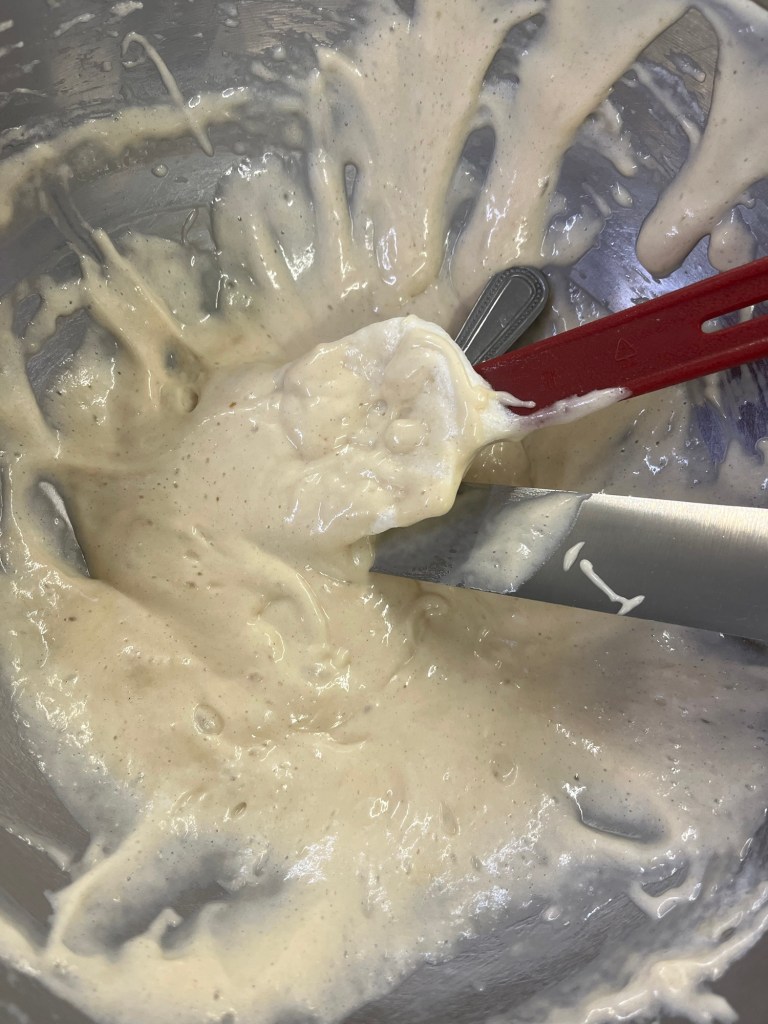
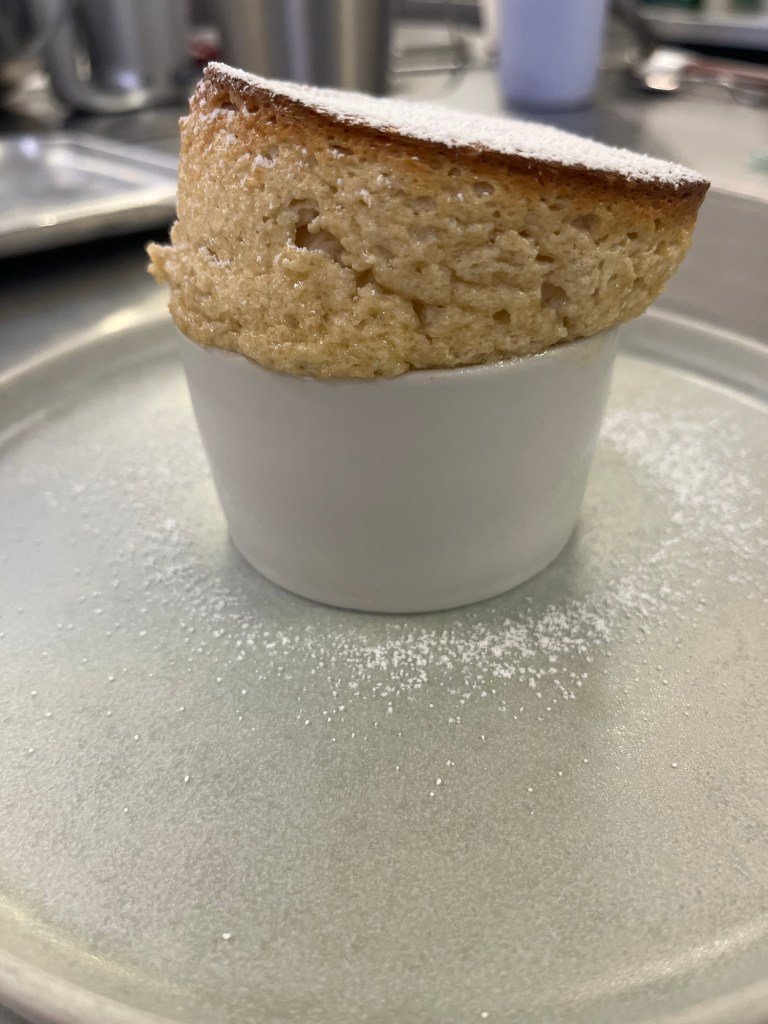
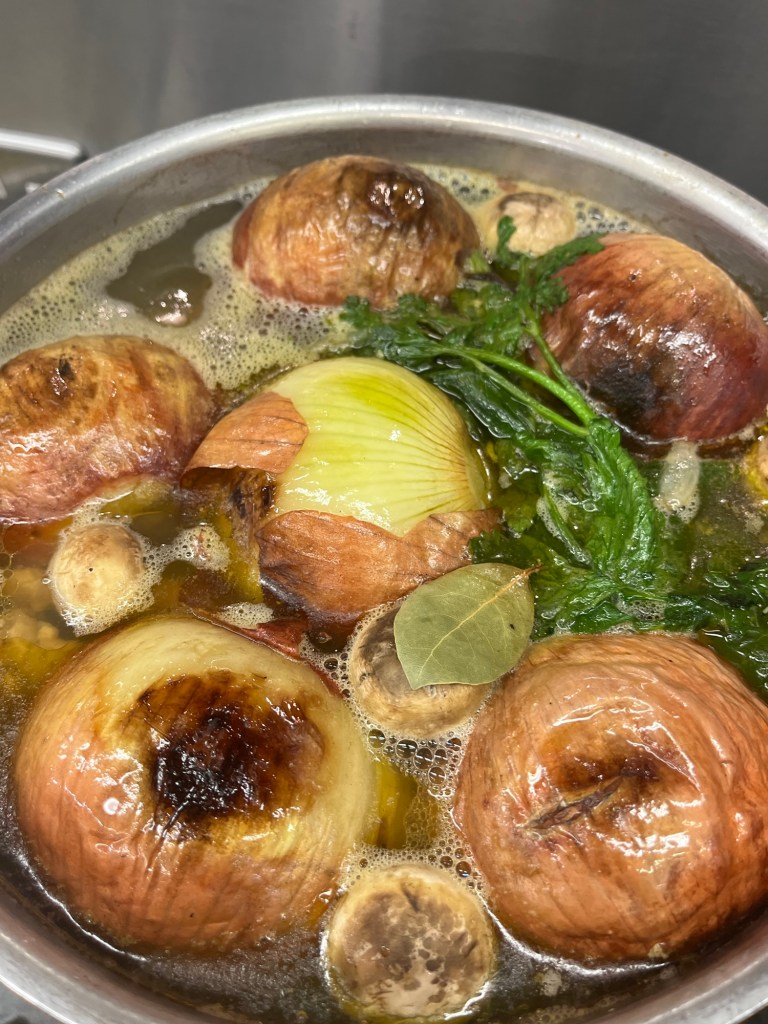
    Thursday was a mammoth all day cook. The time plan alone took several hours to prepare. It was such a great day though, with very tasty food and a real test of our ability to multi-task and, quite literally, juggle plates (and pans!). A couple of days earlier we had made a biga – a pre-ferment used in making focaccia and other Italian breads. It is a mix of flour, water and yeast that ferments for 12-48 hours and then added to the main dough. It improves the flavour and texture of the bread. We started the all day cook getting the main dough ready, mixing it with the biga and leaving it to ‘autolyse’. Autolysing helps hydrate the dough giving the resulting bread a lovely moistness. Meanwhile, we got our brown chicken and veal stock started: carcasses in stock pot with water; and veg browning in a pan. We also prepped some stunning pink rhubarb from Rhubarb Robert for a compote and a puree for our lunchtime service of Barbie pink soufflés. And finally, because we didn’t already have enough going on, we prepared a salty spice rub for our pork belly; and got that in the oven to start its low, slow roast.
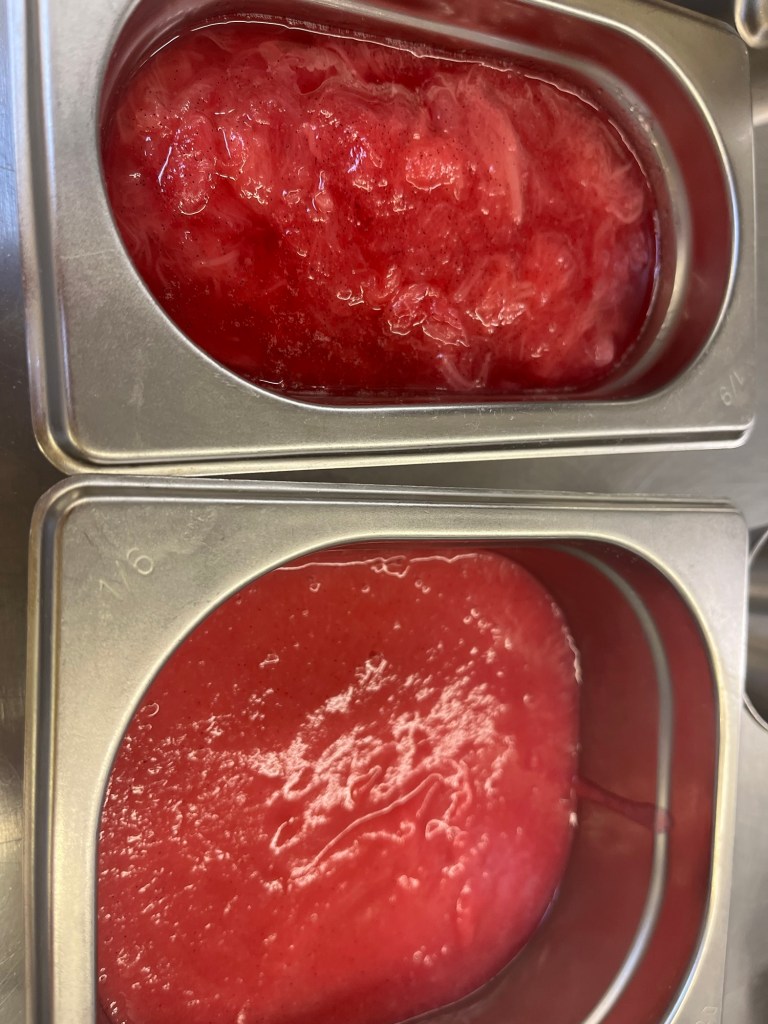
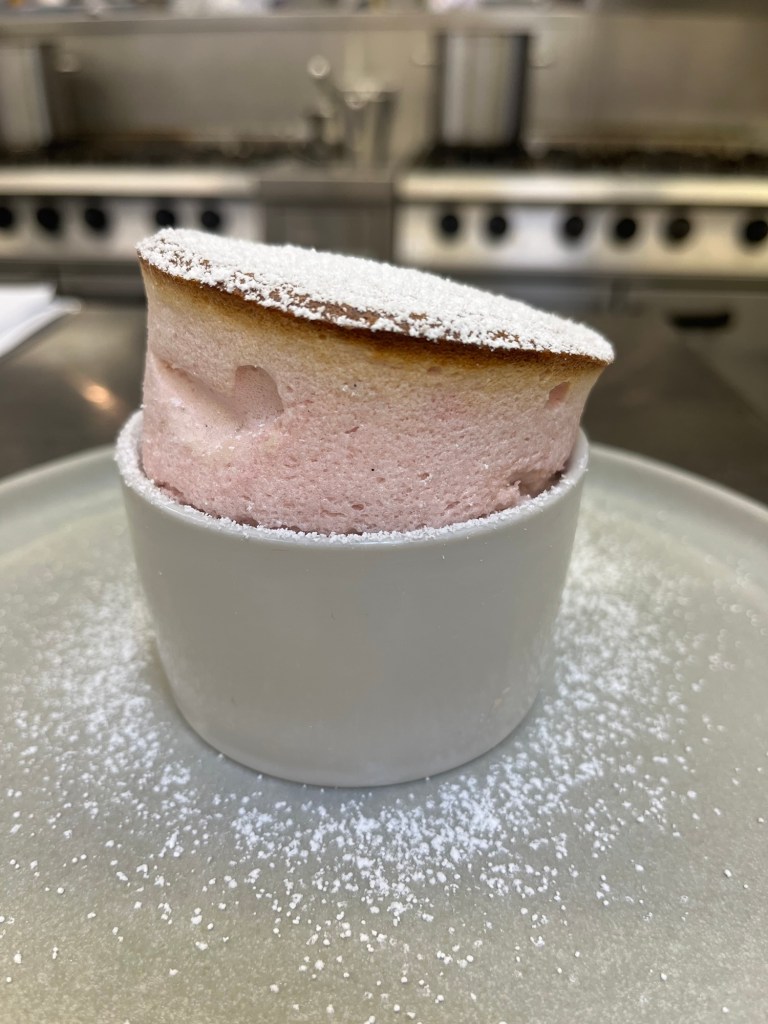
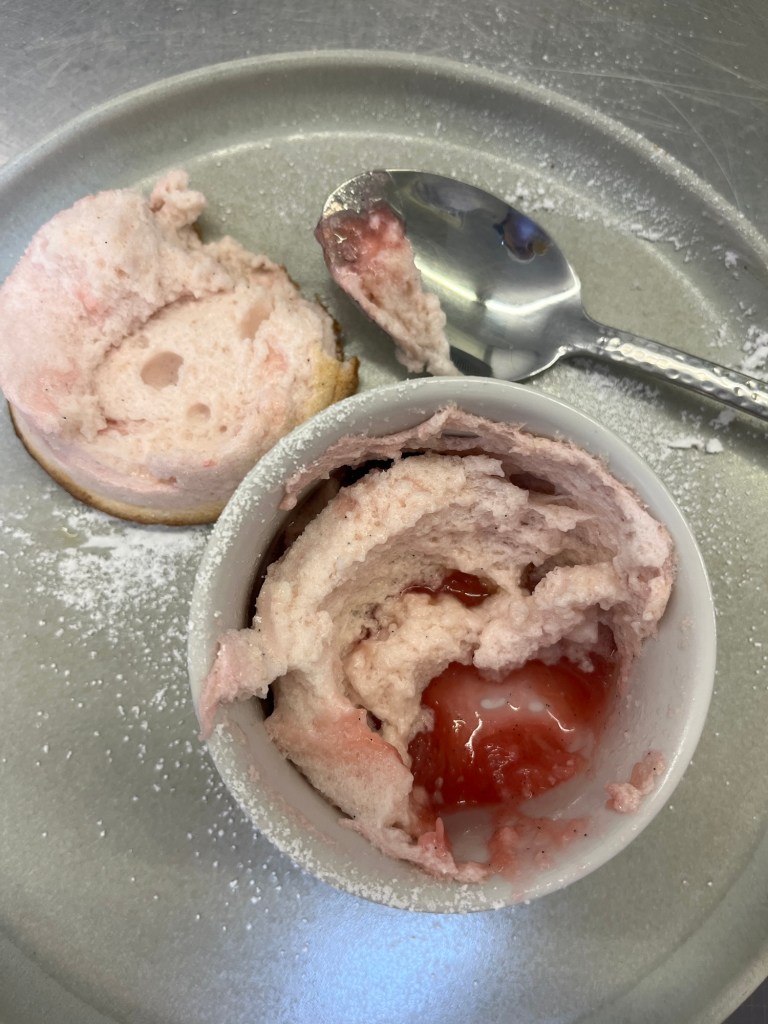
    Somehow we achieved the 12.30 service for our beautiful, light soufflés with hidden rhubarb puree nestled at their base. The perfect pre-lunch snack to get us through the final few tasks before we could take a break. Back from that 30 minute lunch, we were focused on our next service time of 3pm for the pork. Lots of veg prep and knife skills for the accompaniments of a caramelised peanut and chilli sauce and a carrot, mouli and coriander salad. We continued to skim our stock, and progress the seemingly never-ending stages of making focaccia. We also squeezed in preparing, soaking and first cooking of the triple cook chips we would finish the following day. The pace did not let up! Such a fantastic day with delicious food and a vast array of techniques and skills for us to hone and elevate. I was exhausted by the end but very happy.
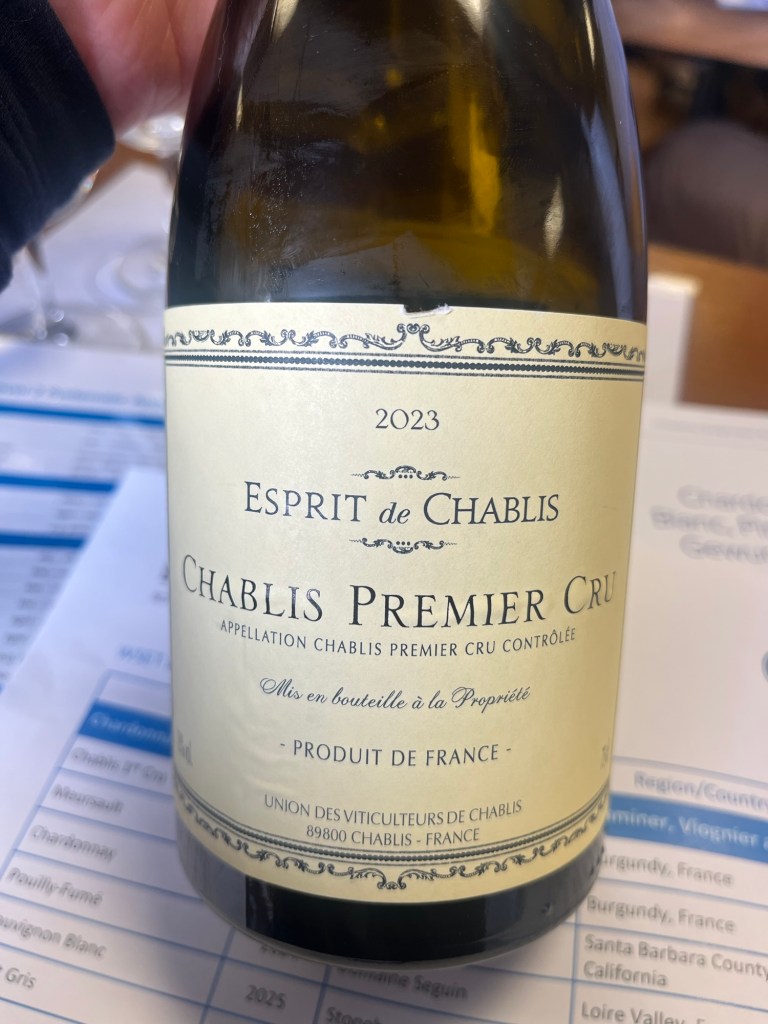
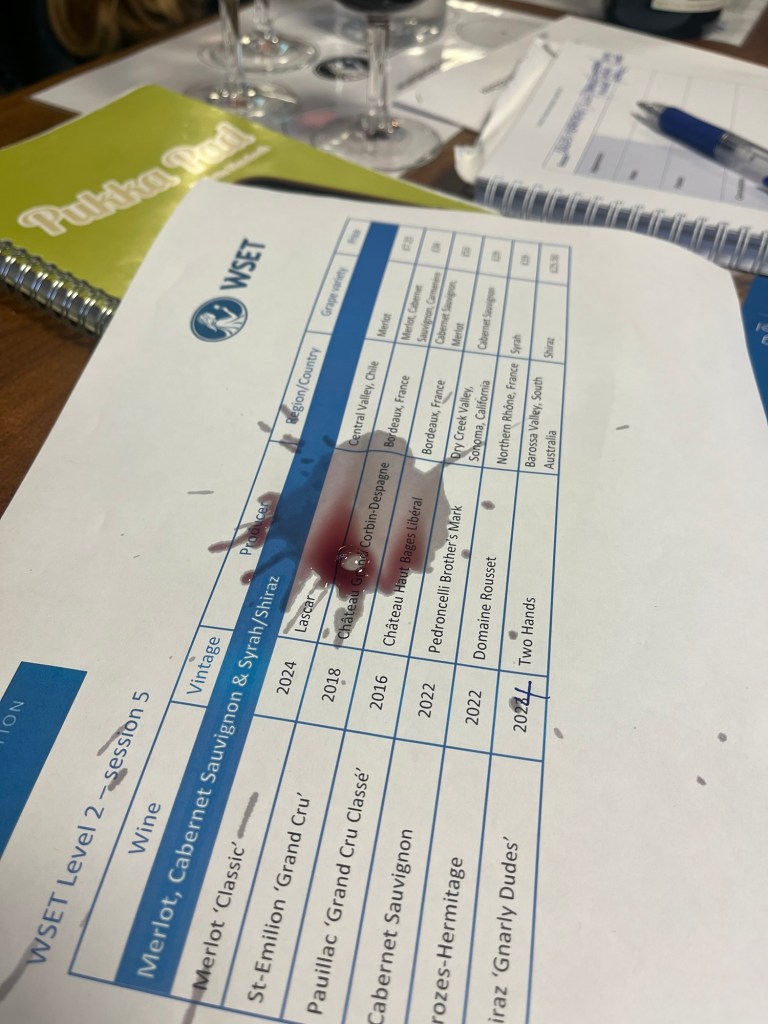
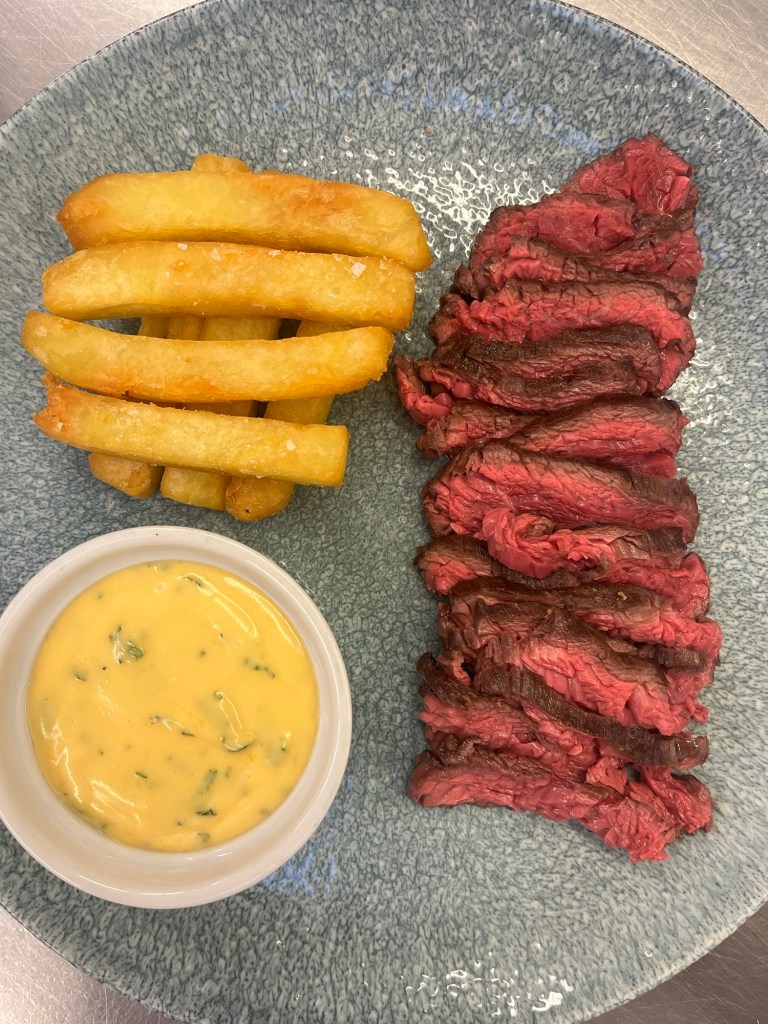
    The week had started with a dem on tender cuts of meat including bavette and pork tenderloin. On Friday afternoon, after a morning of red wine with Marjory (6 bottles to taste before 12.30), we tackled the bavette plus béarnaise sauce and triple cooked chips. Revision of skills of hollandaise sauce and then creating the daughter sauce, béarnaise, with the addition of tarragon and chervil to both the reduction and the final sauce. The chips were cooked twice more, the final time to a golden crisp. And we charred and caramelised our bavette to medium red and sliced thinly against the grain. ‘Gorgeous’ was how my teacher described my chips. I’ll take that! A super end to a packed and enriching week.
  • Another week and another looooong list of skills practiced and dishes executed: pate sucree, soufflé by creme pat method, slow egg cooking, fish stock making, liver prep and cook and round fish gutting, filleting and de-boning. Plus a delicious soporific bread dem, offal and fish dems and two afternoon wine sessions covering white, sweet and rose wine.

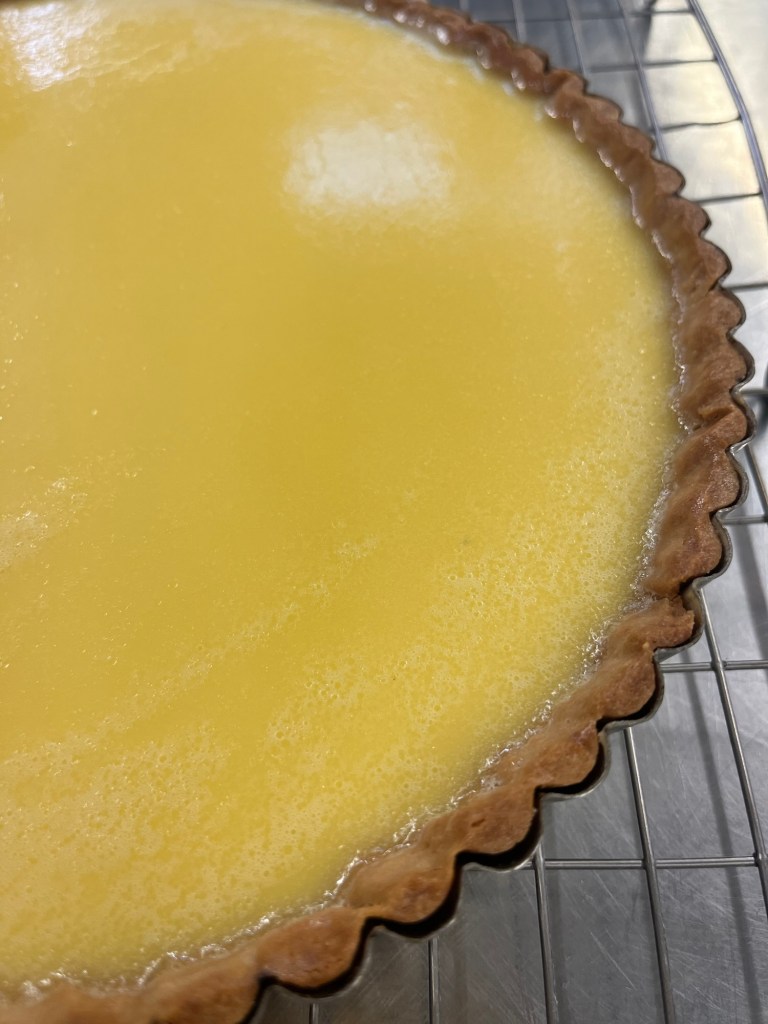
    Kitchen-wise we started the week sweet and ended savoury. Monday was a relaxed and mindful prep session. Revision of pate sucree, this time with the easier task of lining a large fluted tin (the small tins are so fiddly!). I made a lot of creme anglais over Christmas (mostly with large slugs of brandy added) but no creme patisserie. So it was good to be reminded of the method and to not be alarmed by the initial lumpiness of the sauce when it is cooking out. The creme pat was to be the base for a praline soufflé which we would make on Tuesday. The praline paste added to the creme pat smelt divine. I was day-dreaming about eating it slathered on toast for the rest of the day. The final prep job to concentrate on (whilst thinking of melting praline) was the filling for our lemon tart. A not too tricky combining of elements but again doing it carefully and with attention being paid to measuring out the exact quantities and not scrambling the eggs.

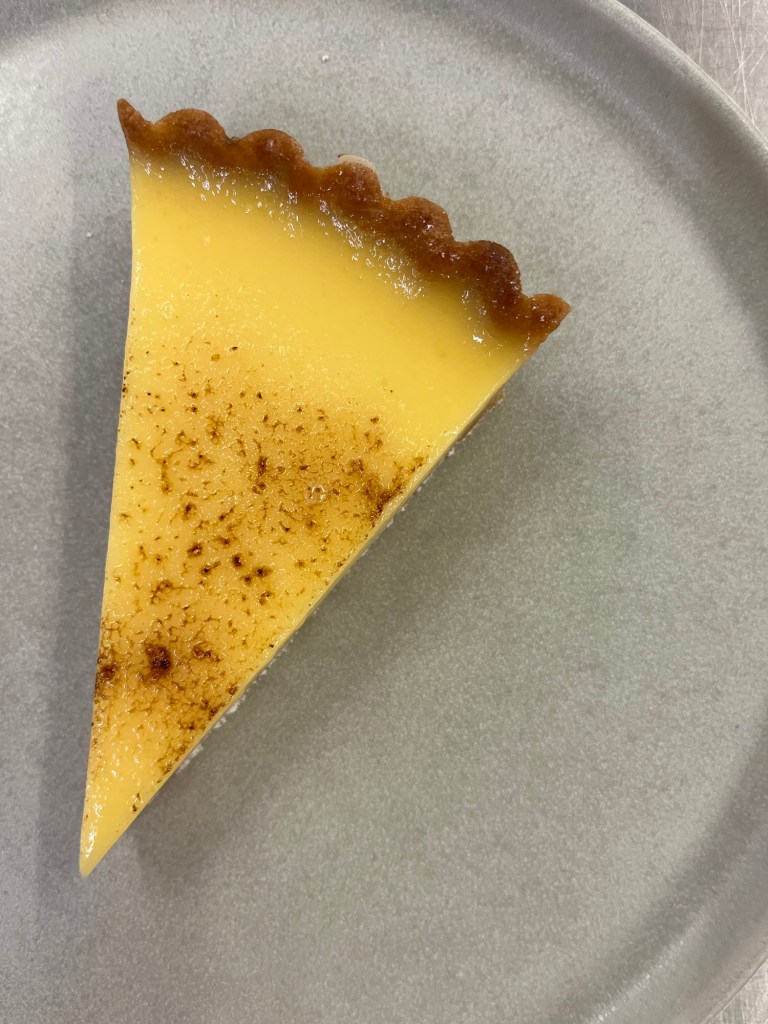
    The earlier start to the kitchen session on Tuesday befuddled us: all we had to do was cook our tart and finish and cook our soufflé. Little did we expect the low and slow cook of the lemon tart would take over an hour, and for some nearly two. Vastly different oven temps for the soufflé versus the tart also slowed things down. But boy were they both worth waiting for! The soufflé ramekin was painstakingly lined, chilled, lined, chilled with melted butter and crunchy demerara sugar. The soufflé was light as air, and almost savoury in its nuttiness. As the spoon plunged to reach the now melted butter this was offset by the softened grains of brown sugar which provided a heady richness and sweet hit. A luxurious balance. Spooning the raw mixture into the ramekins was a somewhat less splendid experience; and one that requires practice. My ramekins were covered in soft egg mix and with hands the same getting the ramekins cleaned up was something of a trial, but I got there. Apparently previous students have been known to inhale three cooked soufflés immediately out of the oven. I can’t claim to have achieved such a feat but I did thoroughly enjoy devouring one as an entirely unnecessary pre-lunch treat. On to the tart…half-way through blind-baking my tart case revealed an irritating crack on one side. In some ways though this was fortuitous as I learnt how to patch and melt over the crack with some leftover raw pastry. This, together with filling the case with the lemon mixture, managed to conceal the crack entirely. A final blow-torching to brûlée the top resulted in a pleasingly professional finish.

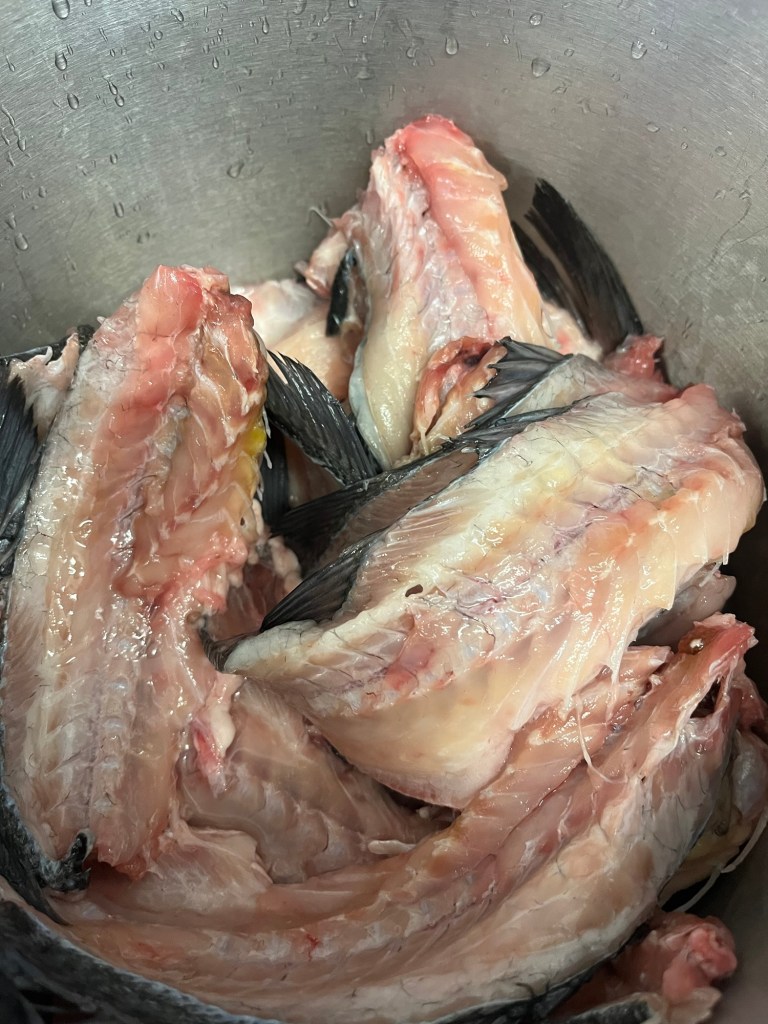
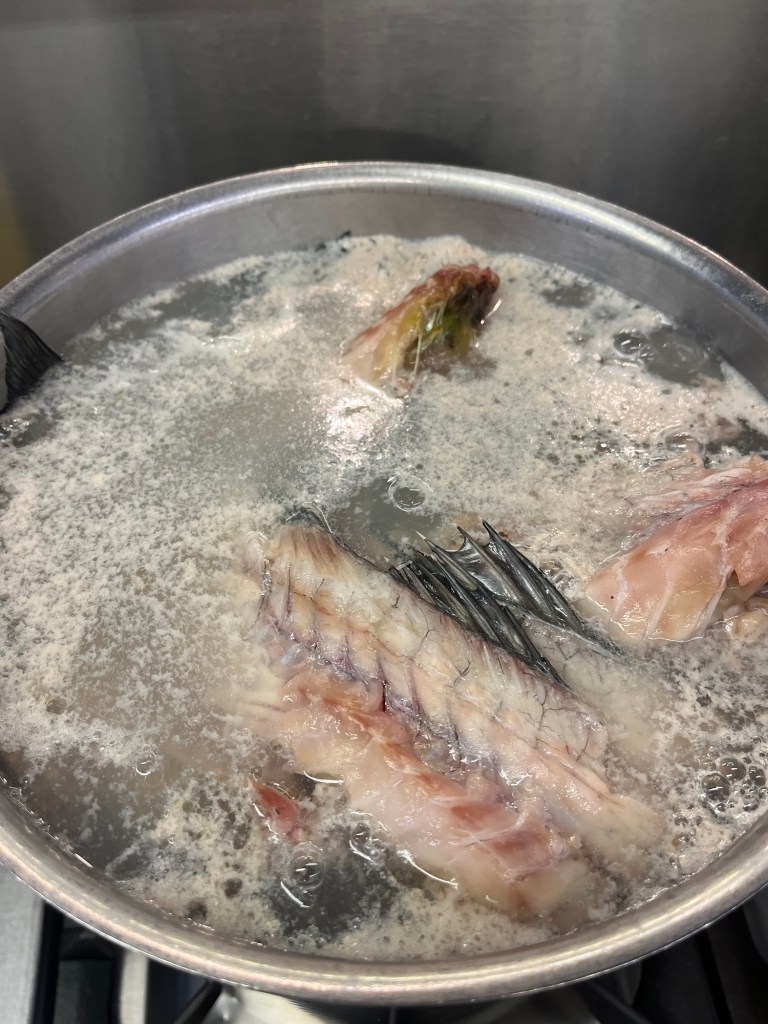
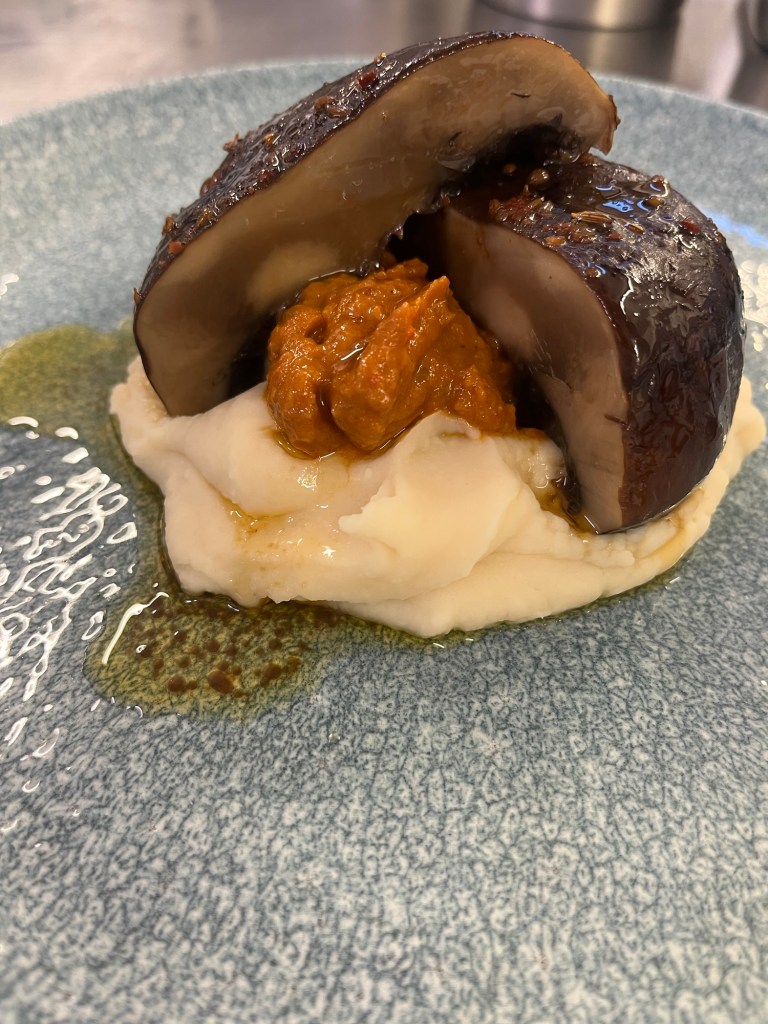
    Wednesday marked the switch to savoury: slow-cooked portobello mushroom and separately fish stock for use on Friday. The aroma in the kitchen was rather pungent. The mushrooms were nestled in an aromatic selection of spices which was later blitzed to create a pungent, chunky sauce and separate liquor to drizzle. A butterbean mash provided a creamy foil to the punch and heat from the sauce. Meanwhile, it was our first time making fish stock. It was quite something to be presented with the frames of eels and various fish at 9.30am. 3kg of frames were washed and pushed into a large stock pot together with veg and aromatics. Cooking time for a fish stock is shorter than for a meat one so we also had time to strain and reduce it down to a usable concentration.

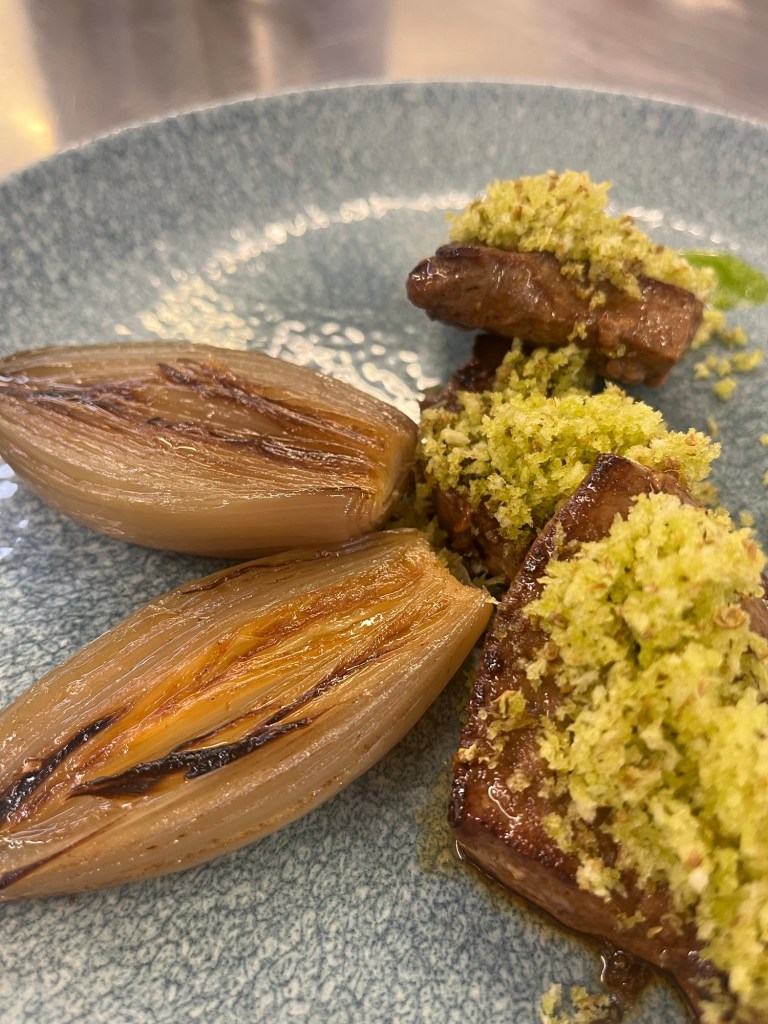
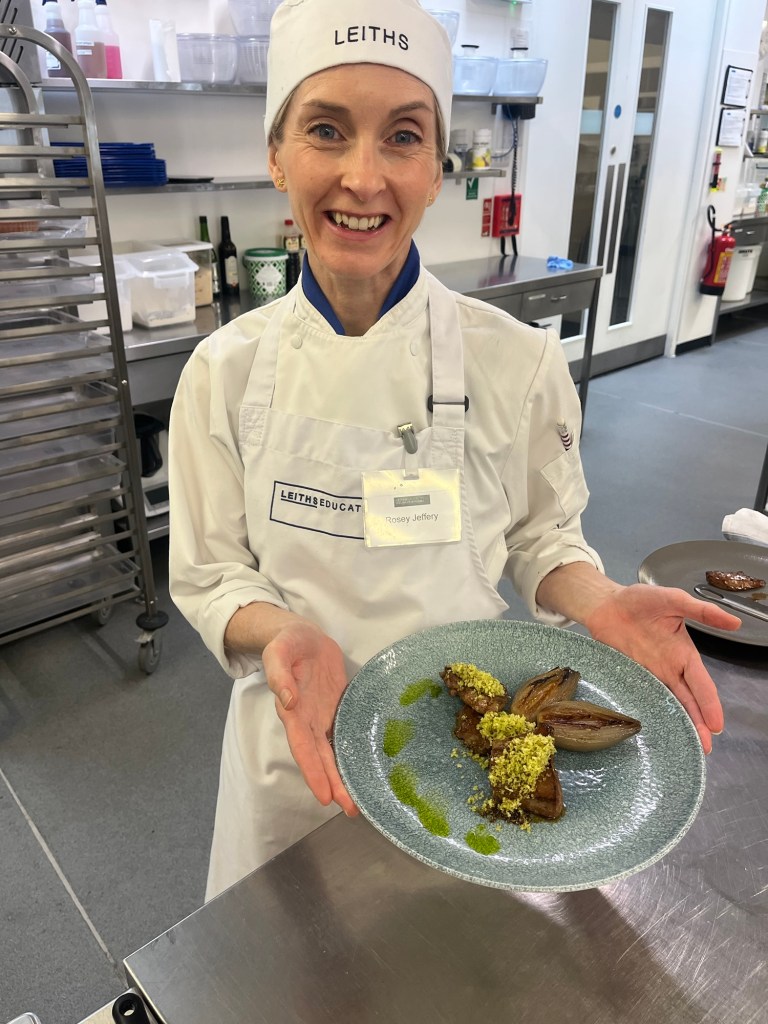
    It’s fair to say there was limited enthusiasm for Thursday’s calves’ liver cook. However, I was very pleasantly surprised. I really enjoyed the cooking session and the resulting plate of food was well balanced with an array of salty, sweet and savoury flavours. The liver was also considerably more palatable than anticipated. In part thanks to the tare sauce which was brushed liberally on the cooked meat. Tare sauce is a savoury-sweet Japanese glaze made by reducing soy, mirin, sake and sugar with shallots, garlic and ginger. It is often used to provide umami to ramen, and will be delicious brushed on salmon or chicken. As a table we also made a vibrant coriander crumb. First we created a coriander oil with a blanched bunch of coriander plunged into ice water to set the colour and then whizzed in a Thermomix with rapeseed oil. We combined the oil with freshly toasted and crushed coriander seeds and panko. It provided a shock of colour and texture to an otherwise soft and brown dish.

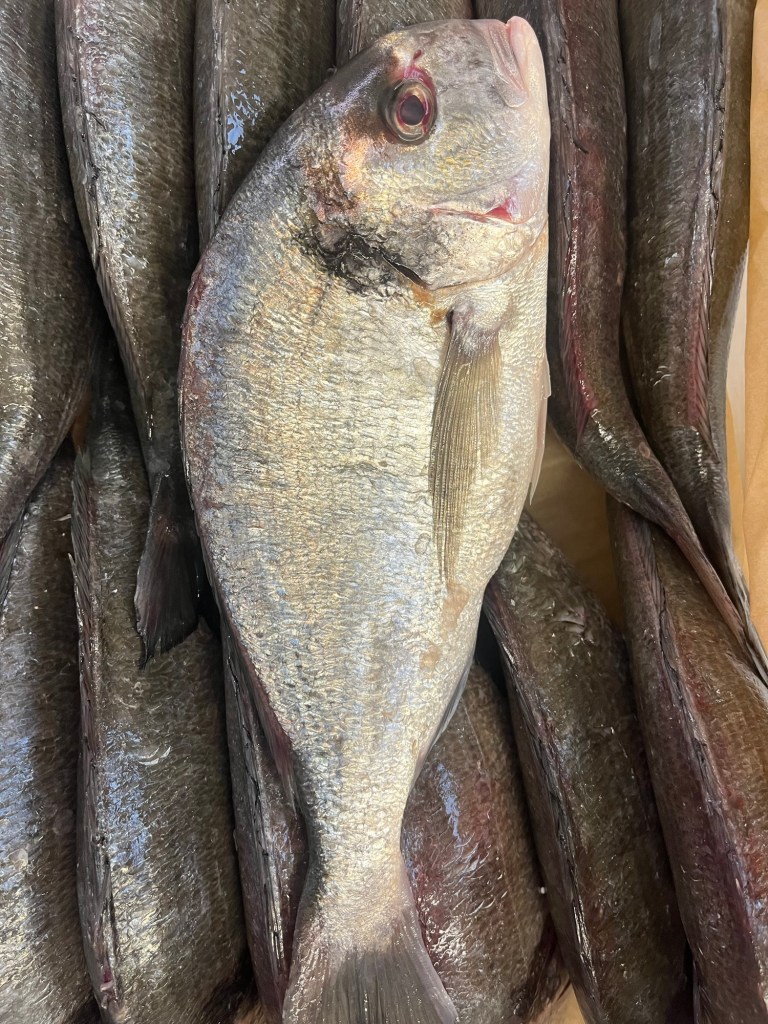
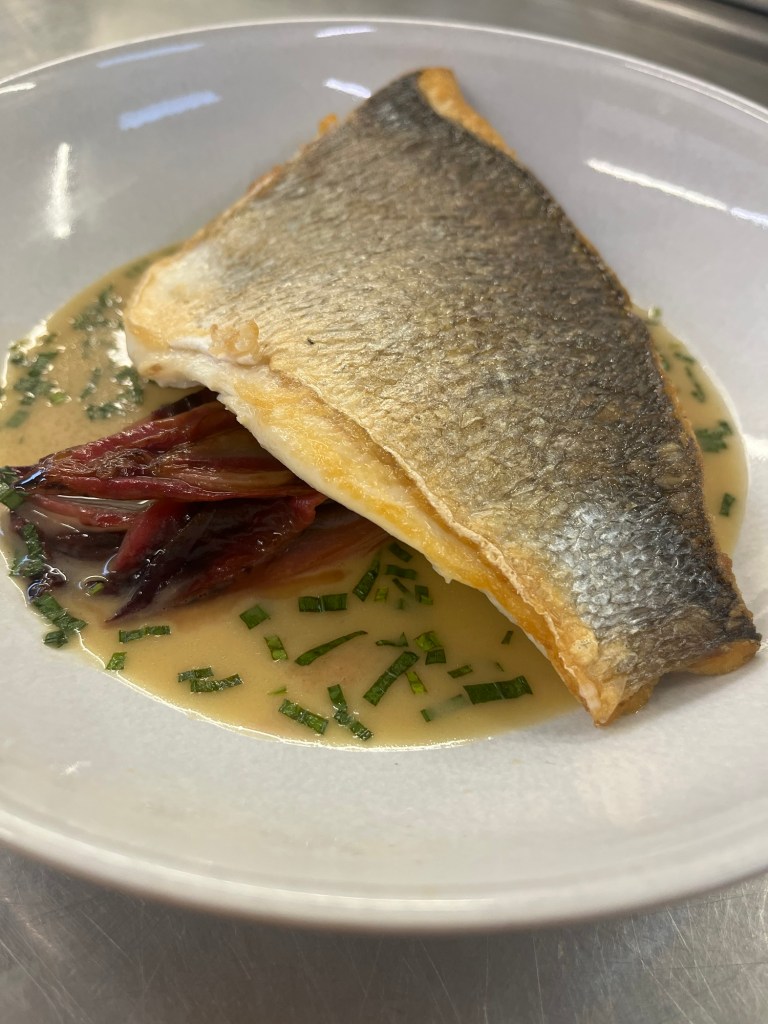
    Fish on Friday and it was a sea bream to fillet for the first time. Blue protective gloves were definitely advised for the gutting stage. I found filleting a round fish slightly trickier than a flat fish with the shape of the rib-cage more difficult to navigate without damaging some of the flesh. We served the bream with an intense white wine, cream and tarragon sauce, with our fish stock from earlier in the week providing a real depth of flavour. Also on the plate was chicory braised in butter, verjus and lemon thyme. Cooking the fish with juicy flesh and crispy skin was the final task. My test piece was over-crisp and my service piece was not crisp enough. Practice makes perfect!

    The most enjoyable dem of the week was bread with Grace. Some revision of bread-making technique from foundation but for three new breads: focaccia, potato bread and a walnut and raisin loaf. The potato bread was brioche-like in its softness but without the sweetness. And the fruit and nut loaf was incredibly more-ish served with whipped butter and a drizzle of honey. We’ll be attempting the focaccia next week including the new technique of creating a biga in advance.

    I ended the week tired but exhilarated; full to the brim with new techniques and flavours. On the horizon for week 4, our first formal assessment of the term and our first all day cook with an alarmingly long (and delicious) list of dishes to produce in a 6 hour window. Leith’s keeps pushing and we keep learning 🙂

  • Inspiring, daunting, intense yet light. Week two had lots of different things going on eliciting a range of feelings.

    A highlight of the week was a careers day organised for us by Leith’s List Connect careers service. All of us felt nervous about the ‘room of opportunities’; fearing voicing our ill-formed plans of what we want to do post-Leith’s bubble to potential employers. Following an insightful talk from Hello Fresh, I felt spurred on to venture towards the employer stands. I was inspired by the ladies from Nourish Hub: a social enterprise which brings food and company to anyone needing subsidised sustenance of mind, body and soul. Every day the Hub creates a 3 course lunch from ingredients that would otherwise go to waste, for a minimum donation of £3. They also offer cooking workshops for children and adults teaching important skills for life. My interest was also piqued by a talk from ex-Leith’s student/teacher, Megan Coker, who now works for Dinner Ladies. What began as a supper club founded by two women is now a well-established large caterer of dinners and events in venues such as the Apothecaries’ Hall in the City of London. Key take-aways from the day: get the CV updated to be relevant for my new world and start reaching out for work experience.

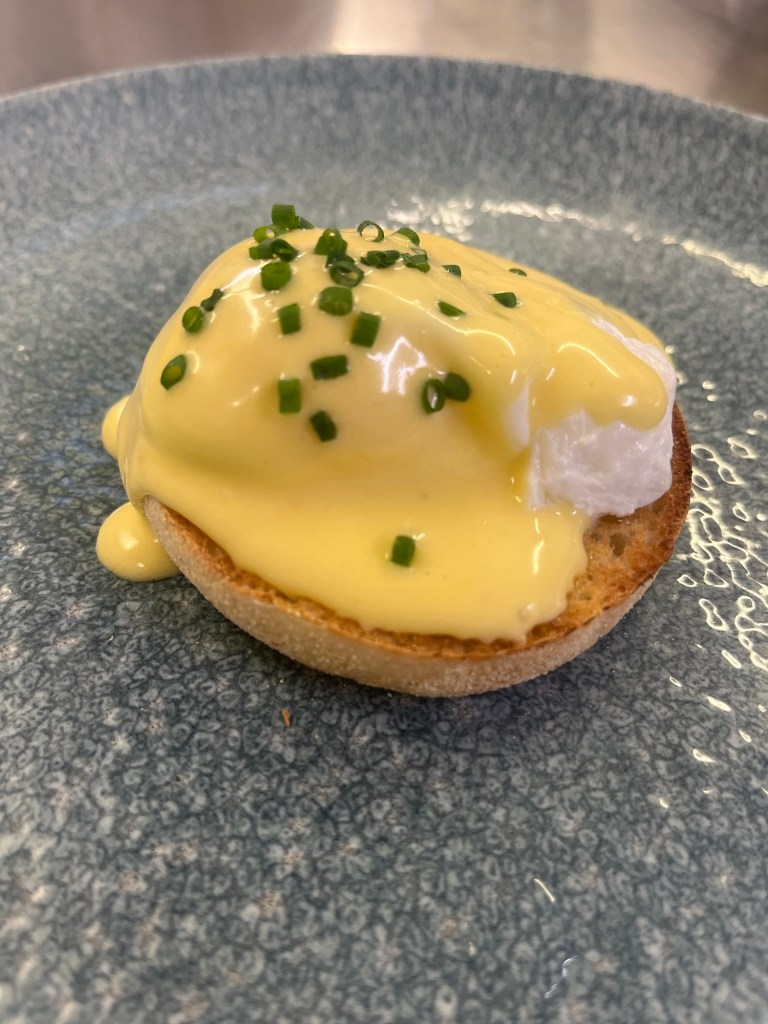
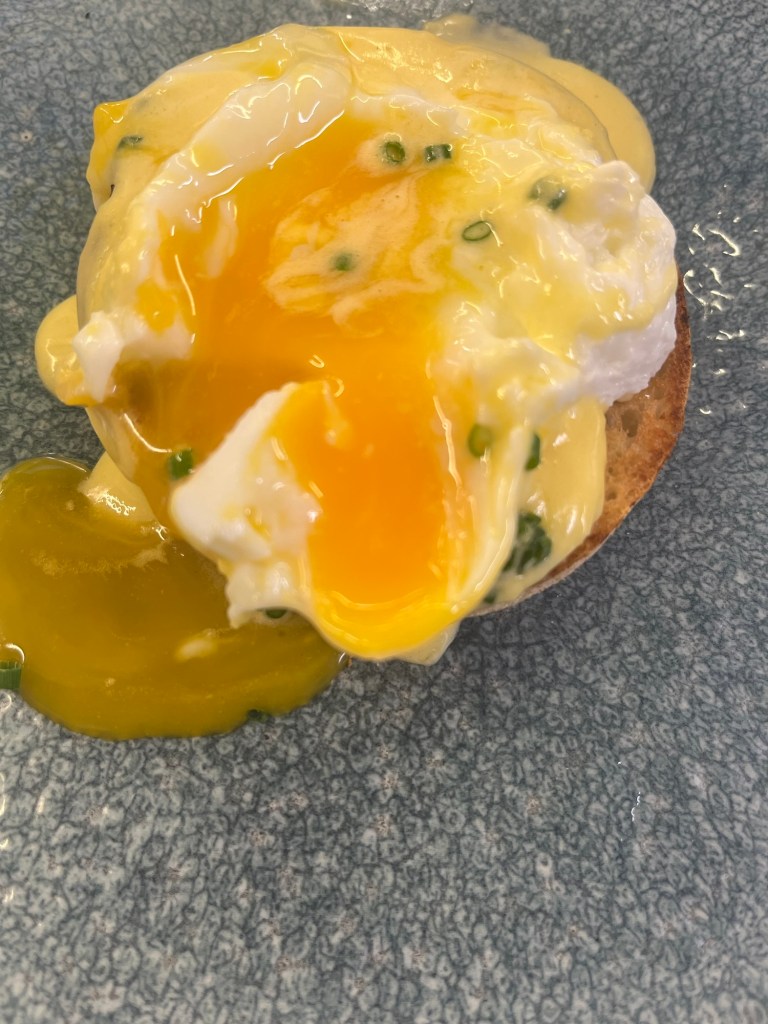
    Our cooking sessions this week were very much focused on nailing specific skills, some of which were revisions of technique from foundation term being taken to the next level. Monday was Hollandaise sauce. A similar sort of technique to mayonnaise by hand i.e. continuous whisking with one hand whilst slowly dripping in fat with the other in order to create an emulsion. As per usual Leith’s teaching methods, we were starting with the by hand rather than machine method, known as sabayon. Egg yolks (flavoured with a reduction of bay, mace and peppercorn) are whisked over a Bain marie until thickened. The Bain marie can’t get too hot or you’ll have scrambled egg; not hot enough and nothing will happen. Once thickened, the eggs are removed from the heat and melted butter (don’t ask how much!) is slowly drizzled in to make, what is known as, an unstable emulsion (unlike mayonnaise which is stable). It can hold for around half an hour before starting to separate so long as it’s kept warm. That left just enough time to poach some eggs, snip some chives and toast a muffin. It would have made the perfect lunch but alas we were afternoon kitchen and most of it ended up in the bin 😦

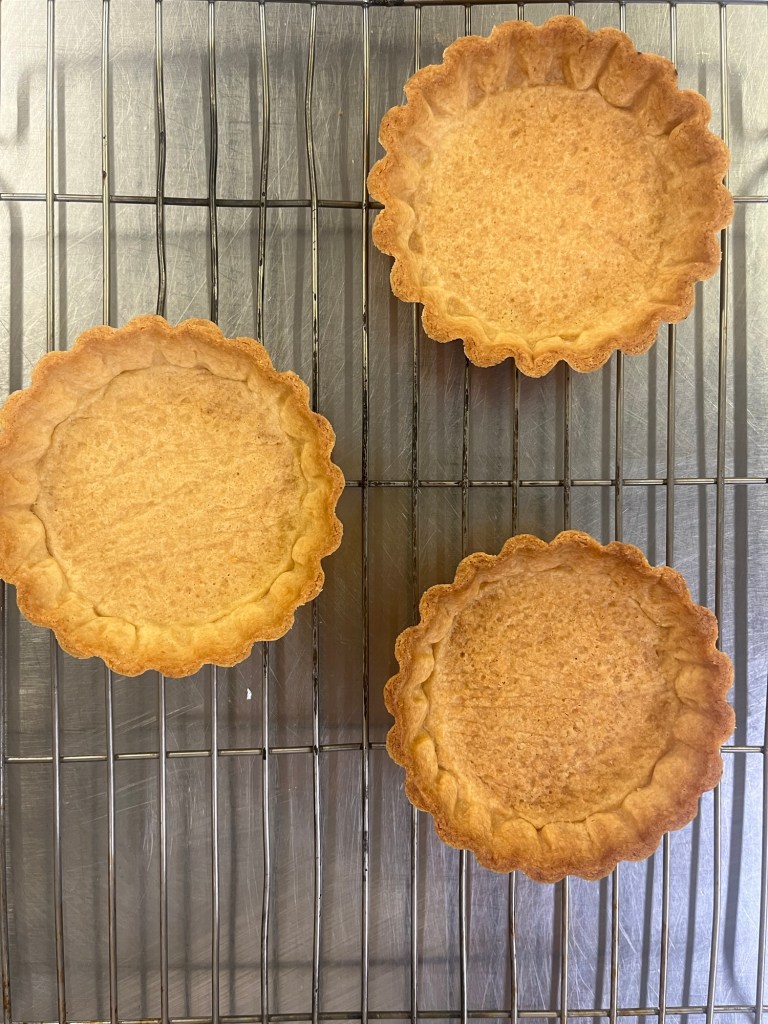
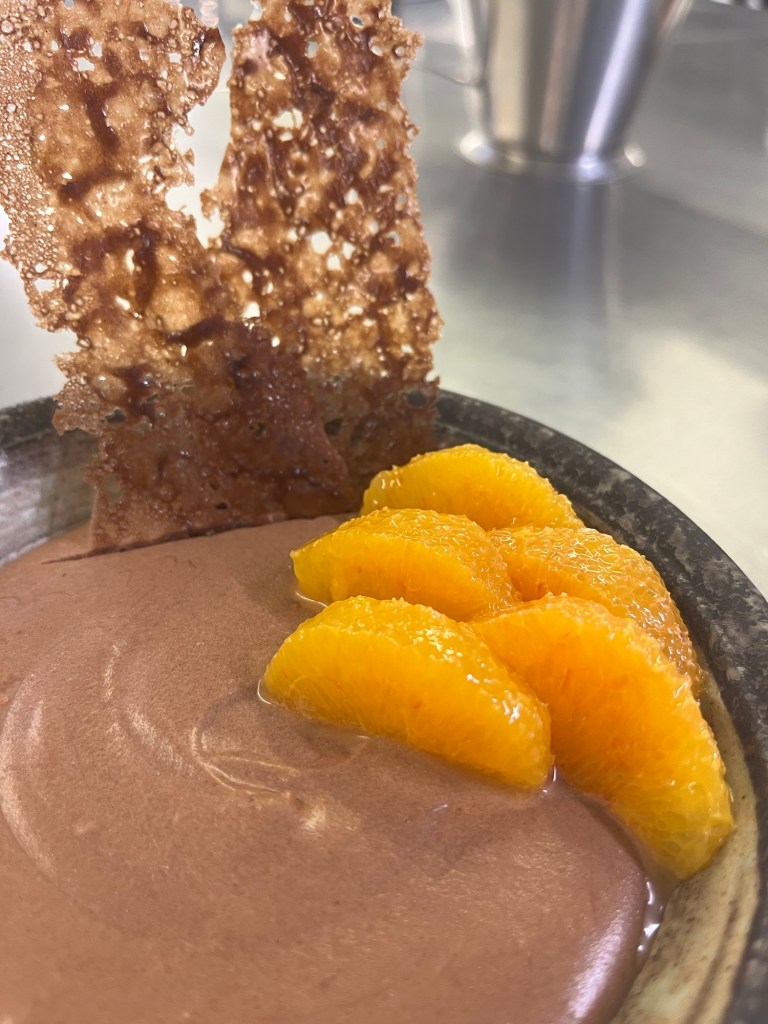
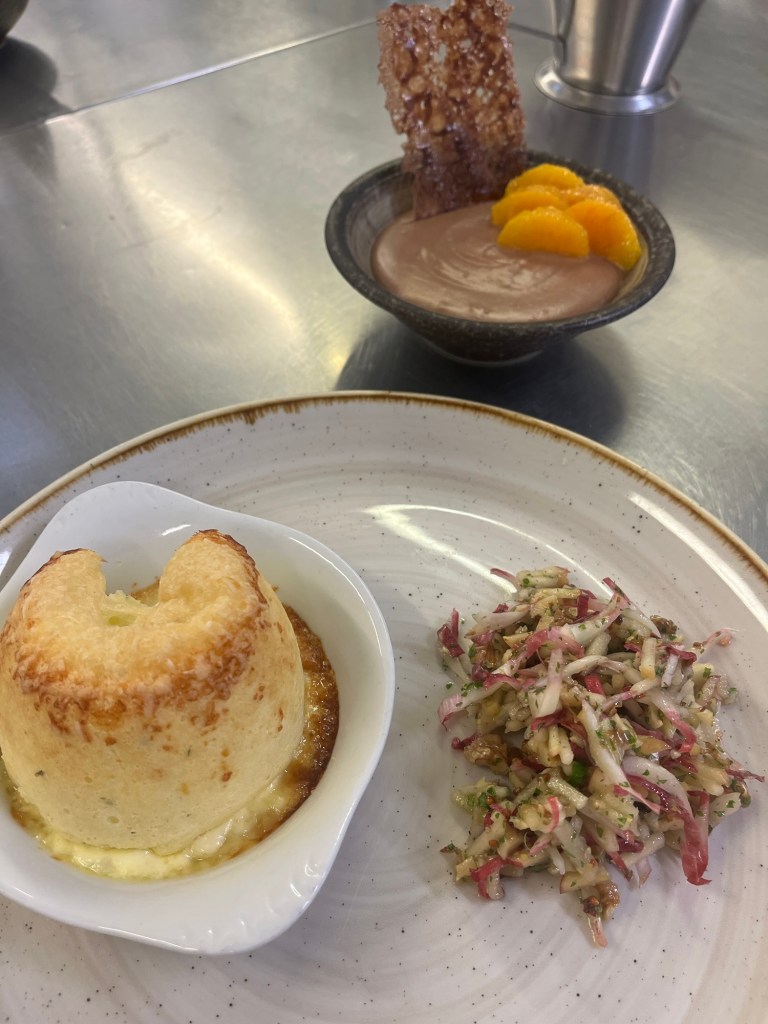
    Some serious patisserie was on the menu later in the week. Practicing pate sucree and lining small fluted tart cases; a chocolate mousse using the pate a bombe method; a thin and crispy chocolate tuile biscuit; and lightly poached blood oranges to cut through the richness. The pate sucree tart cases remained unfilled but made the perfect biscuit accompaniment to a cup of tea so didn’t go to waste. We were also taught Paris Brest and chocolate truffles which we’ll attempt later this term.
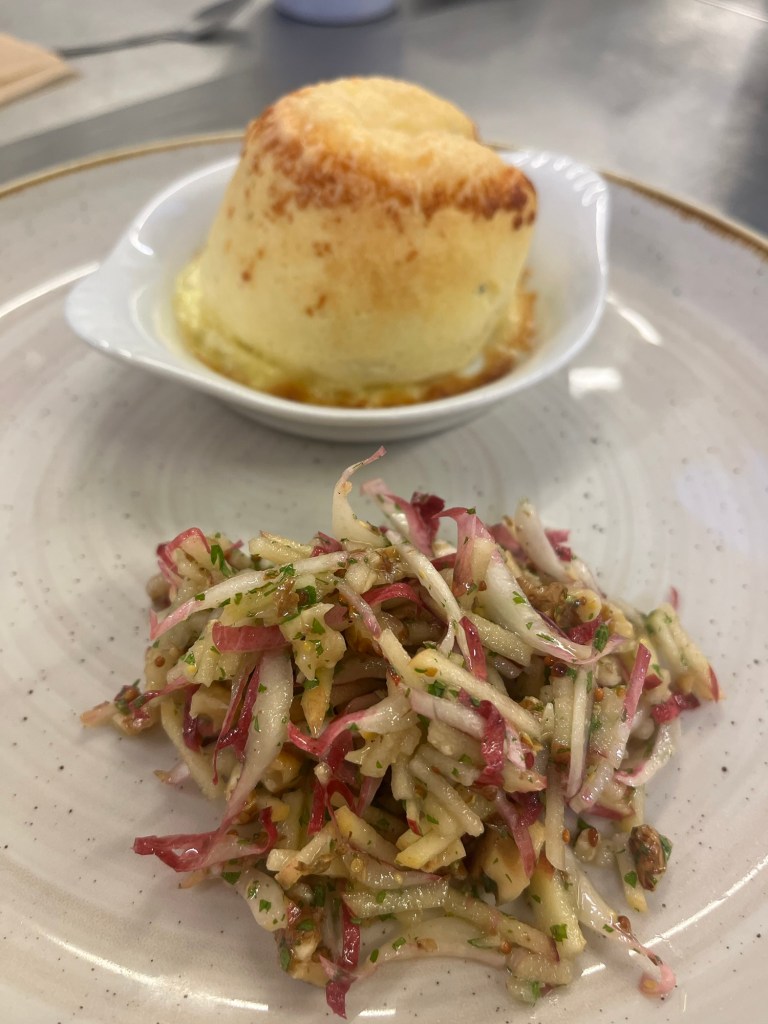
    Friday was our first go at a soufflé: twice-baked goat’s cheese and thyme. Light, yet rich and flavoursome served with a fresh and crunchy apple, walnut and chicory salad. This, followed by the mousse, made for a crowd-pleasing start to the weekend.


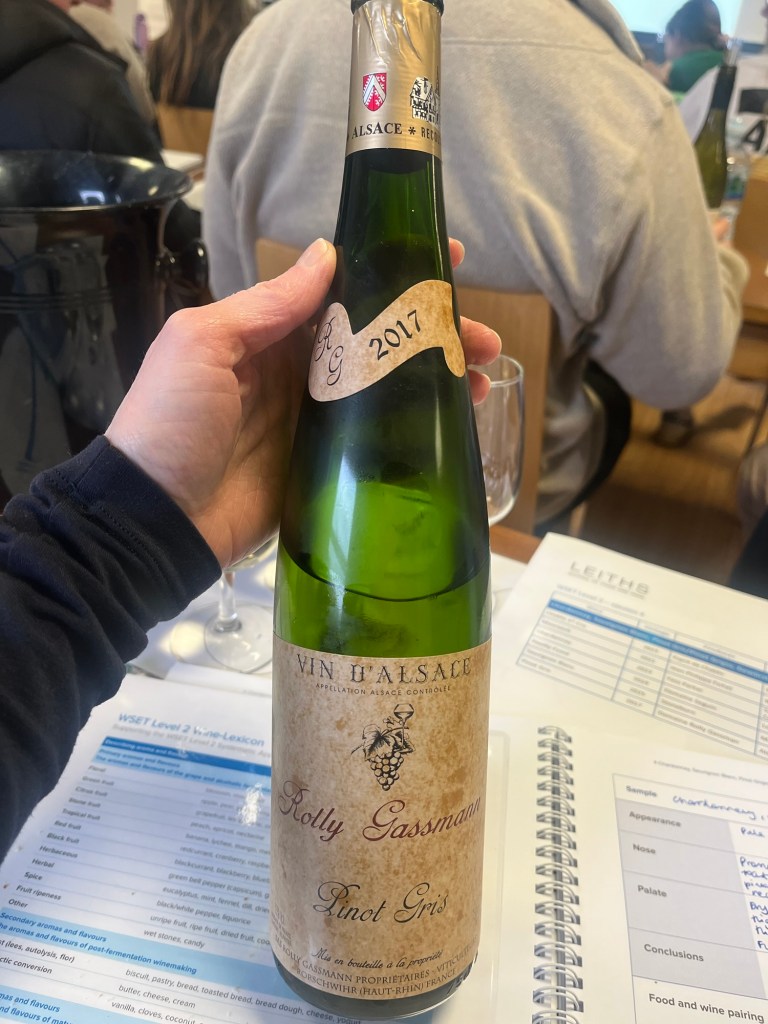
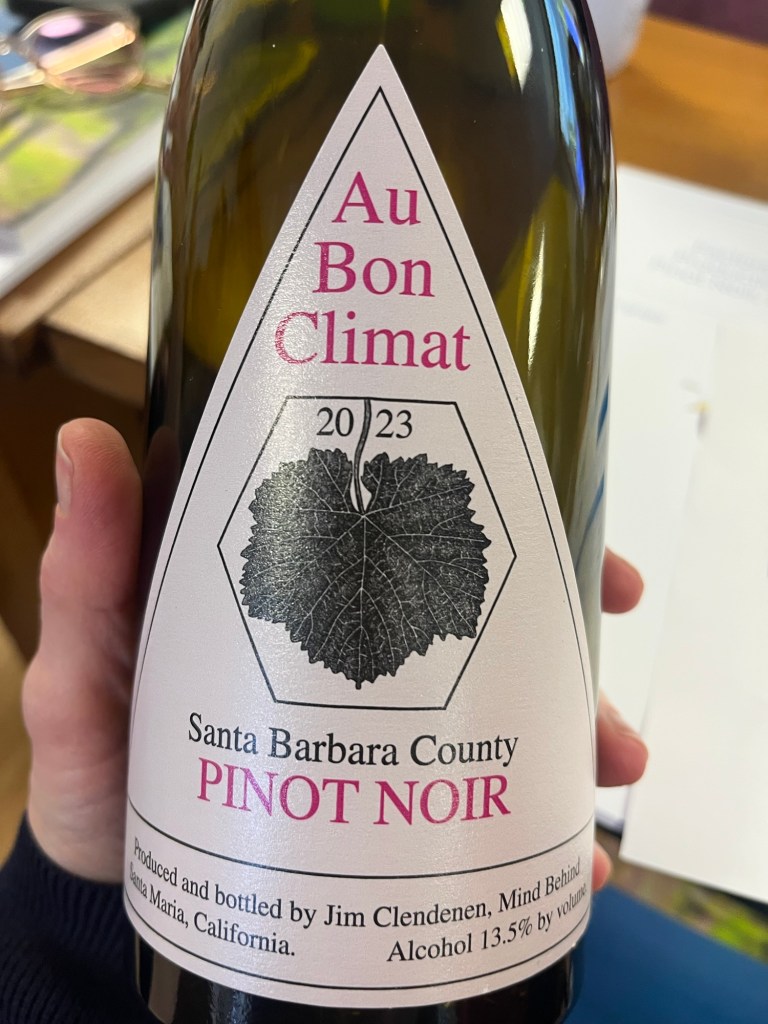
    WSET Level 2 kicked off in earnest with 5 wines to taste on Monday before 12 noon and 3 more on Friday morning. Thank goodness for the spittoons! I don’t drink red wine but the Zinfandel from Sonoma County could be the wine that breaks me. Also good was a Pinot Noir from Santa Barbara and a Gerwurtzraminer from Cave de Turckheim in Alsace. This final wine led to a small day dream about a road trip to the cool yet sunny climbs of Alsace….one for post-graduation perhaps.

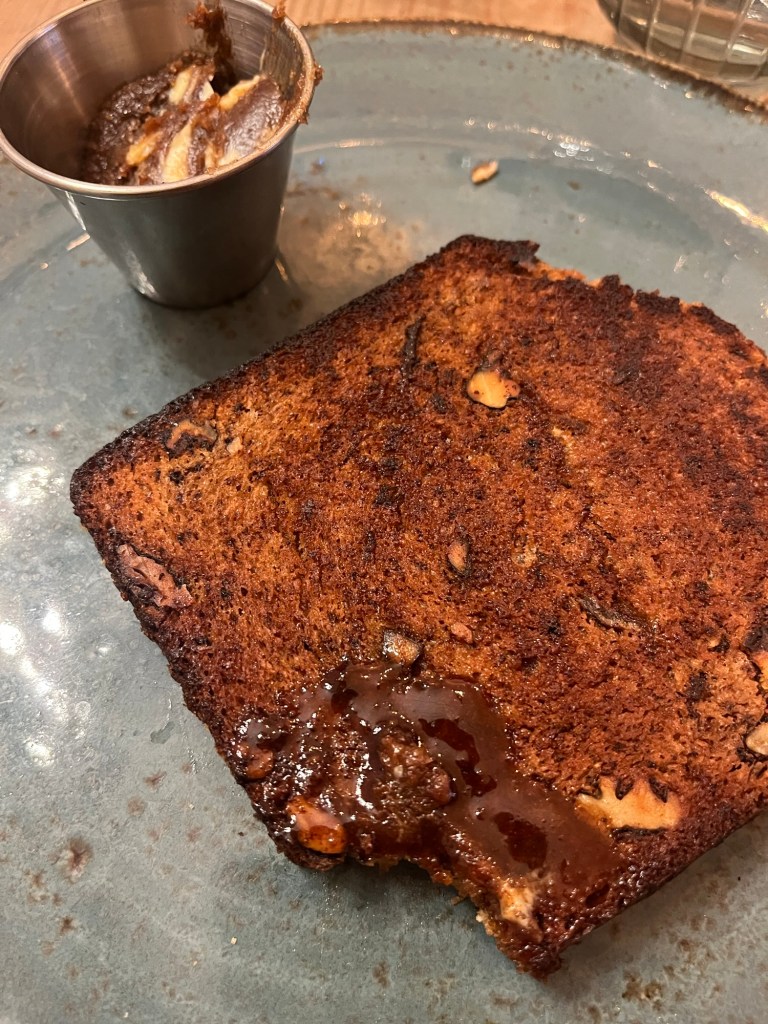
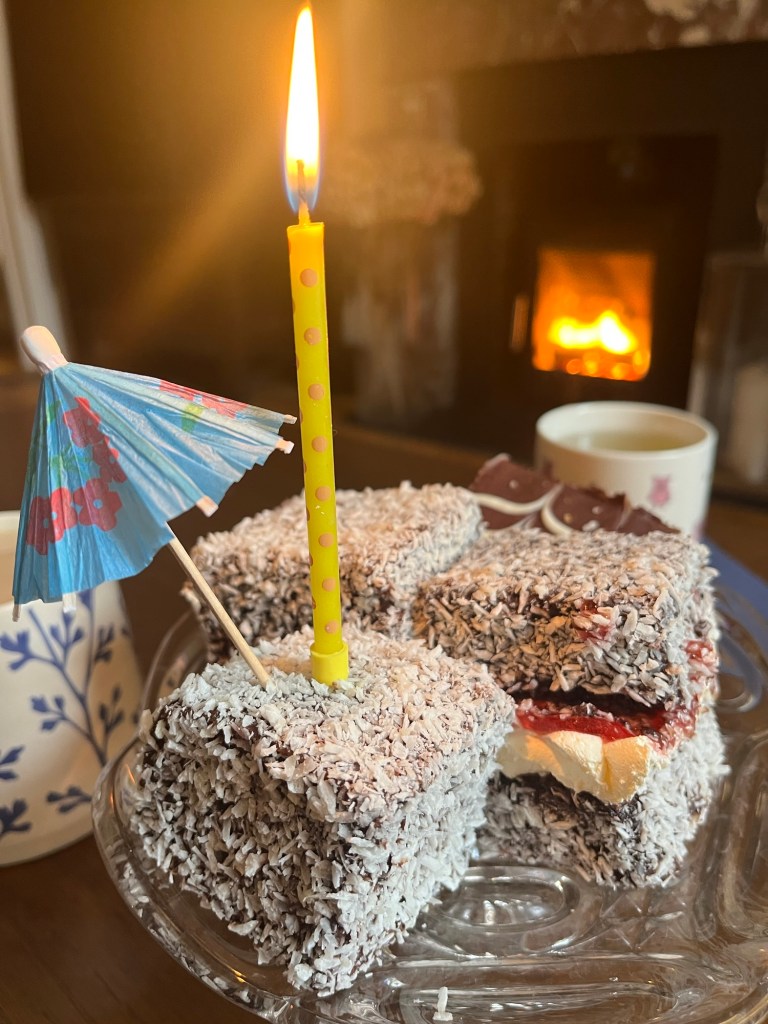
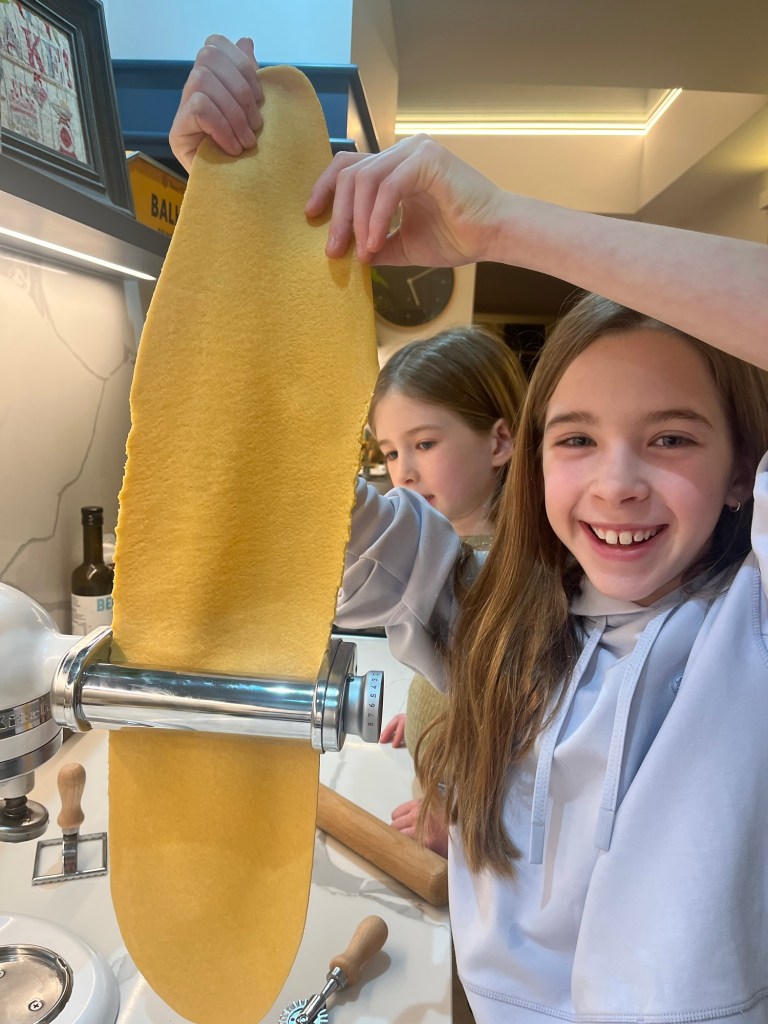
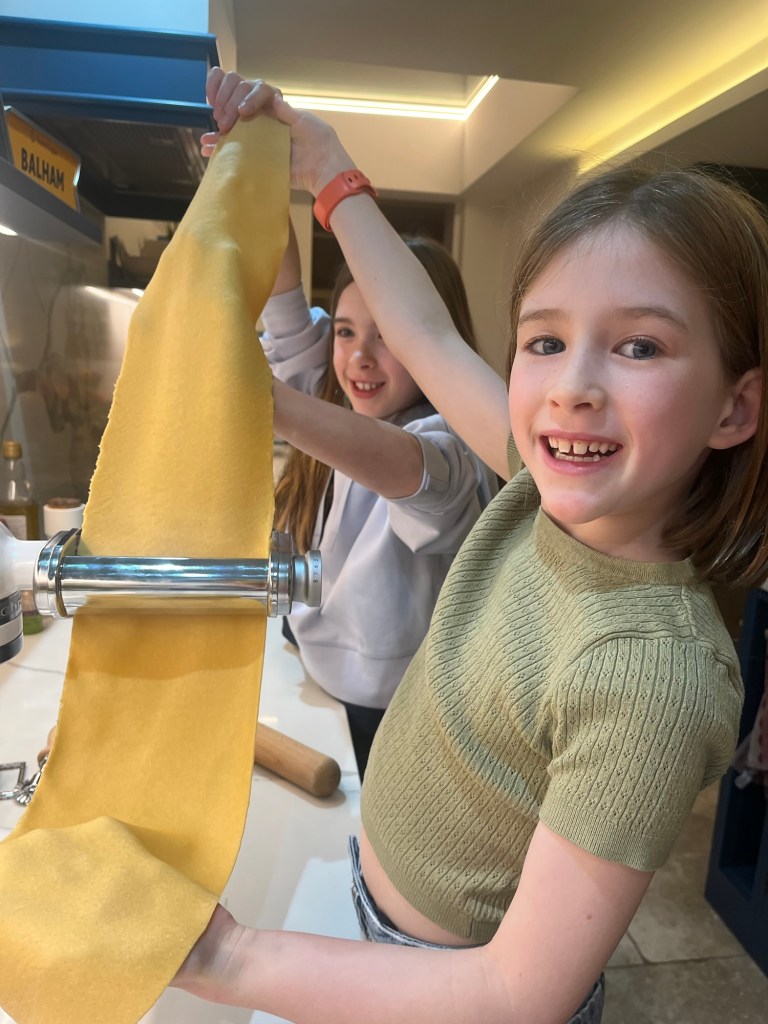
    At the weekend it was my birthday, and we had great fun making pasta and turning it into ravioli with a ricotta, lemon and nutmeg filling. Other foodie highlights were the Lamingtons from the local New Zealand bakery and toasted banana bread with cinnamon butter for breakfast.

  • Back to school and I couldn’t be happier. After a very long break, the anticipation had been building as we received the recipe pack and draft curriculum for the term. Frightening and exciting in equal measure.

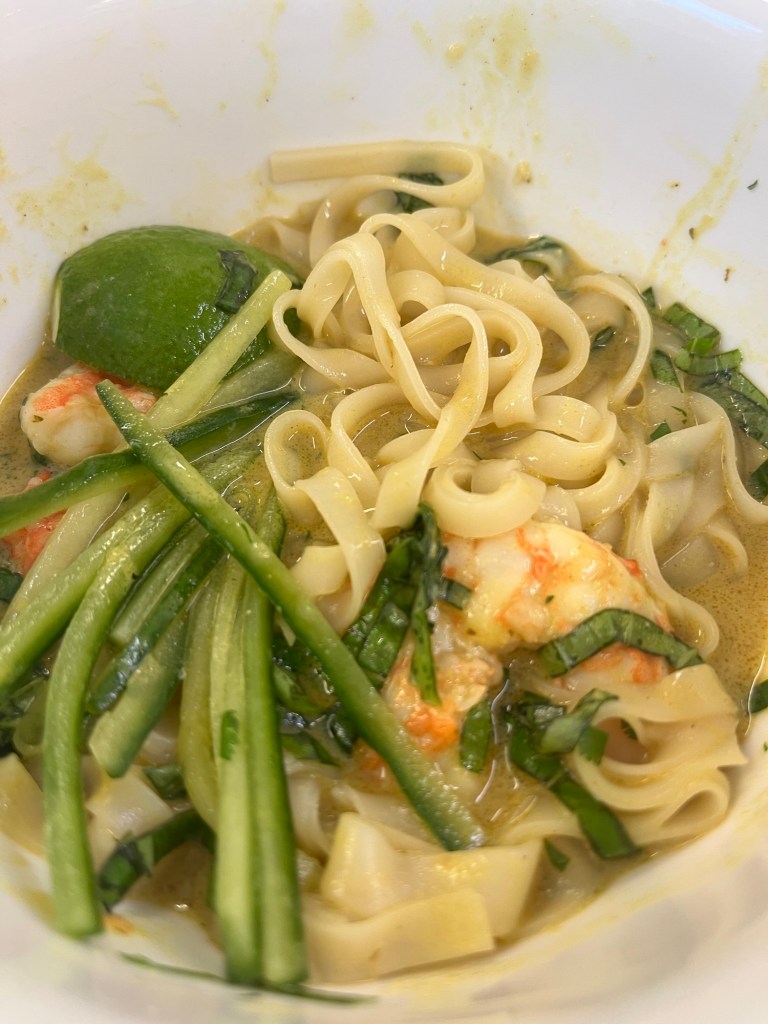
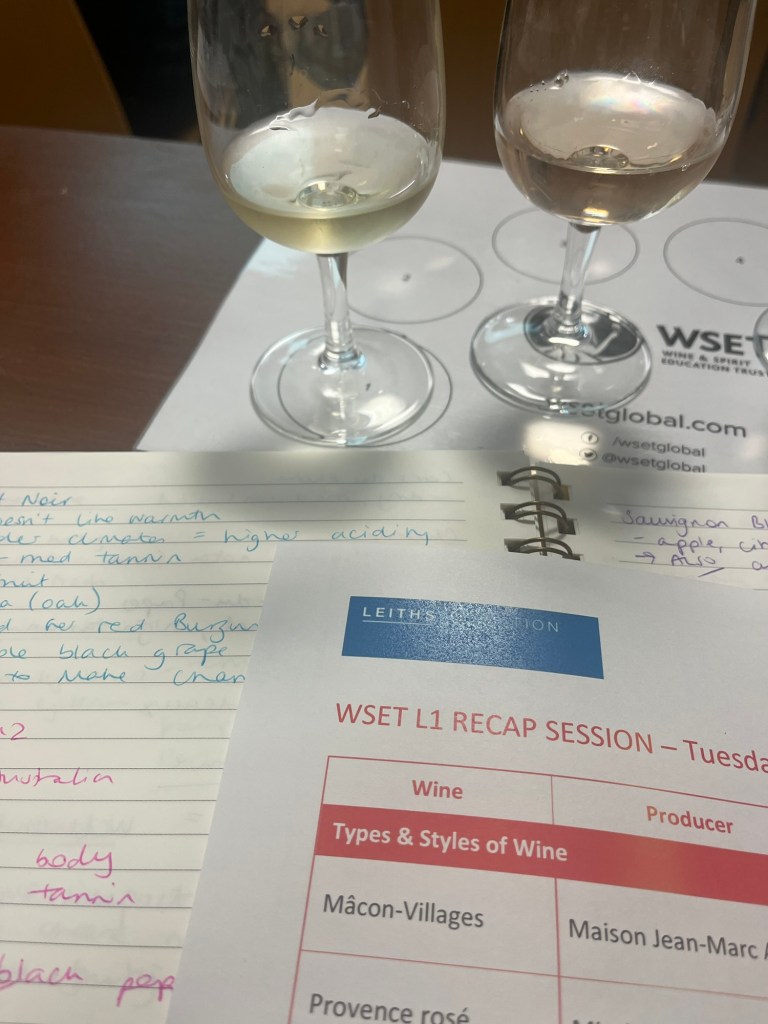
    Straight back into the kitchens on Tuesday morning. And there was a subtle yet definite shift in expectation from the teachers. So long chatty vibes of fountain term; hello focused elevating of skills and technique. We were, however, eased in gently with a prawn laksa. Revision of prawn prep and cook and a reminder of julienning. The aroma as we whizzed the spice paste in the blender was pungent and aromatic. Adding coconut milk resulted in a broth that yielded a gentle warmth. A perfect foil to the cold, wet January day. When I served it to my daughters for supper, the eldest immediately exclaimed: ‘Mummy, I’m so glad you’re back at Leith’s!’. I’m not sure what this says about my cooking over the holiday but better not to dwell I suspect! In the afternoon, we were reunited with our fabulous Frenchie, Marjorie, for a revision of Level 1 Wine. Anyone hoping to do Dry January would need cast-iron will-power to resist Marjorie’s tastings.

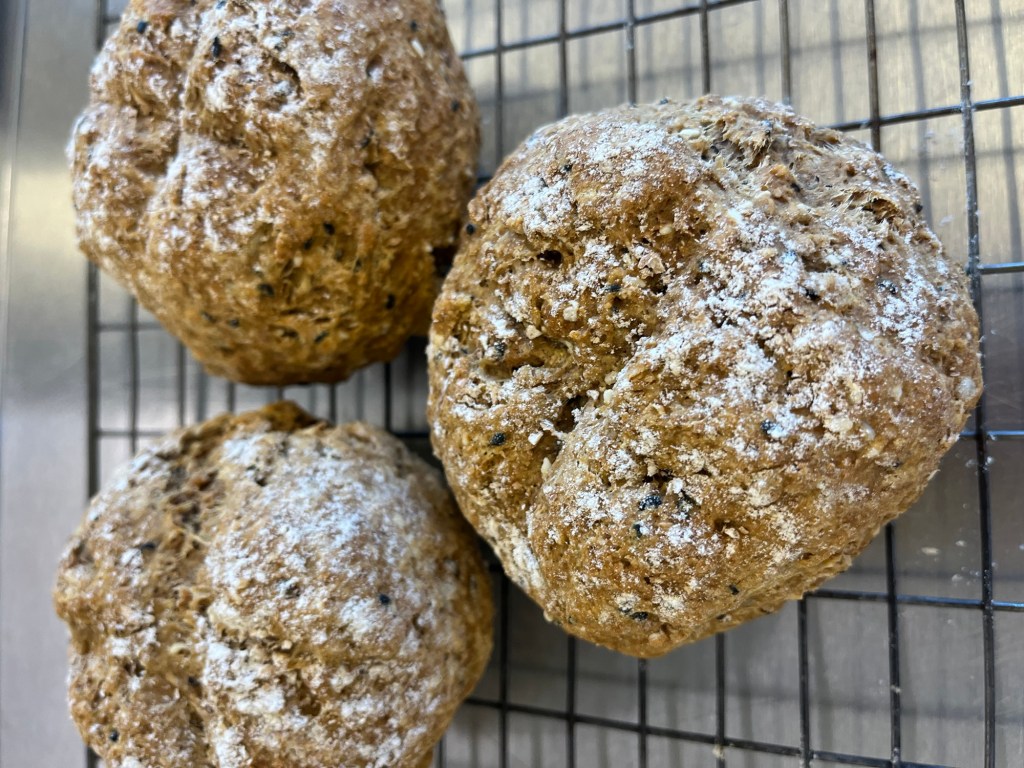
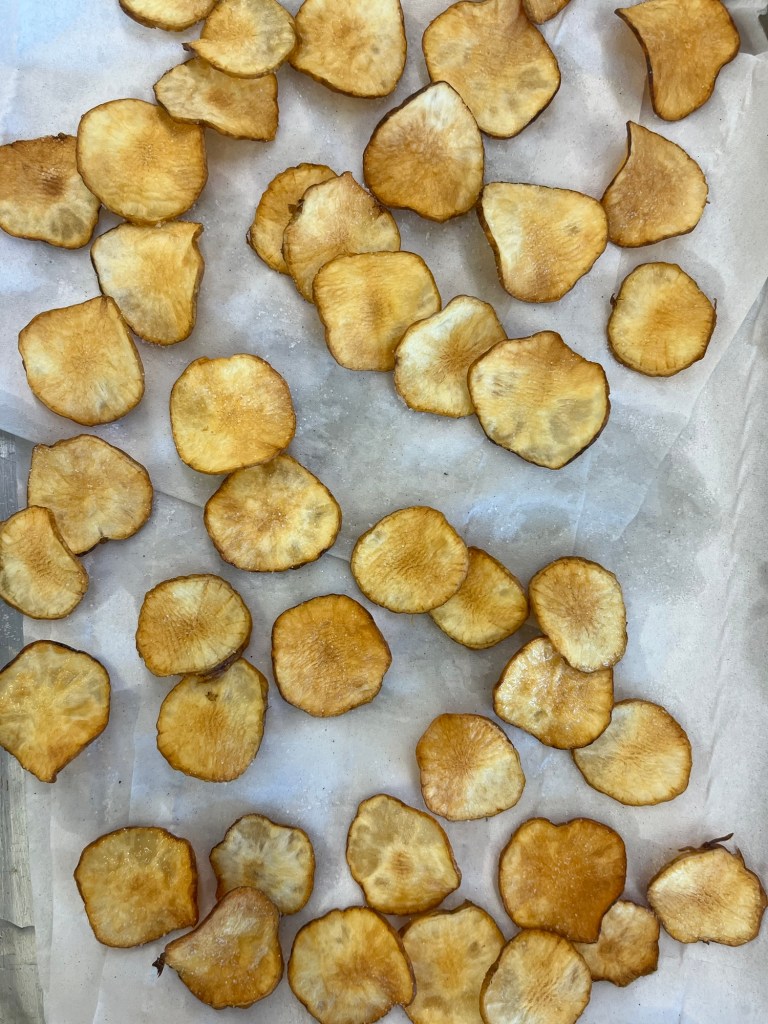
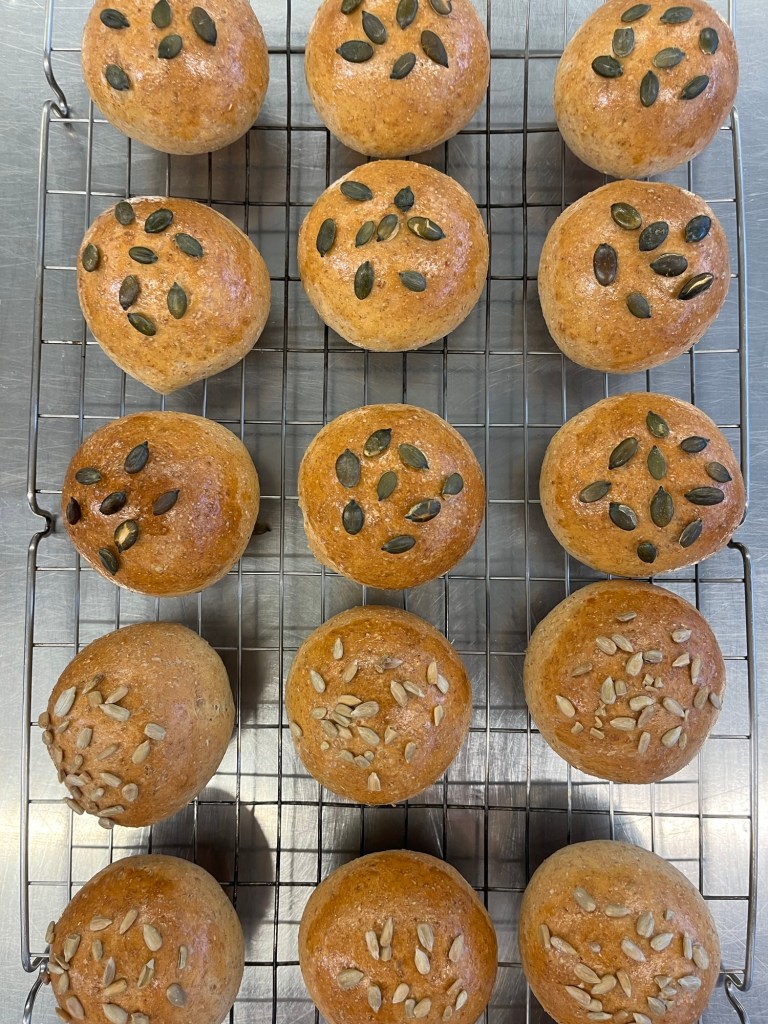
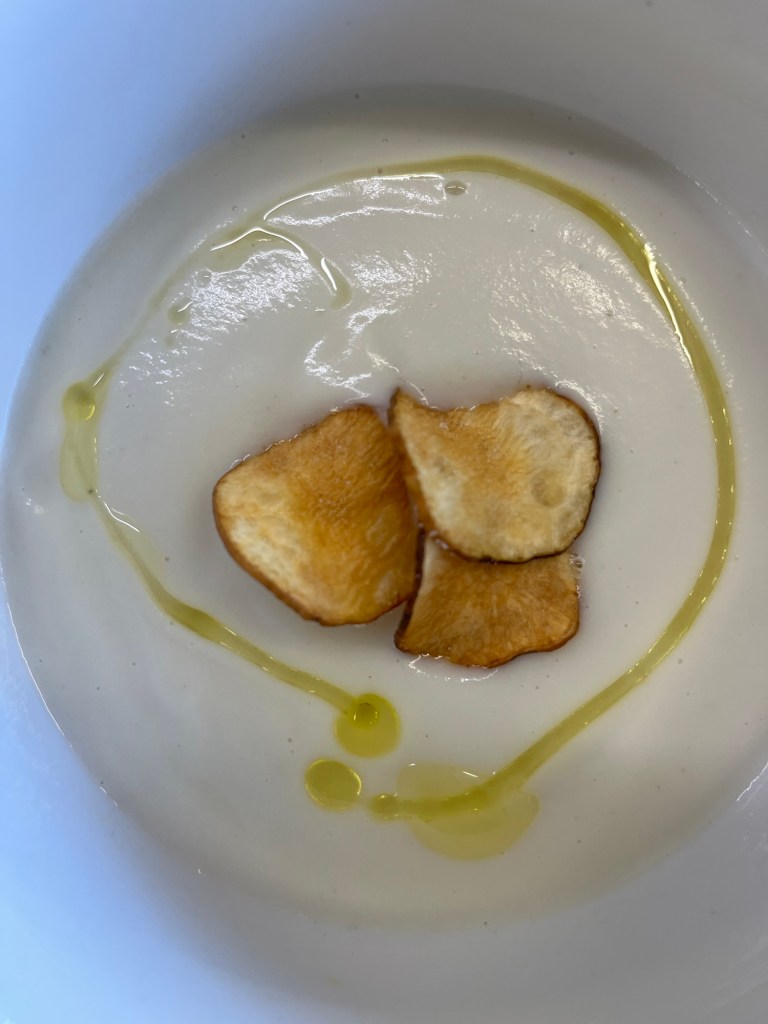
    Jerusalem artichokes and soda bread were our focus for Wednesday morning.. First, sweated slowly to make a creamy soup and secondly, finely sliced on the mandolin and shallow fried to crisps. I had eaten most of those before we had left the kitchen. Soft, flavoursome soda bread rolls studded with an array of seeds filled the kitchens with an appetising aroma and have formed the basis of many a light supper this week. The afternoon dem was a total treat: pate sucree as the base for an indulgent chocolate tart with honeycomb and a zingy yet mellow tarte au citron. Three hours of first aid training felt daunting after a full day but it was so engaging and practical the time whizzed by and I left feeling evangelical about mandatory first aid for all.
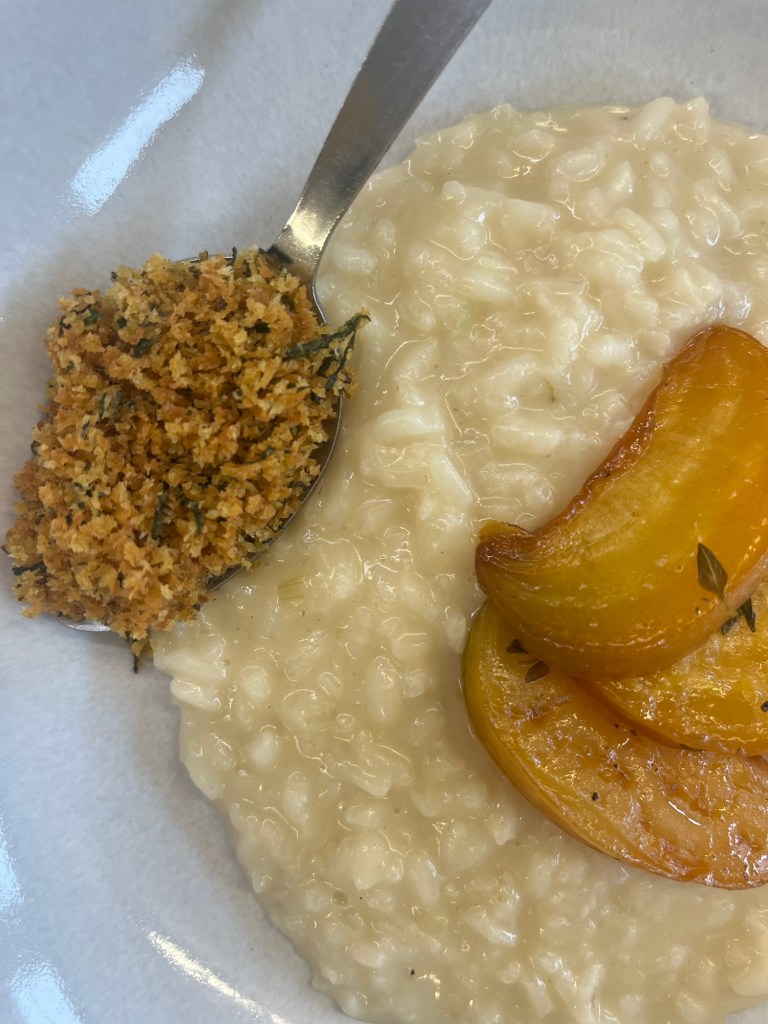
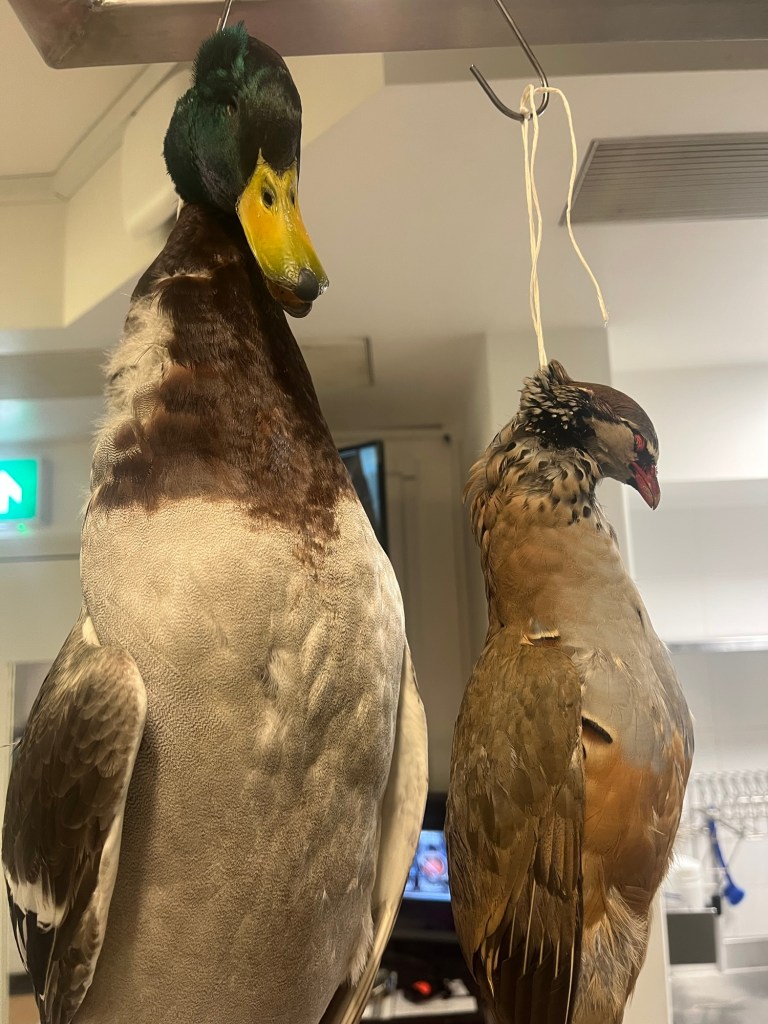
    Further skills revision on Thursday with risotto, and a reminder that the expected 20-25 minute cooking time is something of a fantasy. Yet, stirring a risotto is meditative, and happily provided some catching up time with fellow students. We served our ‘sighing’ risottos with thyme-roasted golden beets and a pangrattato – the perfect herbaceous crunch against the soft, unctuousness of the rice. A hanging mallard and a partridge greeted us in the dem room that afternoon. A prelude to an afternoon of roast partridge, wild mallard ramen and wild boar rags. Big, bold flavours and (apart from the partridge) long, slow cooks.

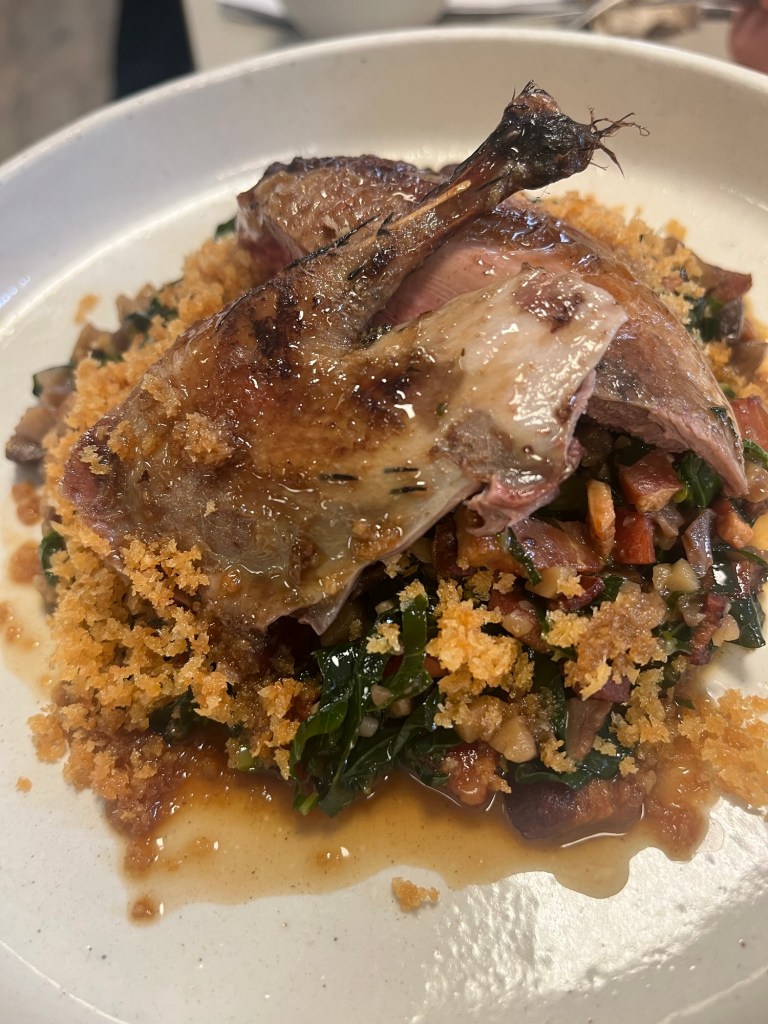
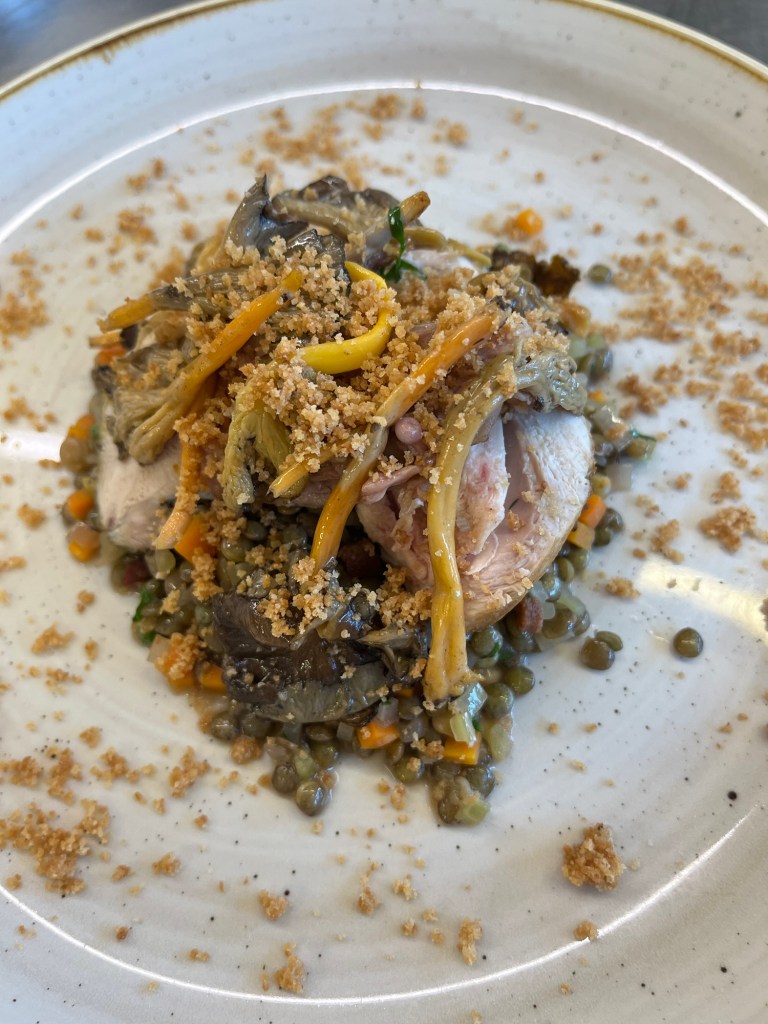
    The partridge was ours to roast on Friday. And what a dinky little bird it is. Thankfully provided to us ‘oven-ready’ with just the wish-bone to remove to ease carving later. The dish had a number of elements that required plenty of mise en place and multi-tasking. Several pans on the go simultaneously to sweat mirepoix, render pancetta fat and flash fry chanterelles. There was also a duck fat crumb with a shocking ratio of dense white fat to panko. And that’s before we basted the partridge in a hefty wodge of butter. This was French cooking at its finest! The indulgence continued in the afternoon with a soufflé dem: twice baked goat’s cheese, rhubarb and praline. All with slightly varying methods. And all of which we will tackle ourselves in the coming weeks.

    What a treat the week has been. And a powerful reminder of how lucky I am to be at Leith’s. The fun continued into the weekend with the opportunity to help the home ec team (one person!) on Saturday Kitchen. A 5.50am cab to Cactus Studios and a fascinating yet somewhat surreal morning prepping veg, fruit and pastry in a tiny kitchen which then appeared live on TV. Tired and only mildly star-struck I returned home to the familiar washing pile of chef’s whites and a pastry case blind-bake to practice.

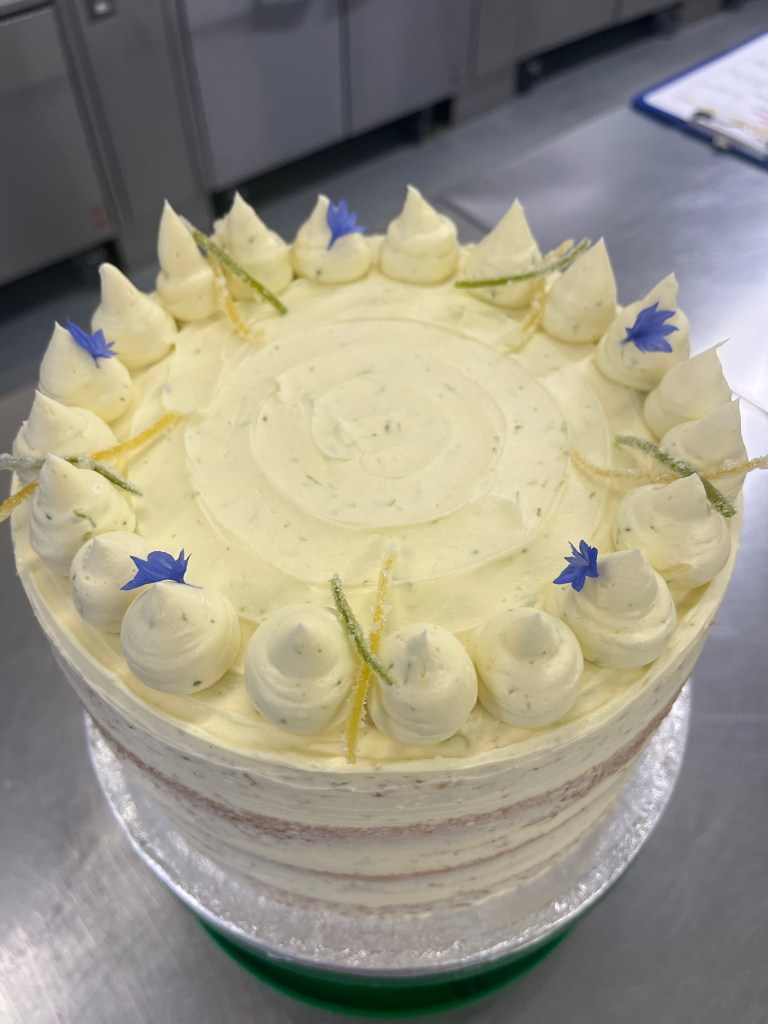
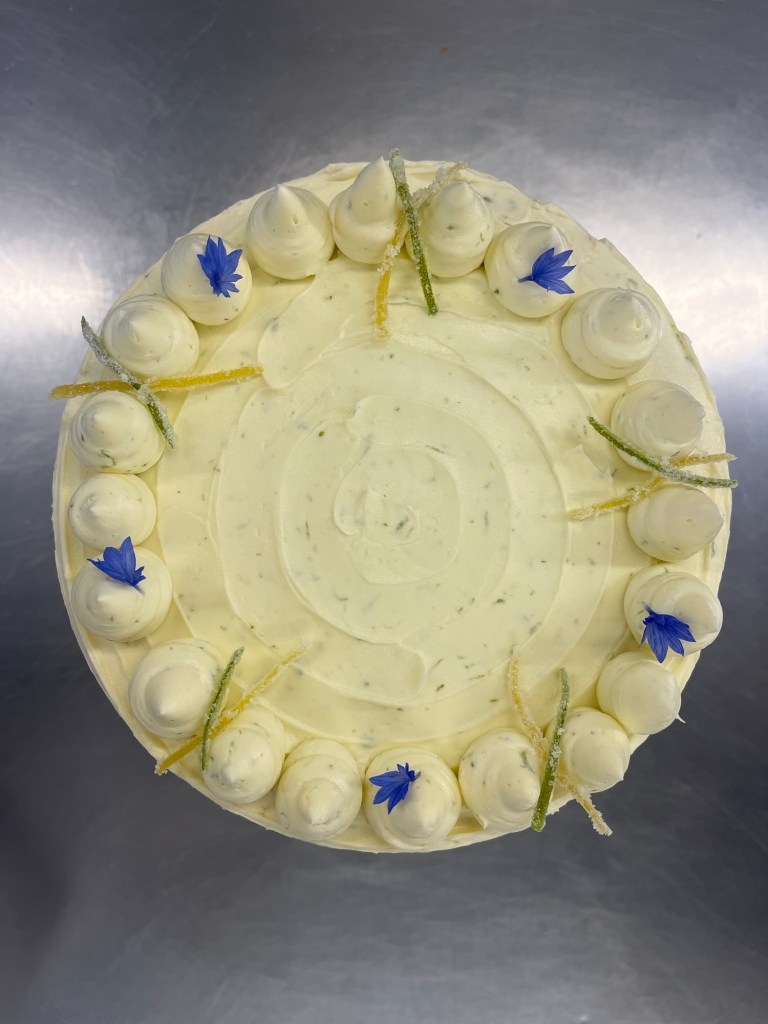
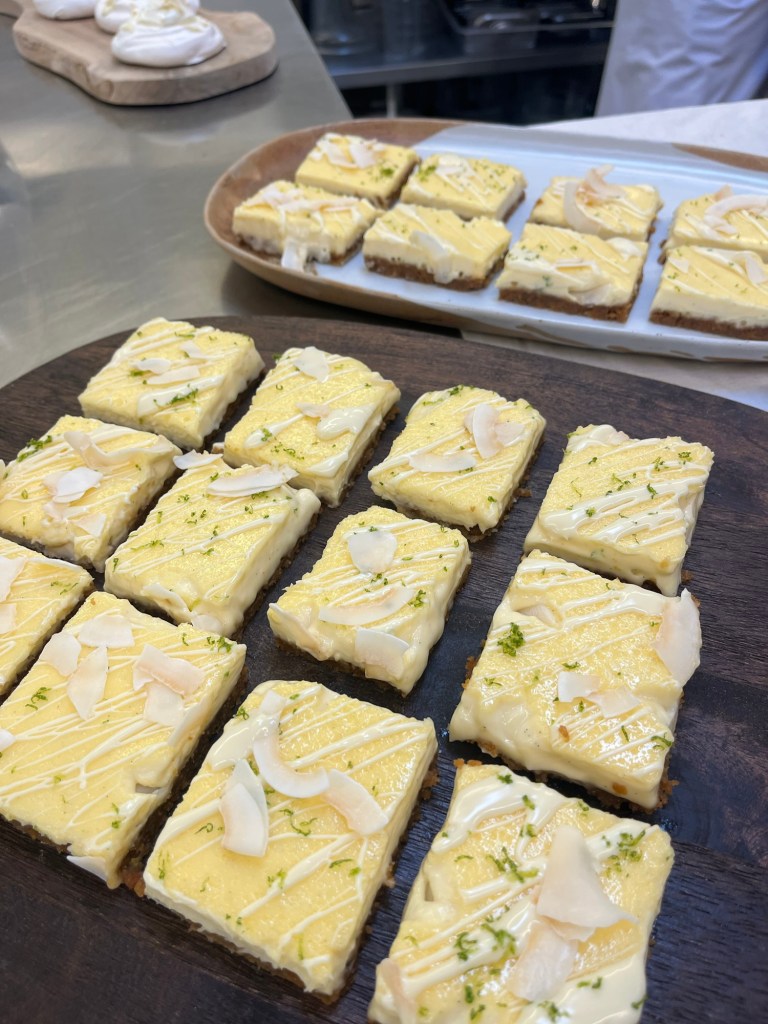
  • The final week of the foundation term. And it didn’t disappoint. Skills practice, a Christmas lunch to beat all that came before, and the final flourish: a four layer white chocolate and lime celebration cake with lemon and lime needle shreds.

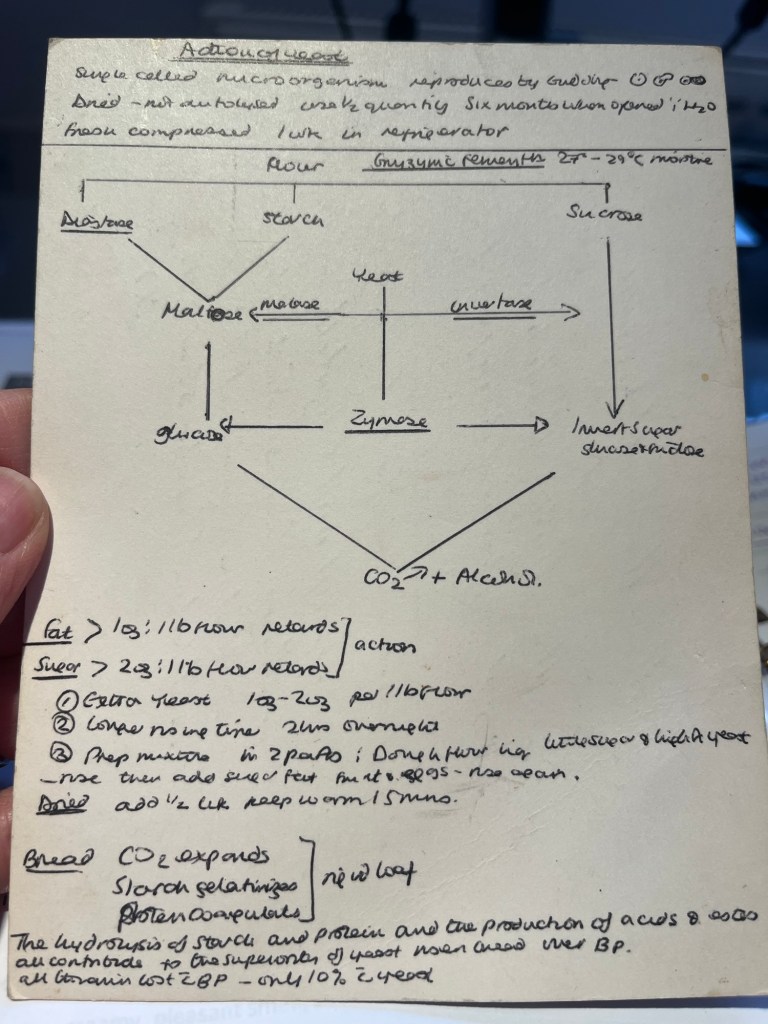
    Before all that: the much anticipated theory assessment. The preceding weekend had been spent learning the cuts and cooking times of beef, pork and lamb; memorising terms like starch gelatinisation, dextinisation and coagulation; and the reasons why my bread might not rise or my pastry could be greasy. Mid-revision marathon, I discovered my mum’s notes on yeast from her own exams at college 50 years ago. They might have been useful if I could read her handwriting! The 90 minute exam included all of the above and more plus an ingredients identification test. Twenty ingredients in little pots for us to smell, taste and name. Somehow I couldn’t place the smell of Marmite despite its constant presence since my early childhood. As soon as I tasted it I knew. There was a chilly spice mix that potentially foxed me but overall the assessment was fair and I had learned the right things – phew! Then it was home to prep my time plan for our skills practice session on Tuesday.

    A short talk from Valerie Berry, food stylist and writer, kicked off Tuesday. Valerie has styled recipe books, supplements and magazines. She talked us through the must-have skills of a food stylist. I was delighted to discover that you don’t need to be a photographer. However, you do need to be meticulously organised, adaptable, able to troubleshoot and to smile sweetly when your client or photographer suggests something you hadn’t expected. Twenty years at the Bank of England feel like good training!

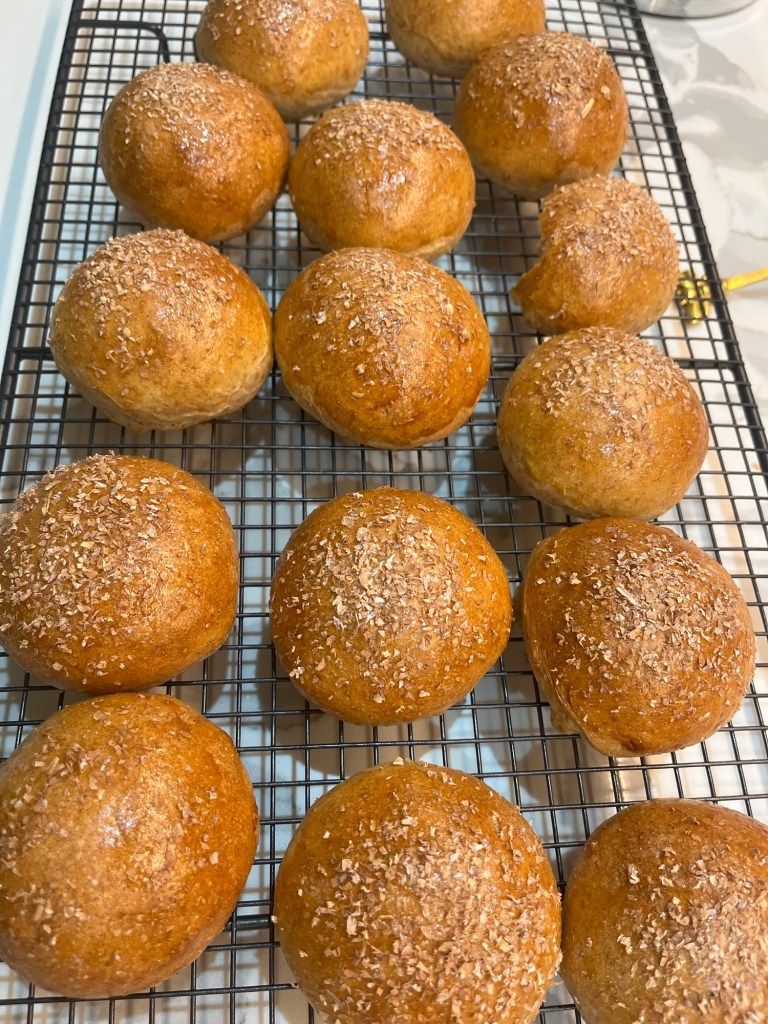
    For the skills practice session, I had selected to make wholemeal rolls, choux buns and creme patisserie. Rather a lot to get through in three hours. My family were delighted when I returned home for the second time with choux buns and creme pat. And my nanny has a particular penchant for the rolls so I’ve kept her on side for a few weeks.

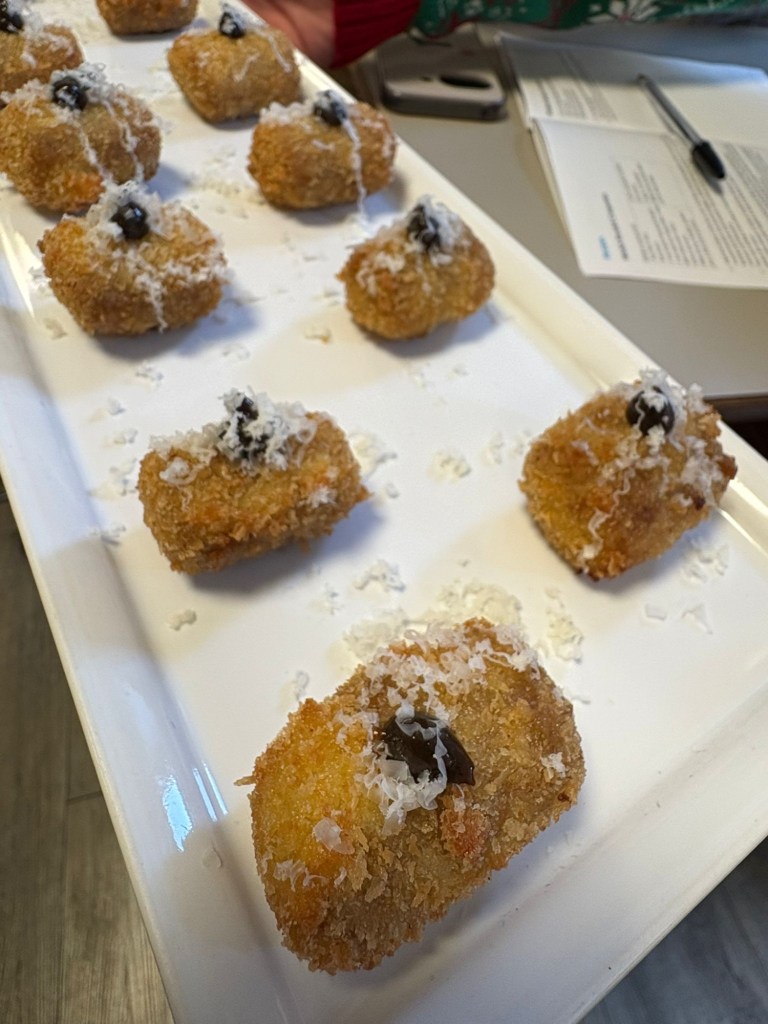
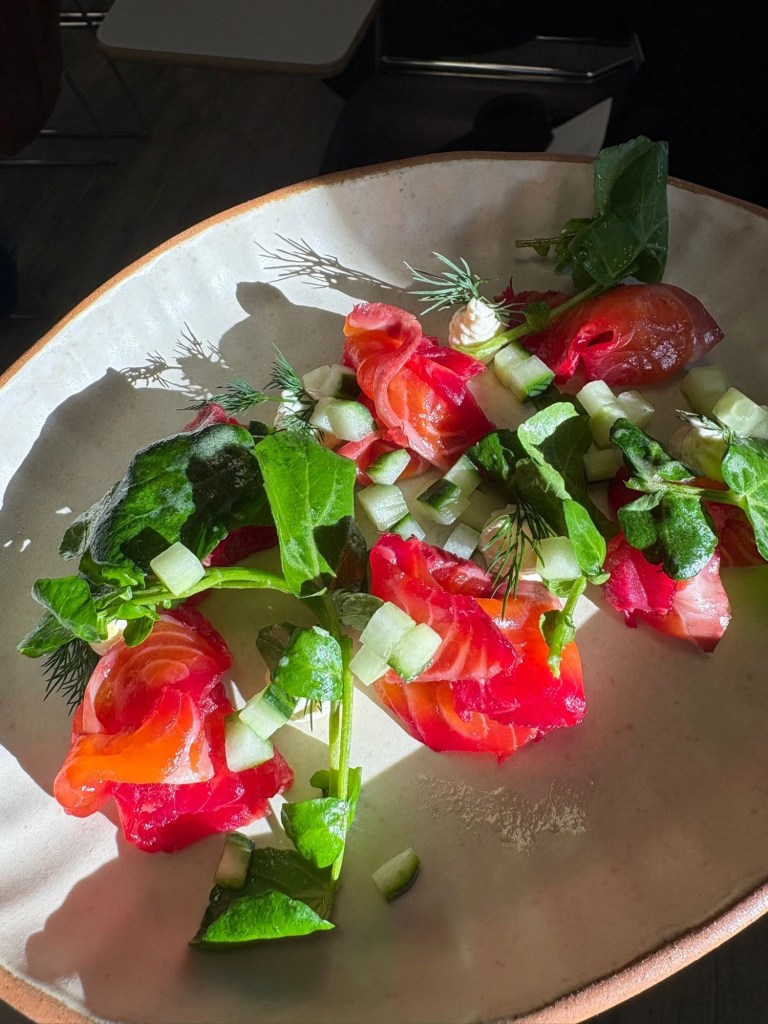
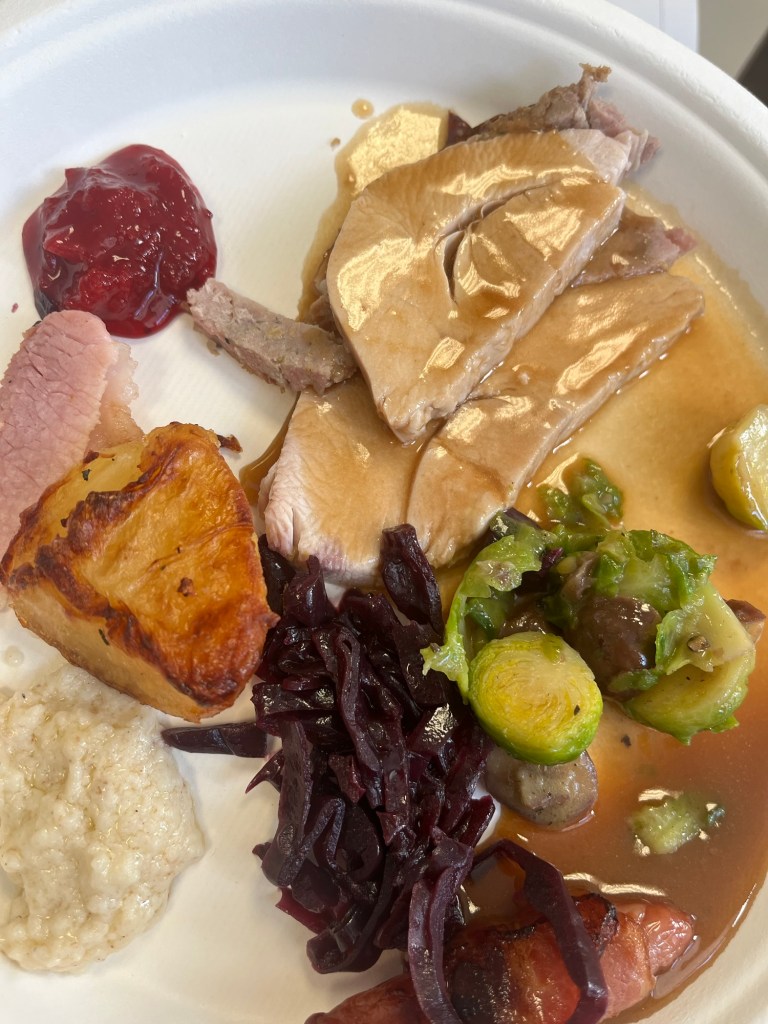
    Wednesday was a standout day of the foundation term. Our teachers, Ryan and Mark had been preparing for some weeks in advance to wow us with Christmas lunch Leith’s-stylee. And wow-zer it most definitely was. We ate the finest Christmas fare from 10.30am until 3pm. The menu began with Welsh rarebit croquettas adorned with walnut ketchup: crunchy, soft, savoury yet sweet. Up next a beetroot and orange cured trout on seeded soda bread served with a cucumber, dill and horseradish salad. The teachers oozed tips and tricks for the main event: roast turkey, onion gravy, pork, sage and onion stuffing, honey and mustard glazed gammon, roast potatoes, pigs in blankets, bread sauce, cranberry sauce, nut roast, red cabbage and roasted carrots. A real showcase of how to nail it without losing it. To finish: a light Christmas pudding with no added fat or sugar making it less rich and more moist than the traditional variety. Eggnog ice cream was the creamy and spiced accompaniment to the pud. We left stuffed and content, and for once the washing up was not our job.

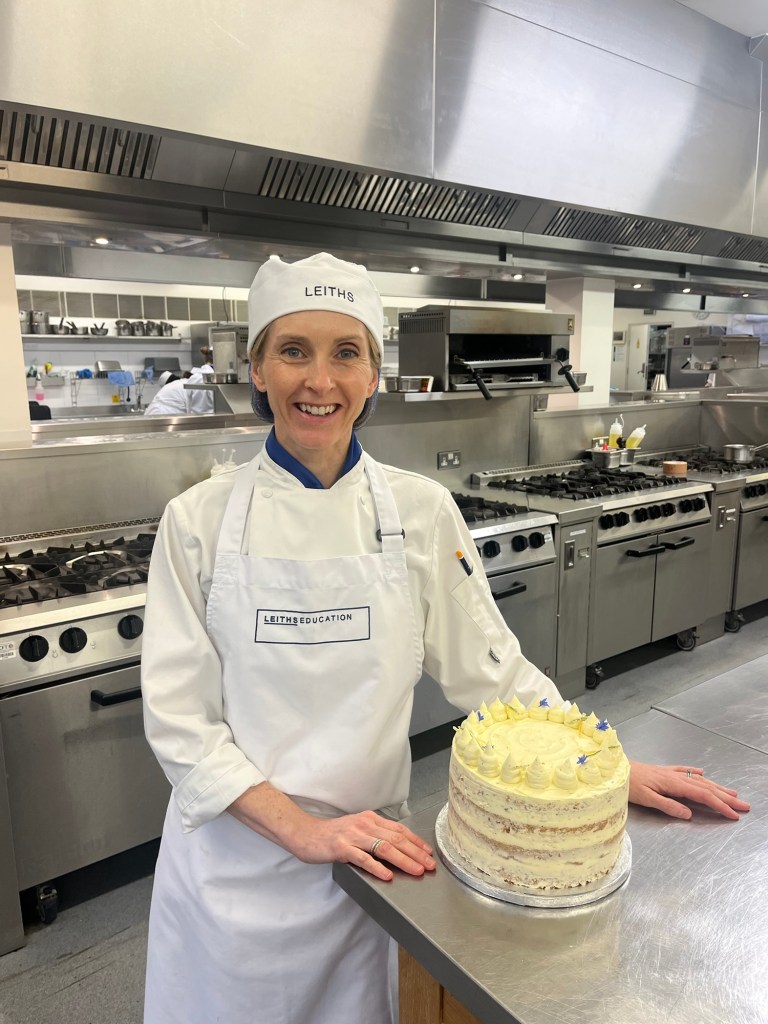
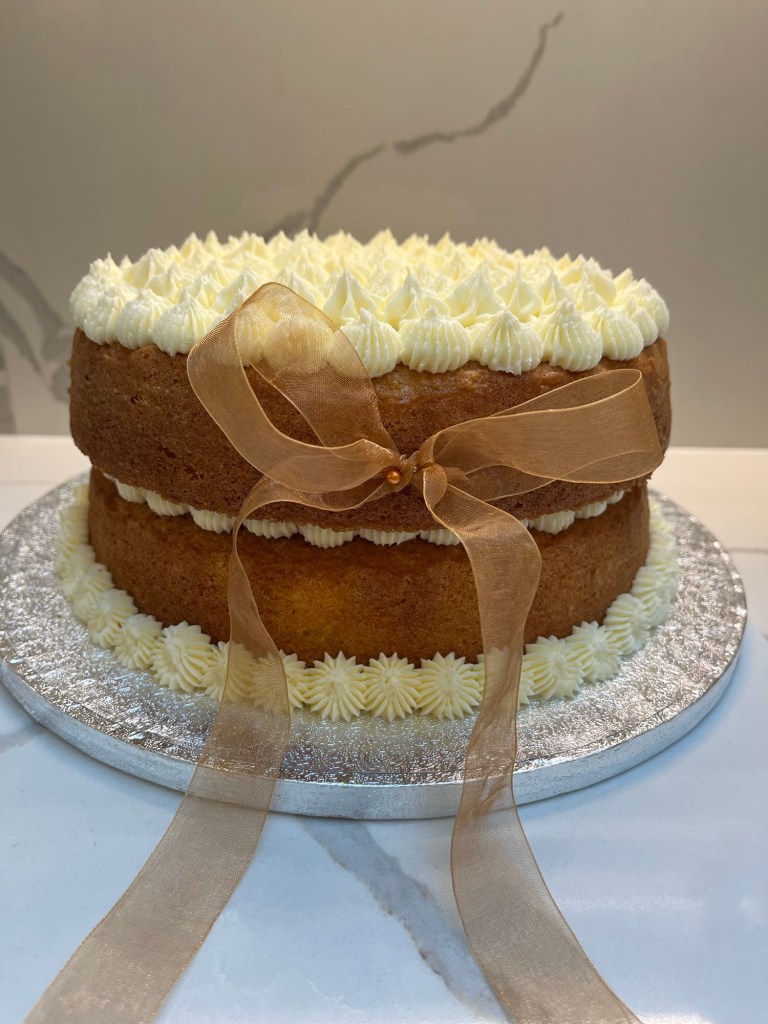
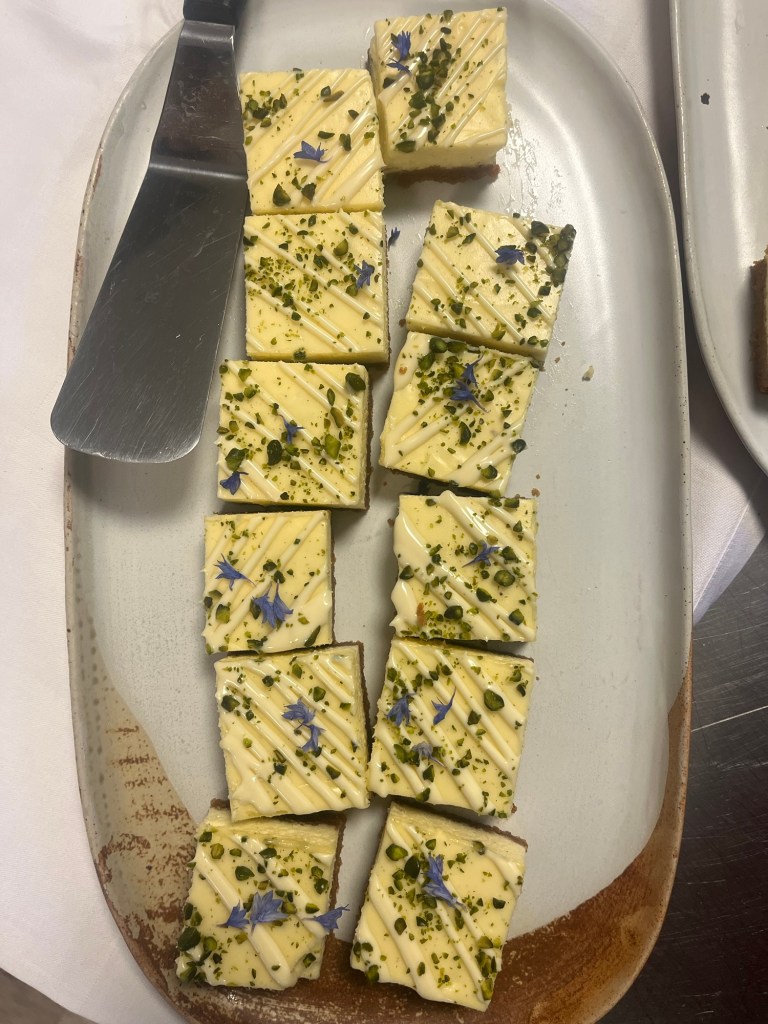
    Thursday marked our final day in the kitchen as Blue Group B. A fun and fitting end to our journey. Our naked celebration cakes took all day to create. We iced them to perfection, prettily dotted with cornflower petals and daintily draped with lemon and lime shreds. A quick change into our civvies and back to the kitchen for farewell mulled wine and a speech from Lou, head of school. Emotional to say the least to bid adieu to those with whom we have shared this transformative experience. We’ve made friends for life bonding over shared passions, kitchen disasters and triumphs, and washing up marathons.

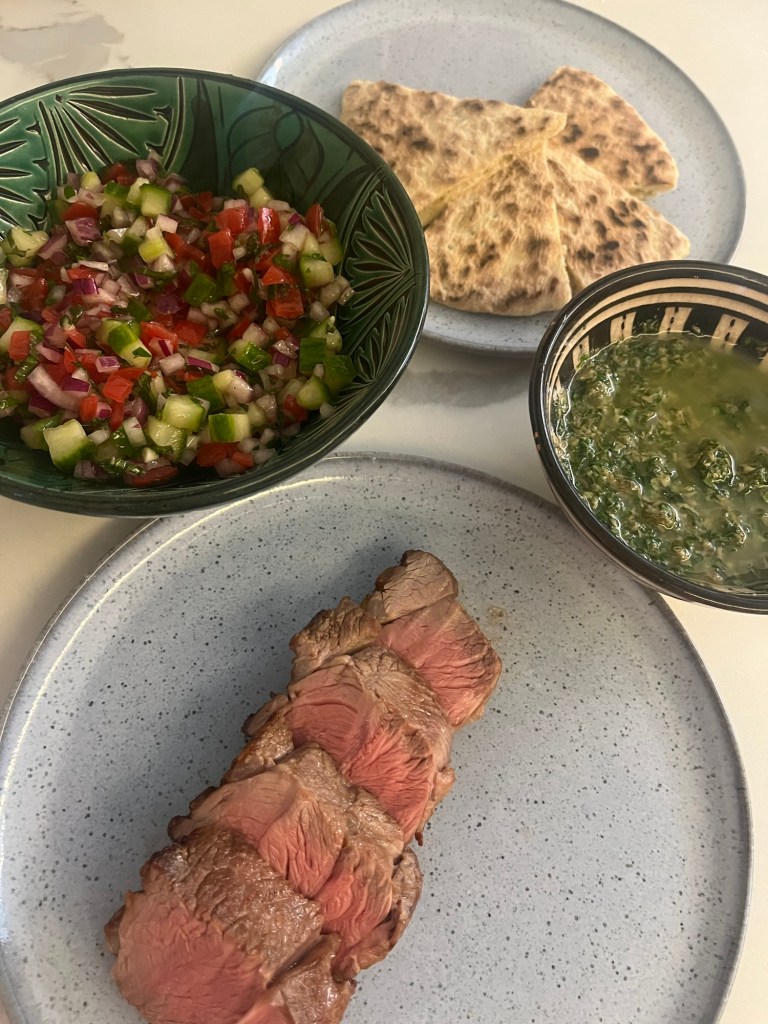
    My final practical assessment of the term was six days later allowing me some time to practice and get nervous! In 3.5 hours we had to serve: a lamb rump cooked to medium rare, a salsa verde sharp enough to cut through the fattiness of the lamb, a cucumber and tomato salsa, 6 spiced chickpea flatbreads and 2 lemon and poppy seed drizzle cakes. Intense. Exhausting. Stressful. I started off relatively calm and ahead of my time plan: cakes in the oven, dough proving, lamb tempering. The salsa making scuppered me with its exacting requirement for knife skills, expert palate for balanced seasoning and steady finger on the magi mix for correct texture. By the time I got to my dough, a new life-form seemed to have developed in the tuppaware. It was huge, but also soft and moist and the spices smelling appetising. I was against the clock though. Two pans on the go simultaneously to get the breads cooked. One skidded to the floor mid transfer between stove and bench. A quick check that no-one had seen and I hurried on. I served everything with one minute to spare in the 20 minute service window. I was absolutely spent. But as always the washing up, clearing down and stove clean still needed to be done. By now, it was gone two o’clock and I was starving. By the time I got home at 4, I was only capable of boiling the kettle and eating a large slice (or two) of the cake. A few weeks’ rest now (alongside Christmas) before embarking on the intermediate term, about which we have been primed to expect a considerable stepping up. For now though, thanks for reading and sharing my journey so far. Merry Christmas and see you in the new year!

  • After the emotion and adrenalin of week 8, the start of week 9 felt flat. I was absolutely exhausted. Not helped by the fact I had cooked for 12 hours on Sunday preparing mince meat, mince pies, biscotti and rocky road for a Christmas shopping evening on Wednesday.

    We were cooking lamb rump with salsa verde and flat breads. I couldn’t wait to get it done and come home for theory revision (and rest!). Such was my mood I didn’t even take a photo of the finished dish, pretty as it was with the pink flesh of the lamb against the verdent brightness of the salsa. I couldn’t face the lamb but the flatbreads were soft and absorbent to the sharp, salty vibrant salsa verde. An afternoon writing theory notes, crucially sitting down, and a good night’s sleep meant I was a new woman for Tuesday.

    Whilst our fellow students busily prepared a buffet lunch for us, we marinated and cooked a soy glazed salmon served with a crunchy hot and sour salad. Careful cooking of the salmon was required to ensure the glaze didn’t over-caramelise in the pan, and the fish didn’t over-cook in the oven. Precise knife skills for the salad and balanced flavours for the dressing. A punchy little number. But I resisted eating it aware of the buffet to come. Our team mates did themselves proud serving up an Ottolenghi-style feast. In the afternoon, an inspiring and fascinating dem with Olia Hercules, who I have long-followed on instagram. Olia educated us in the virtues and methods of fermenting. To really convince us she prepared a fresh salad with pickles, butter beans and dill and a Polish-style ramen with slow-cooked beef shin and pickle garnish. A warming elixir which we gratefully imbibed.

    The enjoyment of others’ food continued that evening with a book launch event with Helen Goh. It was fascinating to hear about her double life as a psychotherapist and how that contributed to the theme of her latest book: Baking & the meaning of life. We tasted a range of the bakes from the book. The kumquat biscotti were a wonderful mix of nutty and jammy; the kumquat jam being a must-make for eating on toast, in cakes and nestled into the thumb print of these delectable little treats. The semolina pastry on the pineapple ma’hmood melted in the mouth in such a delightful way that I may have pinched an extra one for the journey home.

    Wednesday was my team’s turn to buffet. With a man down ill, and another with a sprained foot, we weren’t at a standing start (literally). But we worked as a team and had done prep in terms of choosing a realistic and varied menu that we could deliver in the time. Our South East Asian theme seemed popular with our guests. The only slight panic was when I realised an hour from service that I had forgotten to make the individual portion of crustless cheesecake for the gluten free guest…and all the cheesecake filling was now baking in the oven on the gluten-based crust. Quick brainstorm and I remembered I had two egg whites leftover that I could whip up into some meringues to fill with some lime-spiked sweetened cream cheese and drizzle with white chocolate. They had just enough time to cook: disaster averted! In the afternoon, a high energy session to battle our post-buffet slump with Be Kasapian, an expert in vegan and specialist diets. Be was an absolute whirlwind, cooking up at least 5 dishes in two hours whilst talking non-stop. The vegan tart with coconut oil pastry and cashew crew was surprisingly tasty and a good one to have in the arsenal for catering events.

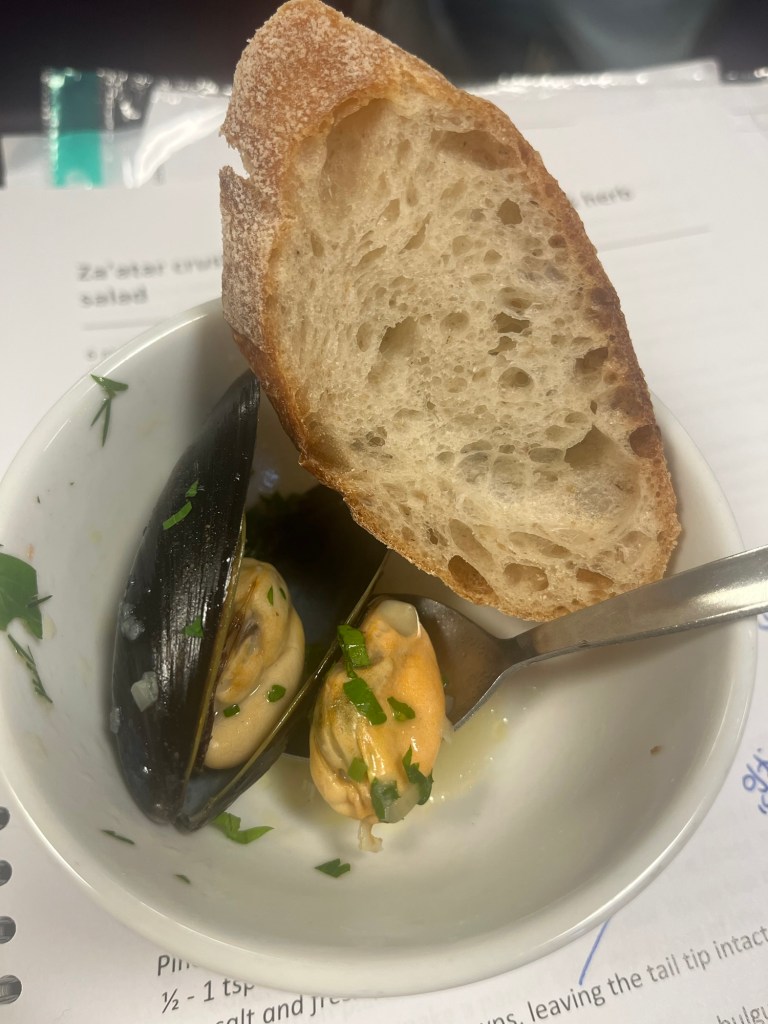
    The week of over-indulgence continued on Thursday morning with a cake dem: naked celebration cake with lime and white chocolate; vegan chocolate cake with a decadent whipped chocolate icing; and an orange and olive oil cake. All before, you’ve guessed it, another buffet! The afternoon was a tale of two halves: sweet in the form of shortcrust pastry and savoury in the form of moules marinere.

    A riot for our senses on Friday morning. Jo and Jess Edun aka the Flygerians were as lively, spicy and fabulous as the food they cooked. An inspiration to hear of their journey in the food industry and grateful to be handed some hard-earned advice. Their mission is to bring Nigerian cuisine to the forefront of the UK food market. And boy do they have the energy to deliver that. Stand-out tip of the morning: chop life before life chops you. In the afternoon, a lovely session blind baking our prepared and chilled tart case. And filling it with a sweet and nutty mix of golden syrup, treacle and walnuts. A mash-up of treacle tart and pecan pie. Sweet!! I’m not sure if I’m proud or not to say that the tart didn’t last the weekend. Revision, revision, revision (alongside tart) this weekend ahead of the theory exam on Monday.

  • Week 8 can only be described as epic. Wine exam plus two formal practical assessments. And added to that the emotion of the first anniversary of my mum’s death. Definitely a hard week but looking back I’m beginning to see the culmination of everything we have learned over the foundation term.

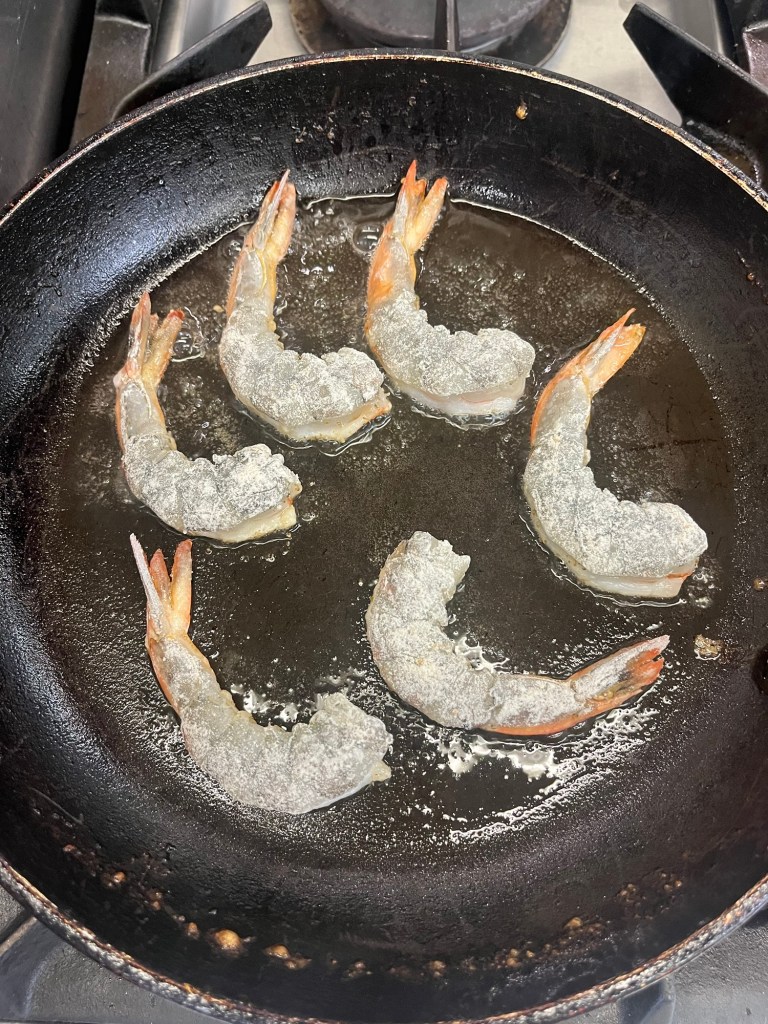
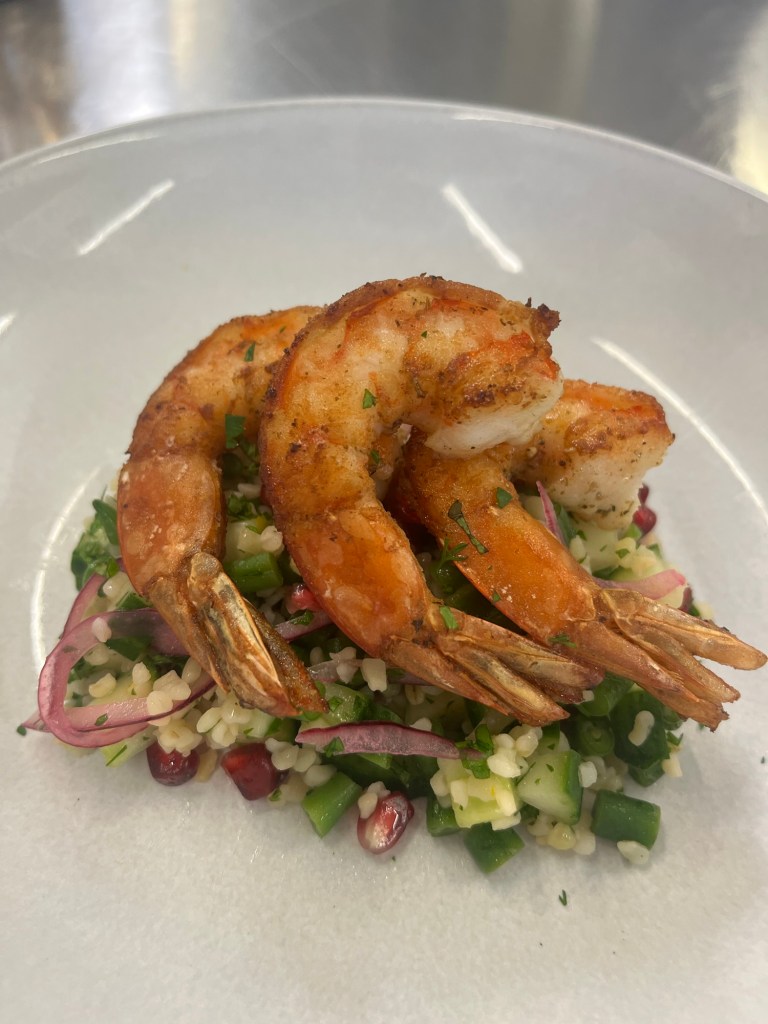
    The wine exam kicked off Monday morning: 9.30 sharp. Thankfully no tasting involved! A very helpful menu planning workshop followed, supporting us to think through our approach to private cheffing, menu design and costing to ensure a profit. And a relatively relaxed session in the kitchen to round off the day – the only one of the week! Za’atar prawns with a bulgar wheat and herb salad. The salad sharp with citrus and bejewelled with pomegranate and pickled red onion. The prawns were lightly spiced; mine were on the better edge of being overcooked. Overall very tasty and the bowl was all mine for supper that evening.

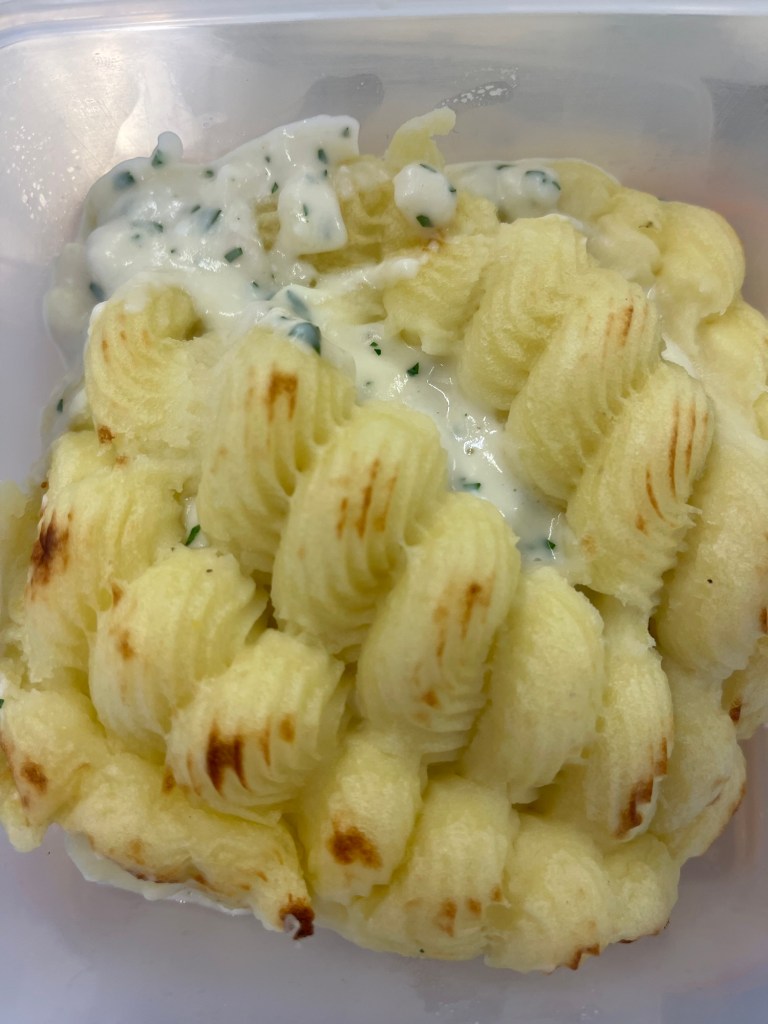
    Fish pie to Leith’s exacting standards was our first formal assessment of the week. The kitchens were tense: no talking amongst students except to discuss stoves and washing up. The timetable was tight: make a roux, infuse milk, boil eggs, poach fish, make a pipe-able well seasoned mash, a flavoursome white sauce and assemble with fancy rope-piped mash, grilling to just the right hue. All in just 2.5 hours. No feedback of any description was given based on the view that no distraction was needed ahead of the second formal assessment on Friday. I had trialled the fish pie at home at the weekend and woefully under-seasoned it. When my assessment pie was returned to me by the teacher, I took a taste: nicely seasoned for my tastebuds but possibly under for the professional chef palate. In all the excitement, I forgot to take a photo before service so this one is when it had been shovelled into tuppaware for transportation – you get the idea 🙂 In the afternoon, we were talked through and shown the menu for our second assessment of the week. Always looks easy when the teachers do it!
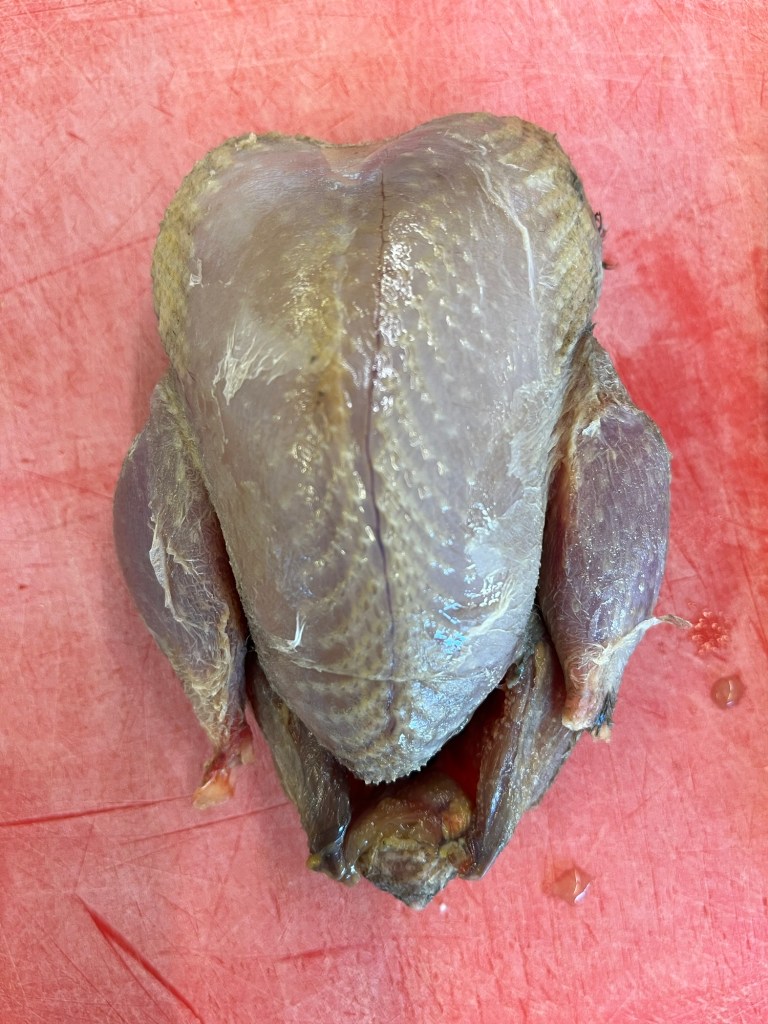
    Wednesday was a welcome reprieve: a day off to plan our upcoming group buffet challenge and start revising for our theory exam. Following a Mass said for the souls of my parents, I busied myself making mince pies, wholemeal bread rolls (practice for Friday) and trying a Christmas biscotti recipe.

    Two hanging pheasants greeted us in the dem room on Thursday morning signalling a morning of game. Mostly feathered (pheasant and grouse) and one furred (venison). A real treat to see how to cook the birds without drying them out and with their traditional accompaniments. I’ll admit I always found bread sauce a bit pointless but Ryan made it so delicious that he’s changed my opinion. Extra bowls of game chips were quickly inhaled by the group as the tasting plates were passed around. My particular favourite was the sprout tops, pancetta and chestnuts served with the grouse. Deeply savoury and salty with extra crunch coming from the fried crumb. Everything in moderation!

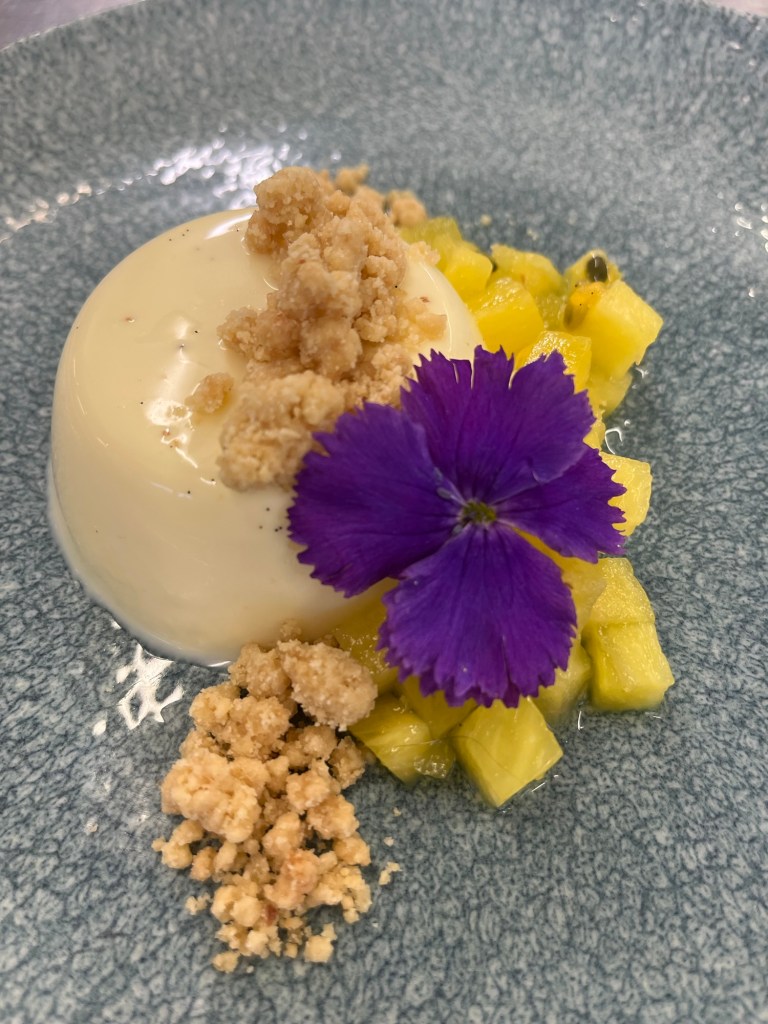
    The calm before the storm in the afternoon. A mise en place session ahead of our Friday all day cooking assessment. We prepared almond crumble, spiced poached pineapple and a vanilla panna cotta. Our wholemeal dough also made, we tucked it up into the fridge for the night and left to dream of cleanly un-moulding our panna cotta for service.

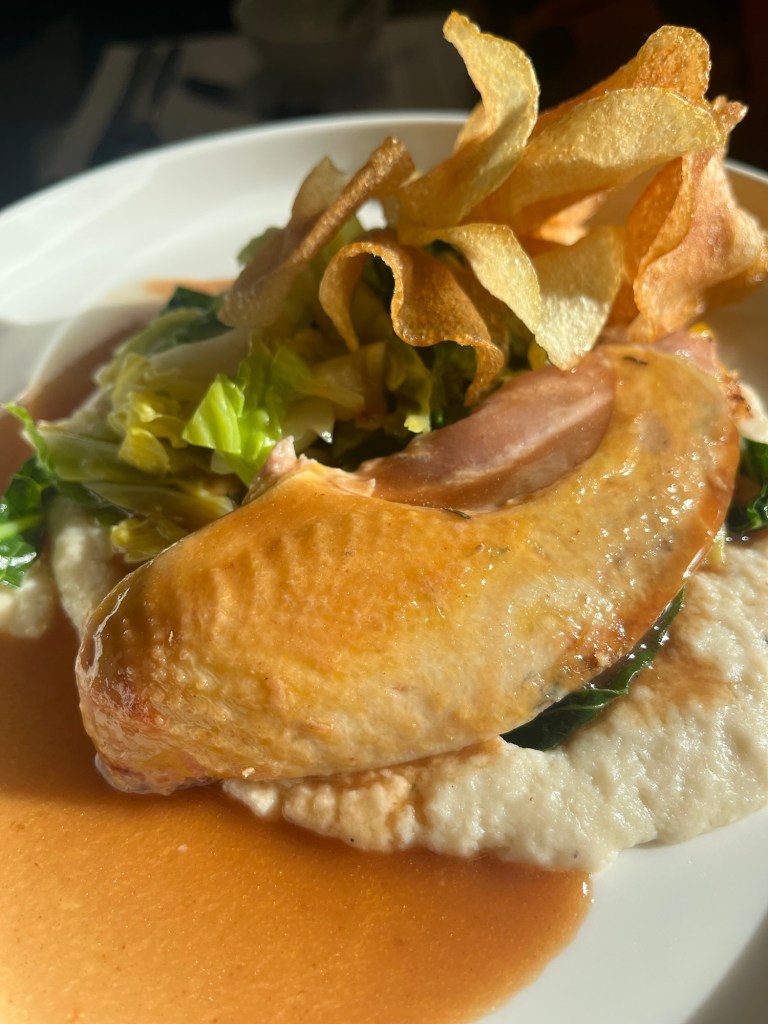
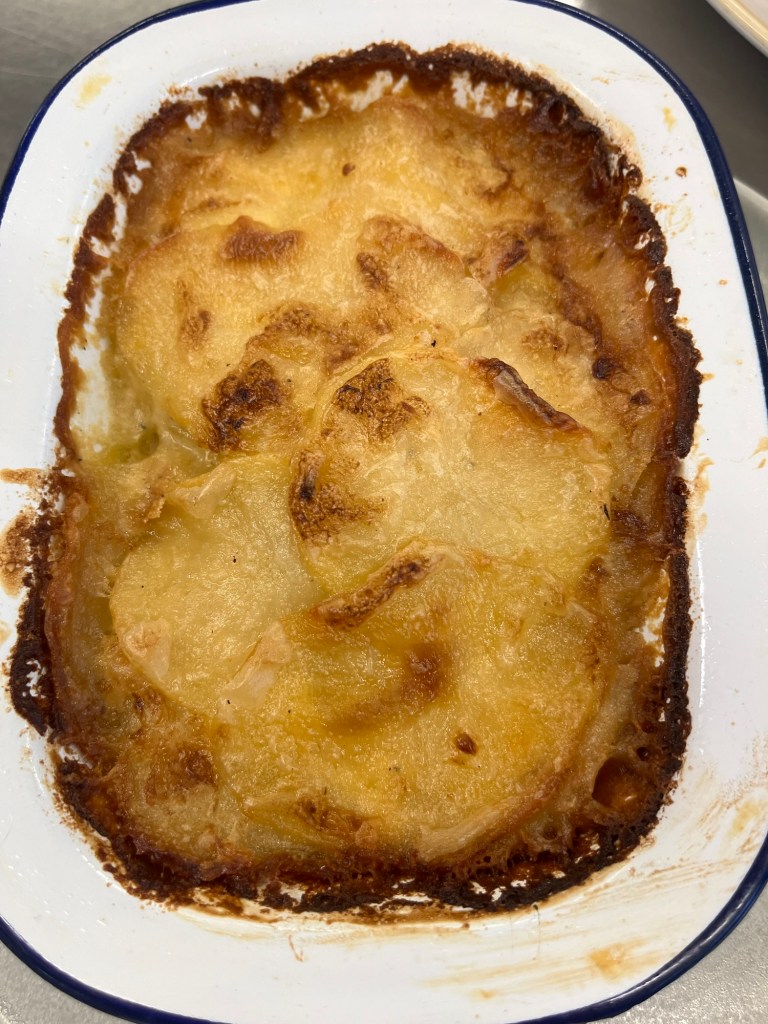
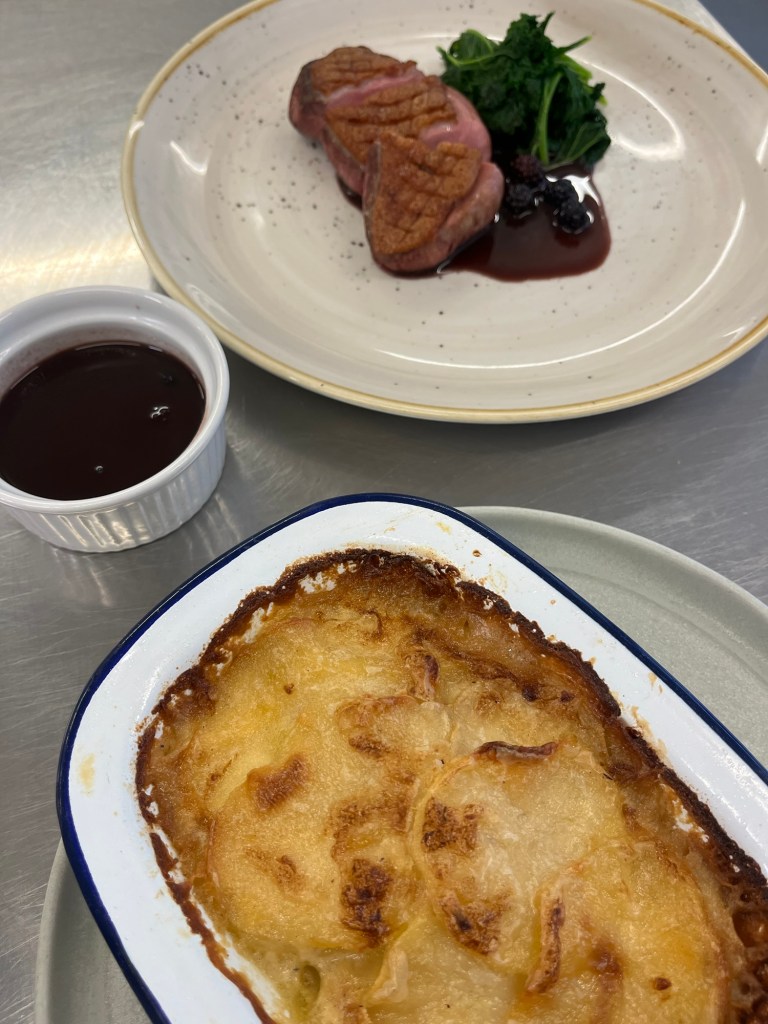
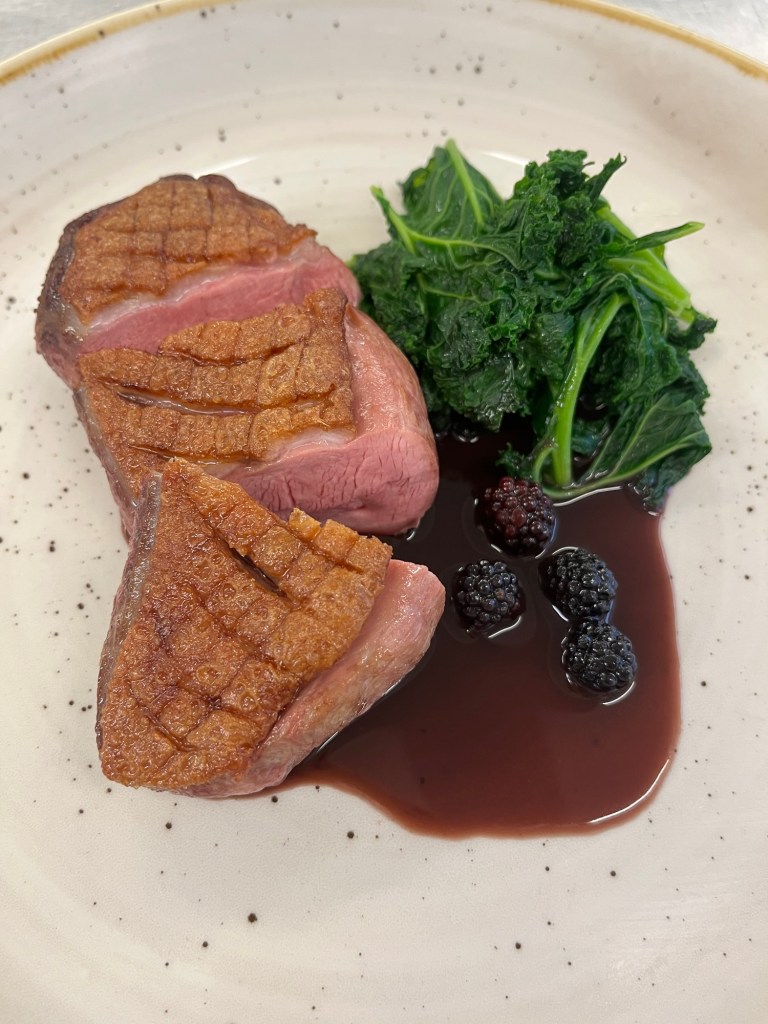
    My nervousness was considerable as I made my way to Leith’s on Friday morning. Running through my mind the initial tasks I needed to execute efficiently to ensure I met the service window. Dauphinoise first: sweating the onion and preparing the potatoes and celeriac. First time using a mandolin but there was no time to get the jitters. Next scoring the duck fat and leaving it to temper whilst preparing a tray of ingredients for the pan sauce. And finally, removing the dough from its sleep in the fridge and letting the warmth of the kitchen allow the yeast to kick in. I’m delighted to say that the assessment feedback said my dauphinoise were ‘delicious’ and the duck cook and flavour was very good. The less said about my over-cooked kale the better! Good flavour on the wholemeal rolls with some helpful pointers for how I can continue to elevate my dough making skills. A quick 15 minute lunch and then the plating up of the pud. The panna cotta took a bit of encouragement but it was smooth in consistency and fun to arrange on the plate with the crumble, pineapple and edible flower. A gruelling six hours but enjoyable and satisfying to have achieved it all to a good standard. And very happy customers at home who got the leftovers for dinner! No rest for the wicked and following a brief pause for a cuppa and a mince pie, I started on the christening cake I had been commissioned to make. A marginally calmer week ahead with our group buffet assignment to deliver. But for now, a well earned weekend.

  • A geographically diverse week: we began in Ethiopia, took a brief sojourn to Morocco, and ended in Goa. And that’s without taking into account the canter through the wine regions of the globe as part of our Level 1 WSET wine certificate. Another fun and stretching week learning yet more new skills (hello mackerel gutting) and consolidating existing skills (Creme Anglais, meringues and drinking wine).

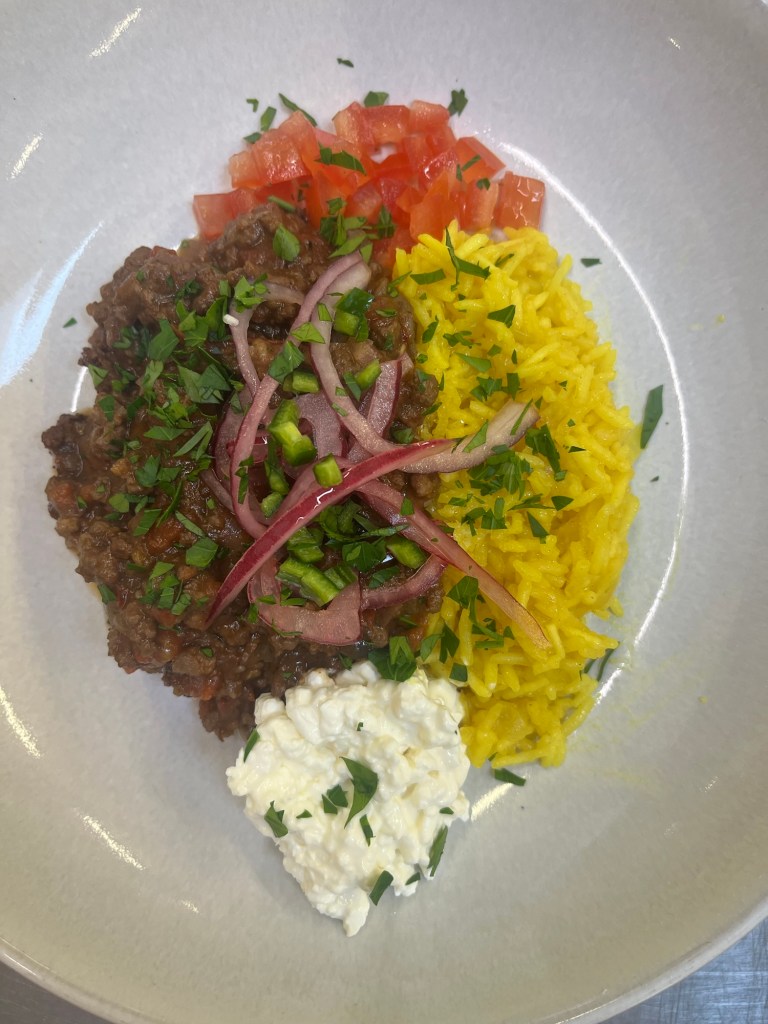
    Our first foray into Ethiopian cuisine came in the form of a minced beef stew: Minchet Abish. We learned that the secret to soft and tender mincemeat is to treat it the same as you would a cut of meat i.e. the same rules apply for the browning process. Allow the mince to sit still in a hot oiled pan to take on colour, and therefore flavour, quickly rather than moving it around constantly. Just as I had finished browning and the meat was draining in my sieve, I was tapped on the shoulder by my tutor and given a surprise ‘short order’ to make Creme Anglais with a 20 minute deadline. The dirty sieve is of note here as a key step of mise en place for Creme Anglais is to have a clean sieve for the just-ready custard to be poured through ahead of service. Thus before I could even start I was back over to the spa bath (washing up bowl – see week 2 blog). Thankfully I had revised the method over the weekend and the ‘test’ turned out to be confidence-boosting. My custard was of good coating consistency and got the thumbs up from my tutor (and from my family who enjoyed it for dinner with raspberries and crushed Ameretti). Back to the stew, and having added various exotic spices and previously made stock to our browned mince, we left the assembled Minchet Abish to develop in flavour overnight.

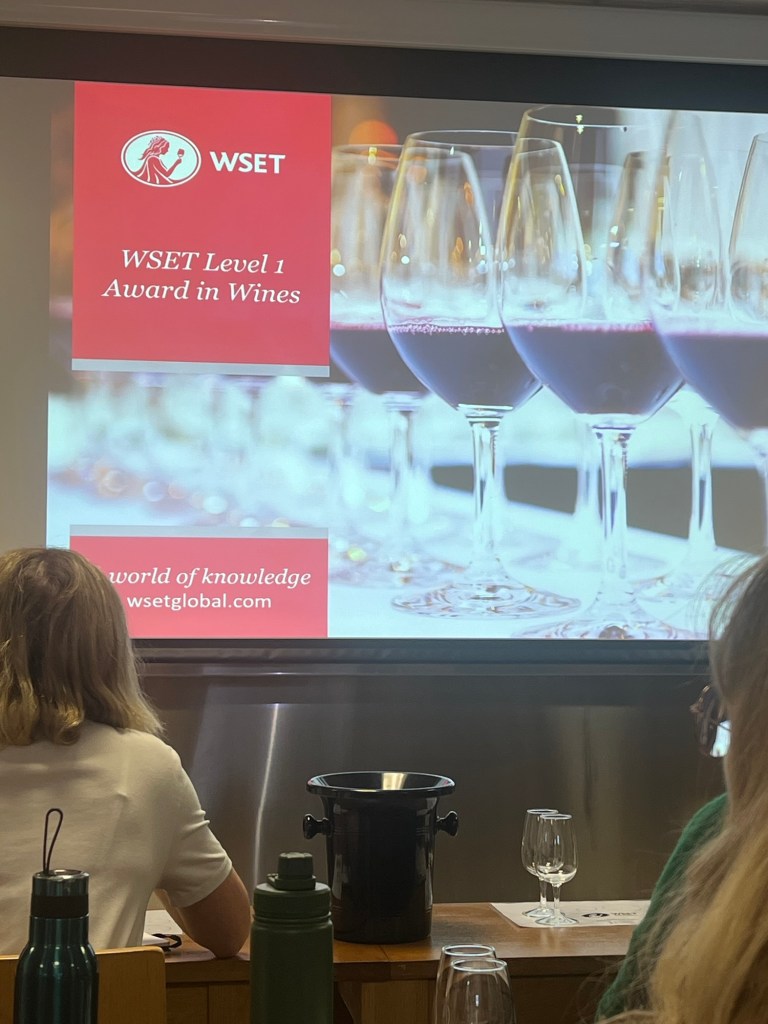
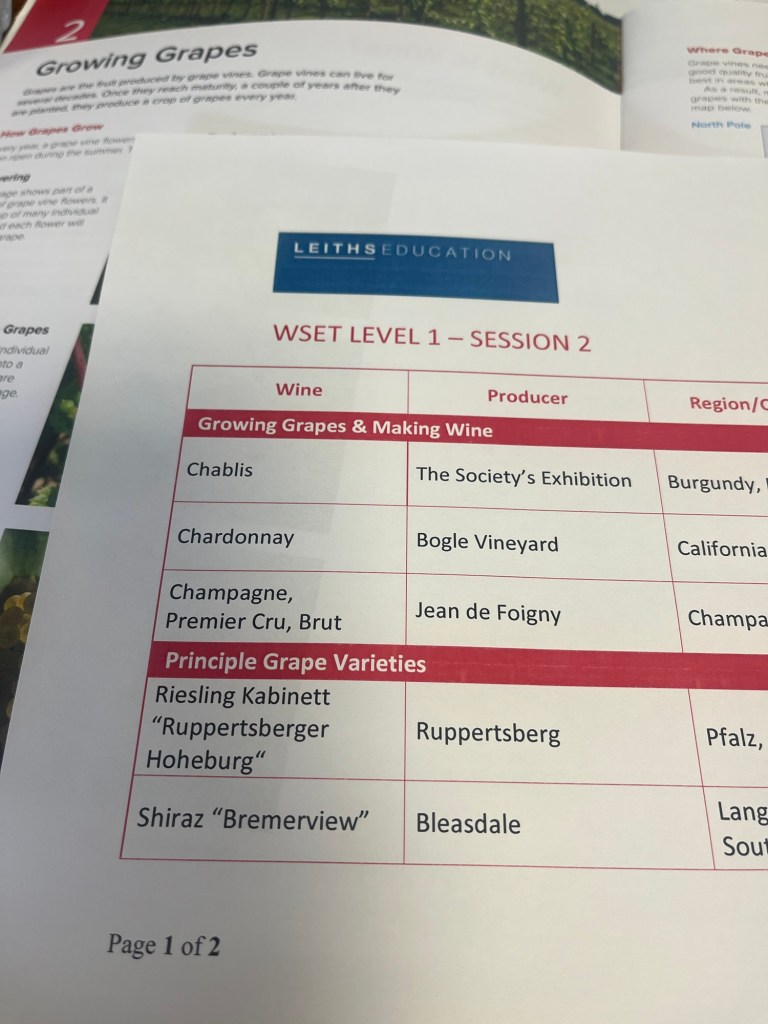
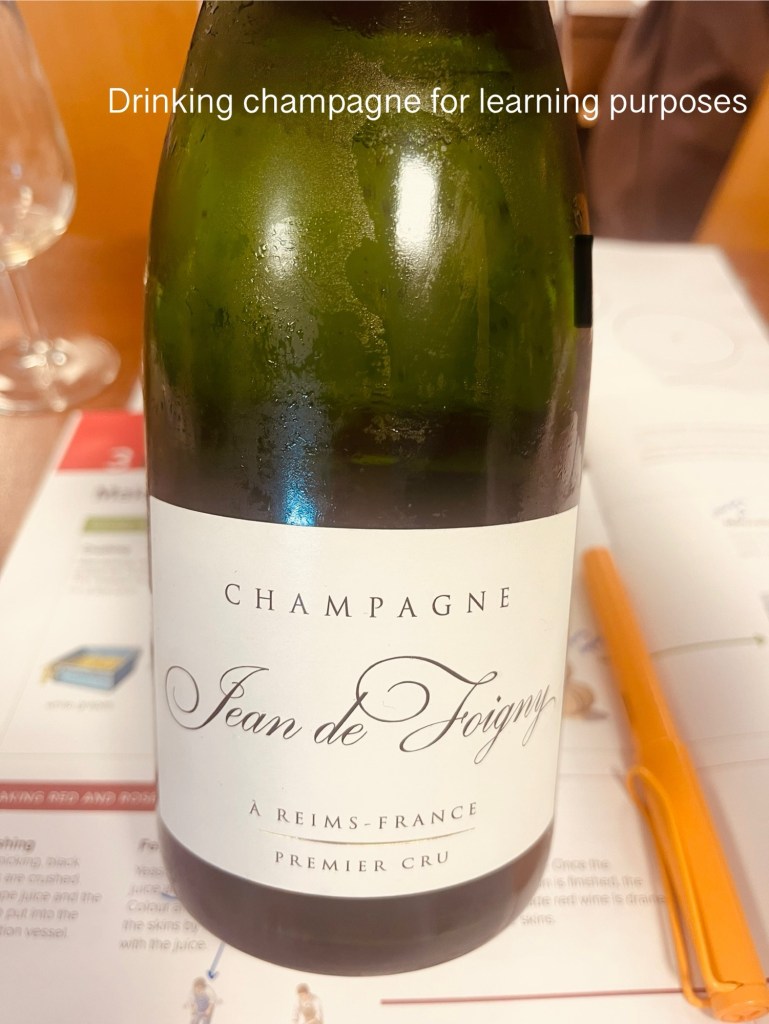
    Monday afternoon marked the start of our Level 1 wine certificate. Our teacher, Marjorie, was a fabulous French woman who was an engaging teacher and has been a sommelier at Michelin starred restaurants for over 20 years. Over the course of the week we learned about growing grapes, how wine is made, wine growing regions, principal wine varieties, types and styles of wine, storage and service and food and wine interactions. We also drank quite a few examples, for learning purposes of course. A spittoon was available and indeed necessary for the Gallo White Zinfandel we tasted on the first afternoon. The exam looms large for Monday morning, and thankfully doesn’t include tasting the Zinfandel or anything else.

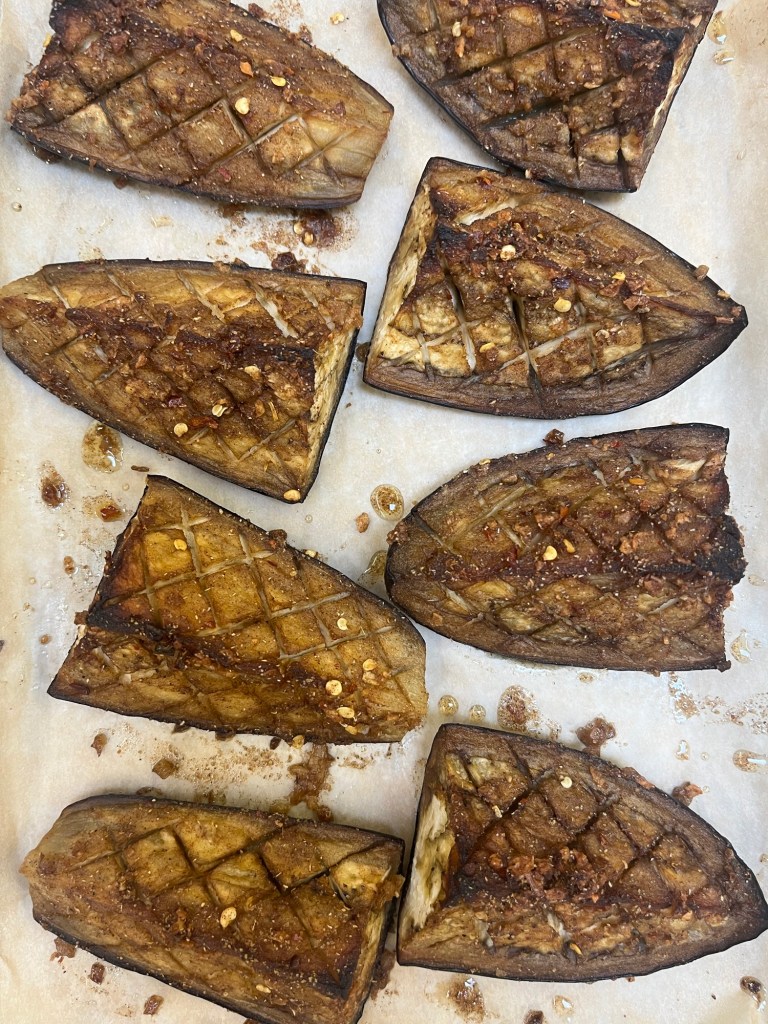
    With some of us feeling fresher than others post wine, we finished our Minchet Abish on Tuesday morning. This deliciously warm and spicy stew is traditionally served with an array of accompaniments and a golden turmeric rice. The toppings include an unexpected dollop of cottage cheese, and less surprisingly pickled red onion, green chilli, and parsley. A toothsome combination! Our second service that day was a Chermoula aubergine with a freekah salad. My bench partner and I regretted not leaving the aubergine longer in the oven for the flesh to become soft and yielding. But the freekah salad was a delight, spiked as it was with toasted almonds, green olives, sultanas, lemon and herbs.

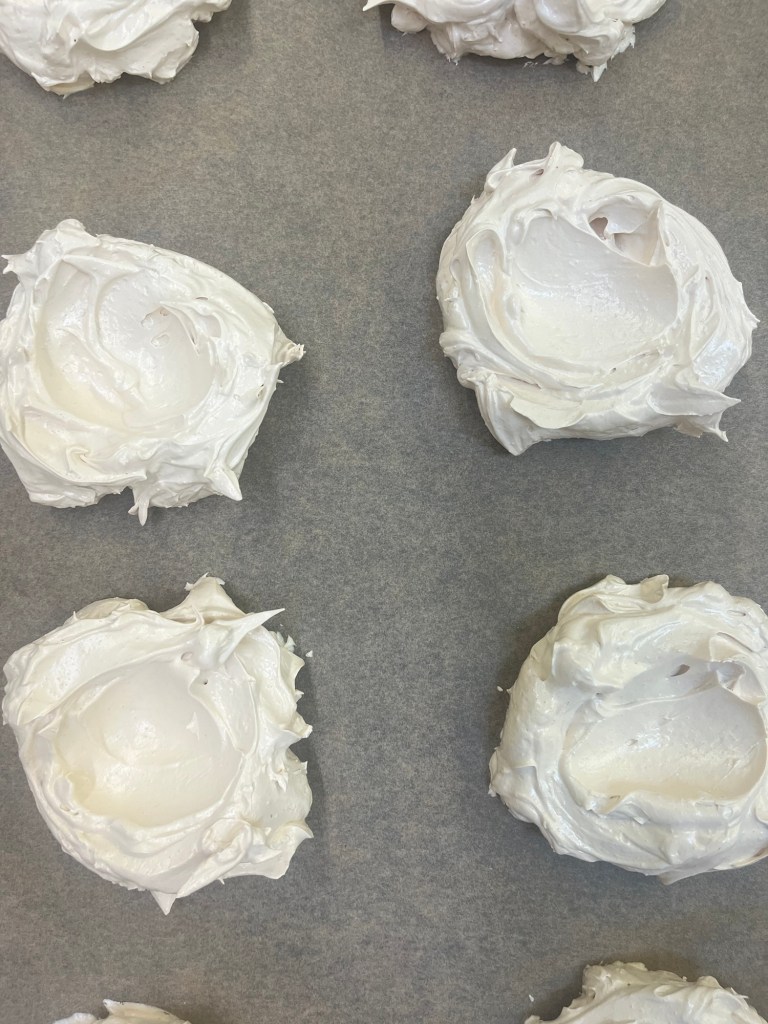
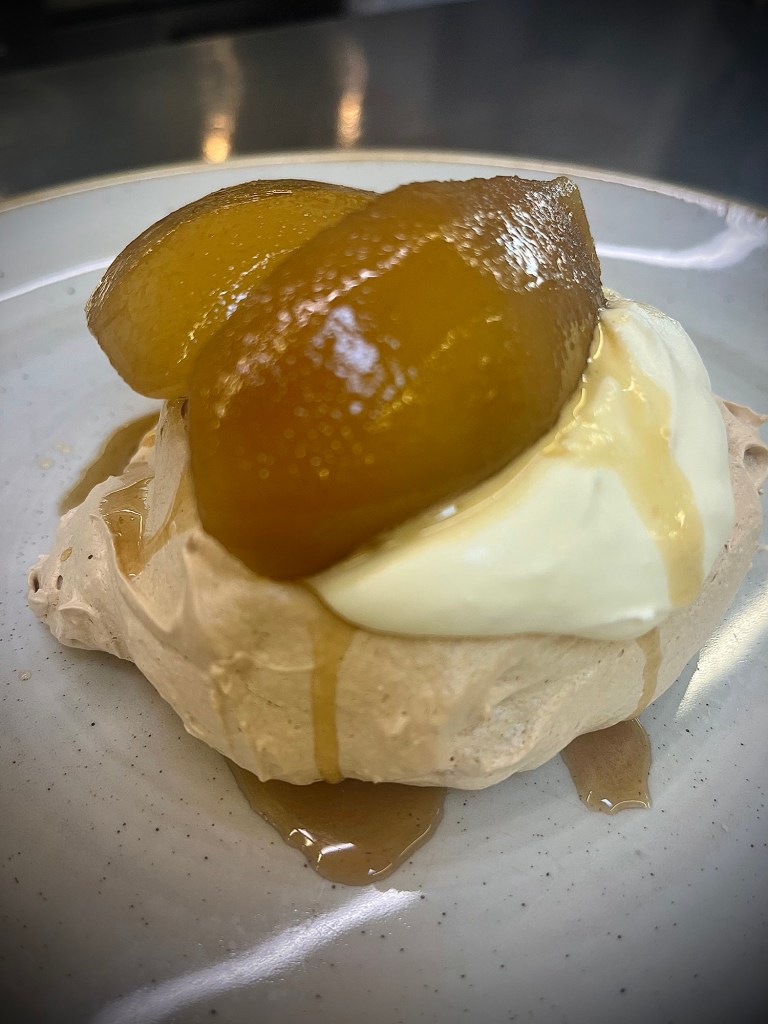
    Wednesday gave us the opportunity to practice and consolidate any of the skills we have learned so far alongside the guidance of Lou, Head of School. She assessed my meringue technique and provided the light-bulb moment that I needed to be more aggressive in my whipping. This was a well-timed discovery for Thursday’s recipe of brown sugar pavlova, poached pears, whiskey caramel glaze and lightly whipped cream. My whipped eggs were incredible. Expanding enormously in volume, they almost came over the edge of the bowl. Once in the oven, we got on with the pears. The poaching liquor was the smell of Christmas: cloves, orange, whiskey and ginger (the left-overs will be perfect for a cocktail!). Once the cooled pavlova had been adorned with floppy double cream and a couple of poached pear pieces, the liquor was reduced to a sticky glaze to drizzle over the top. Gooey, aromatic, and with the cream providing a welcome freshness to cut through the sweetness. Absolutely delicious. A further consolidation of Creme Anglais completed a joyous morning of cooking.

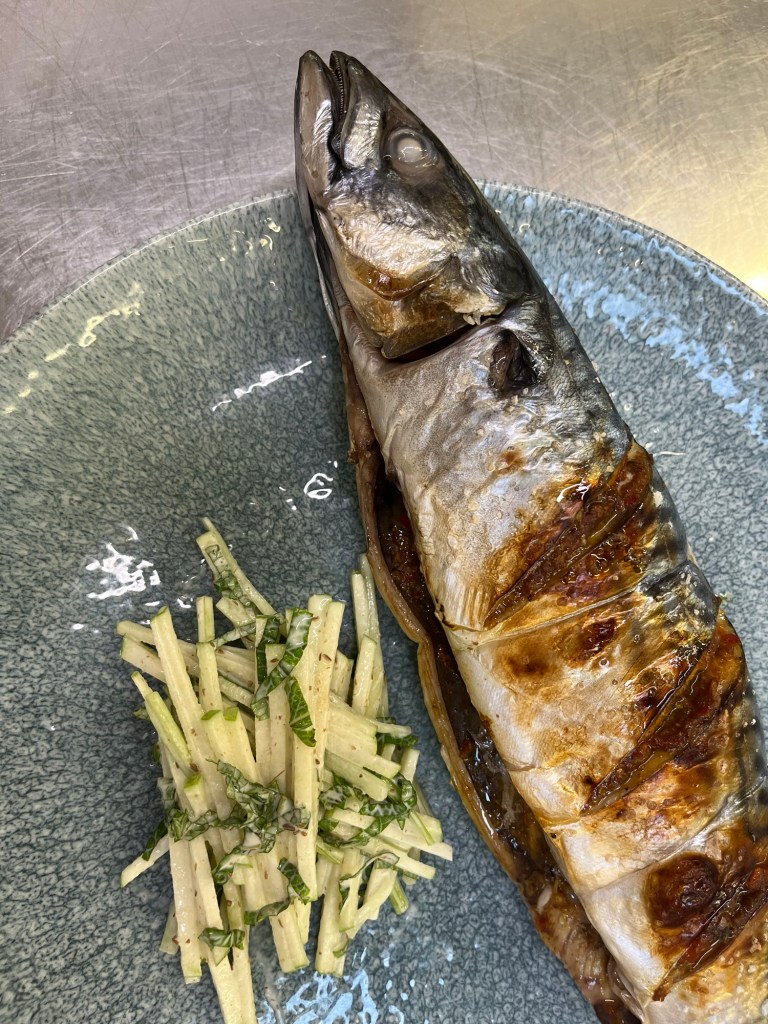
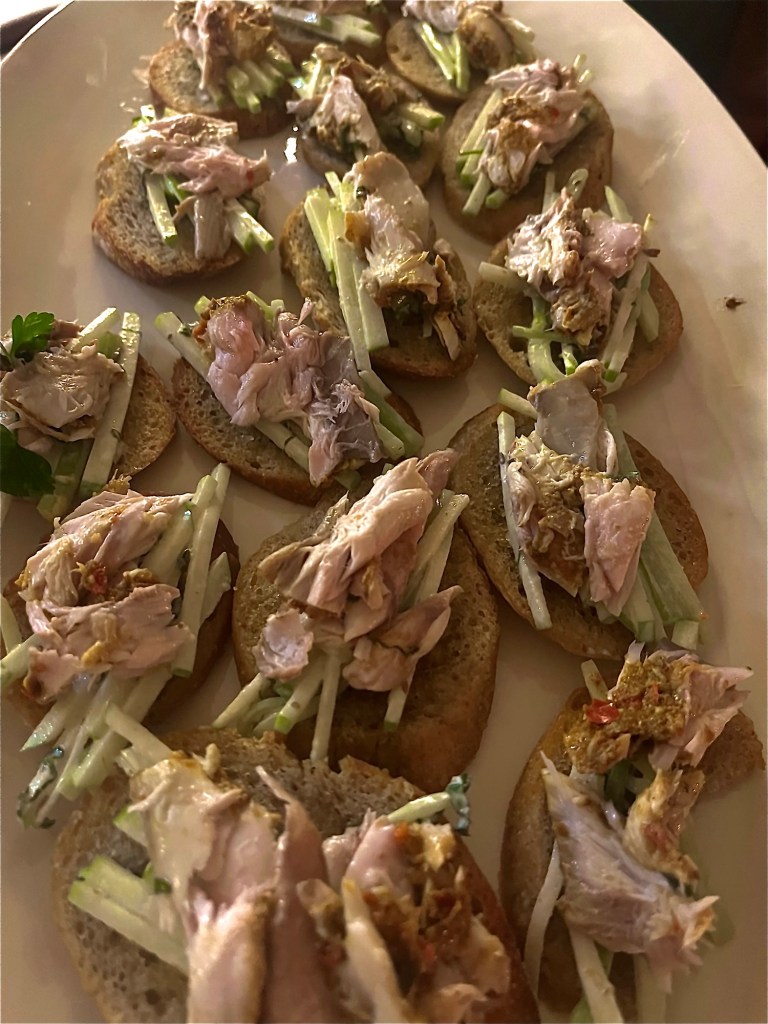
    In the afternoon we were introduced to several fish and shellfish recipes and techniques: preparing and de-veining prawns; moules prep and cooking; en papilotte cooking; and gutting and cooking mackerel. On Friday morning we got to grips with the mackerel. Removing the gills, guts and bloodline before stuffing it with a Goan spice paste. An accompanying apple and celery remoulade provided the opportunity for more knife skills practice. And further consolidation of mayonnaise making, this time by machine. Those still scarred by mayonnaise by hand had assumed machine making would be a breeze. How wrong we were! Somehow (and I honestly think success or otherwise was in the hands of God) mine didn’t split; others took up to four attempts and still weren’t successful. Best to put it behind us and hope for it not to be repeated again on this term’s curriculum. The cooked mackerel, blistered from an initial flash under the grill and richly spiced from the paste, was soft, flaking and flavoursome. The light remoulade was the perfect foil to the oiliness of the flesh. I stripped the flesh from the frame and piled both the remoulade and fish on to crostini that evening for a tasty canapé.

    Much nervousness and apprehension for week 8, with two formal cooking assessments to add to the wine exam. The remainder of the weekend will be spent practicing and revising!

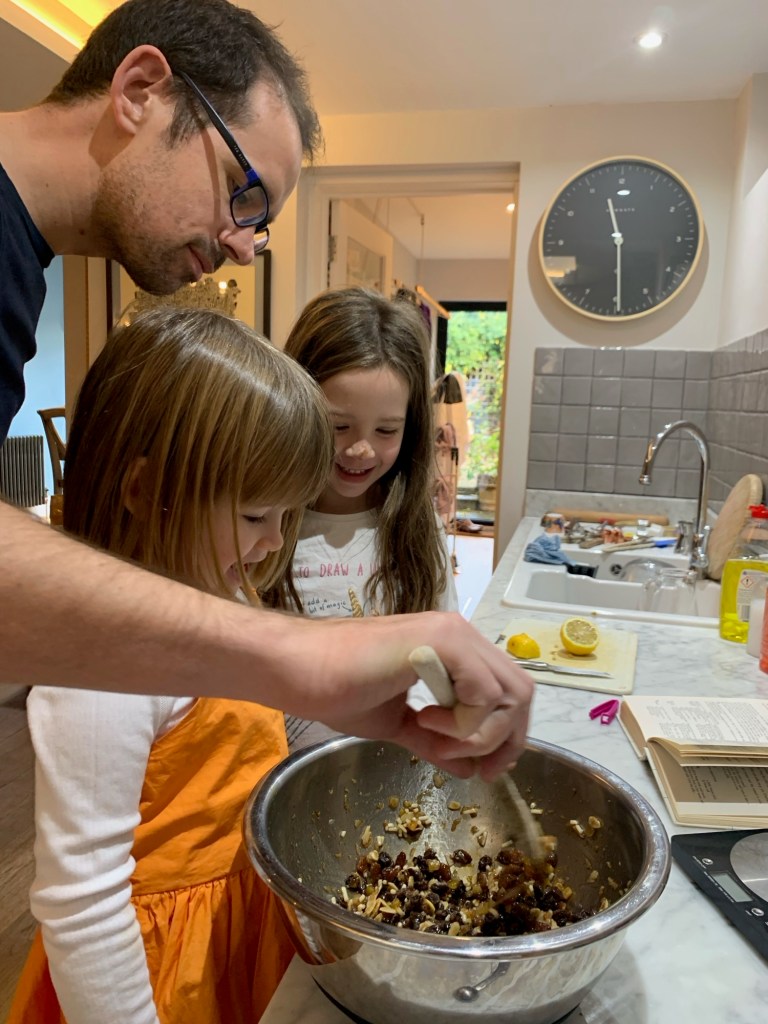
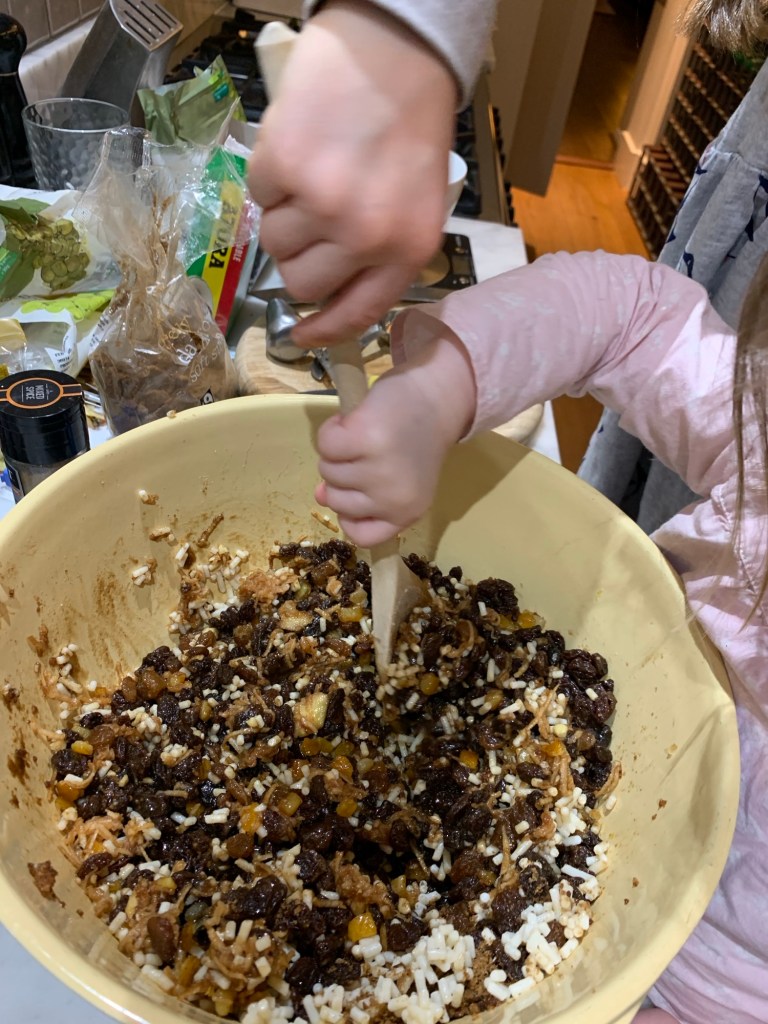
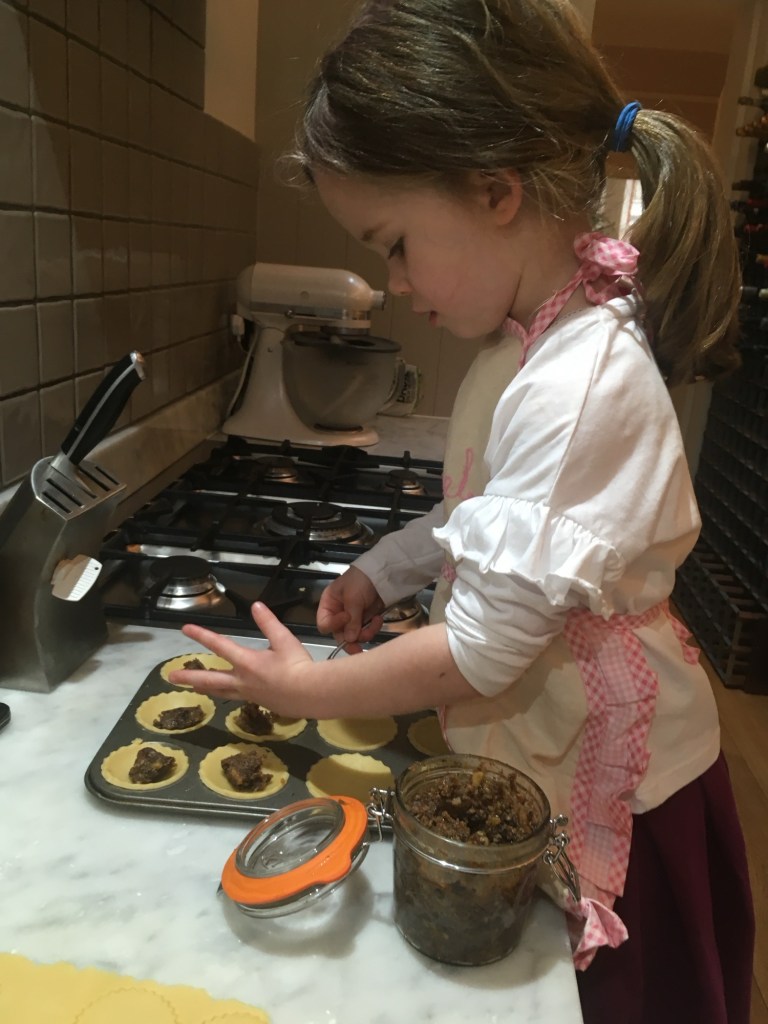
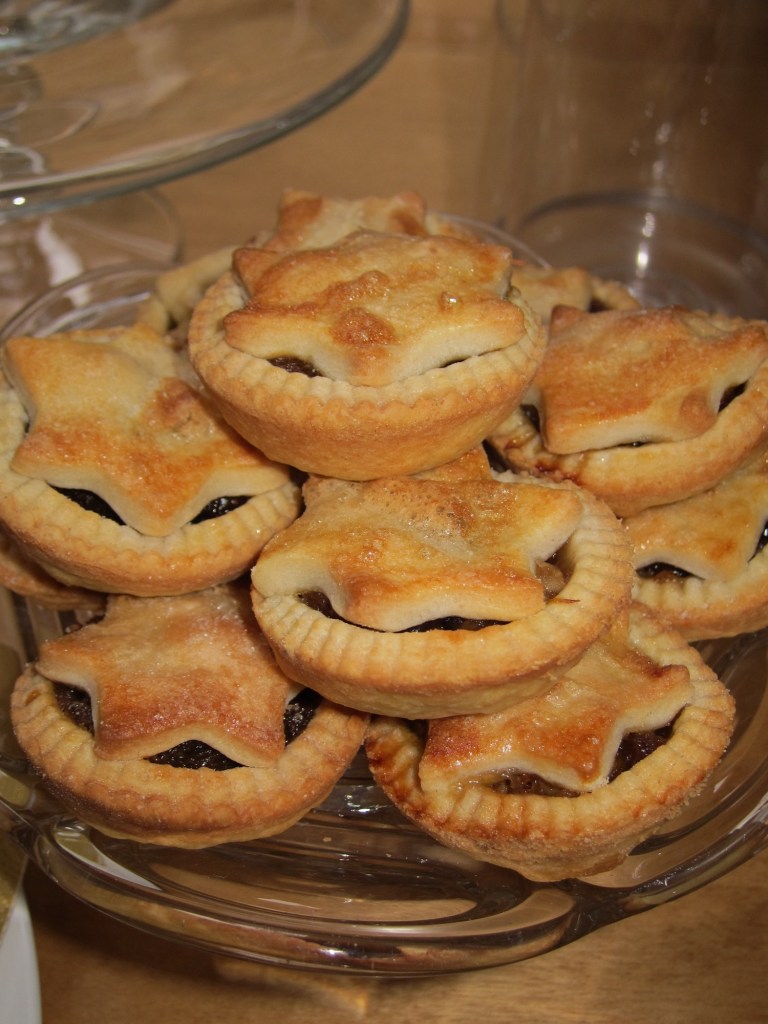
  • The run up to Christmas (and arguably a week or two after) is the only time you can acceptably eat pastry every day. Or at least that’s what my mum thought and anyone who knew her knows it wasn’t worth disagreeing. And why would you? The pastry in question is short and crisp, encasing brandy-laced mincemeat, plump with dried fruit and flecked with almonds. Making that mincemeat in early November is one of those family moments I cherish. It’s a tradition my girls are pining for even before the excitement of Halloween. It’s both satisfying and special, hinting at the joy of Christmas to come. 

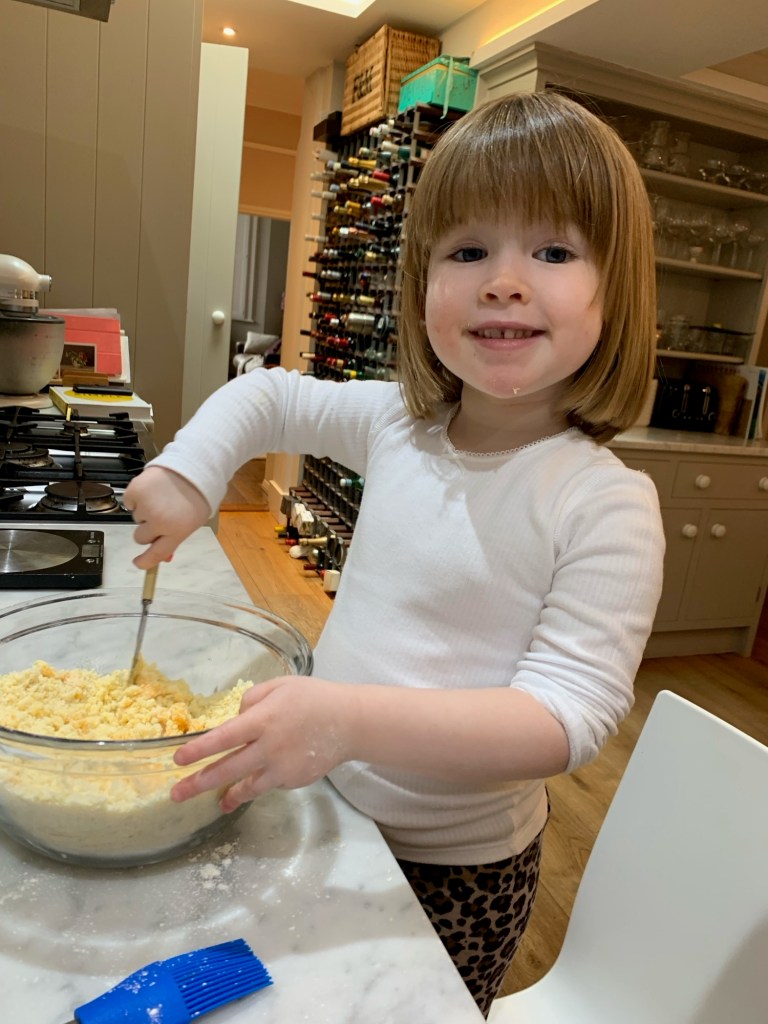
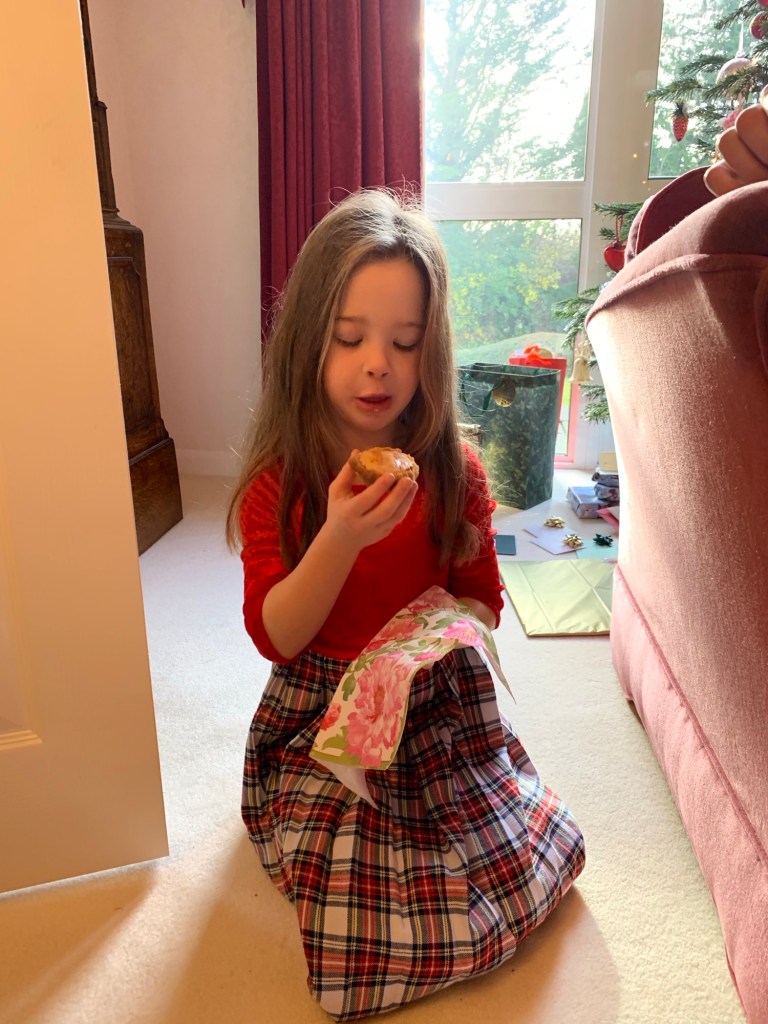
    I’ve been making mincemeat and mince pies with my daughters since they were 18 months old; teaching them what I learned from my mum. She was of course the expert but, guided by her, I was making them myself from the age of 11. I always proudly notified my best friend Christina (by old school land-line) when a fresh batch had been baked. My brother and I would happily scoff them as fast as my mum and I could make them. But on Christmas Day, it was a decadent treat to lift the pastry lid, spread brandy butter over the mincemeat, replace the lid and devour! I can’t recall whether that became before or after the obligatory turkey, chipolata and mayonnaise sandwich encased in my mum’s granary bread. Probably best not to dwell on that!

    Shortcrust pastry does take a bit of practice but mince pies are reasonably forgiving. No blind baking required and pastry cutters can help hide a multitude of sins. If you really can’t face making pastry, buy a good quality all butter one. But I urge you to have a go at making your own mincemeat. It’s lovely to do as a family, borrowing from stir up Sunday and making a wish as you mix all the rich ingredients. Of which there are quite a few to buy, and they aren’t cheap. But it really is worth it. The difference between your own and the syrupy-sweet viscose version you find in the shops couldn’t be more striking. Have a try and I promise you’ll never buy a supermarket mince pie again.

    If you’re keen for some in person tips and want a fun couple of hours for you and a few friends, I host mince pie making workshops at my kitchen table. You’ll make your own mincemeat (to take home), your own shortcrust pastry and half a dozen mince pies (also to take home). You’ll be treated to one of my mince pies and a glass of fizz or mulled wine. Contact me on roseyjeffery@me.com to book.
    Mincemeat (to fill 3 x 400g jam jars) adapted from Cooking Explained, Barbara Hammond

    • 200g suet
    • 200g cooking apple
    • 200g raisins
    • 200g sultanas
    • 200g currants
    • 2-4 tbsp brandy (optional?!)
    • 200g mixed peel
    • 50g flaked almonds
    • grated zest of 1/2 lemon
    • juice 1/2 lemon
    • 1/2 tsp mixed spice
    • 200g brown sugar
    1. Grate the apples into a large bowl, add the lemon zest and squeeze over the lemon juice.
    2. Measure out the rest of the ingredients and add it to the bowl.
    3. It will need a really good stir, allowing all family members to take a turn and make a wish 🙂
    4. When everything is fully incorporated, pack the mincemeat into prepared (i.e. sterilised) jam jars. Jam jars can be sterilised by putting them through a dishwasher cycle. Or for speed, wash with soapy water and put in the oven on a low temp for 10 mins.
    5. Store the mincemeat in the fridge until you are ready to make your pies.
  • Week 6 was short and carb-heavy. Two days off for half-term (yippee!) and then pasta, cacio e pepe, mashed potato, risotto Milanese and white bread….freezer now re-stocked for a few weeks 🙂

    We returned from a restorative four day weekend to a morning of slow cooking. Carbonnade of beef, lamb tagine and an Ethiopian mince beef stew. We learnt about the steps to success for browning meat (e.g. don’t over-crowd the pan, and wait for the meat to self-release) and enjoyed tasting the meat which just fell apart and melted in the mouth. Minchet Abish (the Ethiopian stew) was a revelation. Such interesting flavours paired with yellow rice and tangy toppings of cottage cheese (yes!), quick pickled cucumber, chilli, plum tomatoes, and parsley. In the afternoon, we made pasta by hand and by machine. We learnt that when ready the pasta should feel like chamois leather. Which took me right back to cleaning my dad’s Renault 7 on a Saturday afternoon circa 1990. Not what one normally associates with pasta! We made a quick basil pesto ahead of cacio e pepe. The pungent aroma of toasted pepper was heady. The emulsion of pasta water, cheese and butter created a silkily smooth sauce which was a perfect foil to the pepper and a more-ish coating for the tagliatelle. With a final shaving of parmesan, we were ready for service.

    To kick off a group project where we will develop and cook a buffet for 25 fellow students and teachers, Grace and Helene treated us to a showcase of crowd-pleasing buffet-style dishes: poached trout with pickled cucumber and lime mayonnaise; courgette and ricotta galette; lamb shawarma with chickpea flat breads and tahini yoghurt; Middle Eastern squash with white beans, mint and lemon; Chermoula aubergine with freekah and yoghurt; and a baked vanilla cheesecake that somehow we all had room for. An inspiring feast which fuelled our creativity as we planned our own menus. One of the things I wanted to get from my time at Leith’s was fresh ideas and techniques and this task will certainly achieve that. My group decided on a South East Asian theme for our buffet which is definitely out of my culinary comfort zone.

    On Friday we embarked on our first all day cook: 7 hours in the kitchen with just a 20 minute break. Good organisation, mise en place, and keeping on top of the washing up were key to success (and staying sane). Plus of course stamina and decent culinary skills! The smell of featherblade beef browning shortly after breakfast was strangely appetising. Having assembled our Carbonnade for a low and slow cook, we weighed out ingredients (including fresh yeast) for a classic white loaf. Whilst the dough proved, I got on with the mashed potatoes. The Leith’s way on mash is as exacting as its way on everything else. And I have to admit I was a little nervous about executing this basic comfort food to those standards. Mash made, I started the final dish of the morning: risotto Milanese. I don’t love the dominance of saffron in this dish but, slightly undercooked carnaroli aside, it’s difficult not to enjoy the slowly sweated onions, plump rice and sighing sunshine coloured sauce of butter, parmesan and saffron.
    A quick 20 minute break to refresh my tastebuds with a salad and back in the kitchen to put the finishing touches on the Carbonnade and mash for service. The meat could barely keep itself together when touched with a fork; the sauce, whilst flavoursome, was thin. I used a beurre manie to thicken it and re-heated the mash adding the dregs of a warm cream, butter and milk mix to take it to a creamy dropping consistency. Unfortunately, I slightly over-seasoned both mash and carbonnade but you live and learn and they still tasted good! Meanwhile, my white bread was now out of the oven and looking well-shaped, proven and baked – my mum would have been proud.