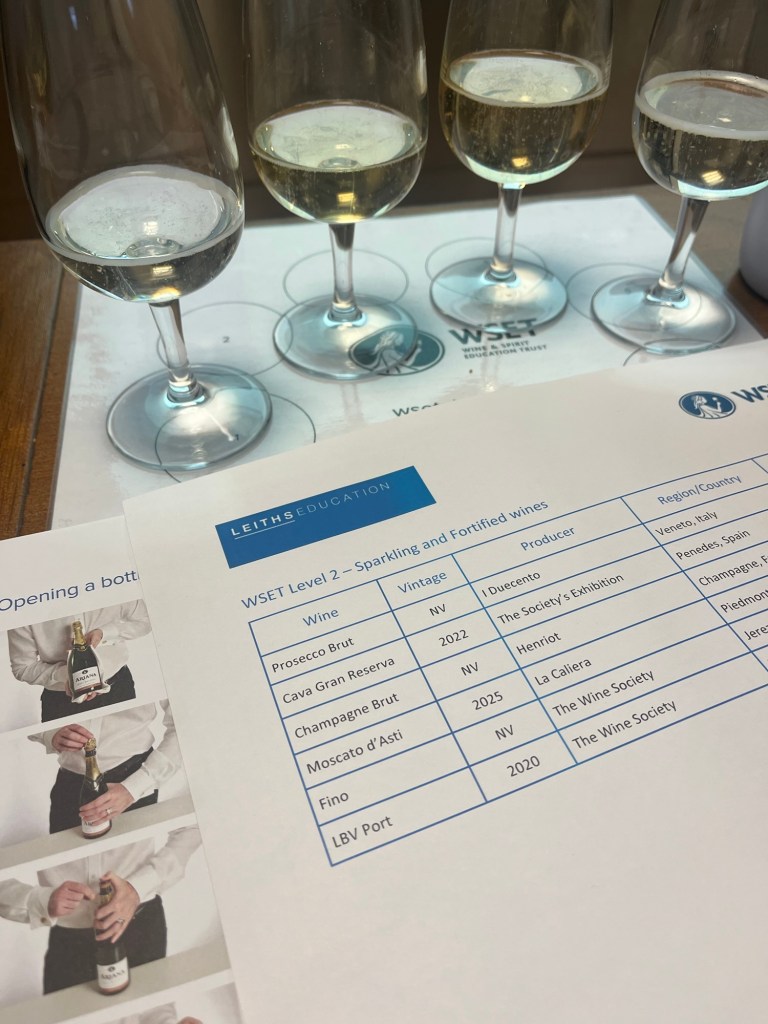
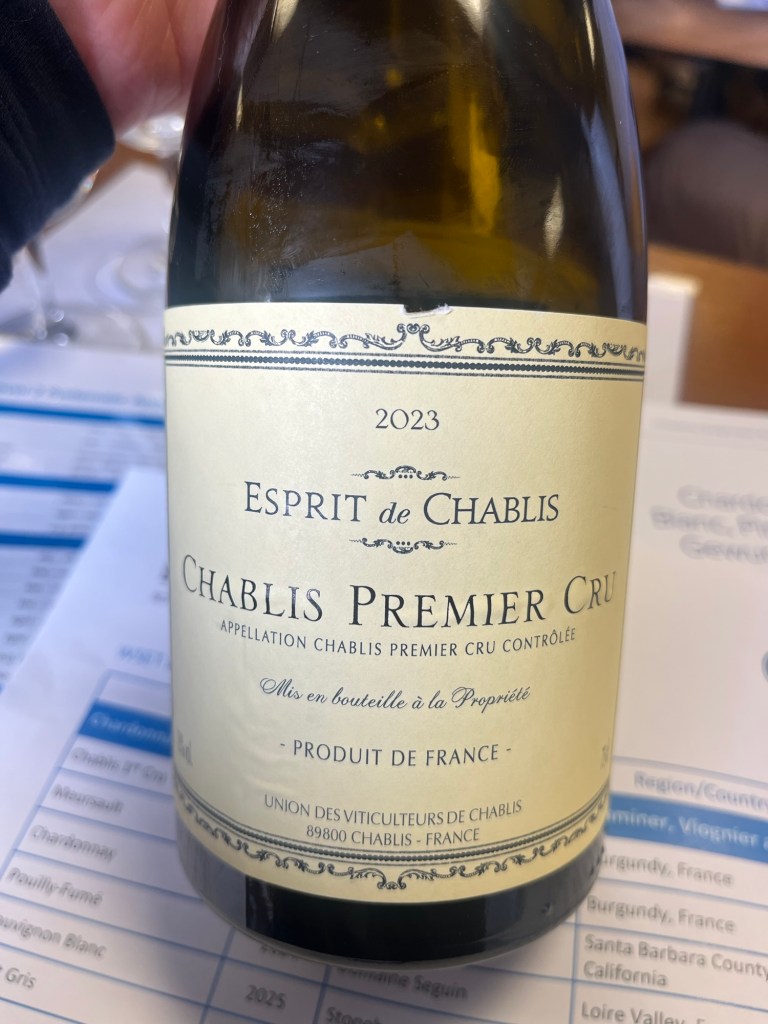
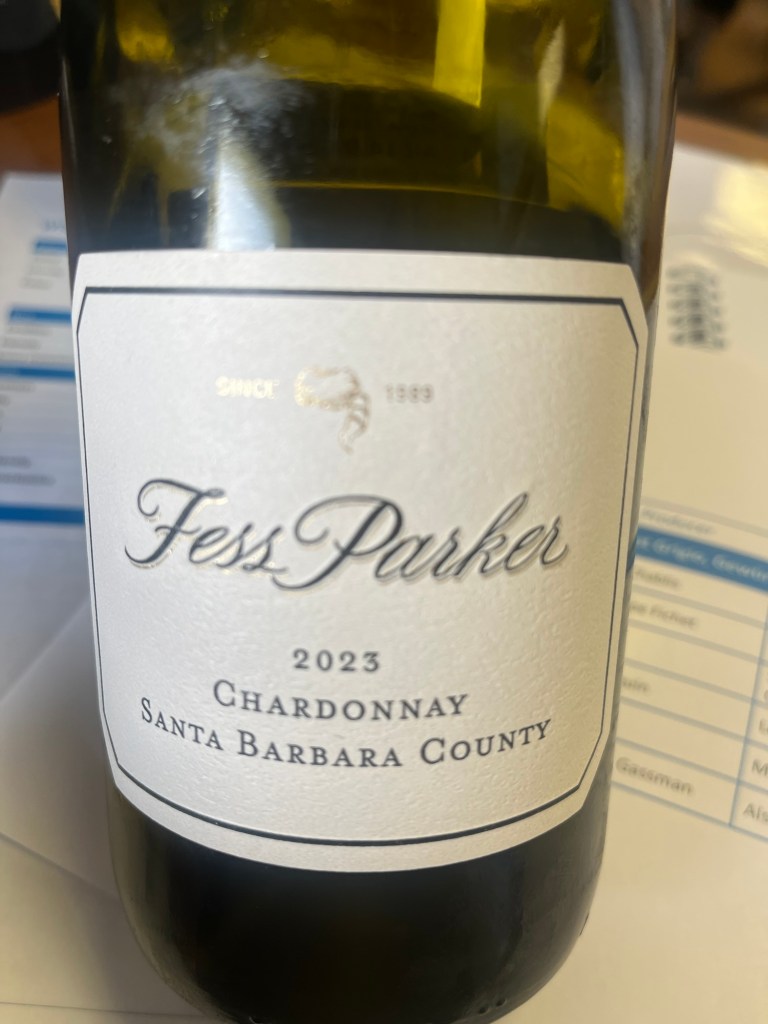
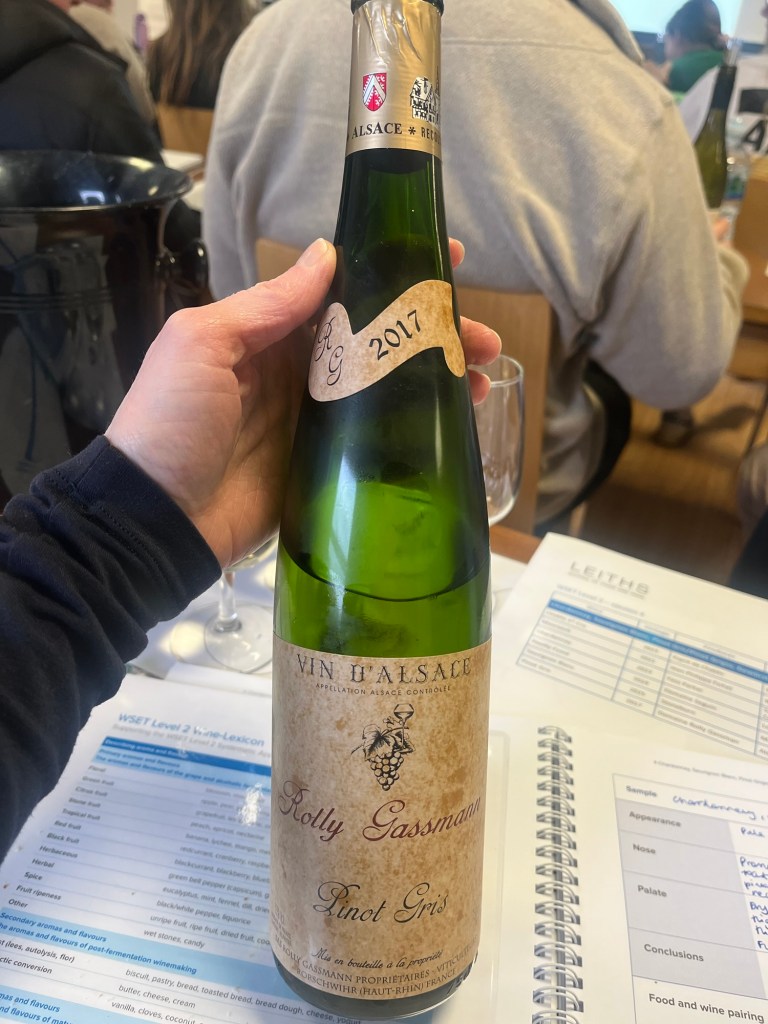
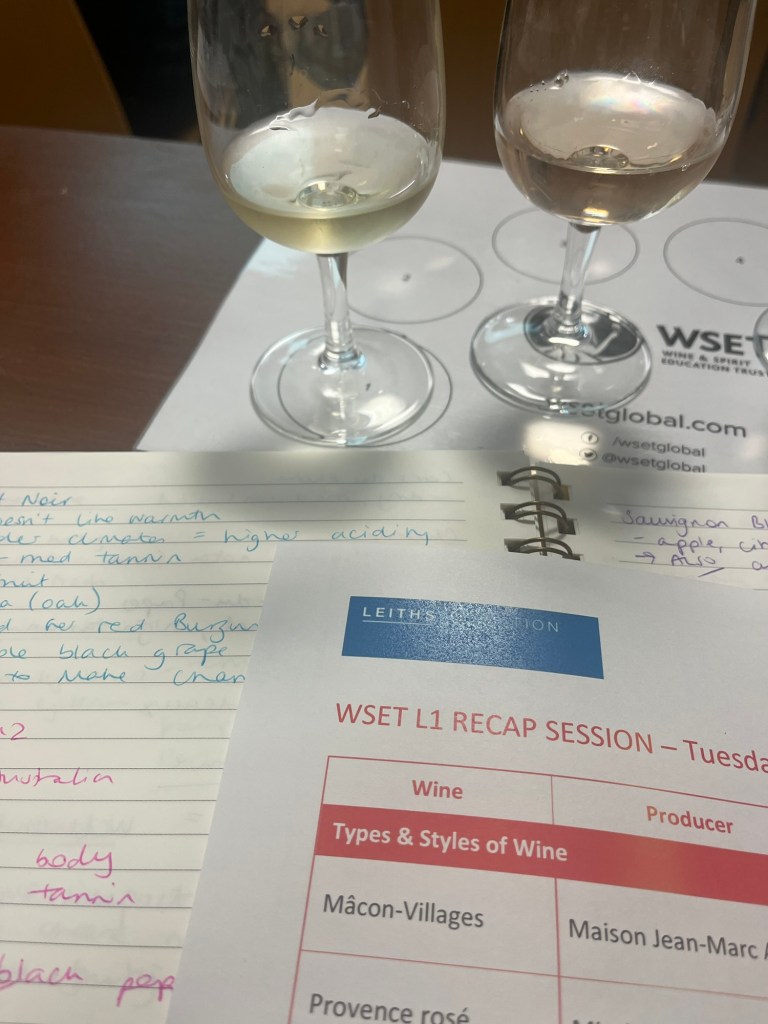
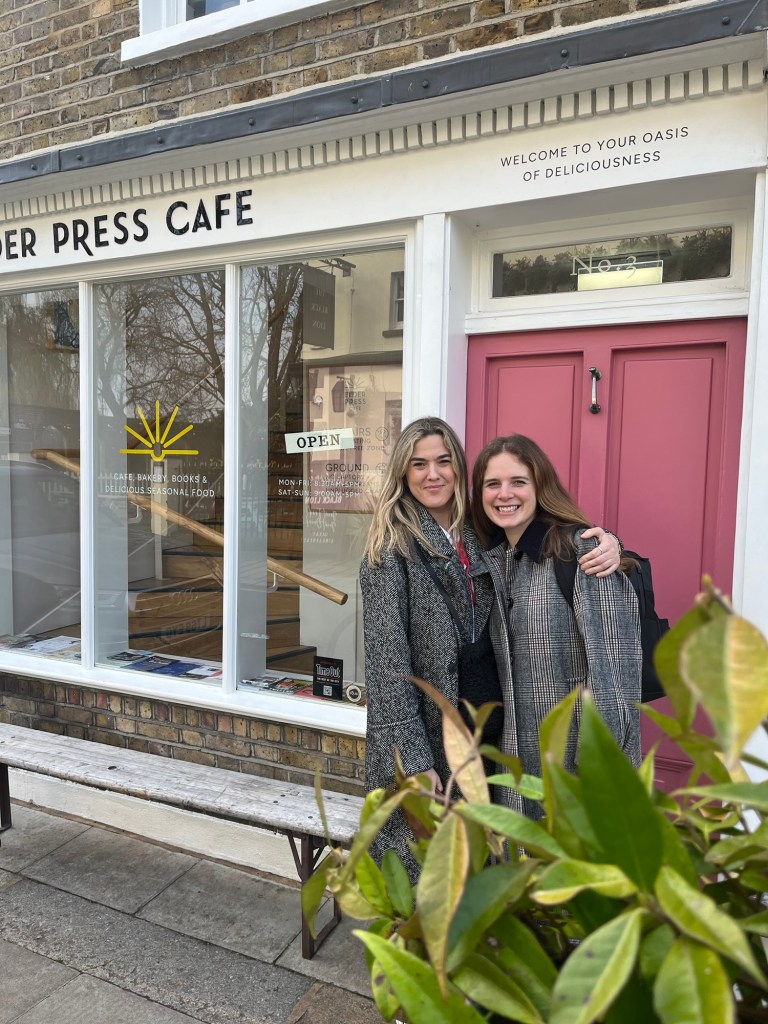
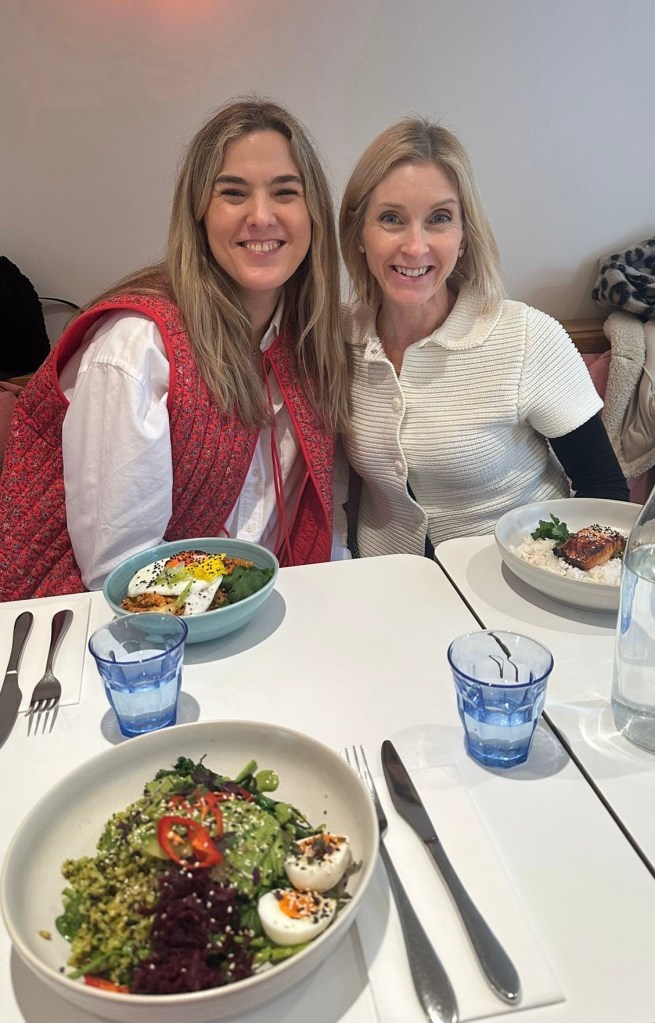
• I woke up at 4am on Monday morning. My brain immediately kicked into gear and I started testing myself on grape growing regions and facts. Chardonnay – Burgundy; Sauvignon Blanc – Loire Valley; Pinot Noir – thin skinned and difficult to grow. Yes, the wine exam loomed large for later that day. Thankfully I had learned pretty much everything covered in the exam. The only thing I wasn’t sure of was the correct chilling temperate for dessert wine. Personally, I like to chill the balls off it but that isn’t necessarily what the WSET advises. To celebrate our hard work, three of us went for a delicious lunch at The Elder Press Cafe by the river in Hammersmith. A run in the sunshine, a few theory notes written and that was Monday done!
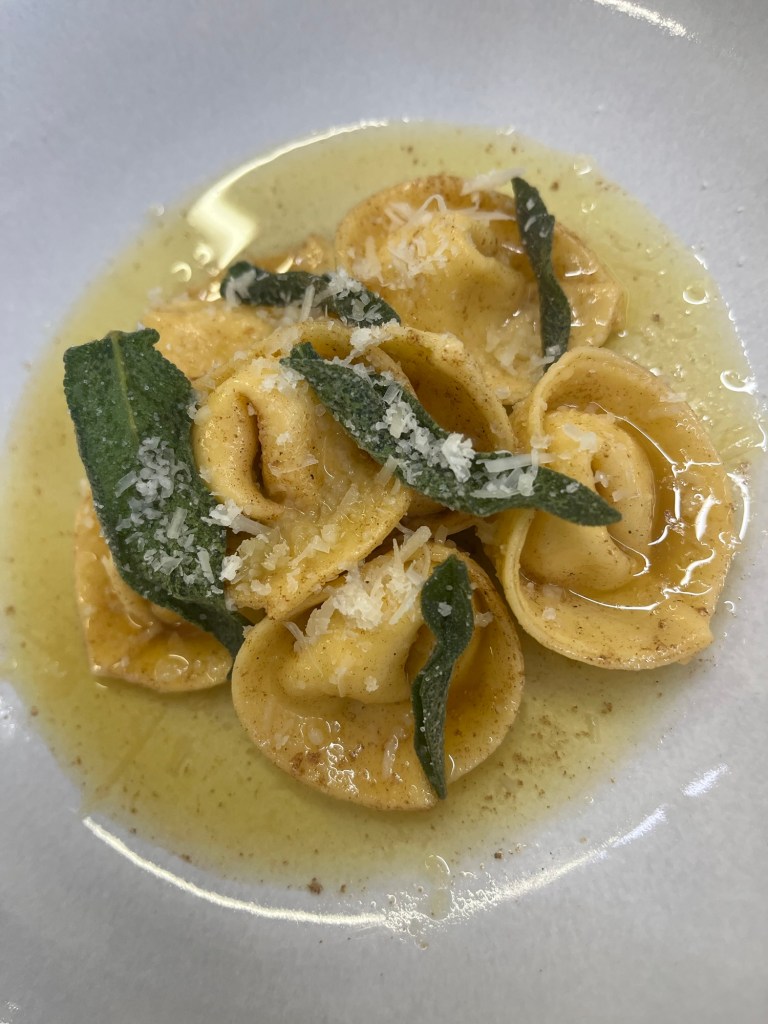
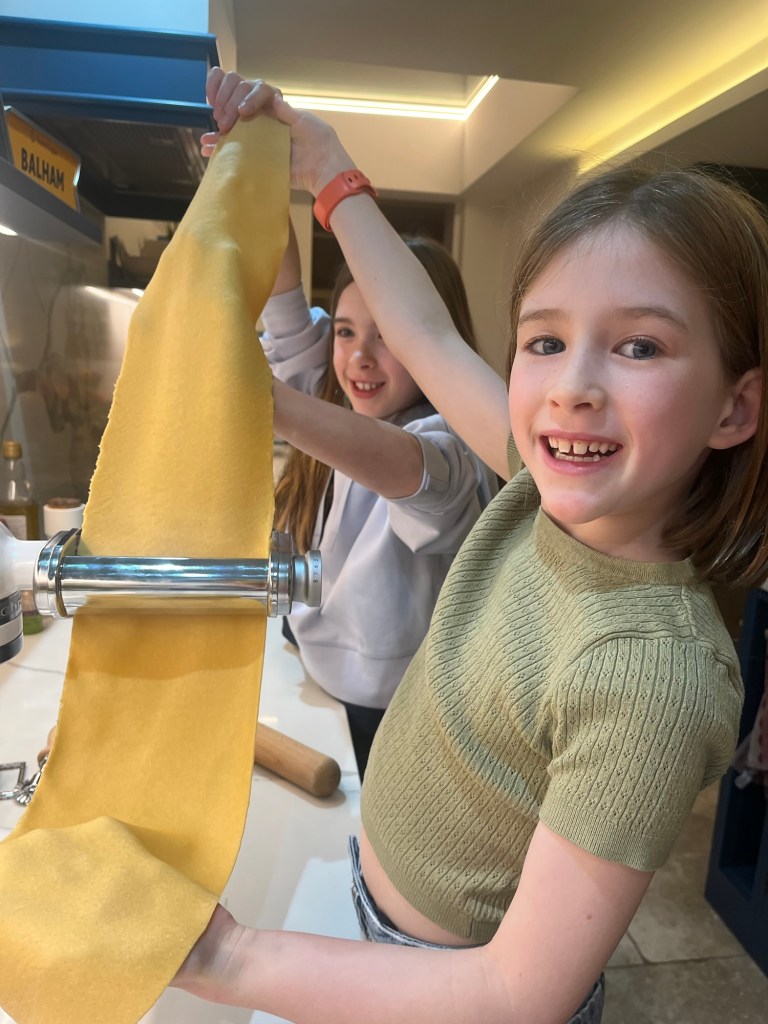
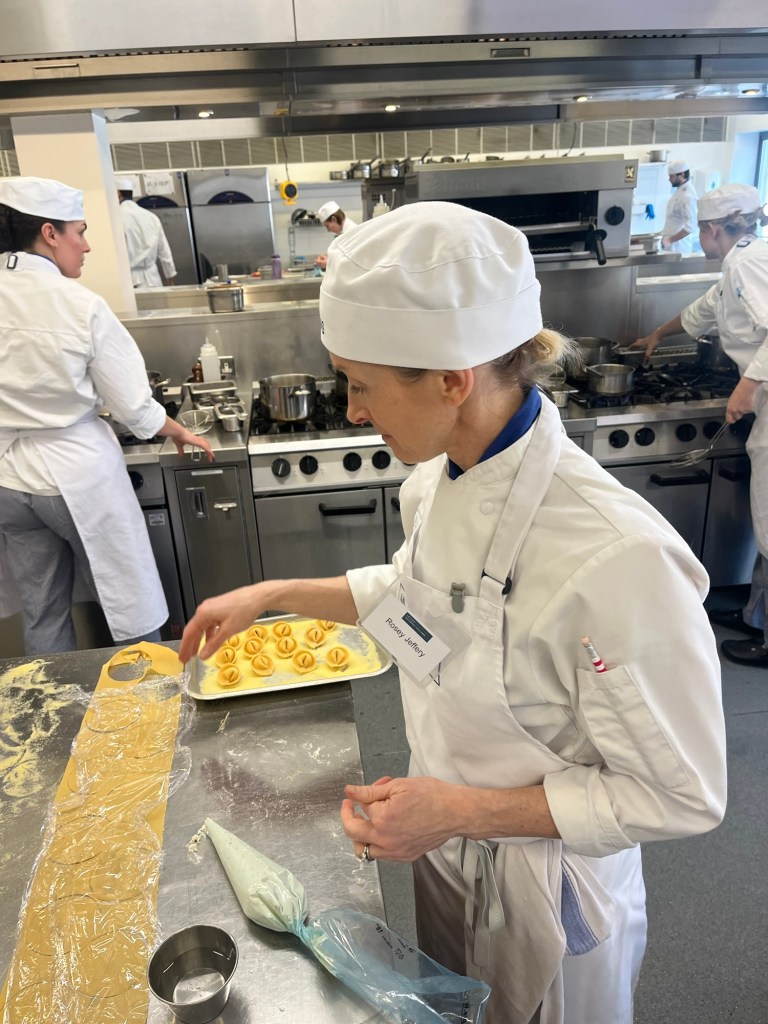
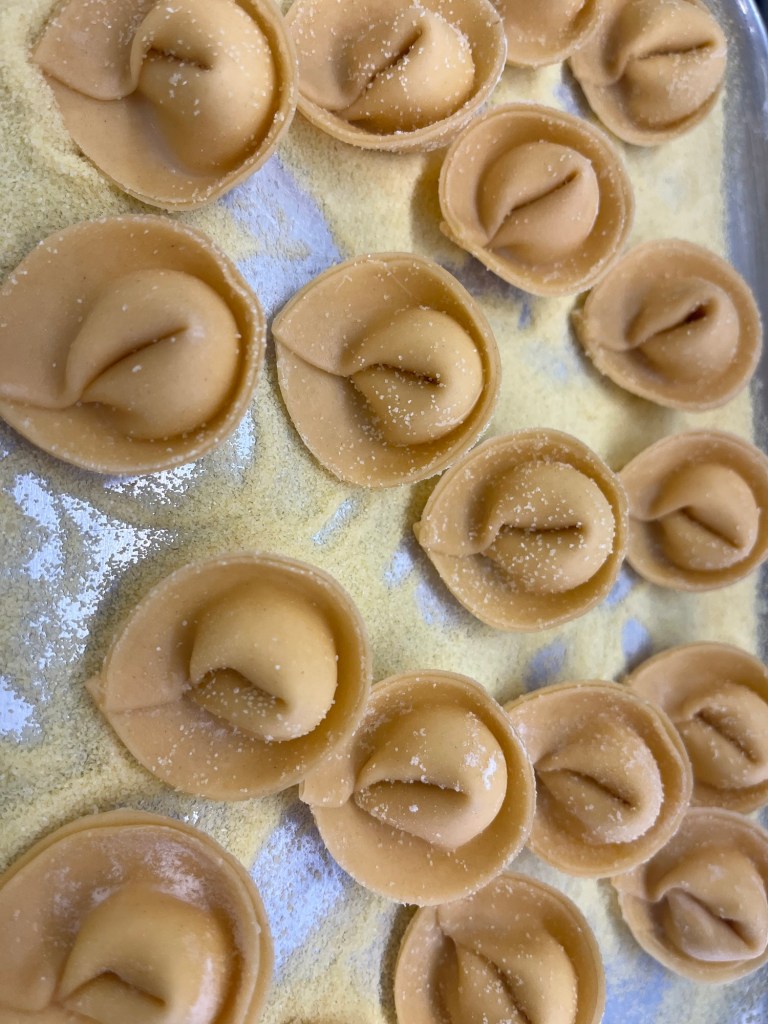
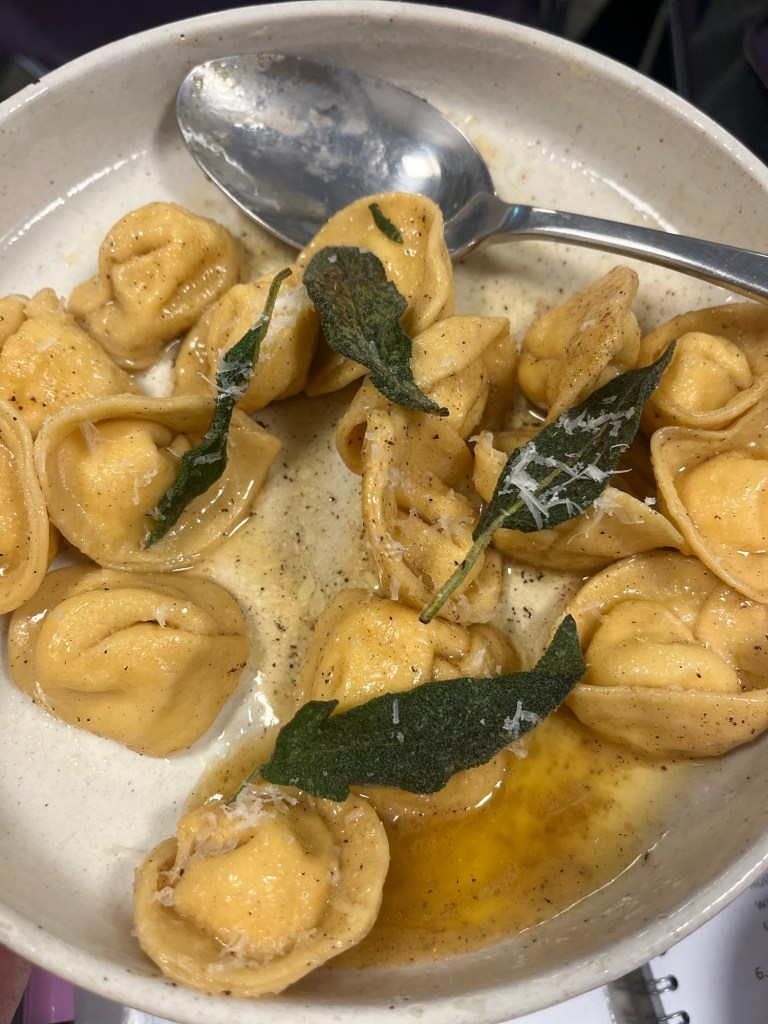
    Tuesday began with a meditative kitchen session making tortellini. We were told that the shape famously resembles the navel of Venus. An infatuated innkeeper apparently created it after spying on her in her room. Having made a golden dough, enriched with egg yolks; and a filling of ricotta, parmesan, lemon and nutmeg, we began the careful creation of the belly button pasta. Piping the filling into the centre of a pasta circle, folding it over, crimping to remove any air; creating a divot in the soft filling and then bringing together the two edges to sit atop each other and sealing with water. Stunning! Alongside the tortellini we also assembled and cooked a Madeira jus ahead of our venison assessment on Friday.
    In the afternoon, a small group of us went to the City Harvest depot to kick off our charity cook project. The depot is huge and houses an enormous amount of food (fresh and store cupboard) that would otherwise go to waste. The charity rescues surplus food from farms, manufacturers, wholesalers and retailers and then delivers it to organisations who feed those facing food poverty. Our task was to each lead a small group of fellow students to produce 50 portions of food using the ingredients available in the depot that afternoon. There were vast quantities of root veg, onions and porridge oats, together with cauliflowers and cabbages as big as your head. Our collective creative juices began to flow. The root veg and oats combo gave me the idea of a savoury crumble. I then stumbled upon a pallet of ‘smoky flavoured sprinkles’ which became the genius flavour bomb addition to the crumble topping. I also grabbed a stack of tinned tomatoes and a dozen red pepper and ricotta pesto jars. We loaded up the palettes of our selected goodies and headed back to school to await the delivery. In the meantime, we prepared a high level plan for the following day’s cook to ensure we had priorities and a sequence to lead our team members.
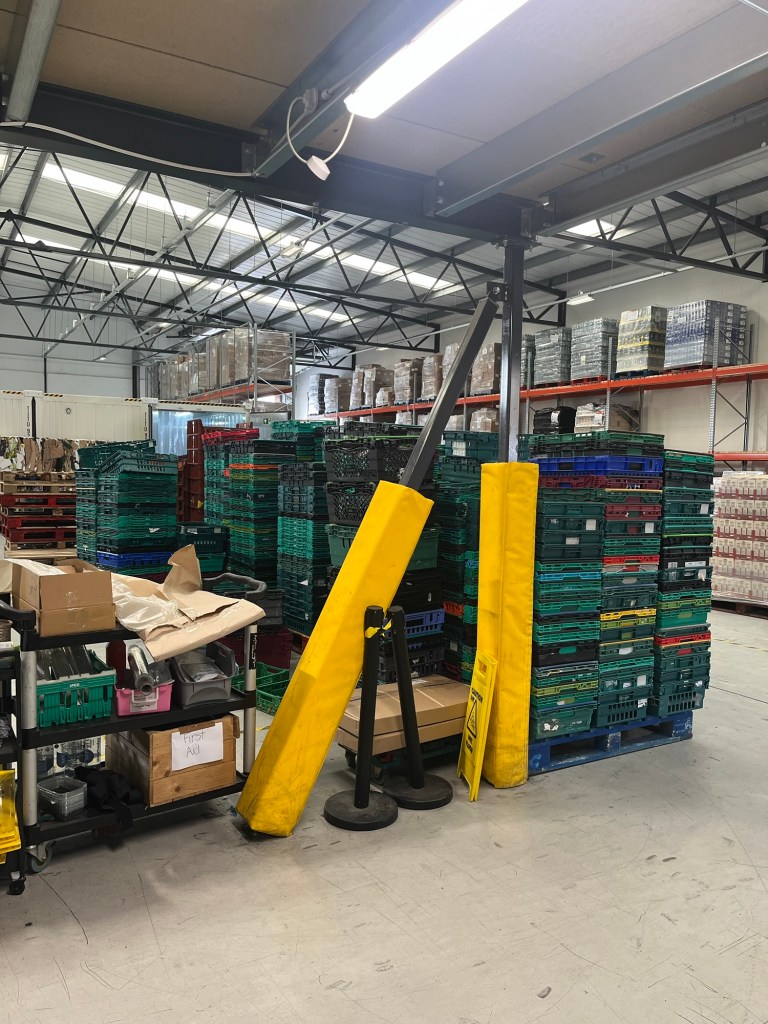
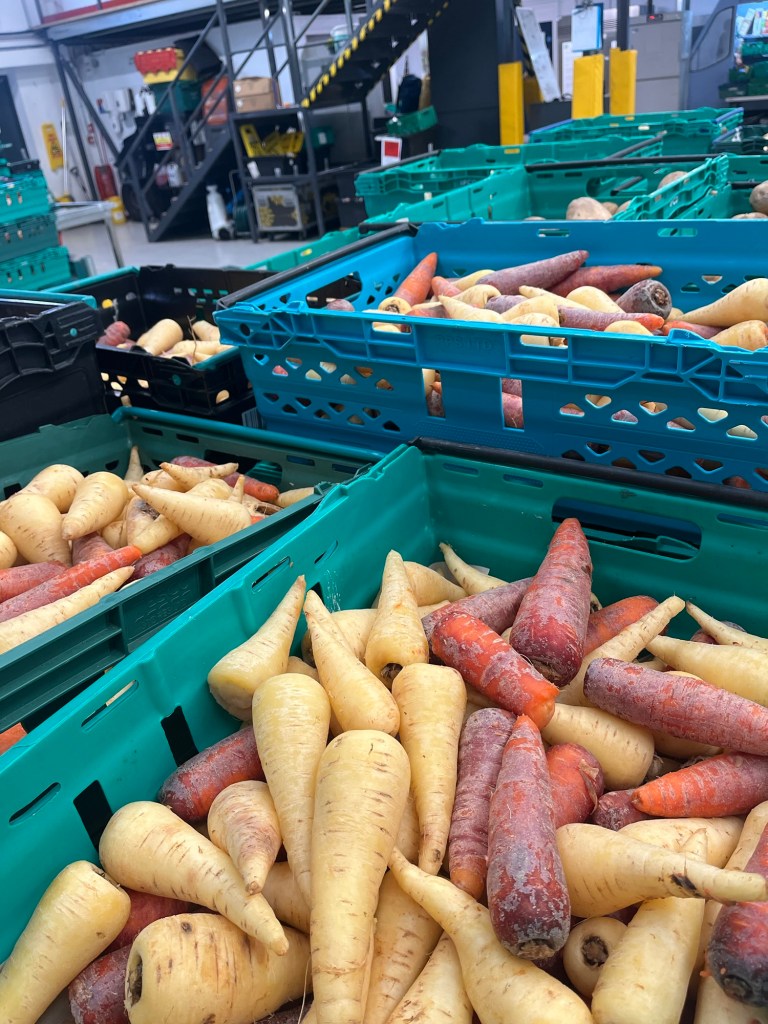
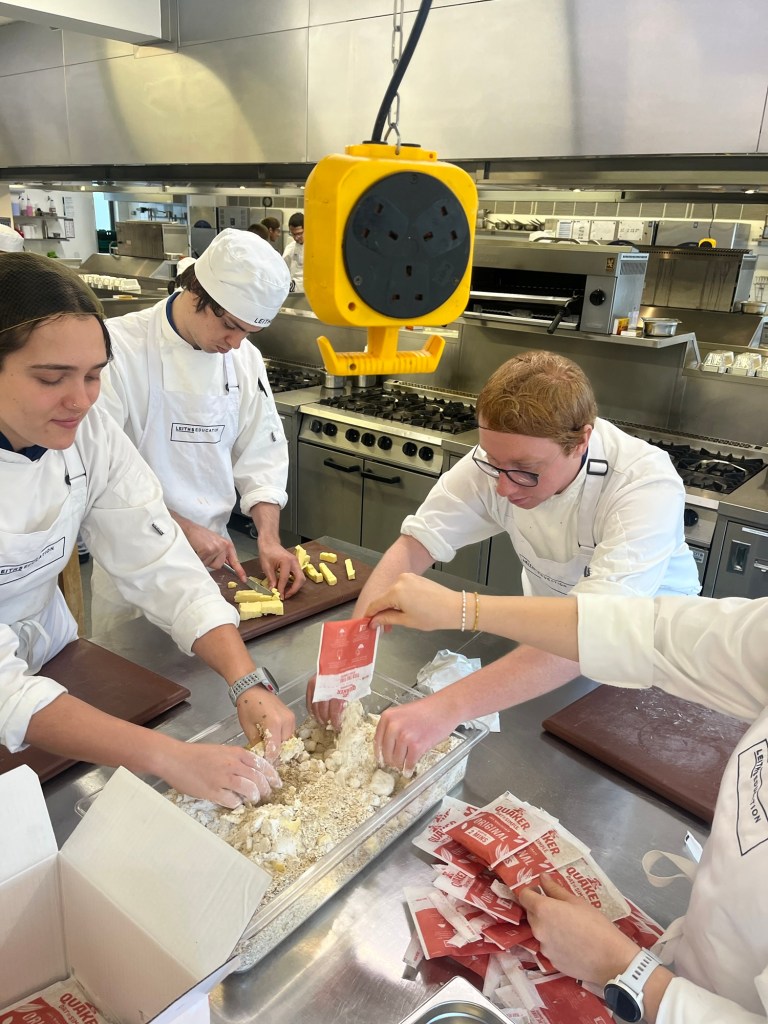
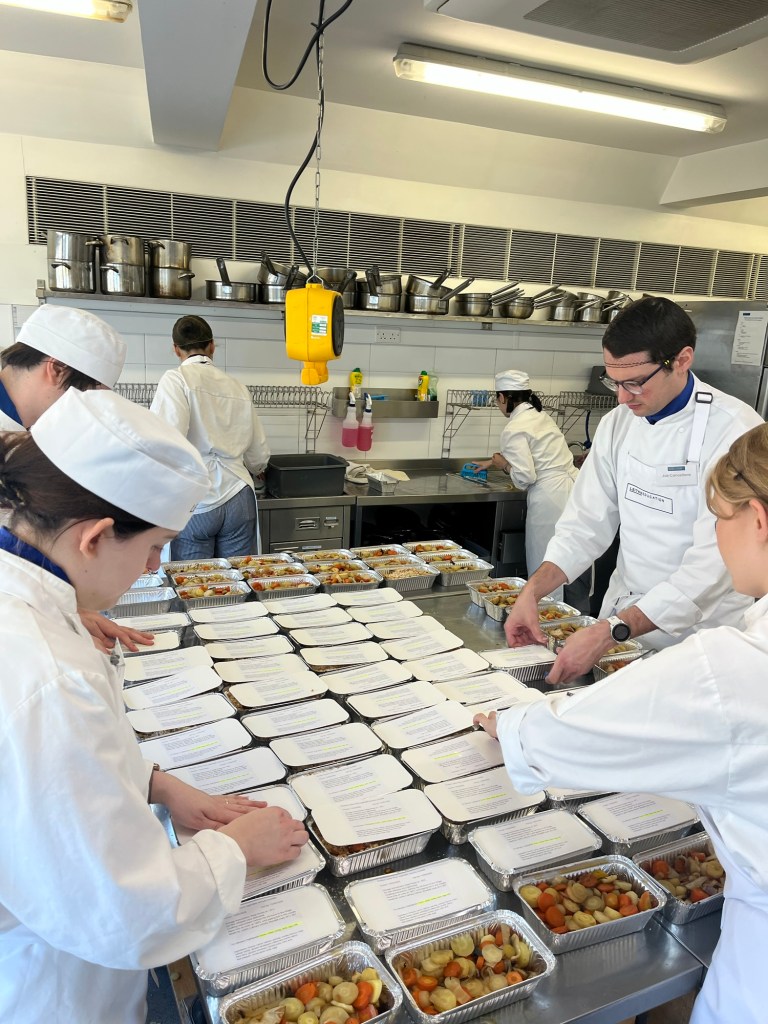
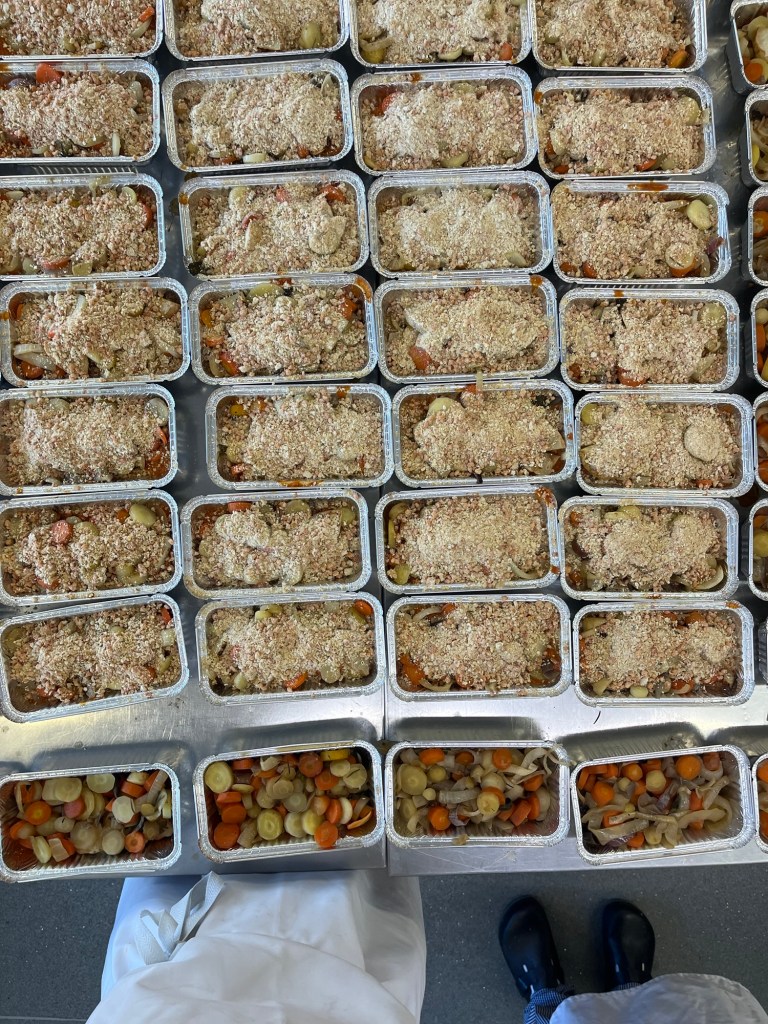
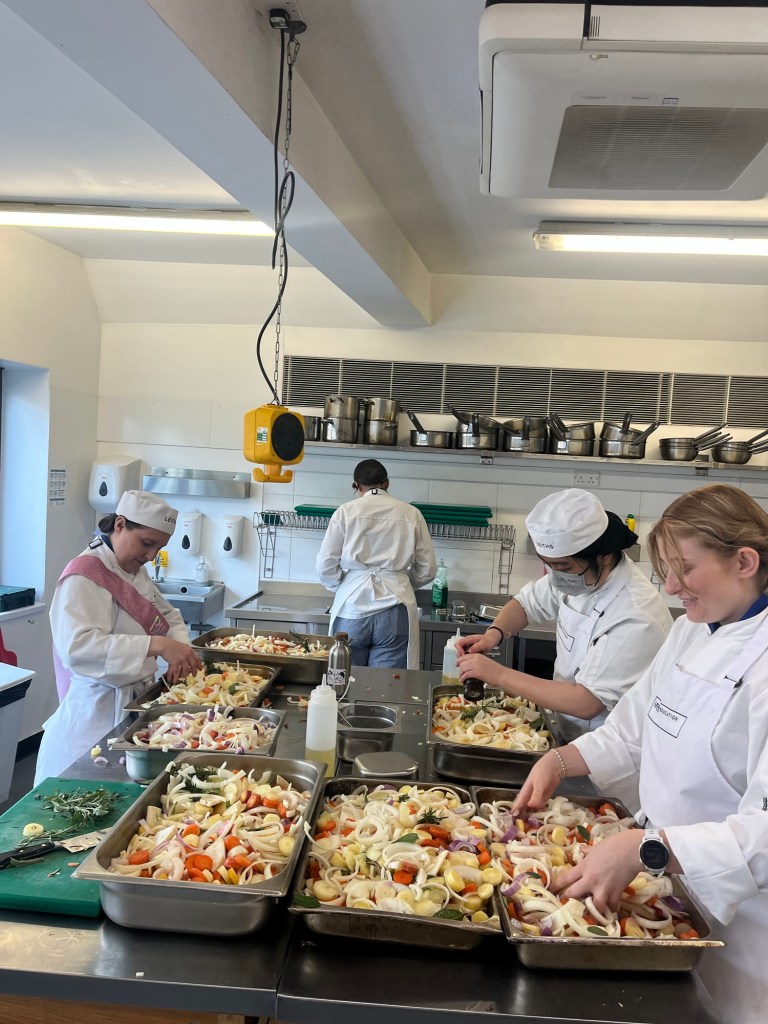
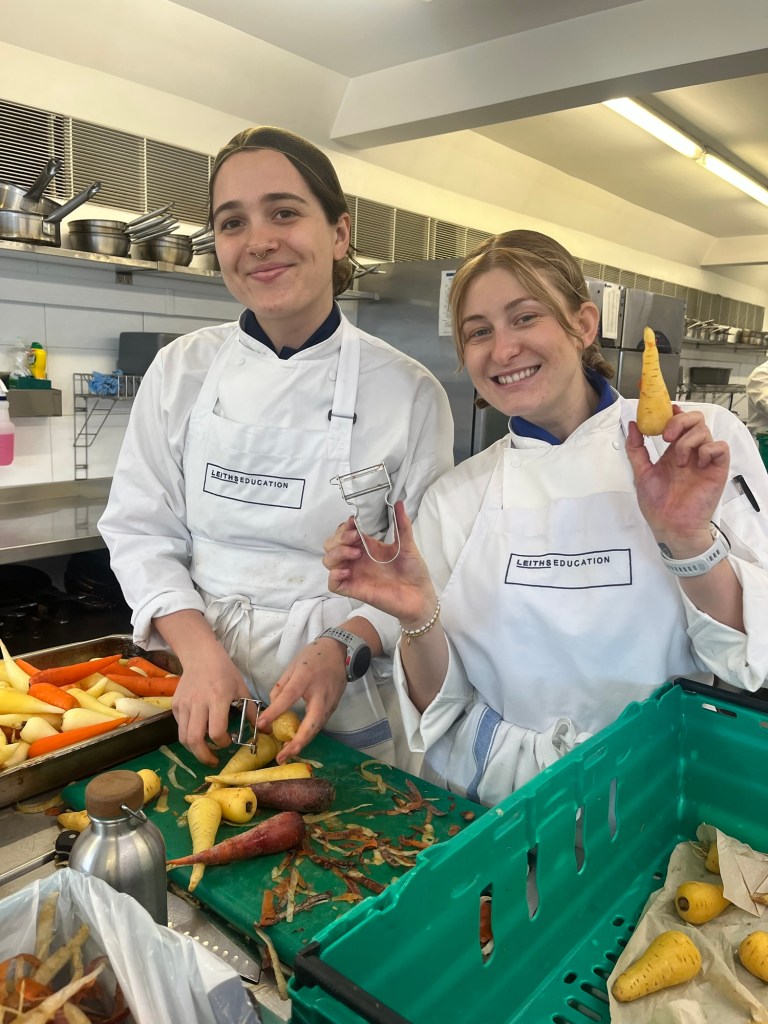
    We arrived the following morning to a palpably different vibe in the kitchens: classic 90s tunes blasting from a speaker, a highly relaxed atmosphere and copious quantities of veg and fruit piled high. We got organised and awaited the assignment of our team members. My team grew from 3 to 7 as we endeavoured to wade through the task of peeling and chopping seven crates of onions, carrots, parsnips and celeriac. It took two hours to achieve and then into the oven they all went to roast along with some fresh herbs I had picked from my garden. The next job was the sauce in which the veg would nestle. We emptied the contents of the tins of tomatoes and jars of pesto into two big double-handed saucepans. We let it come up to a simmer before adding several handfuls of nutritious red lentils. It bubbled away becoming rich and concentrated whilst we escaped for a quick lunch. Finally we prepared the crumble topping of oats, flour, butter and, of course, the smoky flavoured sprinkles. The vast veg took some time to cook but finally we were ready to assemble the three component parts. We realised quite quickly that the veg and crumble were in greater supply than the sauce so we ended up making 50 portions of savoury crumble and 31 portions of root veg gratin. Altogether as a group, we made over 350 portions of food that day. A huge and heartwarming achievement. We were pooped and proud! A well-earned day off on Thursday which I used to complete and submit the Confederation of Hospitality & Tourism coursework on nutrition and sustainability for the upcoming deadline.
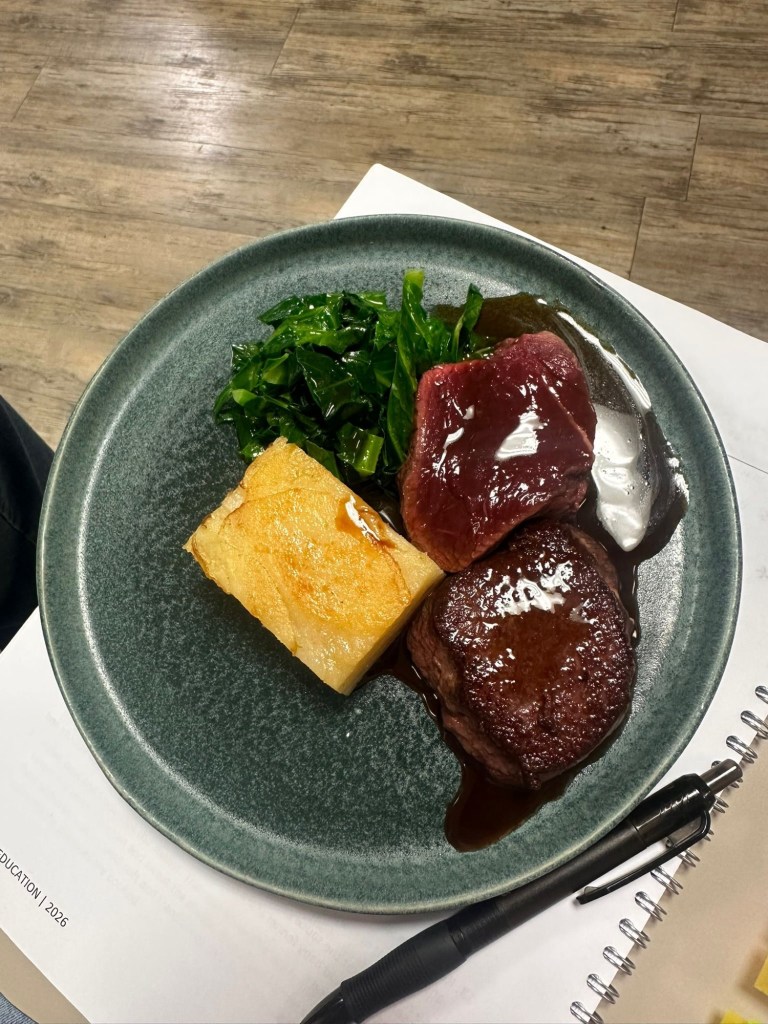
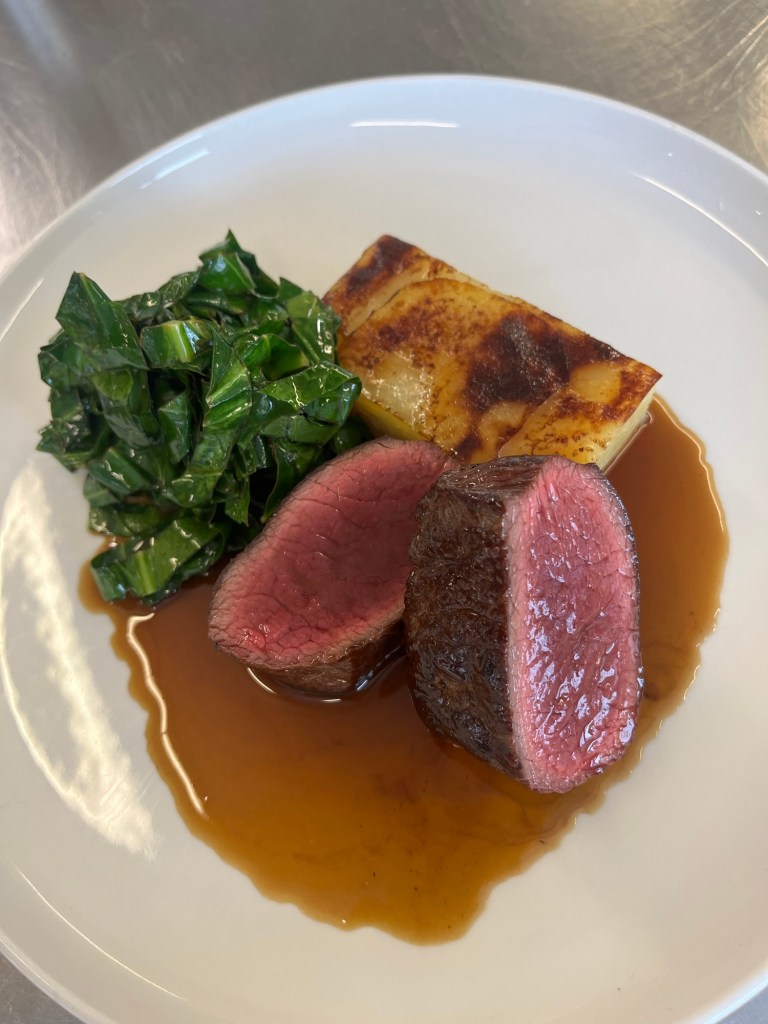
    Nerves were in abundance on Friday morning. Our fourth and final ‘continuous’ practical assessment. A venison steak cooked rare, pommes Anna, spring greens cooked to chef’s choice and a Madeira jus with plenty of flavour, shine and clarity required. I started with the pommes Anna – melting the clarified butter and tackling the death trap that is the mandolin to slice the potatoes. Lots of seasoning and nutmeg and then layering the coated slices neatly in a small frying pan. The melted butter sets up really quickly so it had solidified before I’d even got going. I smeared it round the edge of the pan in an effort to ensure a clean exit from the pan later. The Madeira jus tasted ok but needed reducing to intensify the flavour plus some butter, lemon juice, salt and double cream to achieve a balanced finish. First time cooking venison and it seemed straightforward: temper, sear on all sides for a few minutes, baste in butter and thyme, and rest for at least 8 minutes. Venison is the only meat we have cooked to rare rather than medium rare so lengthy tempering and resting were even more important than ever. The pommes Anna nearly skidded off the plate as I inverted the pan. Thankfully no real crisis and more importantly the top was beautifully golden with caramelisation.
    Just one week to go of the Intermediate curriculum before our theory exam and final practical assessment. My thoughts are wondering to the possibility of an advanced patisserie course in an effort to remain in a learning environment where I can continue to extend my skills and challenge myself. Or maybe I am just procrastinating the inevitable moment when I have to make a decision about what I am going to do with myself once I have finished at Leith’s. Watch this space!
  • Week 8 was a total crowd-pleaser: doughnuts, creme diplomat, jam, puff pastry and sausage rolls. We also had our last three wine lessons before our level 2 exam.

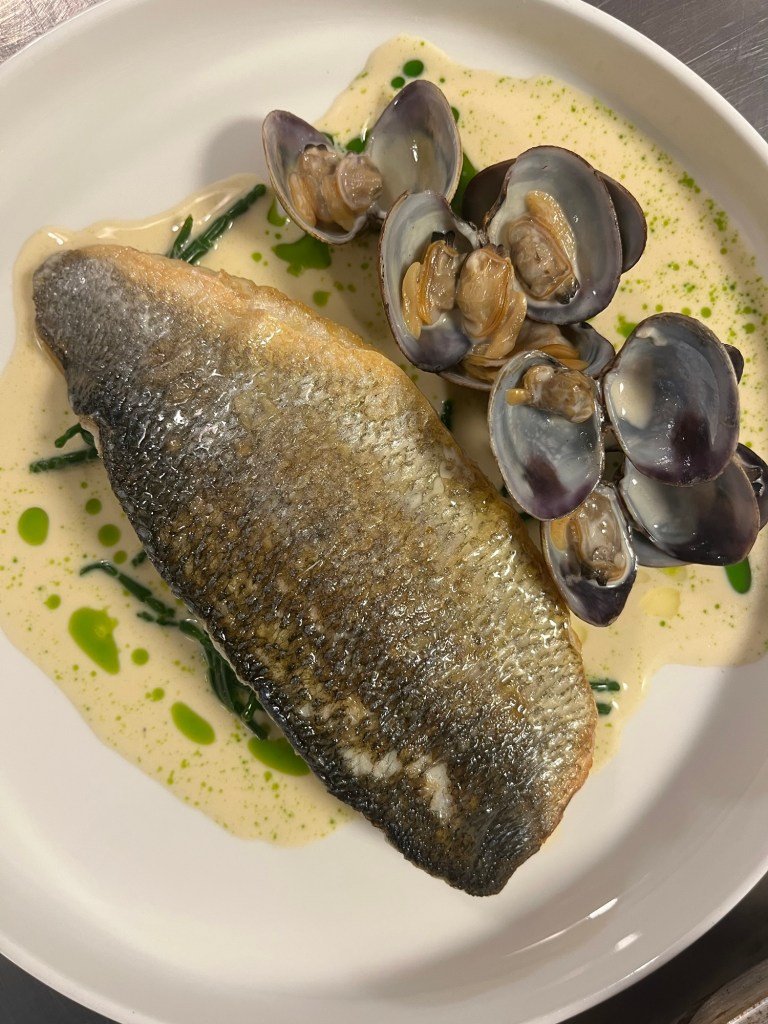
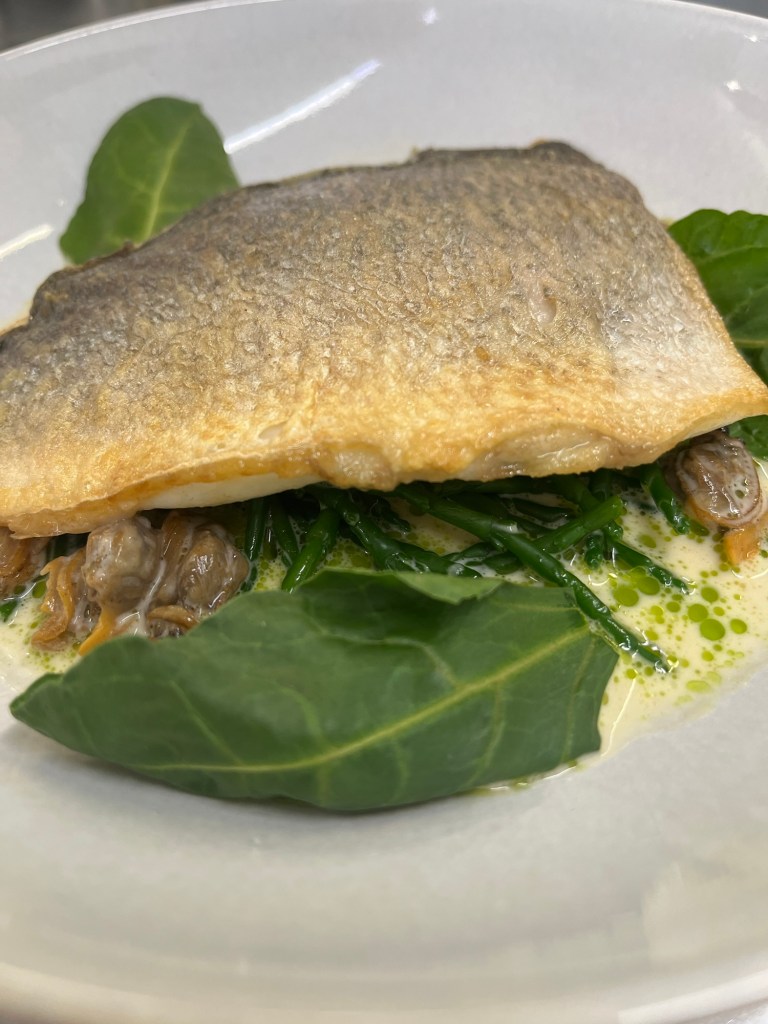
    The week began with our third formal assessment of the term. This time we had to fillet a whole sea bream, ensuring the skin wasn’t damaged, to produce two neat fillets. To check our work, we were required to show our filleted frame (the bones) to our assessor to demonstrate we had not left excess flesh behind. The recipe also called for our first cook of clams. After cleaning and checking for damage, we briefly steamed them before removing the meat from the shell and chilling in the fridge until needed. The fish and clams were to be served in a ‘fish cream’, which is a lot tastier than it sounds. A quickly made sauce flavoured with onion, celery, fish stock and vermouth, and finished with a generous pouring of double cream. A vibrantly green dill oil cut through the richness and provides additional colour and flavour to the plate. The last element to prepare was samphire – cooked and drained carefully to still have some bite and not leave a green watery puddle on the plate. The fish cook was key: soft flaking flesh and a golden crisp skin. I await the results!

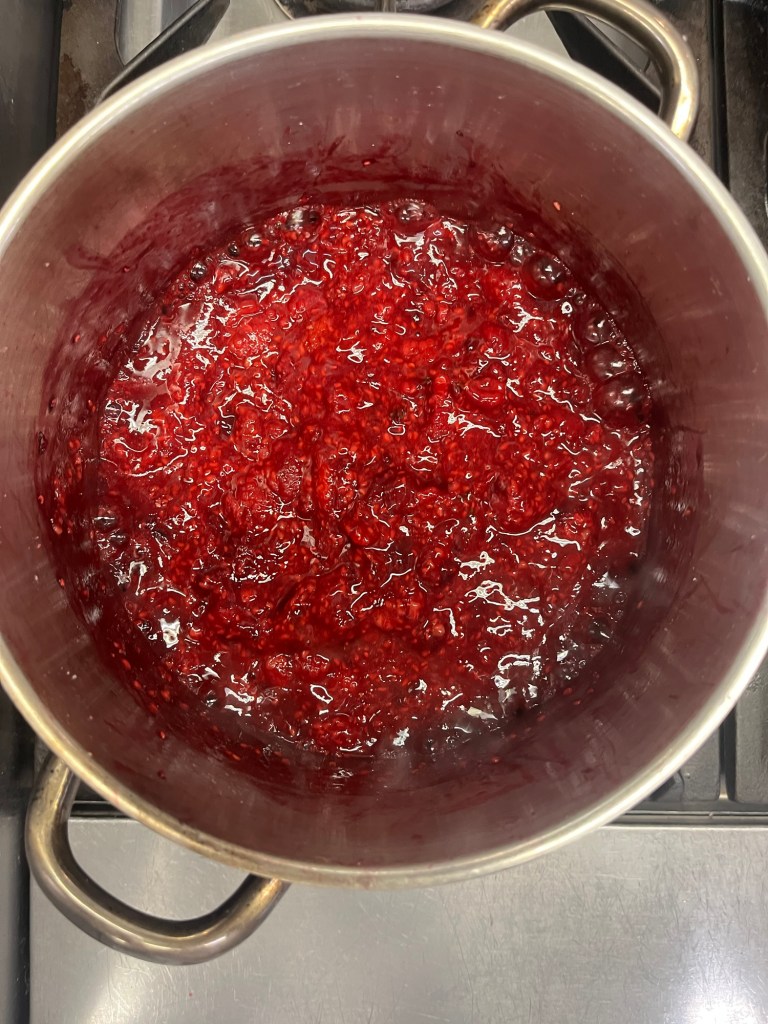
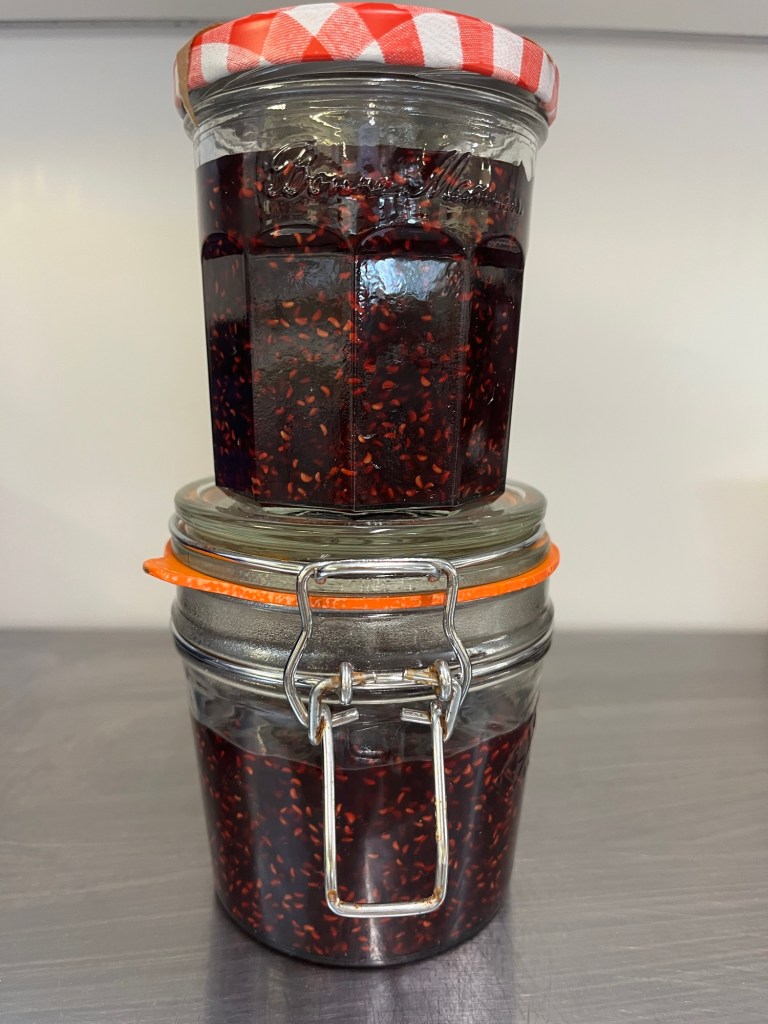
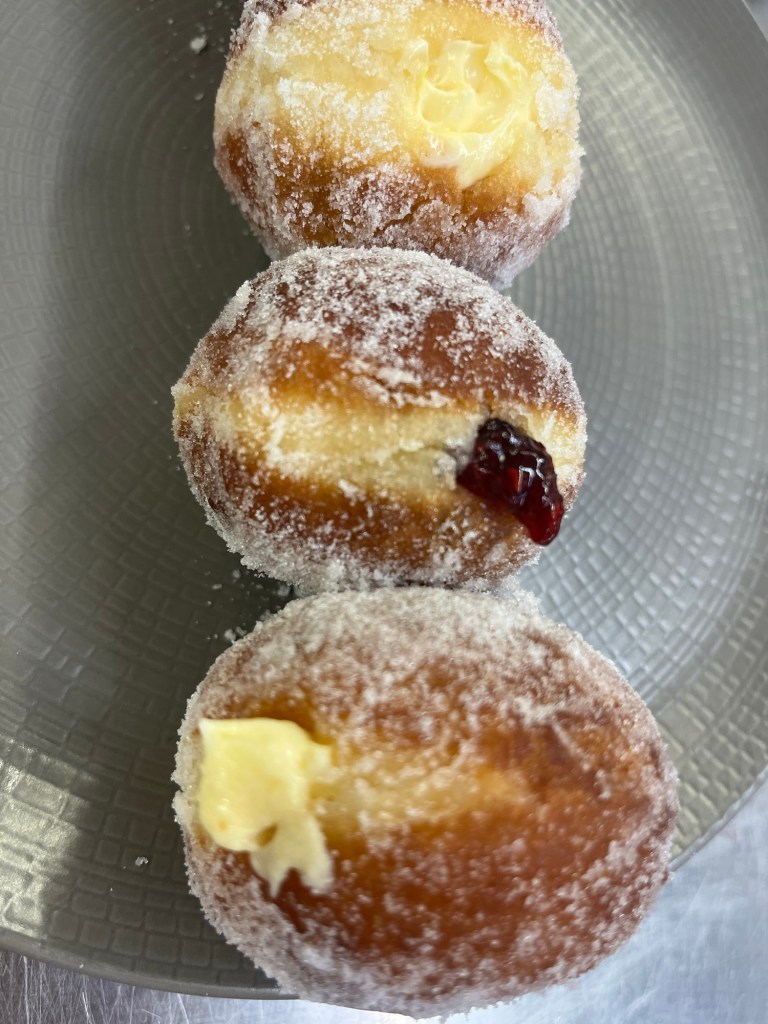
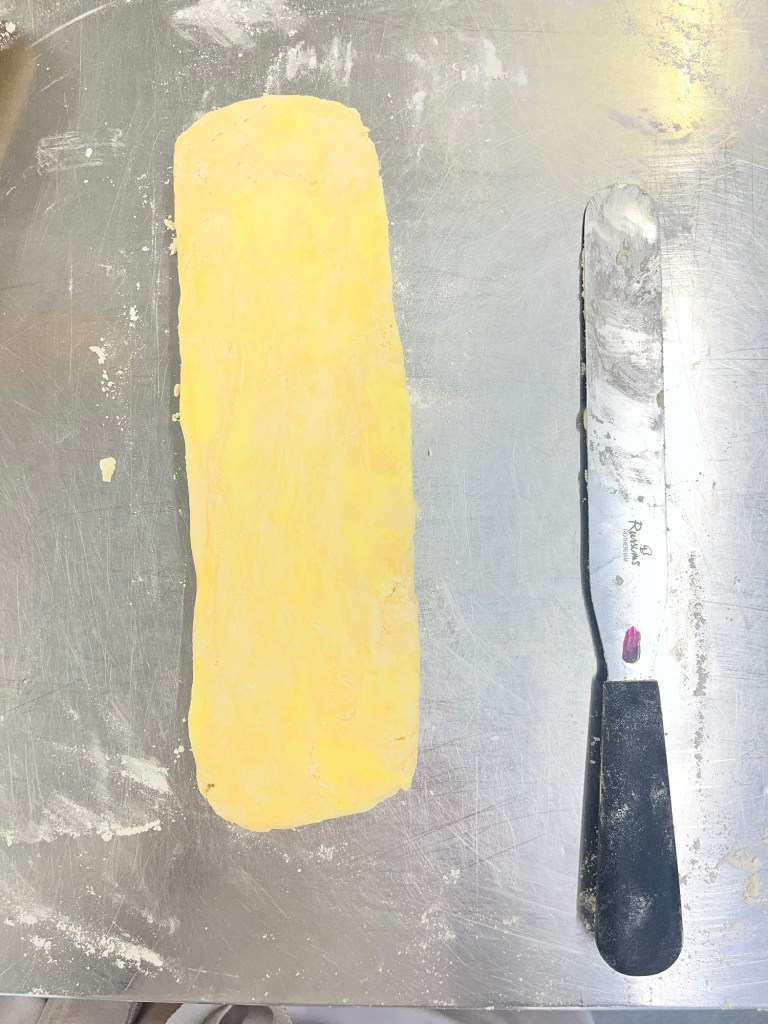
    Wednesday morning was a relaxed prep session. We started making a very sticky doughnut dough. Another different kneading technique required to strengthen the gluten strands – this time a sort of pecking and picking action until you can stretch the dough up to your armpit without it breaking. Next the incorporation of cold but pliable butter, cube by cube. Each cube is pawed down into a paste and then paddled with the fingers into the dough ensuring no lumps. A good arm work-out! The dough was scooped into an oiled Tupperware to prove slowly overnight. Our next task was to begin the rough puff pastry, completing the required number of rolls and folds which would give us the lamination associated with puff. Rough puff was a new experience for most of us so we had lots of help from the teachers to get it right. In amongst these two jobs, we also made a super-sweet and delicious raspberry and lemon thyme jam. Both my partner, Dev, and I attempted to sabotage our jam in different ways but we managed to rescue it ready to fill our doughnuts the following day.

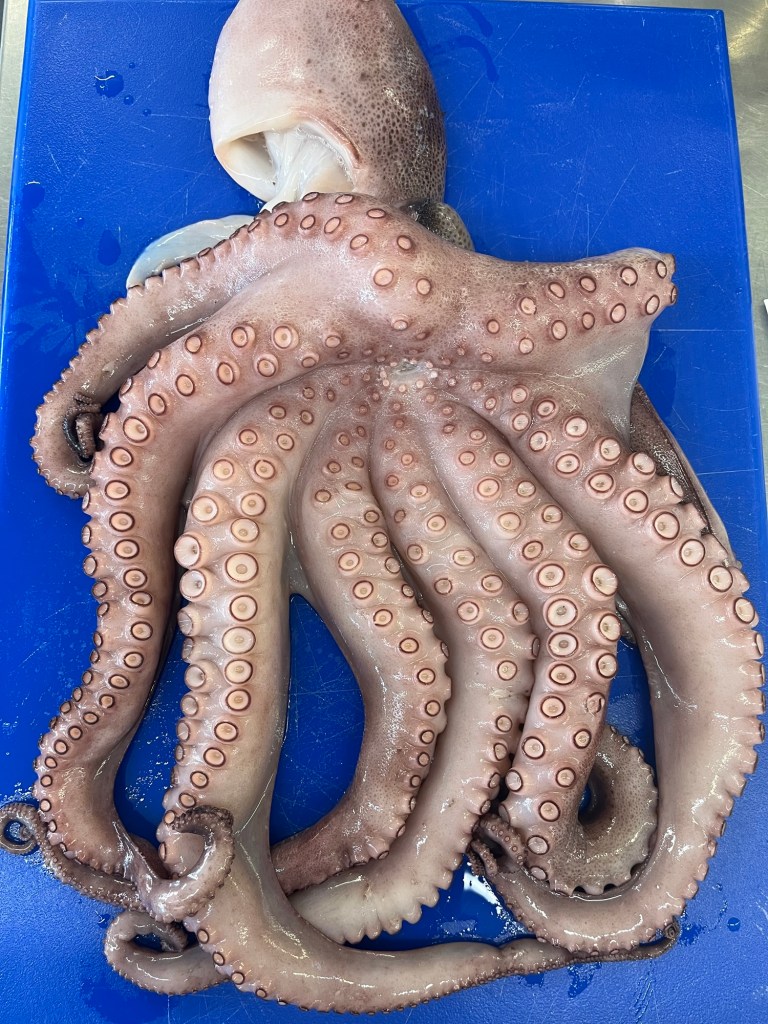
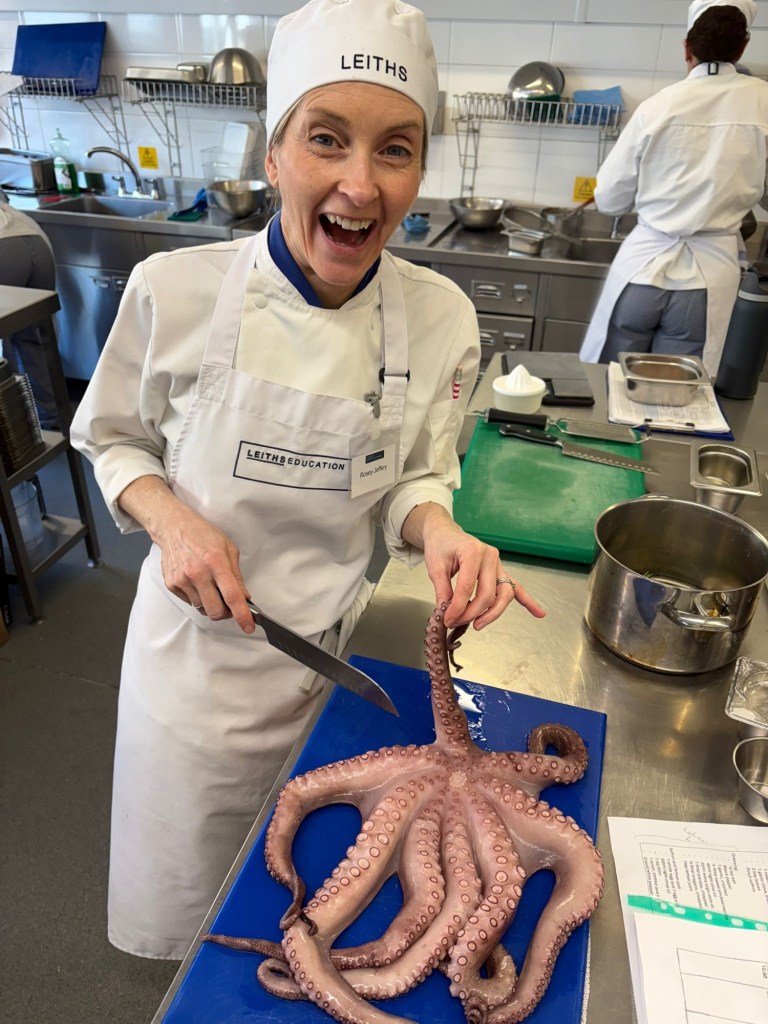
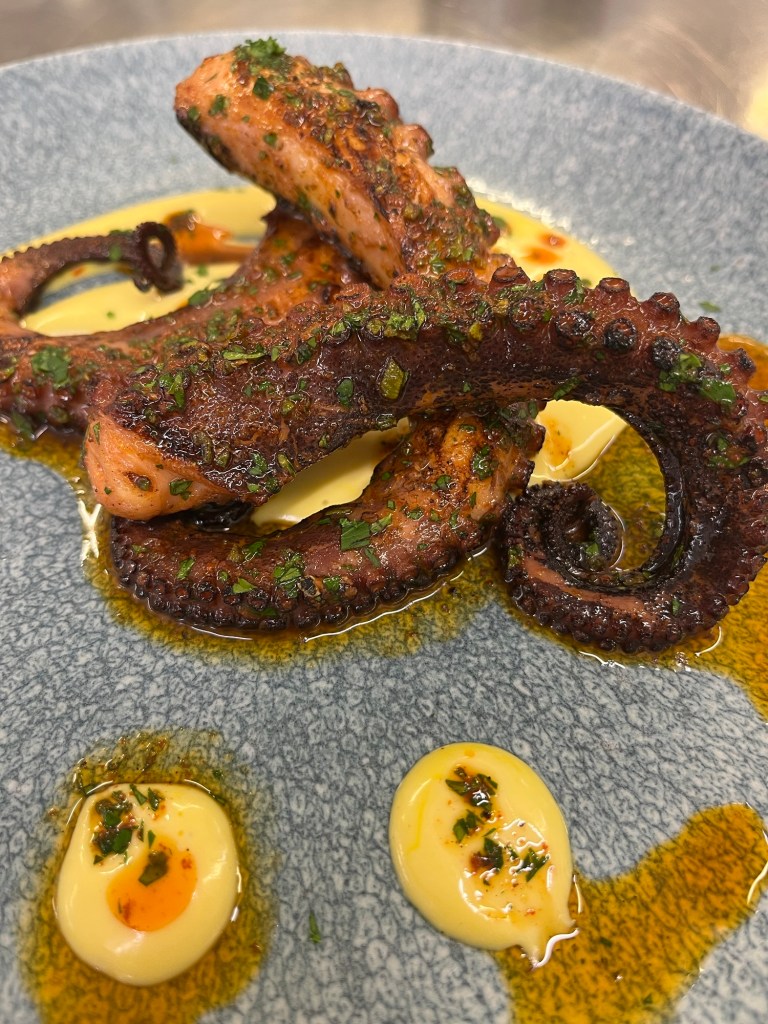
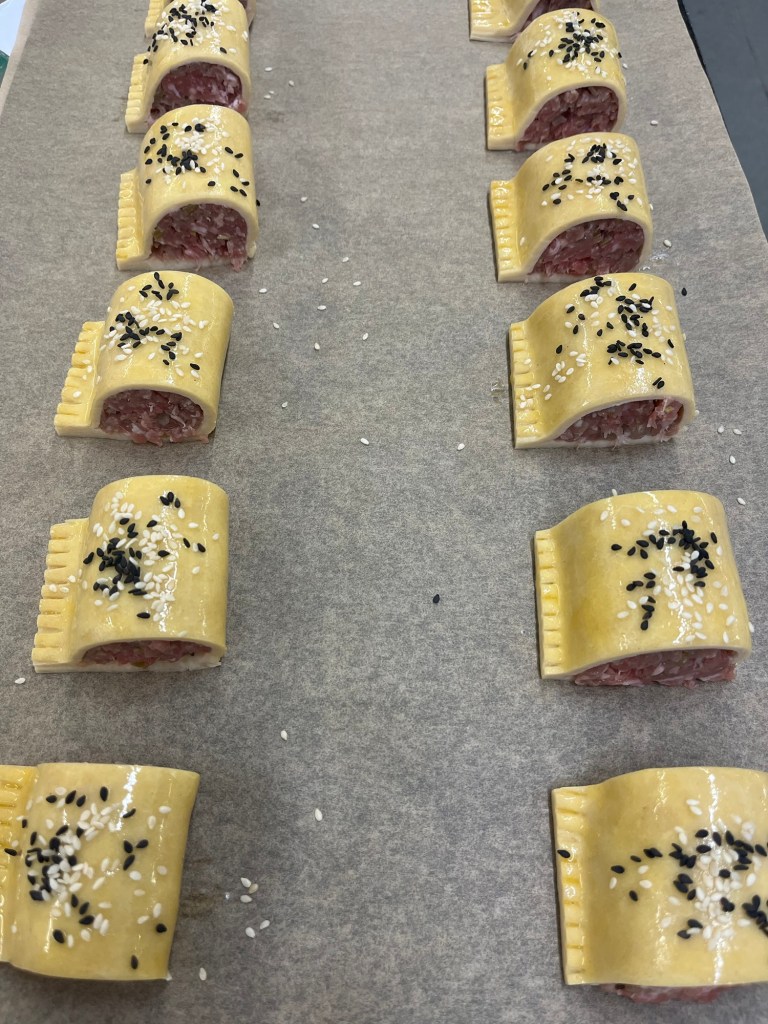
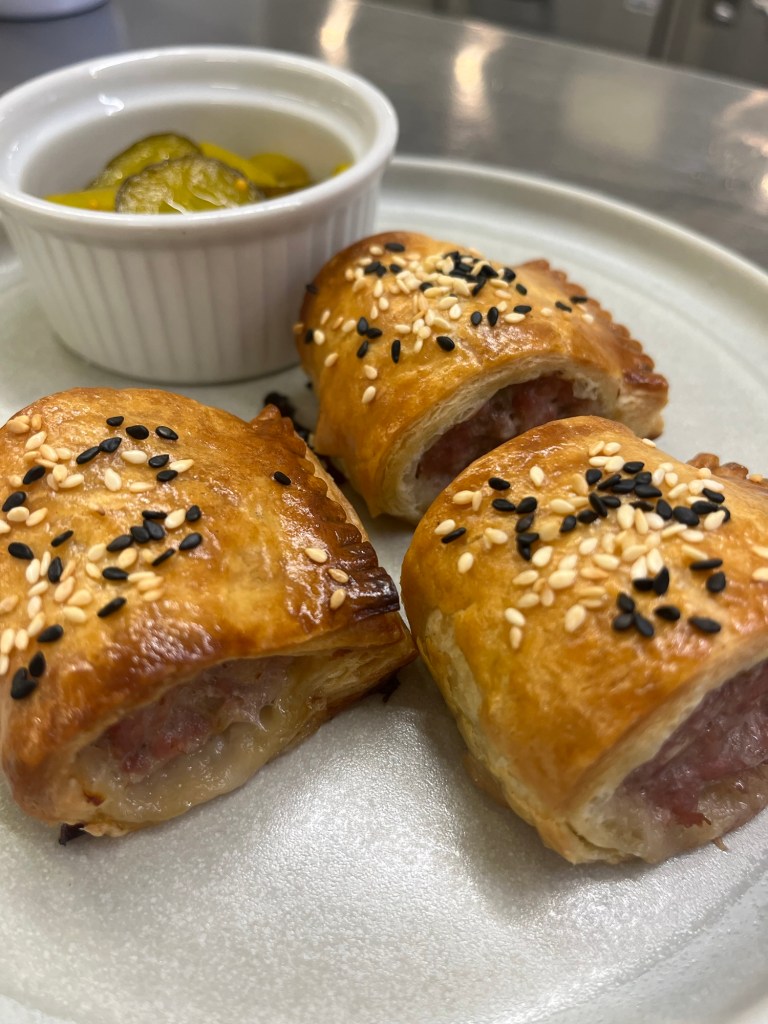
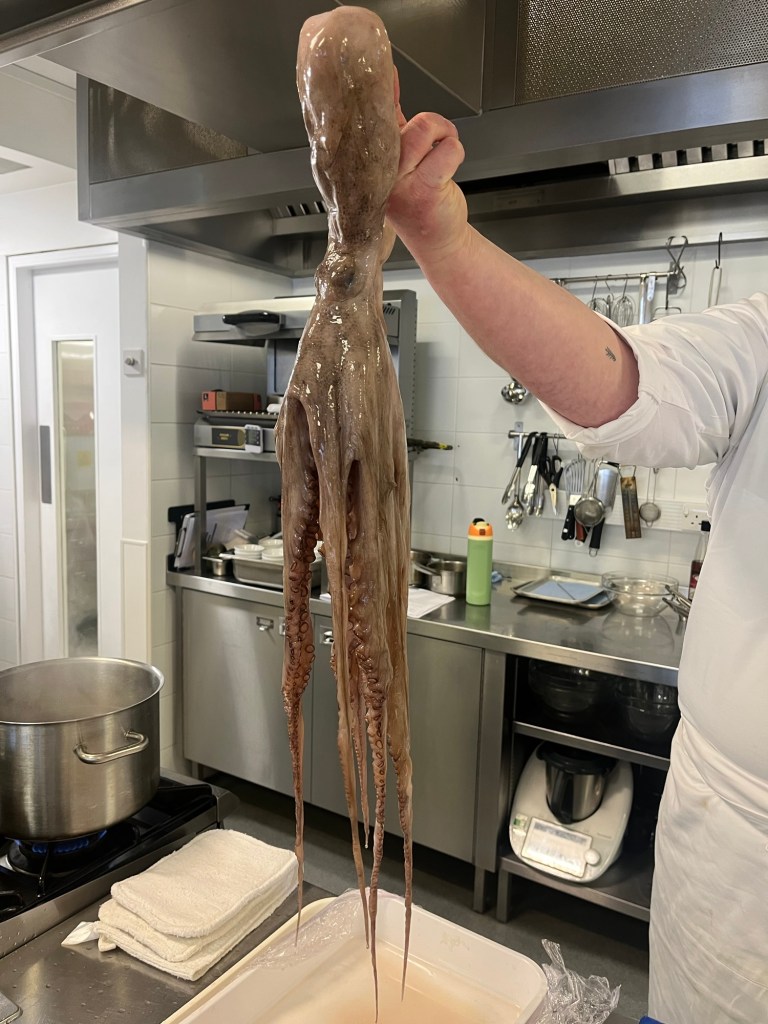
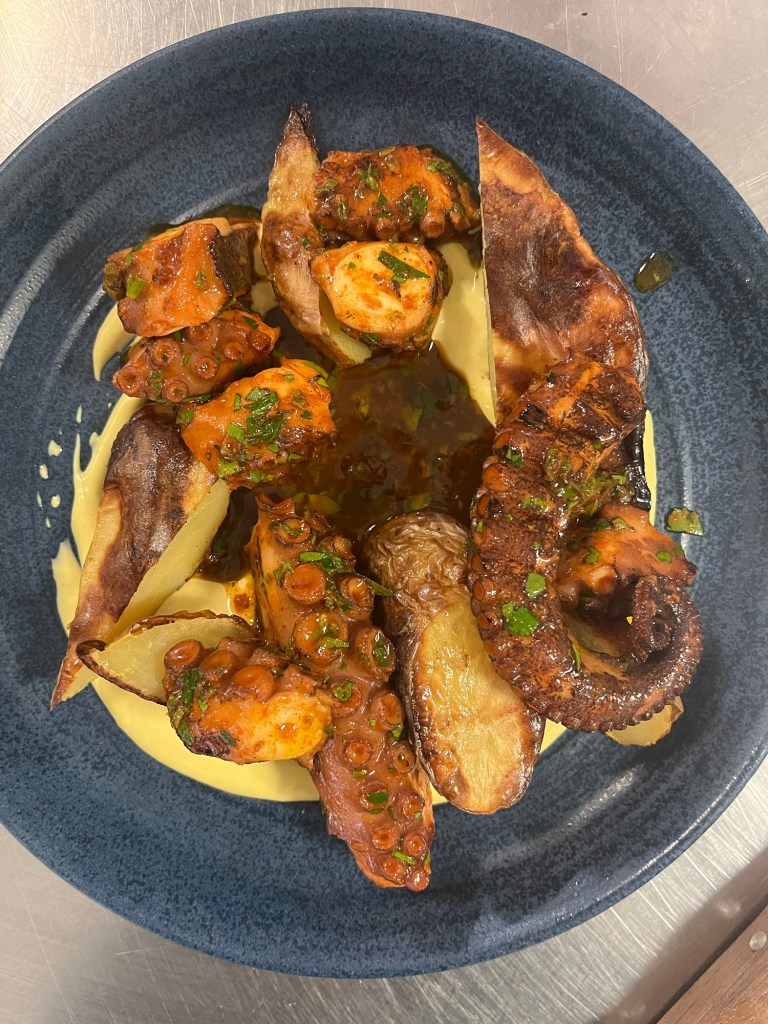
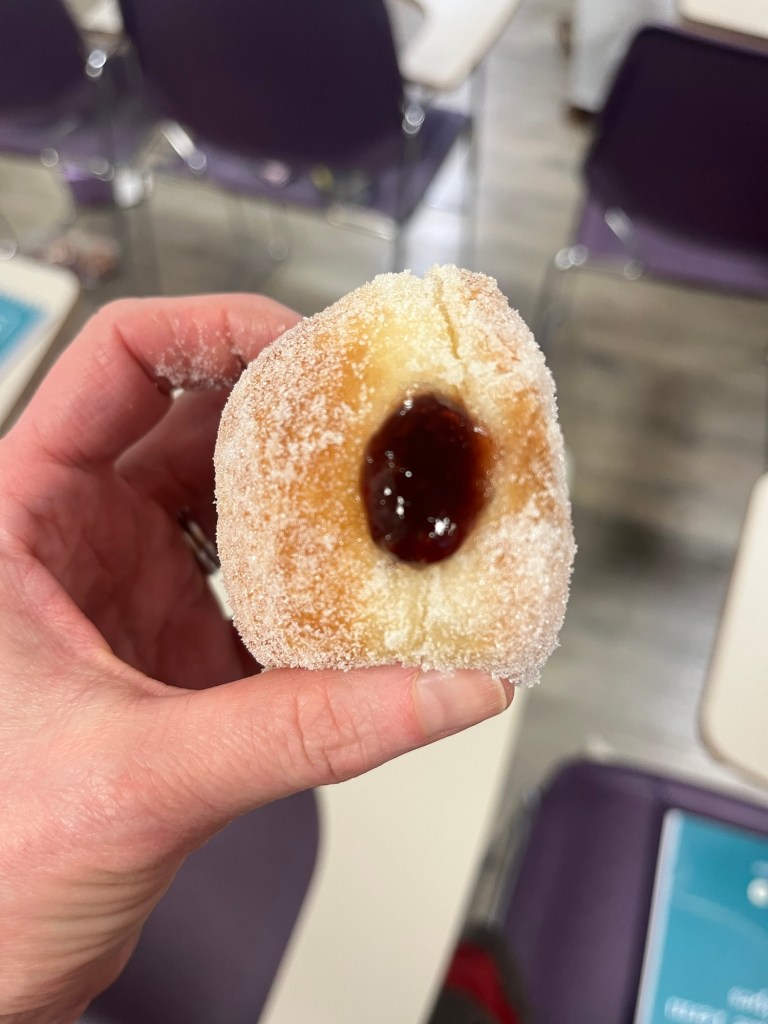
    Our third all day cook of the term was considerably less fraught than the previous two. An eclectic menu for the day included braised and chargrilled octopus in paprika sauce with saffron and lemon aioli. We were all a bit excitable about the octopus, which were enormous and evocative of deep sea thrillers. We blanched it, removed the head and then braised the trimmed legs. It’s a long, slow braise to tenderise the flesh ahead of a chargrill to impart smoky, toasty flavours. Whilst it was braising we shaped our doughnut dough into balls and left to prove; made a flavoured creme pat of our choice (I picked cardamom, the pods of which I infused into the milk); and finally we rolled out our rough puff, prepared and seasoned our sausage filling and created two filled and glazed logs ready to chill overnight. The frying and filling (and eating) of the doughnuts was very fun. The vibe in the kitchen was triumphant as we achieved the perfect golden brown fry plus the white equator – proof of a good prove! Heavily dusted in caster sugar and filled with jam and/or crème diplomat, we were all welcomed home with open arms that evening.
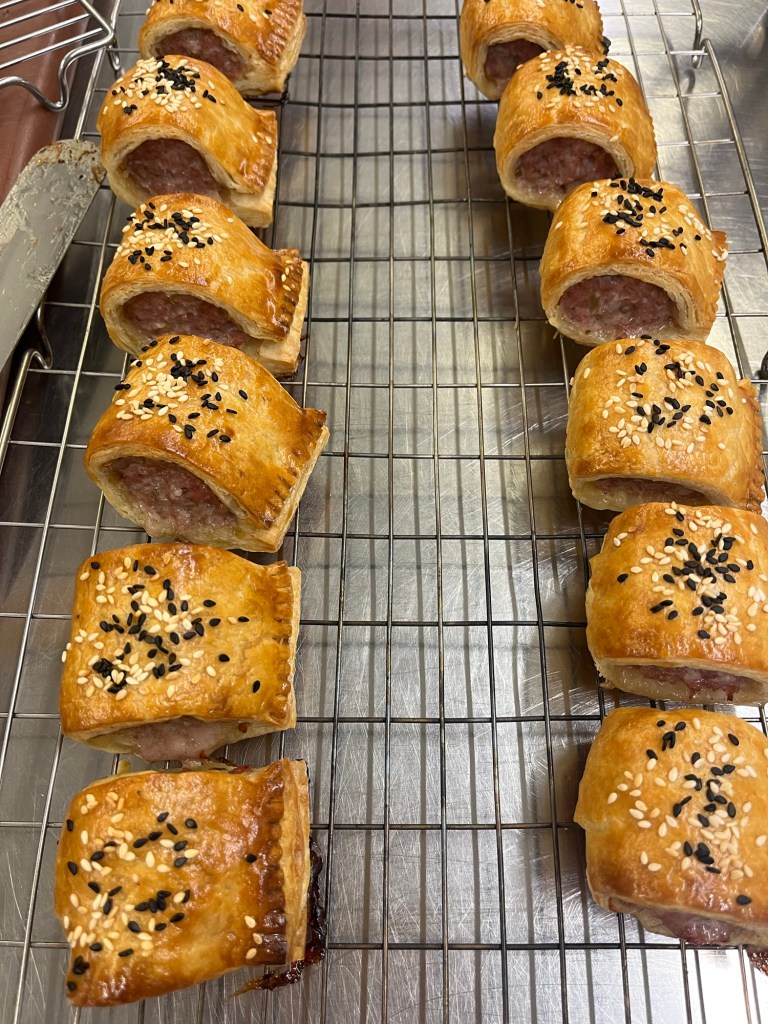
    Our final cook of the week was super simple but highly satisfying. A second egg glaze of our sausage rolls and into a hot oven. Lots of lovely lamination and a side of piquant sweet beer pickles to cut through the savoury flavour and fat.

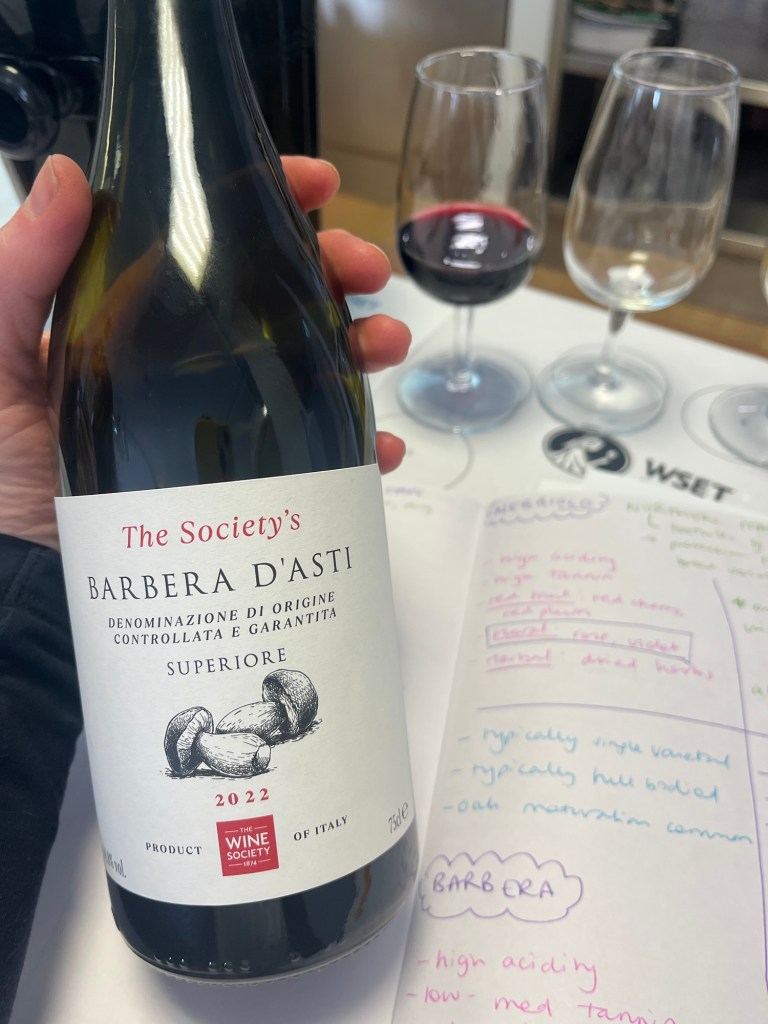
    Italian wines, revision and a pub style quiz fulfilled our final sessions with Marjorie as we bid her au revoir and promised we would do her proud in the exam.

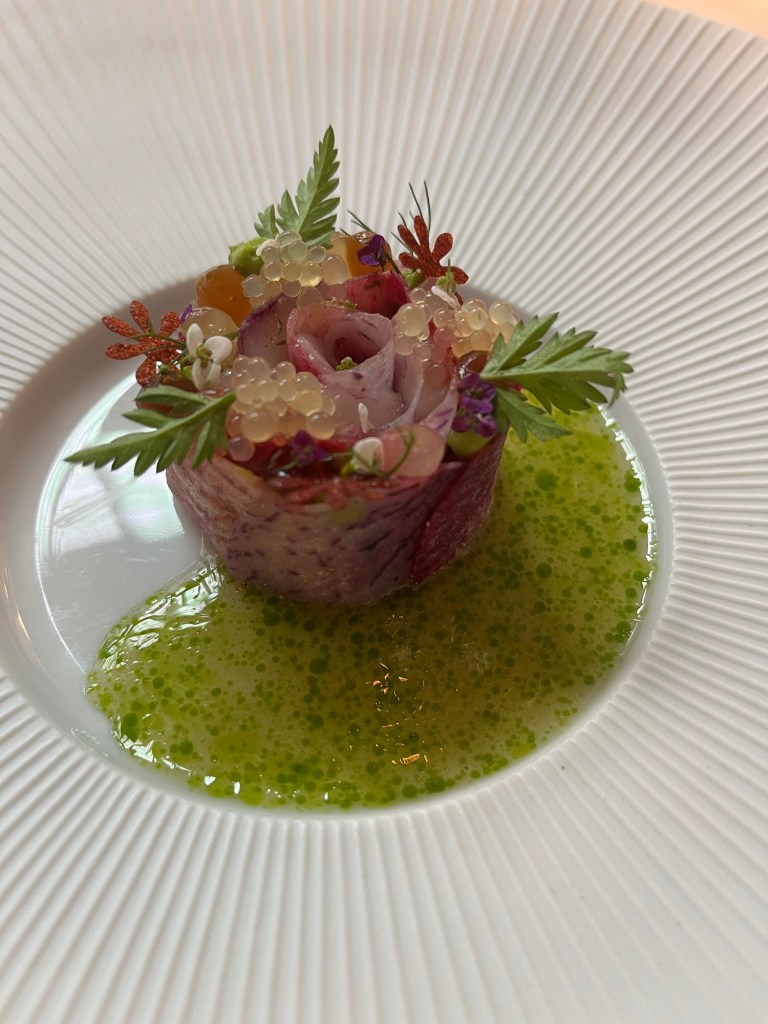
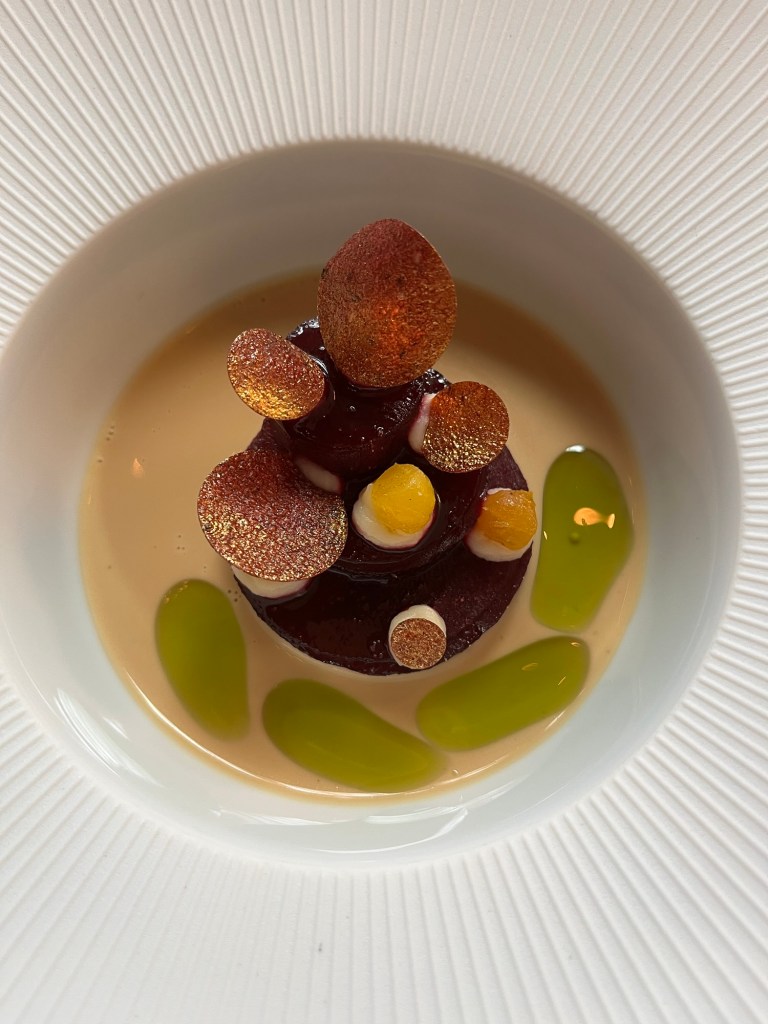
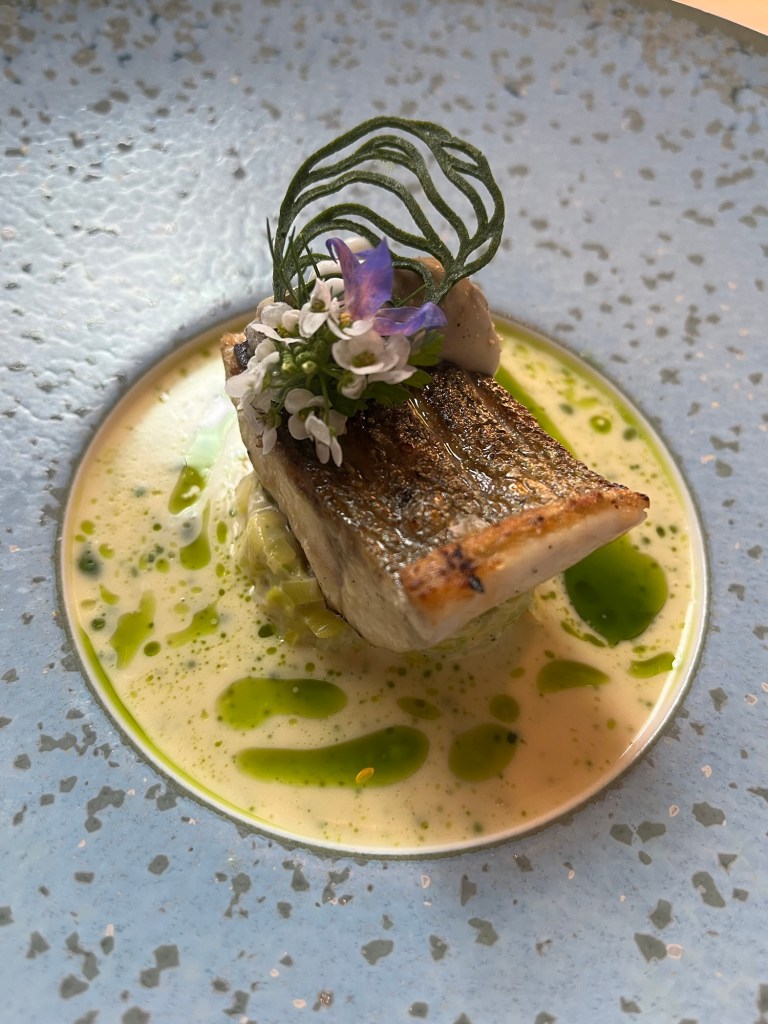
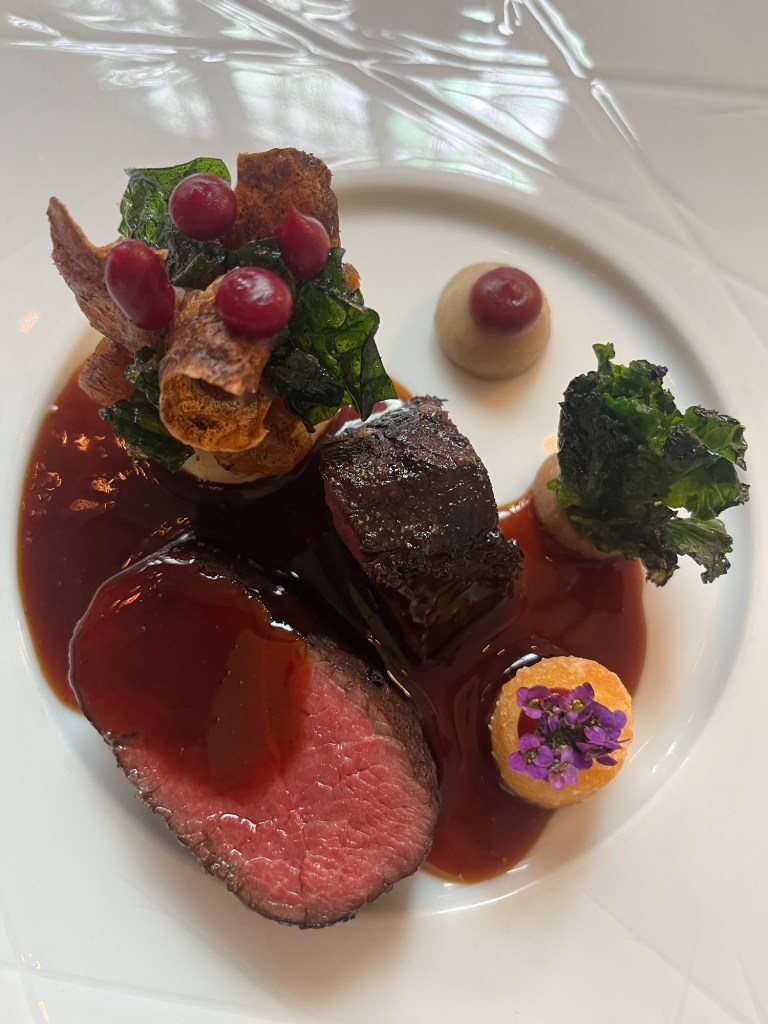
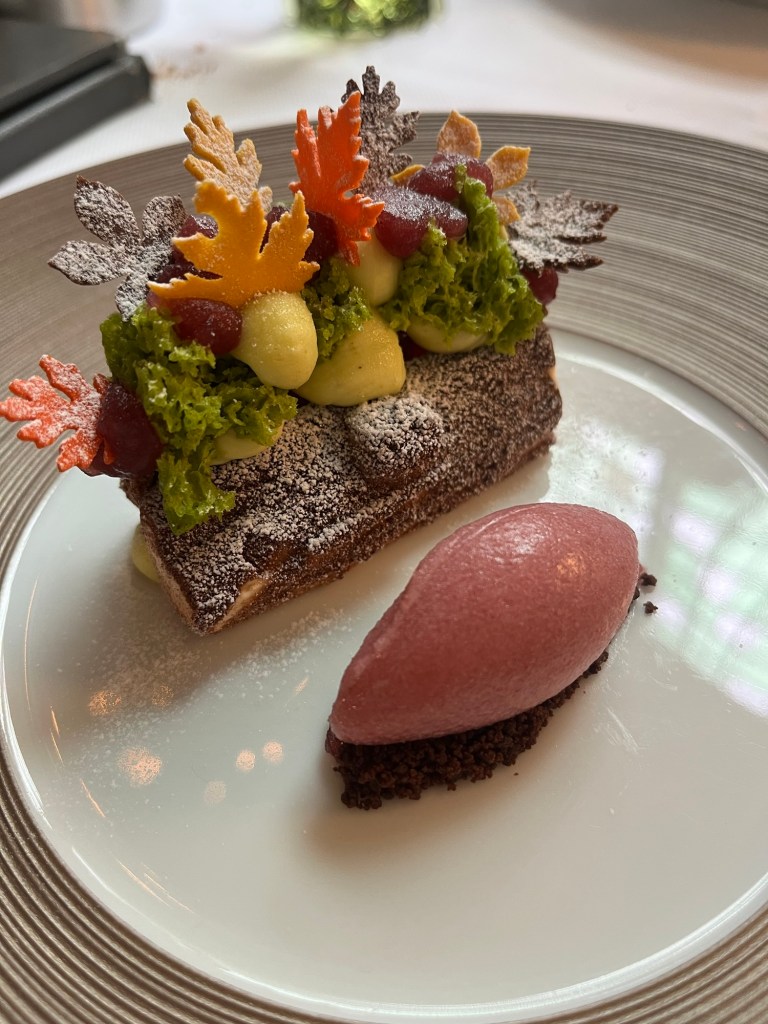
    In amongst preparing for the wine exam, my brother and I took a day trip to Amsterdam on Saturday for lunch at the incredible desilveren Spiegel. A calming and historic setting, elegant, understated service and beautiful food. The photos speak for themselves.

  • We are now more than half way through the intermediate term and also the diploma as a whole. The pace and breadth of learning sees each week race by before we’re prepping for the following week’s challenges. I want it all to slow down so the end feels further away! Without doubt, this will go down as one of the best year’s of my life.
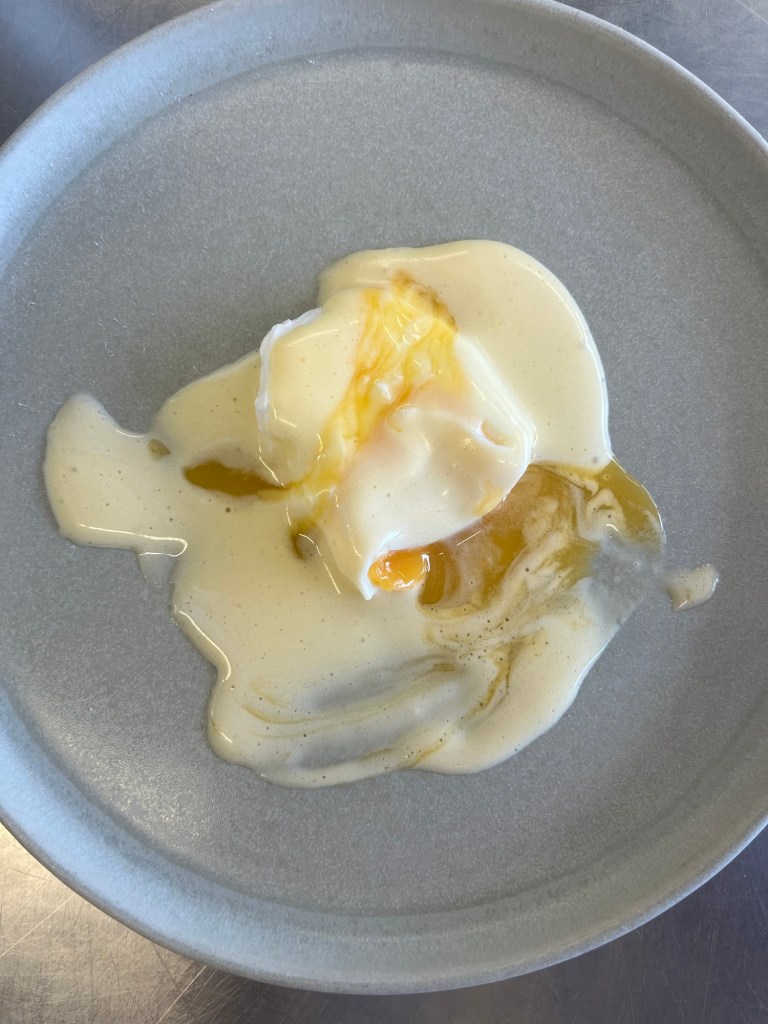
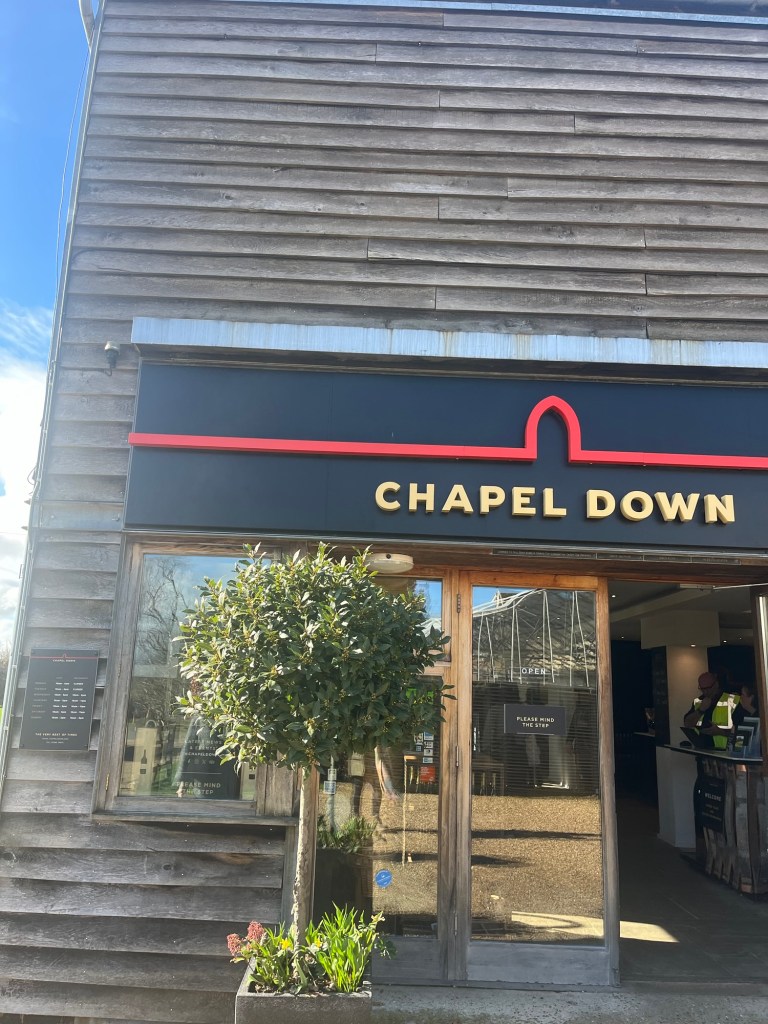
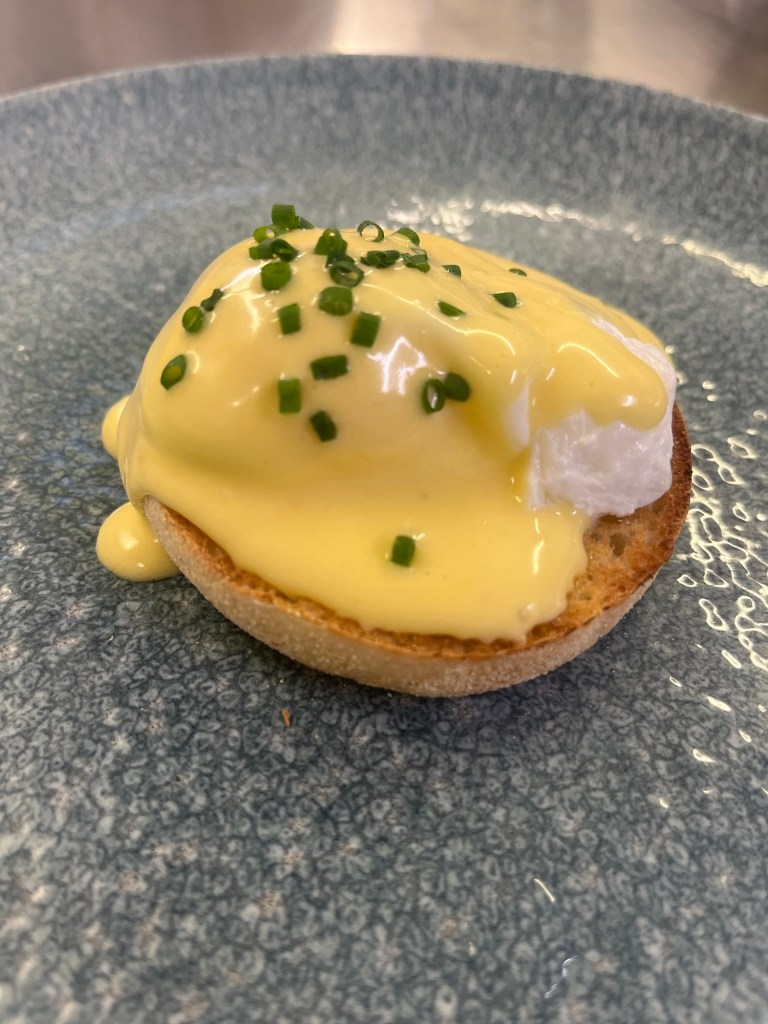
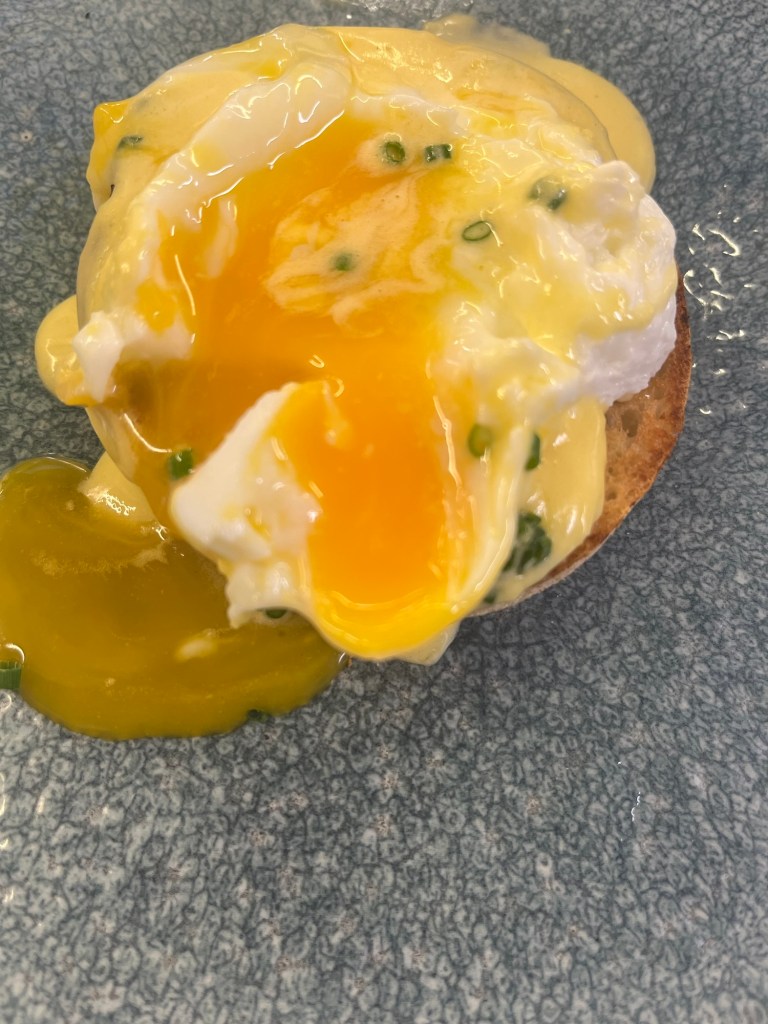
    Our first kitchen session of the week would have been fairly relaxed had it not been for the apprehension for a tap on the shoulder and the request for a short order. What that would involve was not revealed until we walked into the kitchen: Hollandaise sauce (sabayon method / by hand) with a poached egg. I’d anticipated Hollandaise but it was the humble egg I really feared: achieving that classic teardrop shape, perfect runny yolk and set white. We were allowed to begin our other tasks first: browning chicken wings and veg as the starting point for a Madeira jus which would putter away for most of the session; and pulling together the ingredients for the sweet beer pickles which we’d be serving with sausage rolls next week. When the shoulder tap came, we had 15 just minutes to serve. I was a little late but the Hollandaise had a light, airy consistency and good balance of acidity; and when my teacher cut into the egg, beautiful deep yellow yolk oozed over the plate. Job done! In the afternoon, we had an enjoyable stroll through Champagne and sparkling wine techniques with Majorie ahead of the trip to Chapel Down the following day.
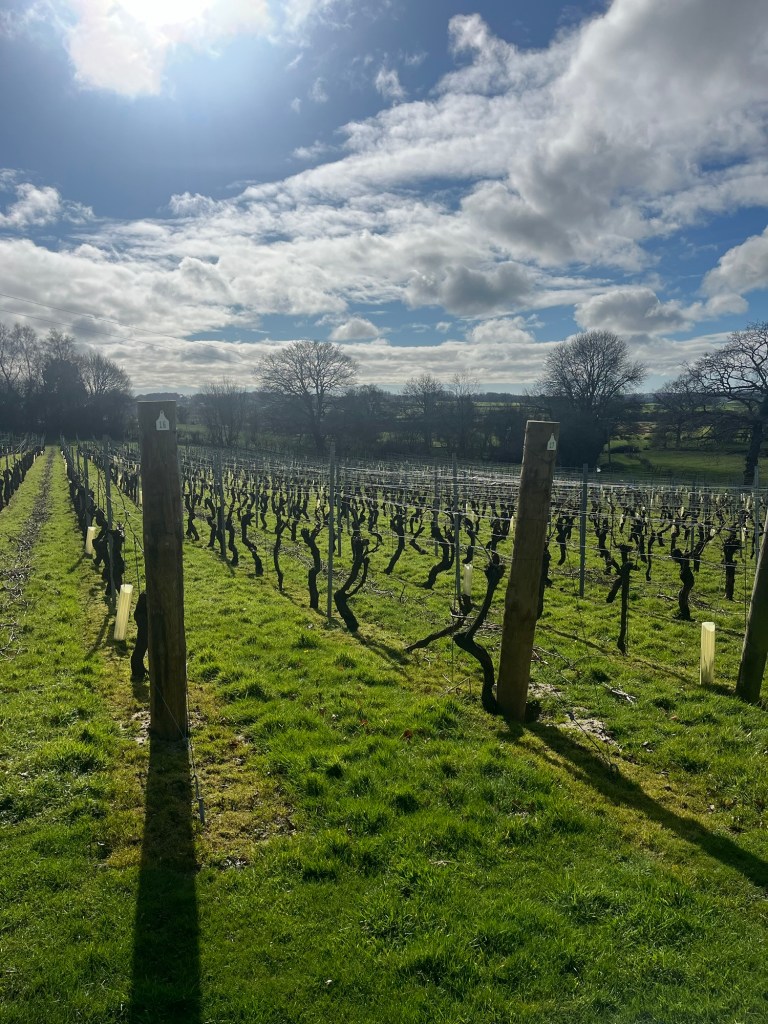
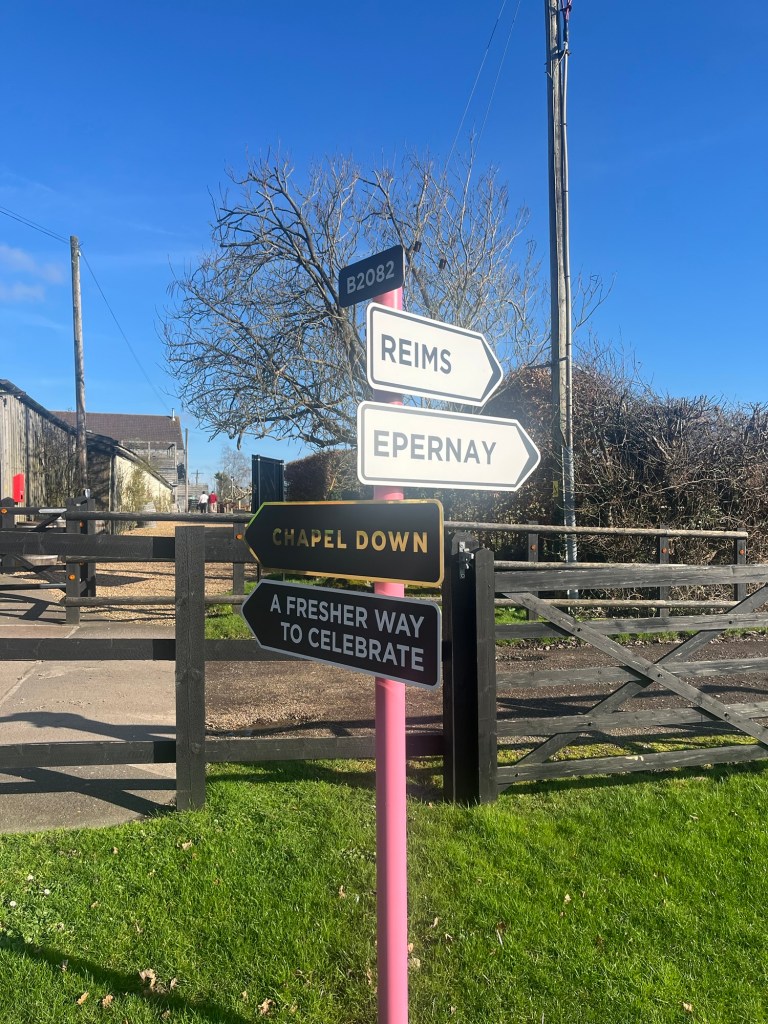
    The trip did not start well. We were an hour delayed and somewhat on tenterhooks following a minor bit of road rage. But soon enough we were out of the city and into the rolling countryside of Kent. We were pushed for time but still managed a tour of the vineyard and a tasting session of six wines. By the time we had lunch it was 2.45pm and we were all somewhat giddy. A few of us opted out of the coach return trip, preferring the idea of the high speed train from Ashford International, accompanied by a cuppa and a four-finger Kit Kat 🙂

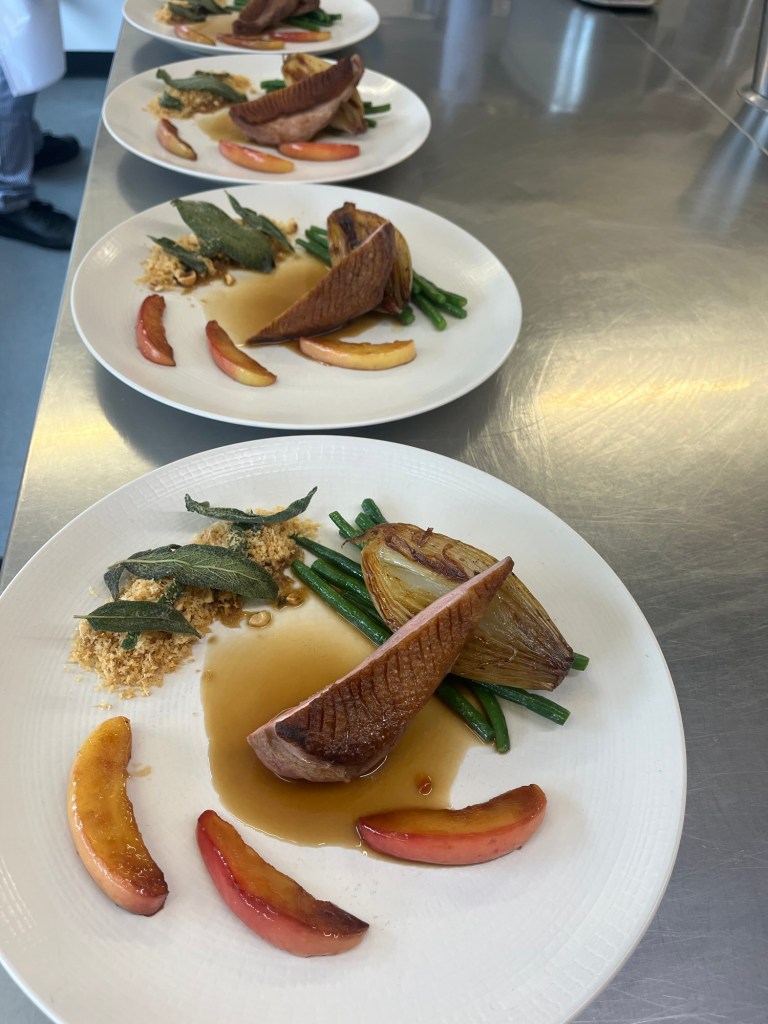
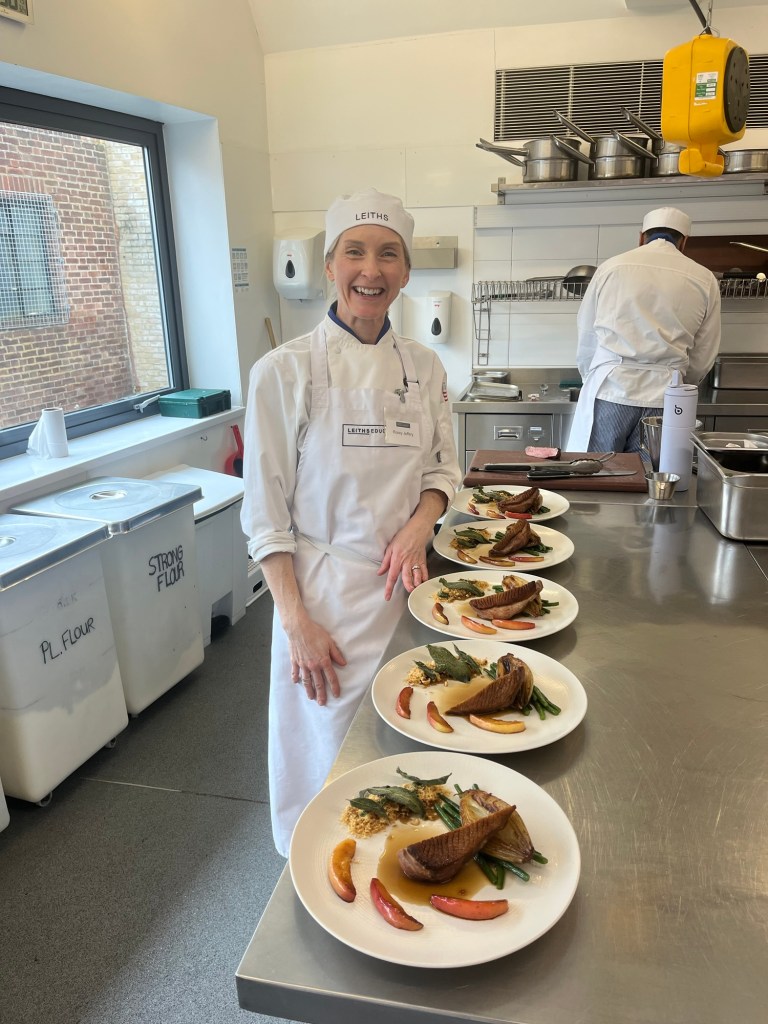
    Wednesday and Thursday posed a new challenge. We would each take the role of lead chef and commis chef in turn to cook in pairs five identical plates of food. Duck breast and Madeira jus were required, the rest was chef’s choice. I took on the commis role first supporting lead chef, Mary Morgan. Her plate included a parsnip puree (sweet, smooth and delicious), pickled blackberries (cutting through the fatty duck perfectly), and green beans with pine nut, lemon and parmesan gremolata. It was great fun working as a team and helpful to have experienced it before taking on the lead role myself. I was nervous watching the commis come into the kitchen awaiting who would be assigned to me. Happily Rohan approached my bench with a big grin. Calm and capable, I knew the session would go well with him as my commis. I quickly talked him through my vision for the dish and we got to work. Me scoring the duck fat ready to be tempered and rendered; and Rohan picking up the accompaniments. Everything came together well and we served exactly on time: duck, Maderia jus, green beans tossed in butter and nutmeg, caramelised shallot, pan-fried Braeburn apple, and a sage and hazelnut crumb. A pretty plate of food that tasted as good as it looked!
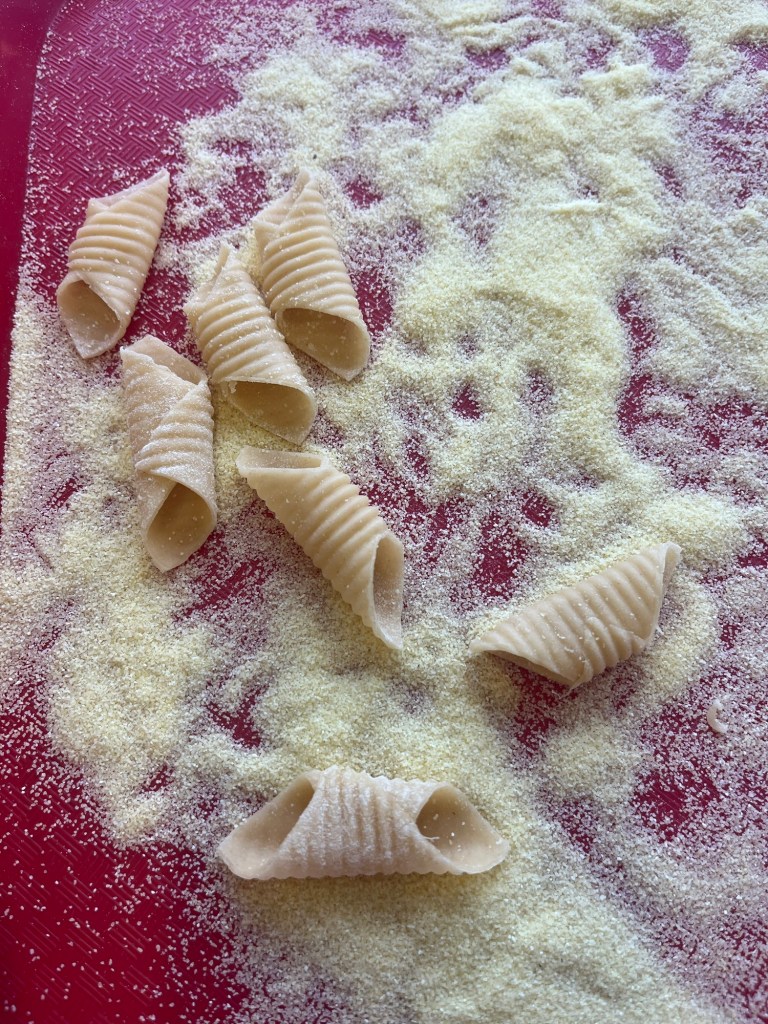
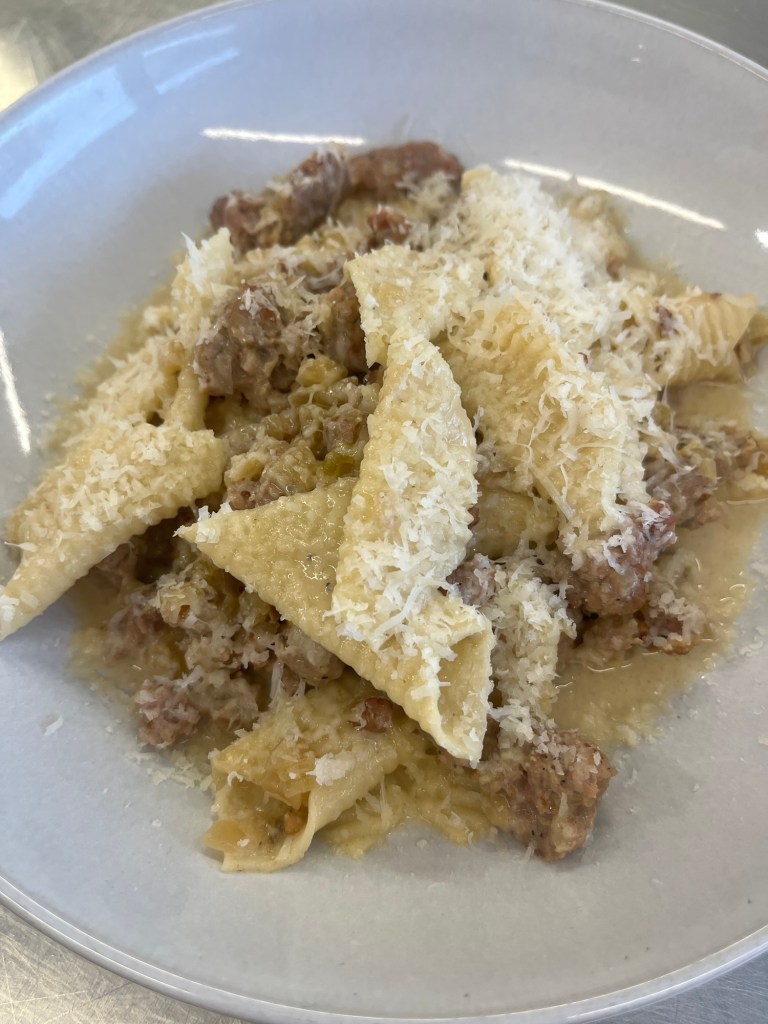
    The final test of the week came on Friday. Our second formal assessment of the term: make pasta by machine and shape into garganelli; prepare a well-balanced sausage and fennel ragu and serve it all hot within the service window. Making the pasta was fine but individually rolling the garganelli was very time-consuming. I worried my pasta was over-cooked (it only needed 2 mins max) and my ragu not softened sufficiently by the cream. But when I ate a portion for lunch I had to admit it was tasty so hopefully the assessor thought so too!

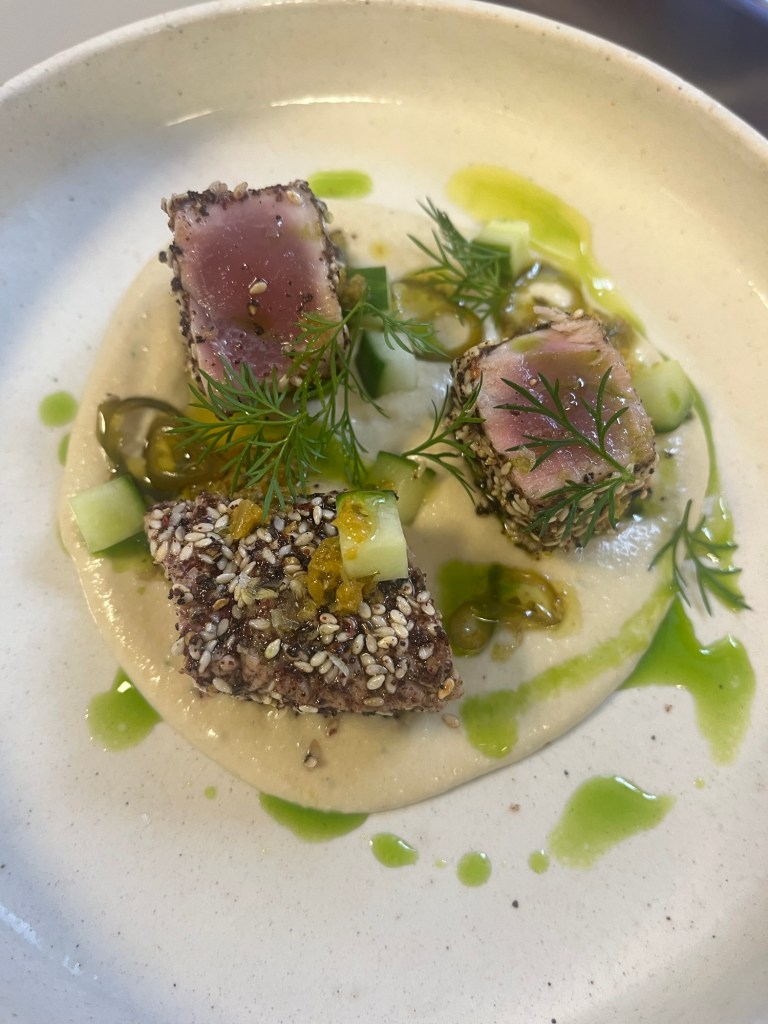
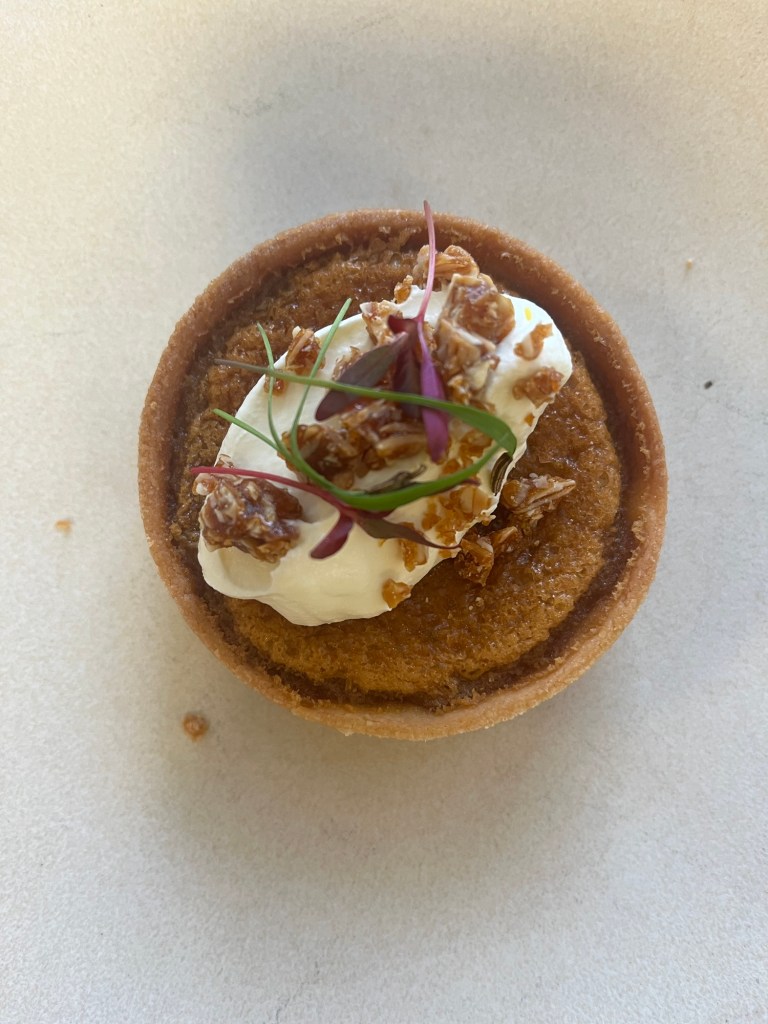
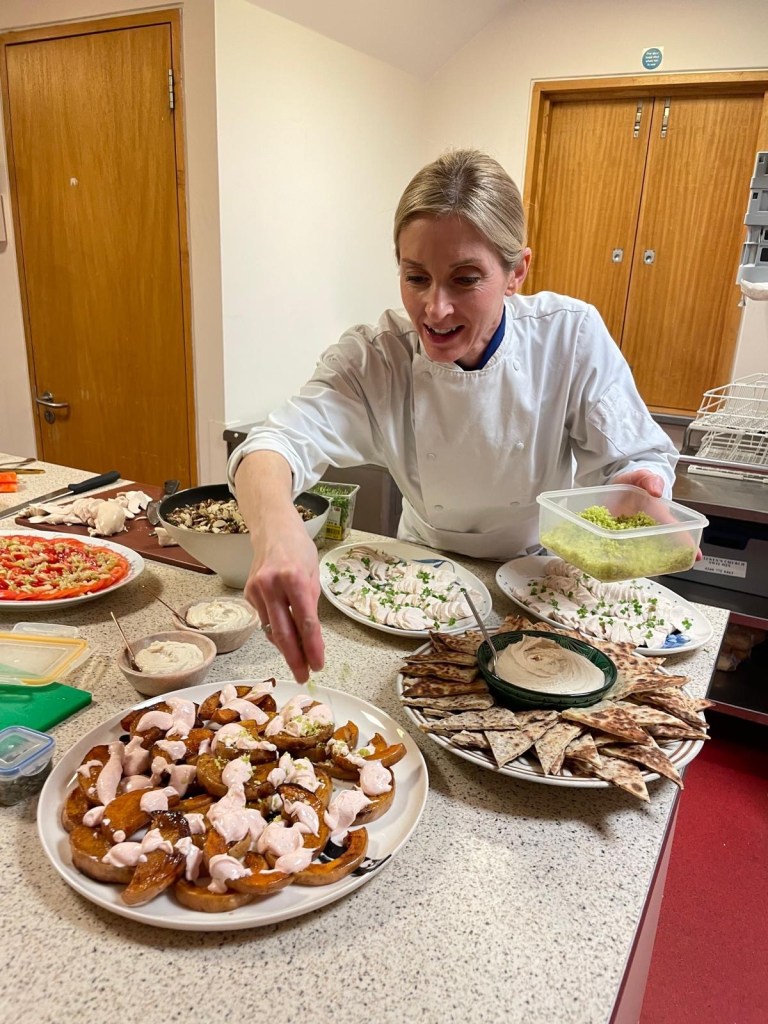
    Our teaching sessions this week were varied and delicious. First was Andy Oliver from Som Saa, who cooked up an array of lip-smacking Thai food. His knowledge of Thai cuisine, having spent a considerable amount of time in the country, was extensive and fascinating. Megan Coker, ex-Leith’s student and latterly teacher, is now working as a head chef at Dinner Ladies, an events caterer. A hugely talented chef who imparted a wealth of useful information about catering and prepared us a three course meal plus three canapés in under two hours. My favourites were the Lavosh cracker, miso mayo, kimchi and fried basil canapé and the seared sumac and peppercorn tuna starter. And obviously I couldn’t resist a second mouthful of the caramelised brown sugar custard tart!

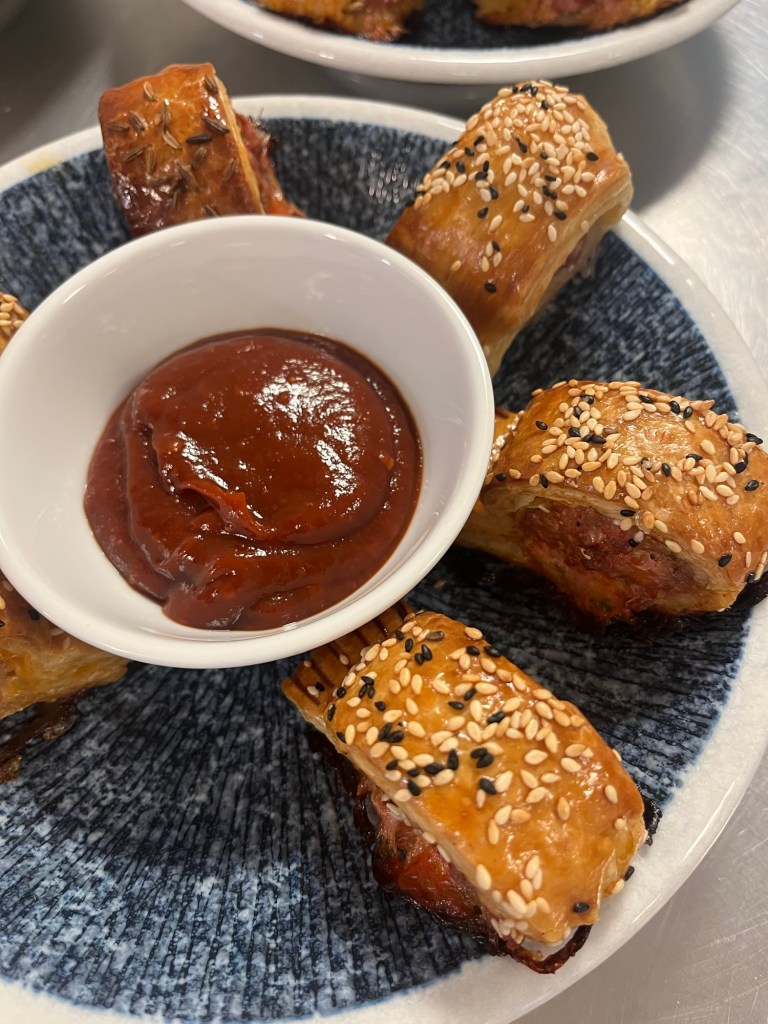
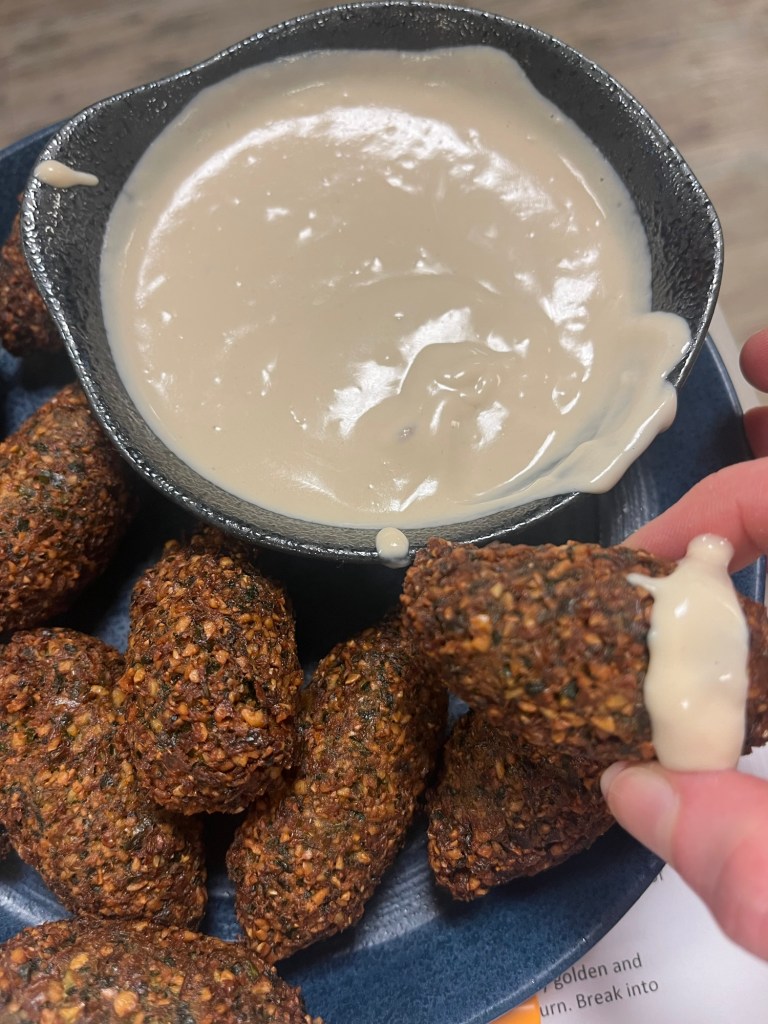
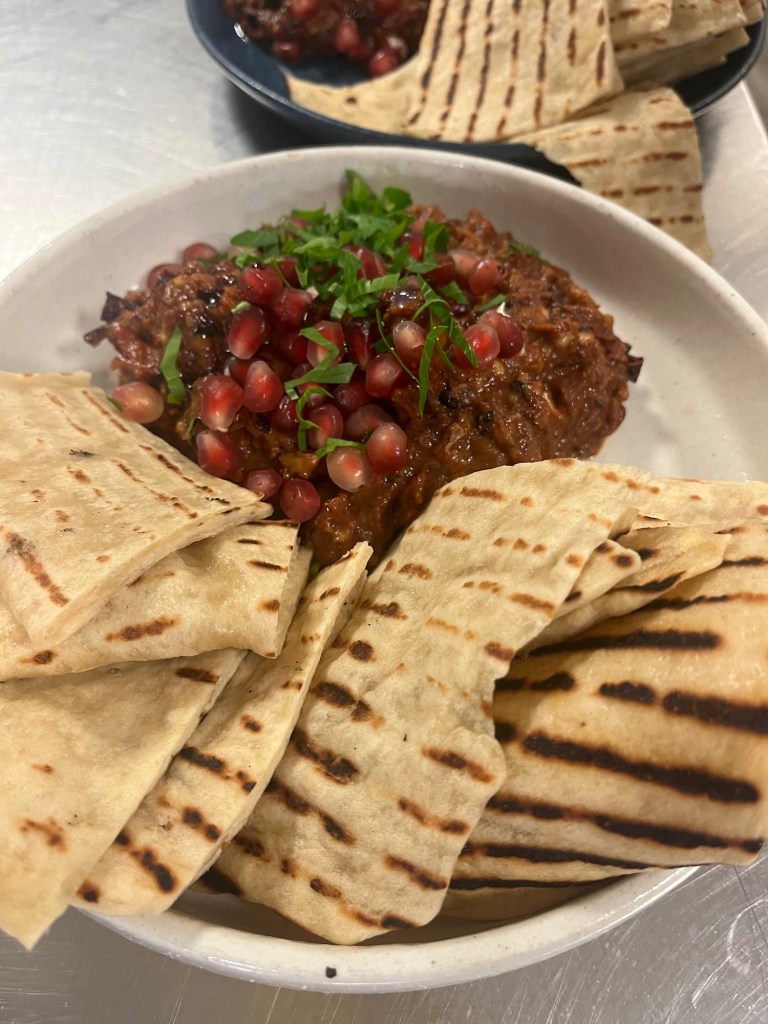
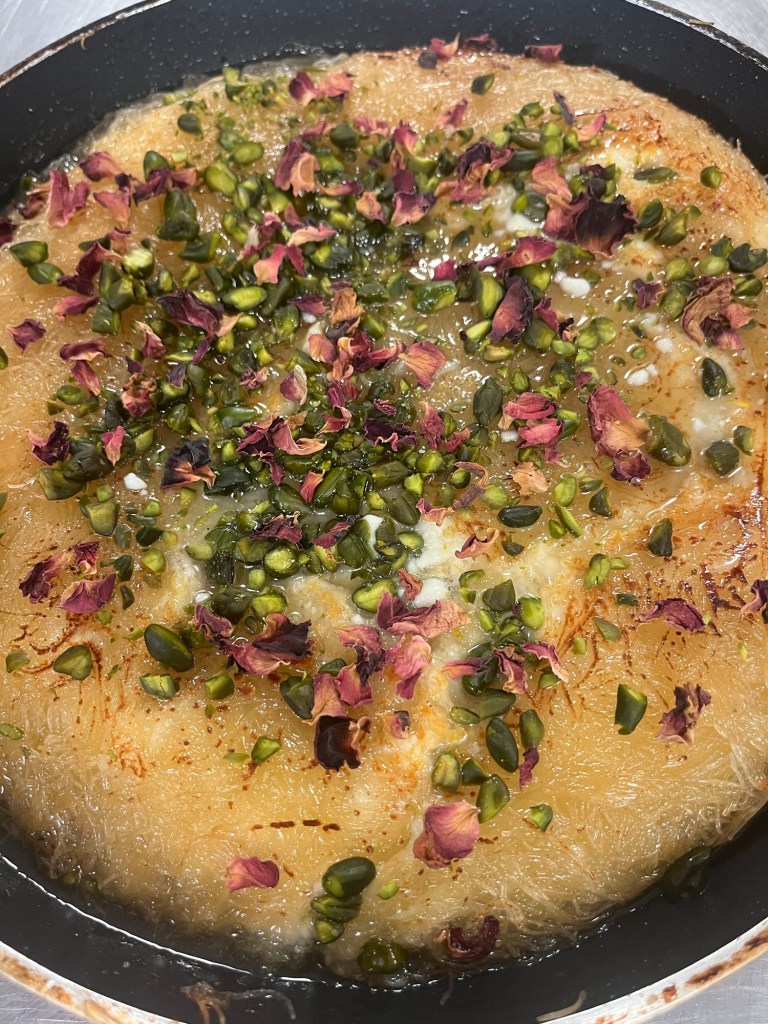
    Rough puff was the teaching demo, which attempted to show us it’s not as difficult as we might have thought. My mum made rough puff effortlessly every weekend as the base for her famous Russian fish pie; and sausage rolls (frequently) on request for family gatherings and the grandchildren’s birthdays. I never managed to master it under her tutelage. Hopefully I can make her proud as she looks down from above. To motivate us, we were treated to freshly baked sausage rolls with a chilli ketchup (hello home-made Christmas gift) and a tarte tatin with Calvados cream. A few hours to digest those treats, and then an evening session with the owners of Honey & co. What a great husband and wife double-act. Very witty and of course, incredibly talented. We feasted on freshly cooked falafel and tahini sauce, muhmara with freshly baked flat bread, fatoush, and their signature knafe pudding.

    A decadent and indulgent week for sure. Swimming and running on the agenda for the weekend…along with wine revision for our upcoming level 2 exam. Next week, another formal assessment, our third all day cook and thankfully a day of for some home study.

  • Week 6 was short and sweet (and crisp). Just two days in school and three off for half term break.

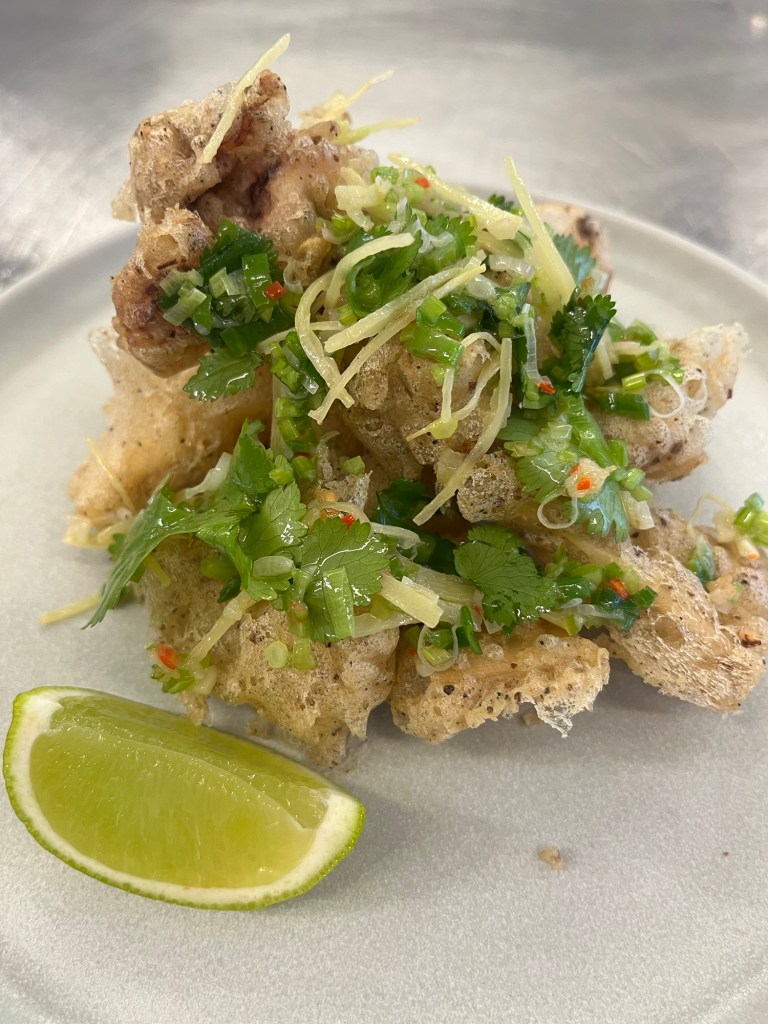
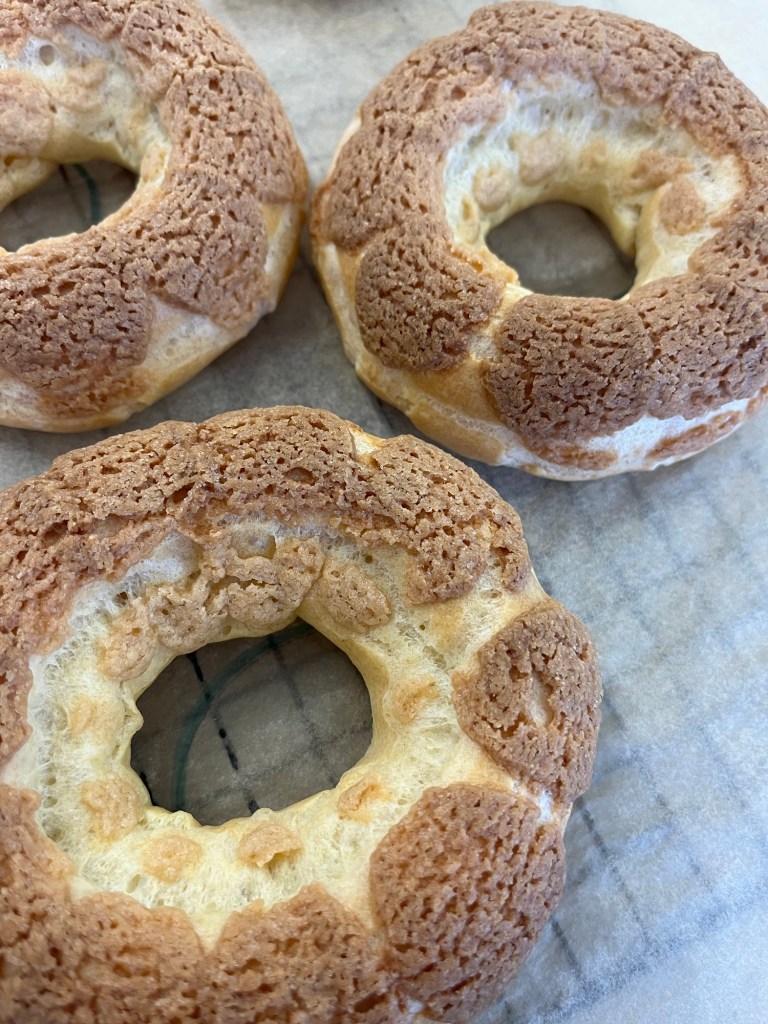
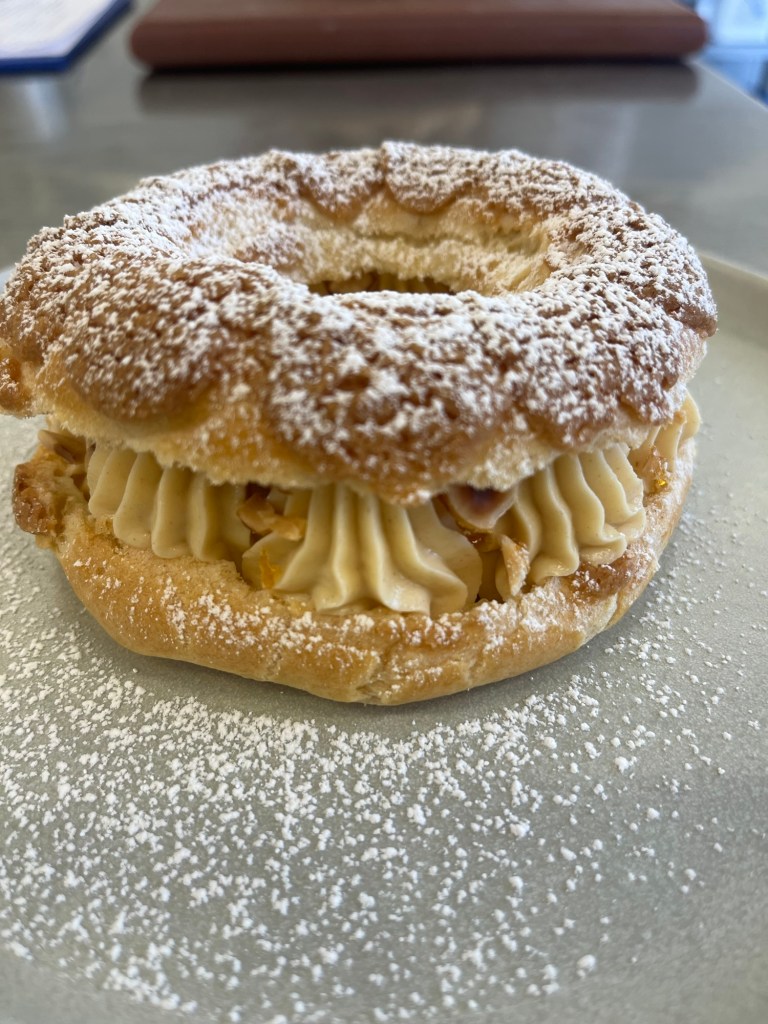
    The sweet element came from the delectable pastry wheel, the Paris-Brest. We started on Thursday by making the crème pat base for the mousseline filling and the craquelin to top the choux pastry for a crisp bite. Once completed, we got stuck into our first experience with squid. A competition ensued over the gutting to see whose squid contained the most interesting specimen. Half digested fishes were the most popular contenders. Once cleaned, we sliced and dried the squid ready for deep fat frying. To accompany the crispy cephalopod, we made a vibrant ginger, chilli and coriander salsa. My previous home attempts at crispy squid have not been that successful. But here we used a gluten free flour and a very small amount of sparkling water to make a batter the consistency of Greek yoghurt which worked perfectly. It was difficult not to polish off the entire plate whilst standing in the kitchen.

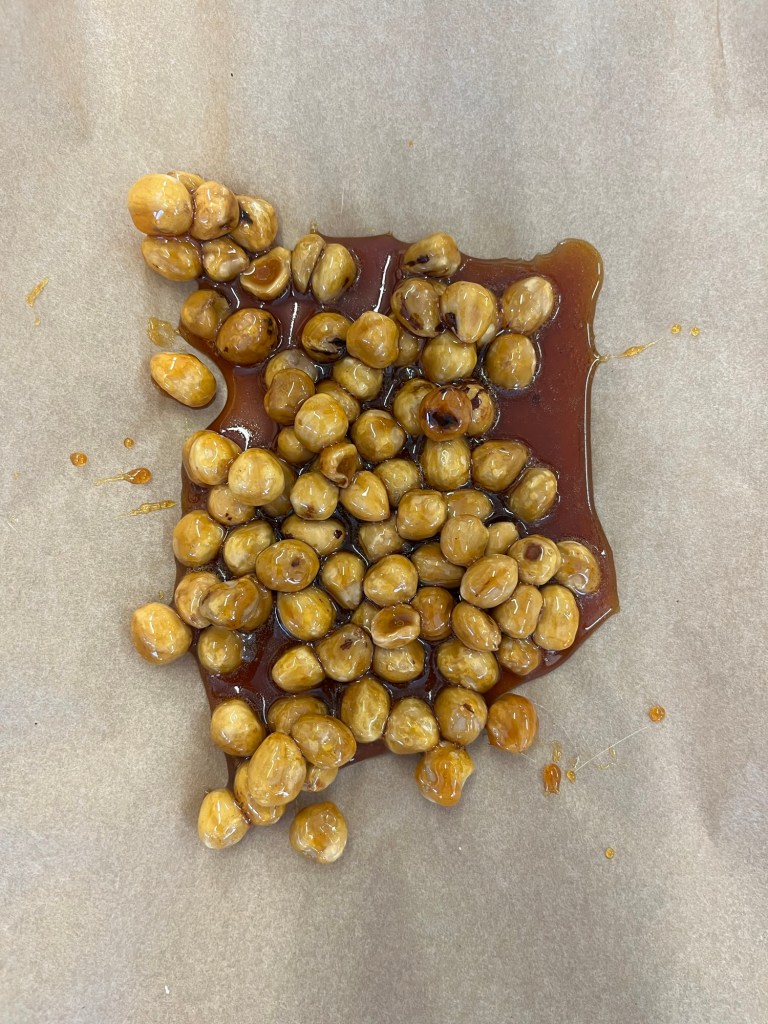
    Finishing the Paris Brest on Friday was a lovely meditative session. Making, piping and baking the choux and topping with tiny overlapping circles of thinly rolled craquelin. Making mousseline by whipping a considerable quantity of soft butter into our crème pat and flavouring it with praline paste. Melting sugar to create caramel and combining it quickly once dark amber with toasted hazelnuts to make praline. And finally the majestic assembly. The choux delicately sliced in half and filled with fluted columns of rich mousseline. The praline roughly sliced into tiny shards to add texture and interest to each bite. And an elegant fine dusting of icing sugar to make it picture perfect.

    Sauces and pasta were the focus of our teaching sessions. In sauces I finally understood what is happening on Masterchef when they are browning and cooking bones in stock which somehow transforms into a glossy sauce. The ‘jus’ is essentially a double stock. One relatively quickly made stock which is enriched with alcohol and a previously made longer cooked stock, resulting in a sauce that is packed with flavour and a syrupy coating consistency. Ours would be started on Monday to be served with duck later in the week. We were taught the three C’s of jus: concentration, clarity and consistency; and the love and attention required in the making of the jus to achieve them. The second sauce was a smooth buttery veloute served with poached brill and a leek croquette – one to be repeated!

    Pasta dem was predominantly revision of skills from foundation but we also had a go at shaping into garganelli and tortellini. Grace also ran us through the sausage and fennel ragu we will make to coat the garganelli for our next assessment; plus a delicious lemon and ricotta filling for the tortellini.

    Panic struck at the end of the week with the realisation of quite how much there is to do in terms of coursework, assessments and revision during the second half term. Definitely a need for head down revising wine this weekend ahead of our level 2 exam in two weeks’ time.

  • Each week I continue to be impressed by the breadth of the curriculum and the high standard of teaching at Leith’s. This week we got to grips with whole pig butchery, learnt about pickles, fermentation and plant-based cooking, came face-to-face with an octopus (which we then ate), and were given an insight of a charity project we’ll be taking part in with City Harvest.

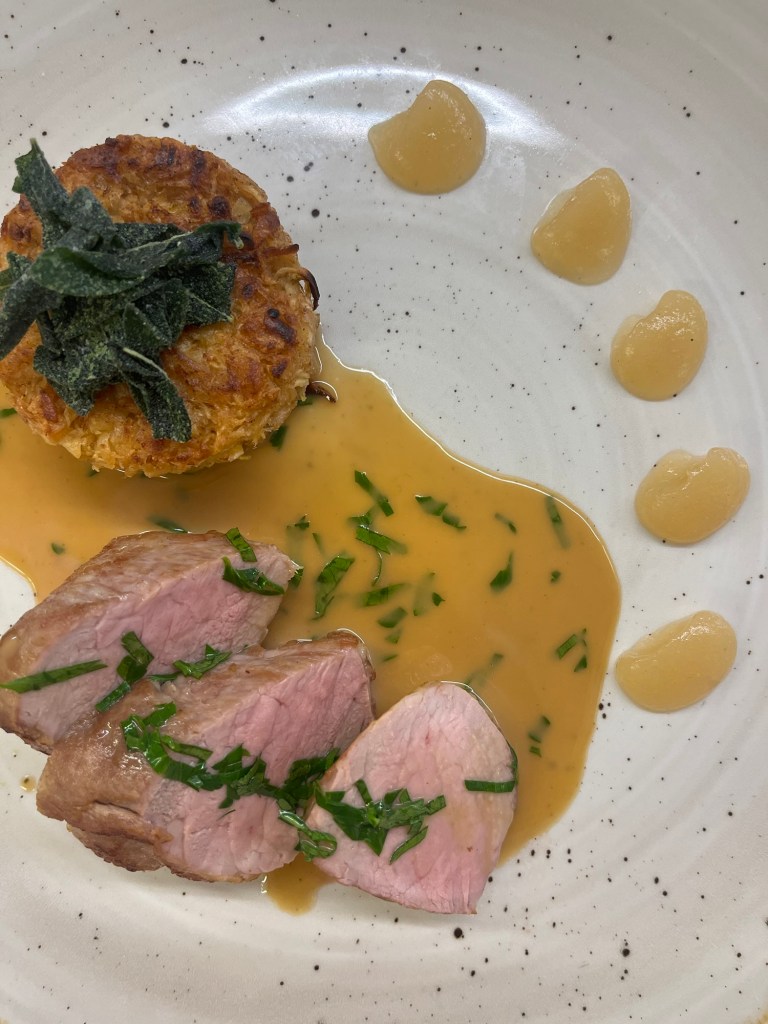
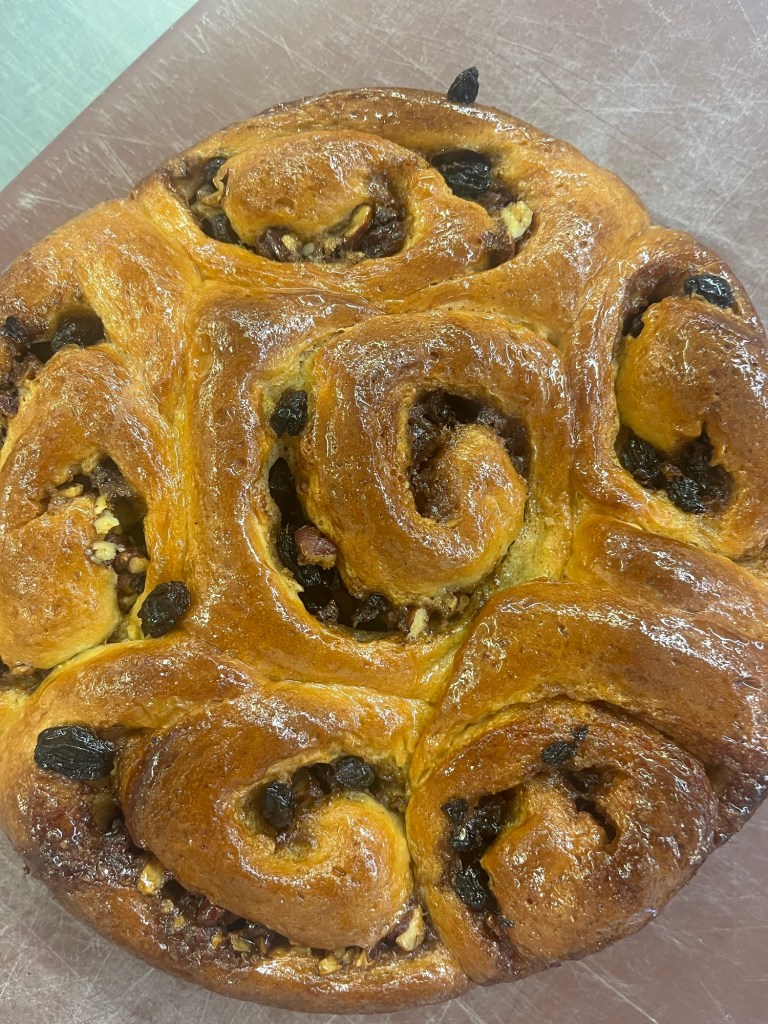
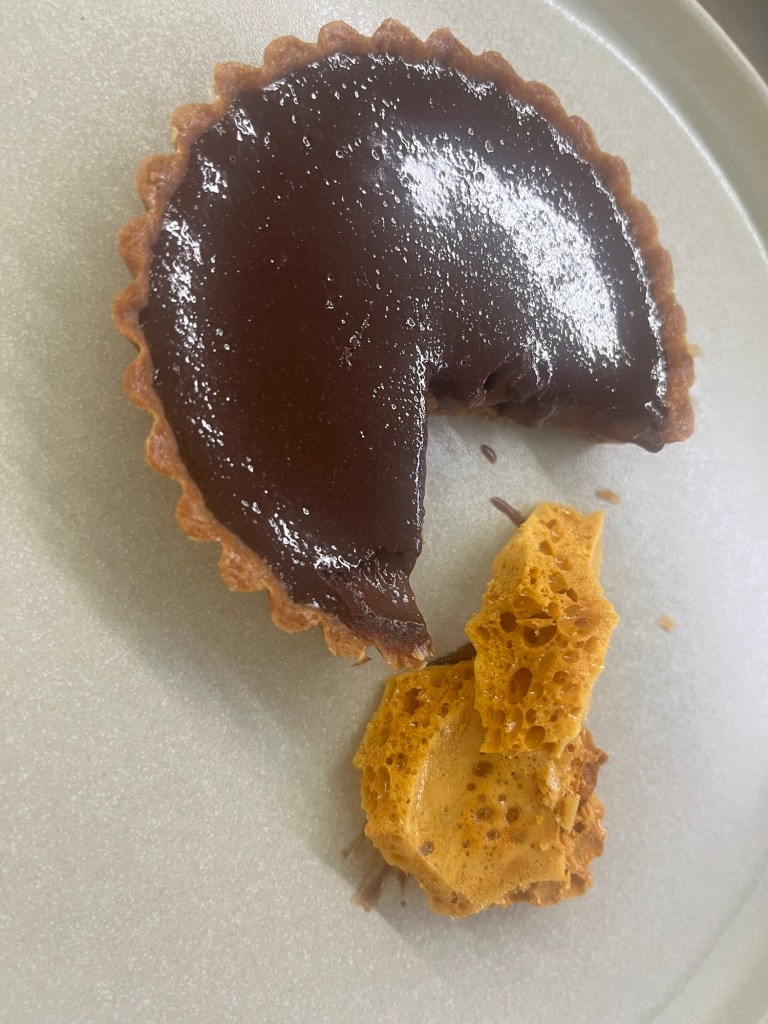
    By far the most challenging day of the week was Wednesday, which marked our second all day cook of the term. The pace did not let up from 9.25am – 4.45pm. Our multi-tasking and remaining calm under pressure skills were tested to the full. We started the day making a very sticky soft dough for our spiced raisin and pecan buns. The dough is so sticky that initially a slapping technique is required to develop the gluten and encourage the dough to come together into something smooth and useable. Next on the list was careful lining of four delicate fluted tart cases. We had done the easy bit of making the pastry the previous day. Every time we do pastry we’re given less time to do the same tasks in an effort to improve our efficiency and seemingly increase our stress! Tart cases lined and chilling, we continued to the next tasks of making honeycomb and preparing an apple gel to be served with pork tenderloin. Simultaneously whilst keeping an eye on the colour of our caramel and reducing apple juice and cider, we grated large quantities of celeriac and parsnip for rosti. The teachers were circulating the kitchen keeping us focused, offering advice and ensuring we didn’t loose momentum. Our lunch break was scheduled for 1.15pm and there were a considerable number of tasks that needed to be completed before that, including getting on top of the increasingly large washing up pile. We managed to get our tarts in to blind bake, make the filling for our buns, fill and shape the buns, and clear down somewhat before we were made to take a break for half an hour.

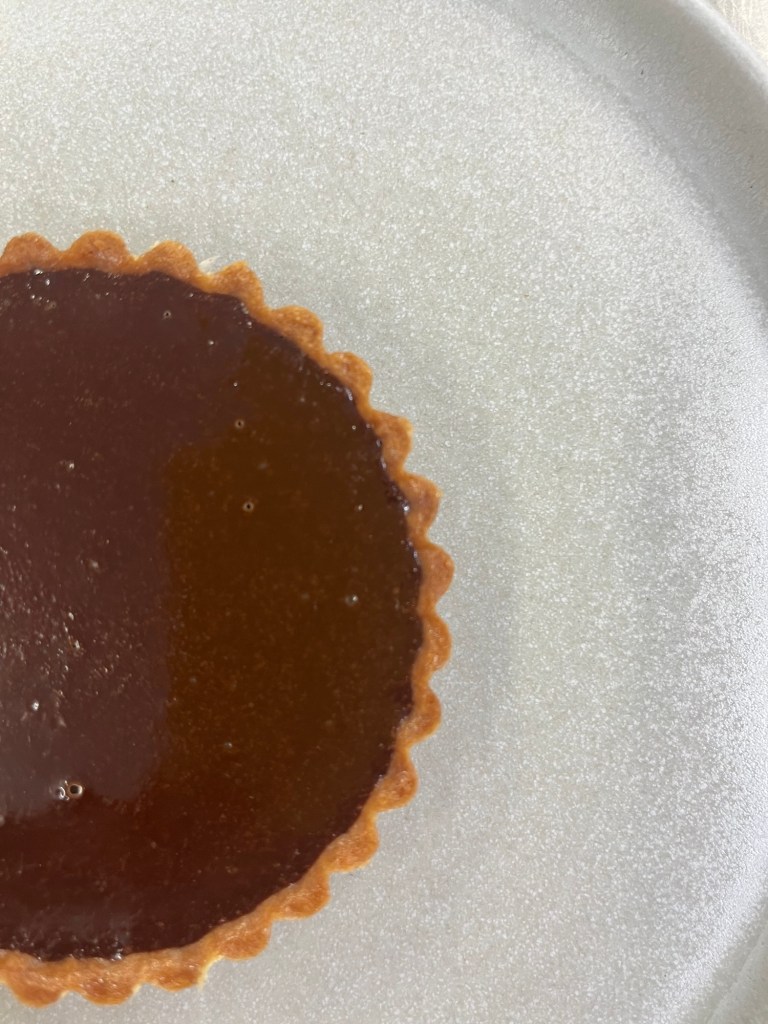
    Back from lunch and we were required to commit to a service time for our pork dish and chocolate tarts. The kitchen took on a chaotic air. We were smiling, panicking and desperately trying to juggle plates and pans to keep us on track for service. The washing up sunk to the bottom of the priority list and we were forced to use random utensils and cutlery inappropriate to the tasks at hand. Pan fry rosti, bake rosti, slow cook chocolate tarts, blend and set the apple gel, prep pork, cook pork to medium rare and pink, make Marsala sauce, deep fry sage, bake buns, make a sugar syrup to vaseline stage to glaze…the list went on! Finally I called service – all elements done. Marsala sauce nailed; pork pink, juicy and prettily plated with elegant ‘blobs’ of apple gel; chocolate tarts silkily set with honeycomb which tasted like a Crunchie; spiced buns soft and bursting with pecans and plump raisins. So good to have finished and have such a bounty to take home to the family.

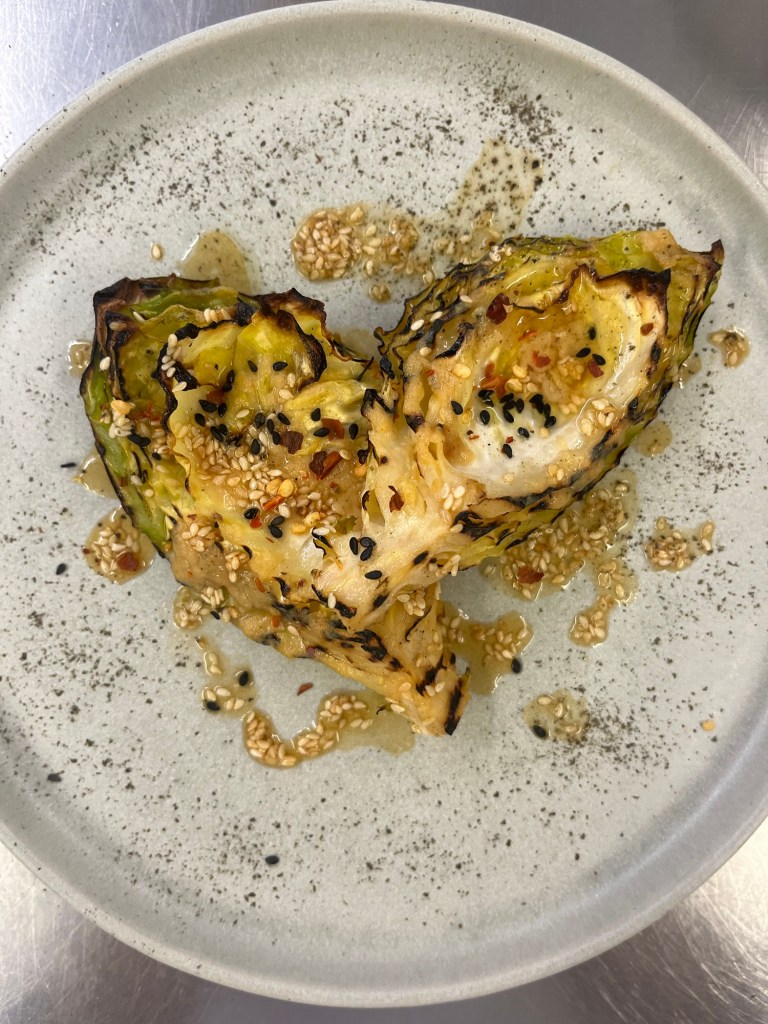
    The other two kitchen sessions of the week were considerably more relaxed. Tuesday we made our pate sucree and chocolate tart mix ready for Wednesday and then tried our hand at charring and roasting a January King cabbage. We basted it in miso butter and served it with a spicy, sweet salty dressing, sesame seeds and seaweed powder. Unexpectedly delicious. Friday was a skills practice session where we picked a few skills we wanted to perfect. I had another go at filleting a round fish. Navigating the rib cage is tricky; it is all too easy to tear through the skin. I also rehearsed prepping and cooking a duck breast, and separately made pasta, ahead of upcoming assessments.

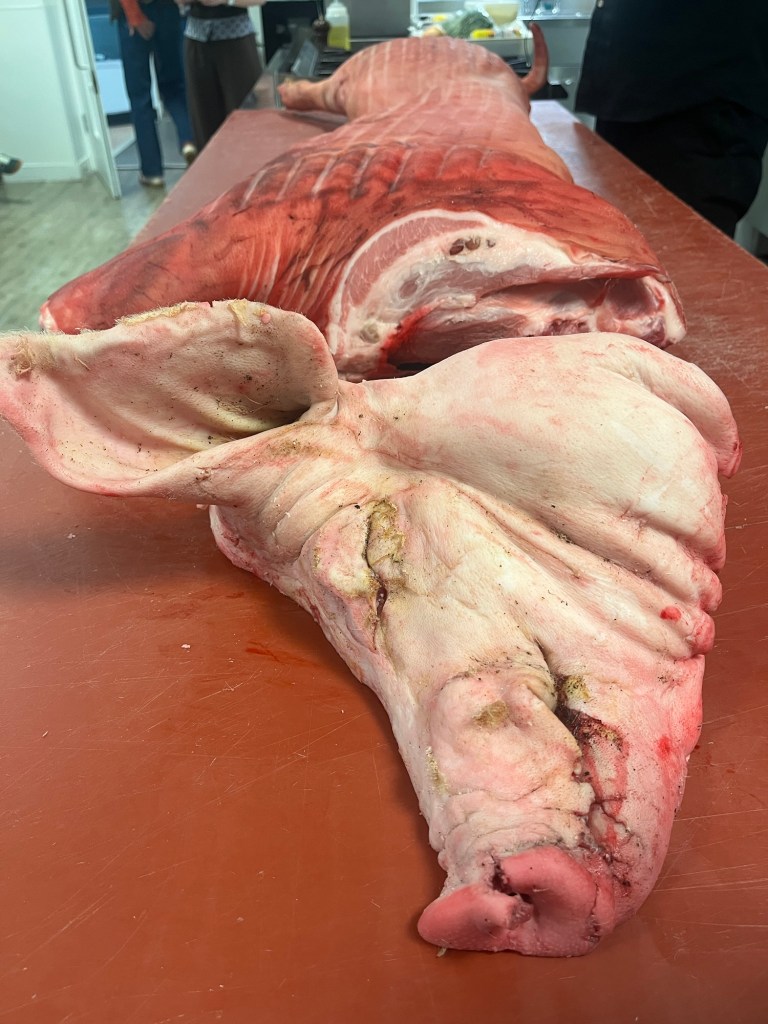
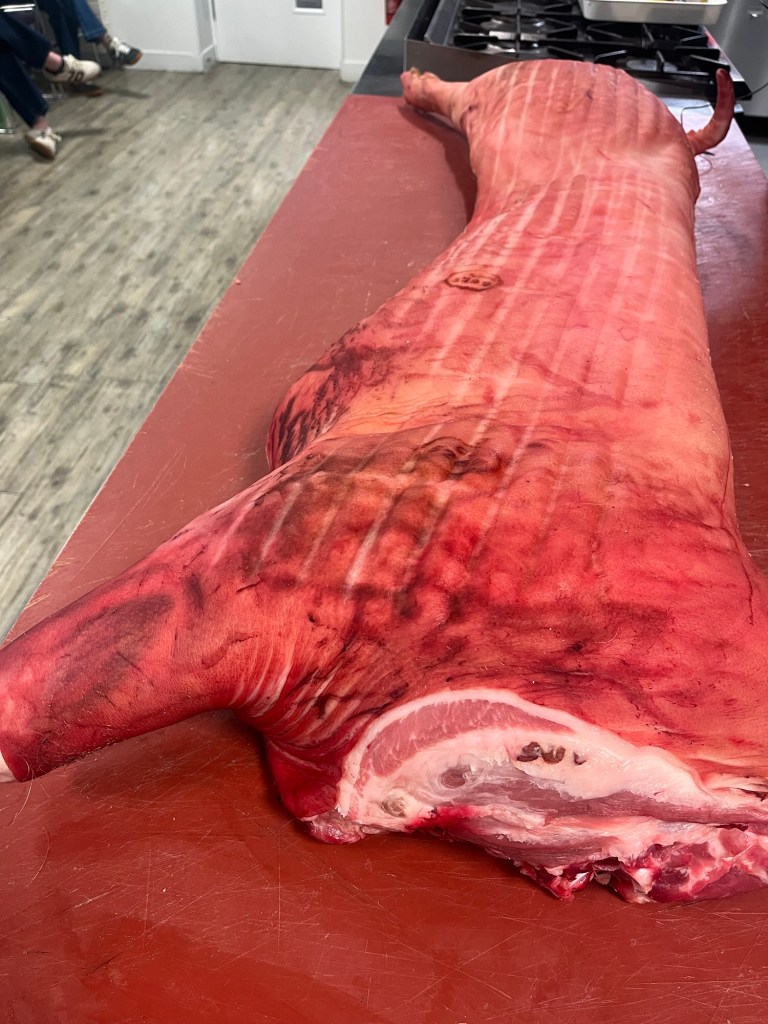
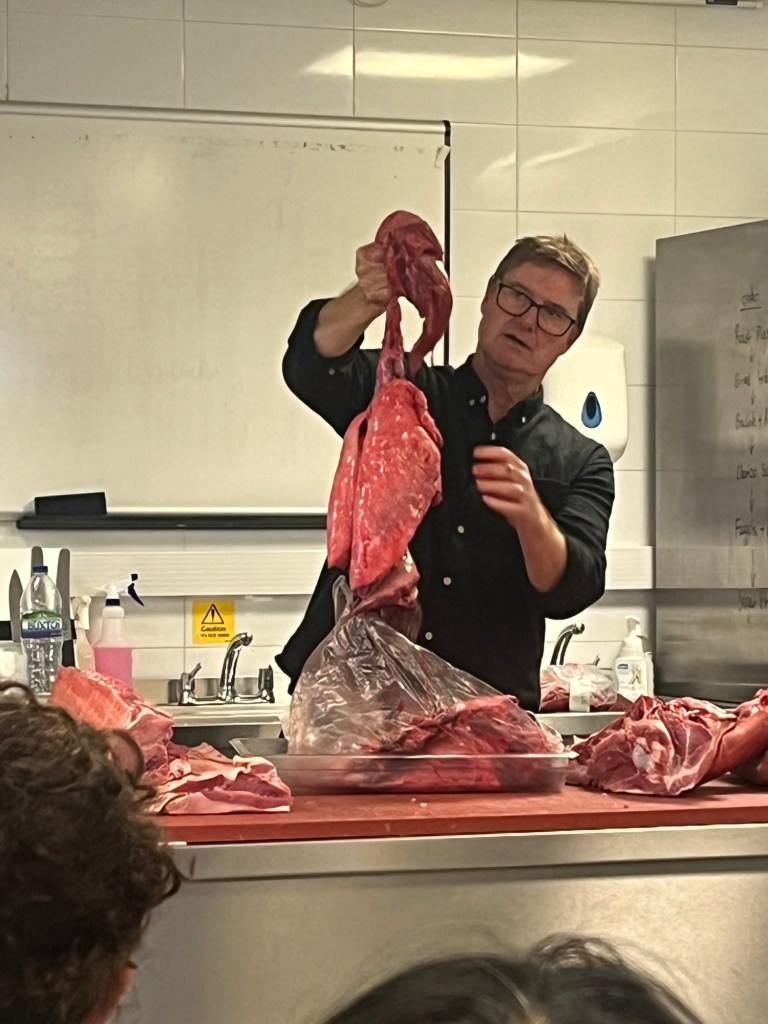
    In exchange for our all day cook, we were treated to an all day dem. On entering the teaching room, we were met with an entire half pig, head included. The other half of the head was already in the oven roasting for our delectation. The session was led by the very experienced and highly engaging Steve Lamb. Steven is an expert in curing and smoking and has been a key part of the success of Hugh Fearnley Whittingstall’s River Cottage. Steven encouraged us to be mindful when sourcing pig and pork products, taking us through the hard to hear differences in treatment between higher and lower welfare animals. With the help of some brave students, Steven took apart the pig and helped us understand the different parts and how they could be cooked to get maximum value and flavour. The session was peppered with delicious treats evidencing his teaching: chorizo scotch eggs; faggots (nothing like what I was given in a Birmingham hall of residence 25 years ago!); roasted pig’s head; brined pork tenderloin with salsa verde and pork sausages wrapped in pork! We left brimming with ideas and tastebuds tickled.

    Difficult to believe how we packed it all in, but there is still more to recount from the week! The introduction to pickles and fermenting was enlightening and somewhat mind-boggling. Particularly coming face to face with a SCOBY for the first time. I’m a big fan of pickles but I wasn’t totally sold on kimchi or kombucha. The final session of the week was fish and shellfish – much more up my street. A whole octopus was cooked, chargrilled and plated in three different ways with aioli and paprika dressing; a delicate sea bass dish (which we’ll be assessed on later) was served with clams, samphire and a dill split sauce. And the final show-stopping crowd-pleaser to round off an awesome week: salt and pepper squid with a chilli and ginger relish. Half term now and time for a well-earned break for teachers and students alike!

  • Two firsts for intermediate term this week: our first formal assessment and our first all day cook. But before that a welcome change of pace with a home study day. A chance to catch up with admin, do coursework for the Certificate in Hospitality and Tourism, and prepare time plans for the week. For me it was also well-timed having catered for a retreat on Sunday so had spend a large part of the weekend on my feet cooking.

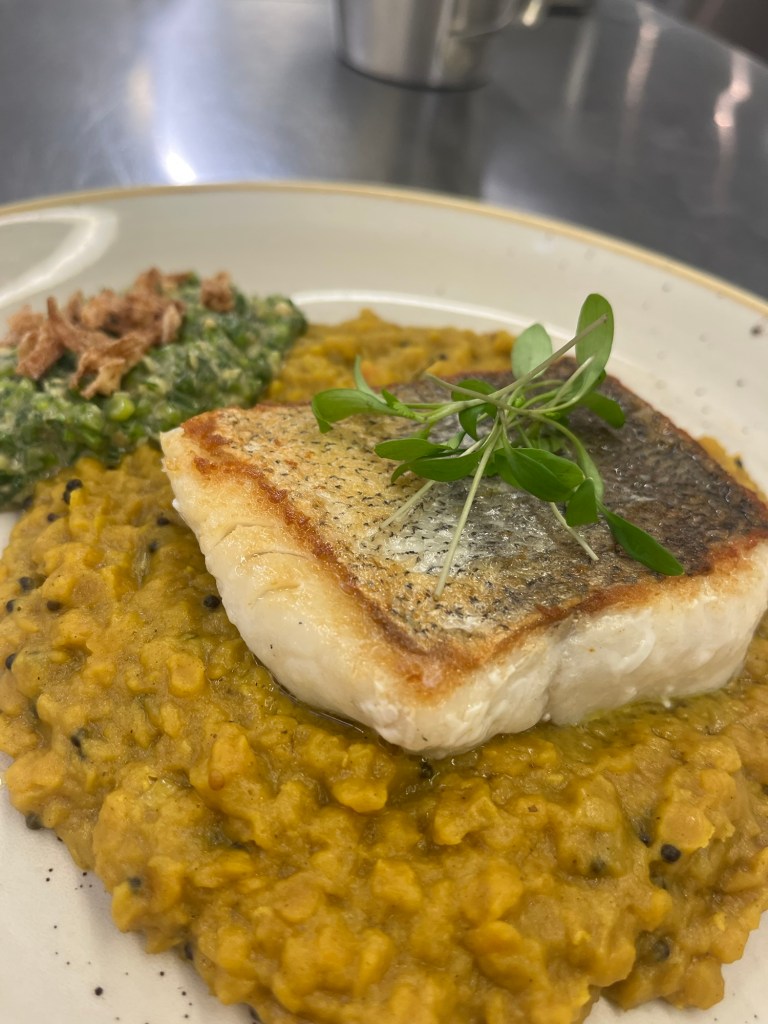
    The first assessment appeared easy: hake but already-filleted; a spiced lentil dhal; and a coriander chutney. But this is Leith’s so it needed to be cooked perfectly to intermediate rather than foundation standards. The fish flesh needed to be moist but with a crisp skin; the lentils cooked to the correct consistency with no chalkiness and well seasoned; and the chutney needed to show refined knife skills and ability to balance flavours. I’m delighted to say I achieved a distinction for my dish 🙂

    Reward for our assessment efforts came the following day in the form of doughnuts. And also spiced raisin and pecan buns. And the buttery-ist, softest brioche loaf. The enriched dough dem with Caz was a total treat; and we can’t wait to repeat it for ourselves in the kitchen.

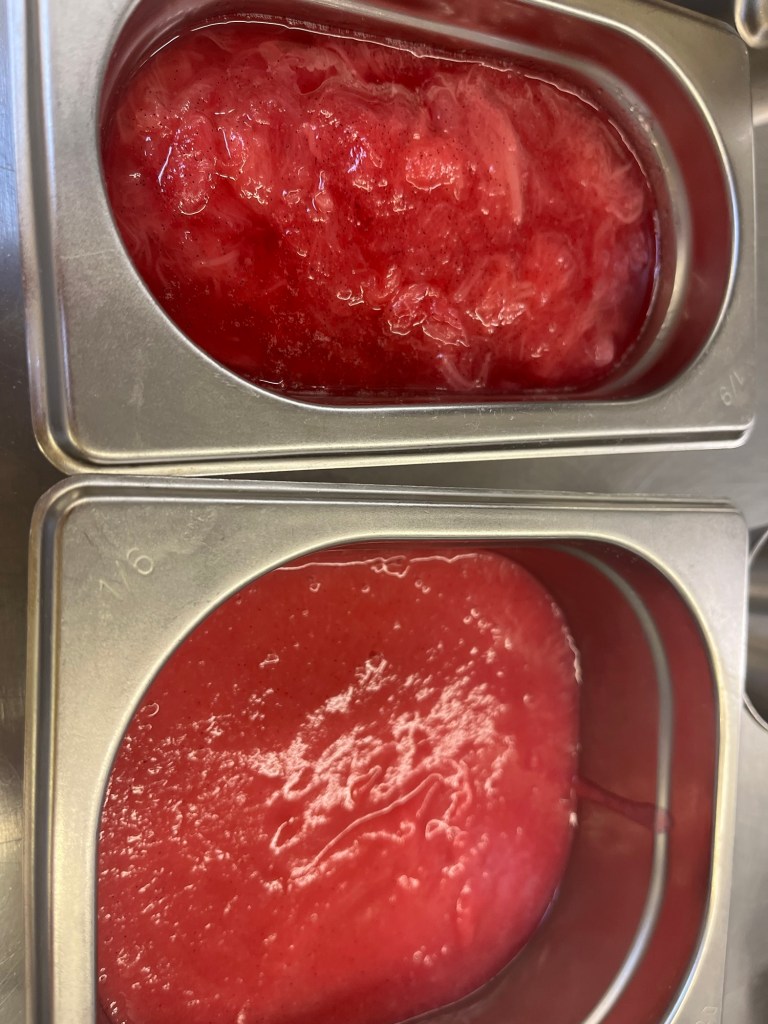
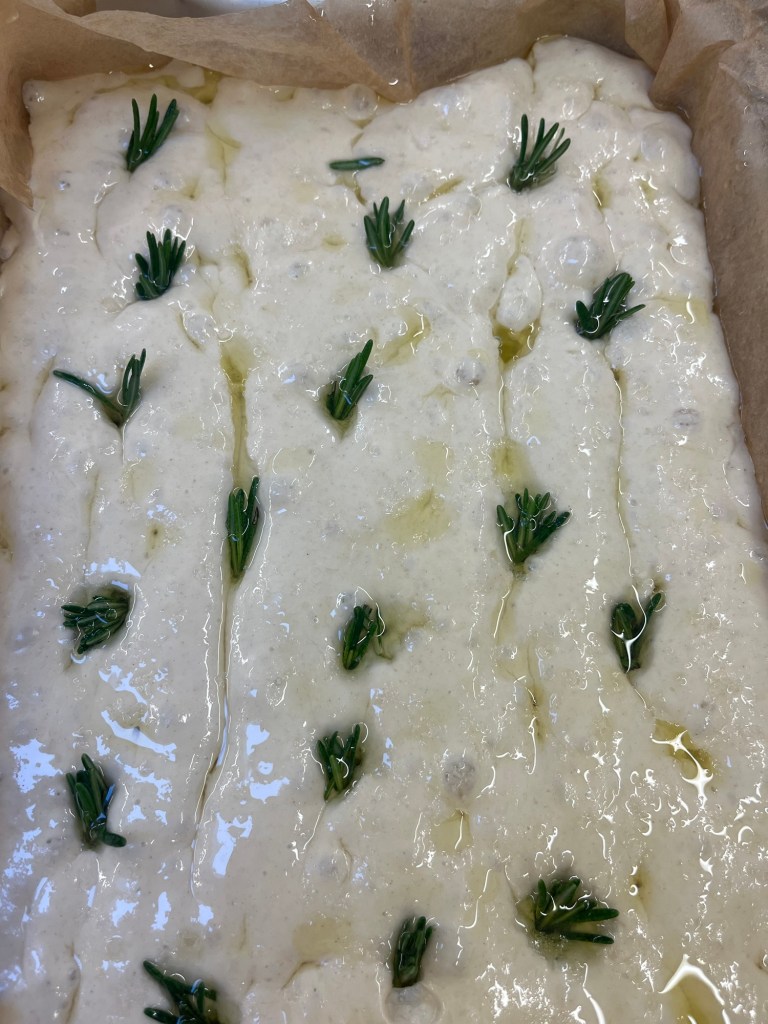
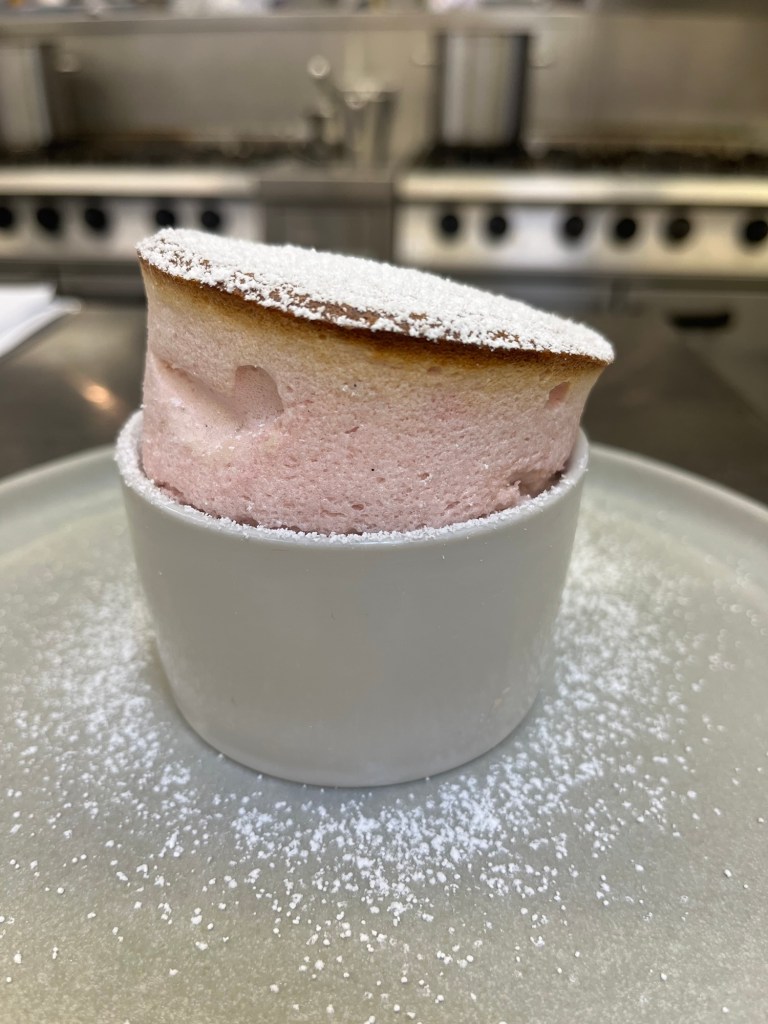
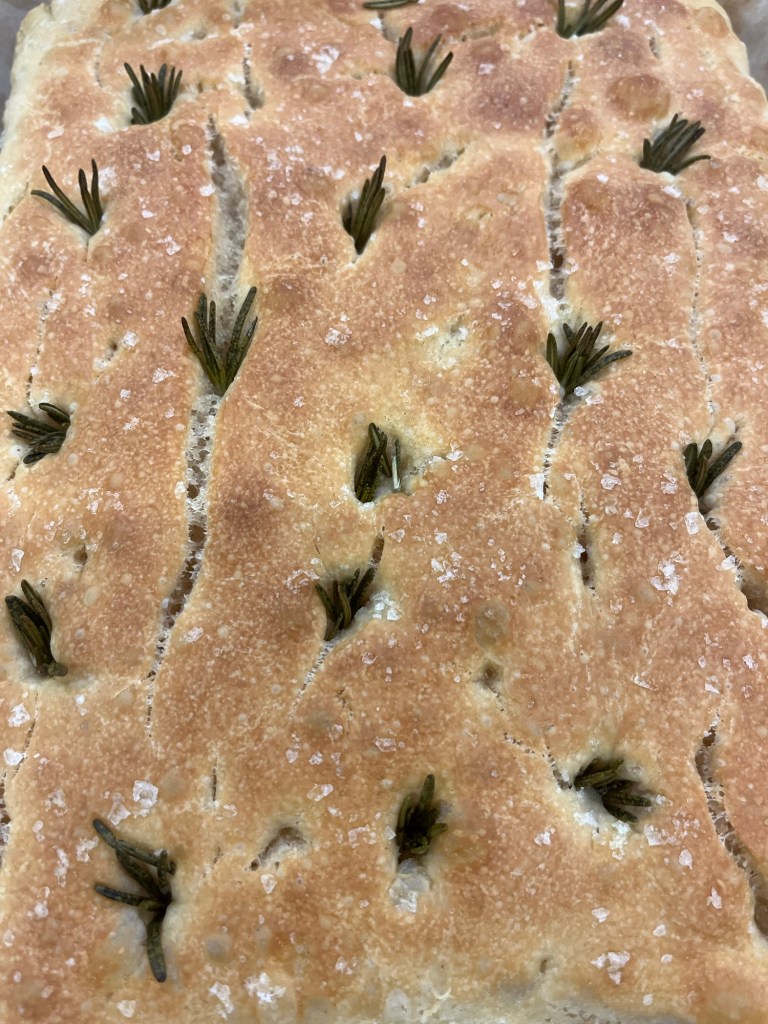
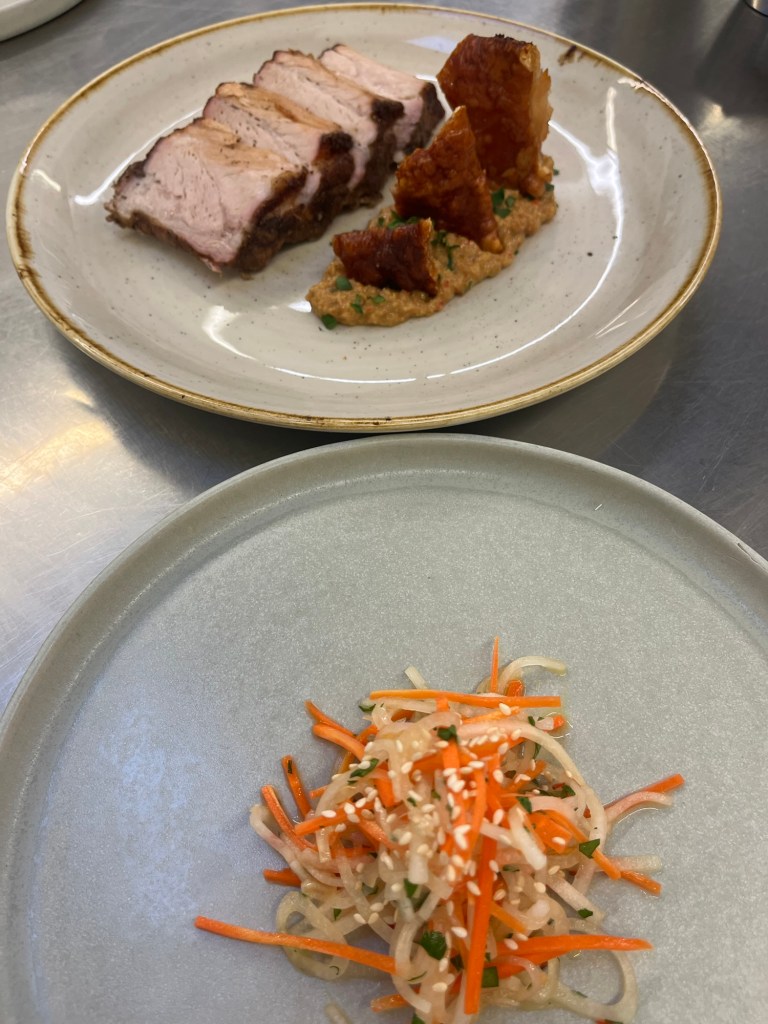
    Thursday was a mammoth all day cook. The time plan alone took several hours to prepare. It was such a great day though, with very tasty food and a real test of our ability to multi-task and, quite literally, juggle plates (and pans!). A couple of days earlier we had made a biga – a pre-ferment used in making focaccia and other Italian breads. It is a mix of flour, water and yeast that ferments for 12-48 hours and then added to the main dough. It improves the flavour and texture of the bread. We started the all day cook getting the main dough ready, mixing it with the biga and leaving it to ‘autolyse’. Autolysing helps hydrate the dough giving the resulting bread a lovely moistness. Meanwhile, we got our brown chicken and veal stock started: carcasses in stock pot with water; and veg browning in a pan. We also prepped some stunning pink rhubarb from Rhubarb Robert for a compote and a puree for our lunchtime service of Barbie pink soufflés. And finally, because we didn’t already have enough going on, we prepared a salty spice rub for our pork belly; and got that in the oven to start its low, slow roast.

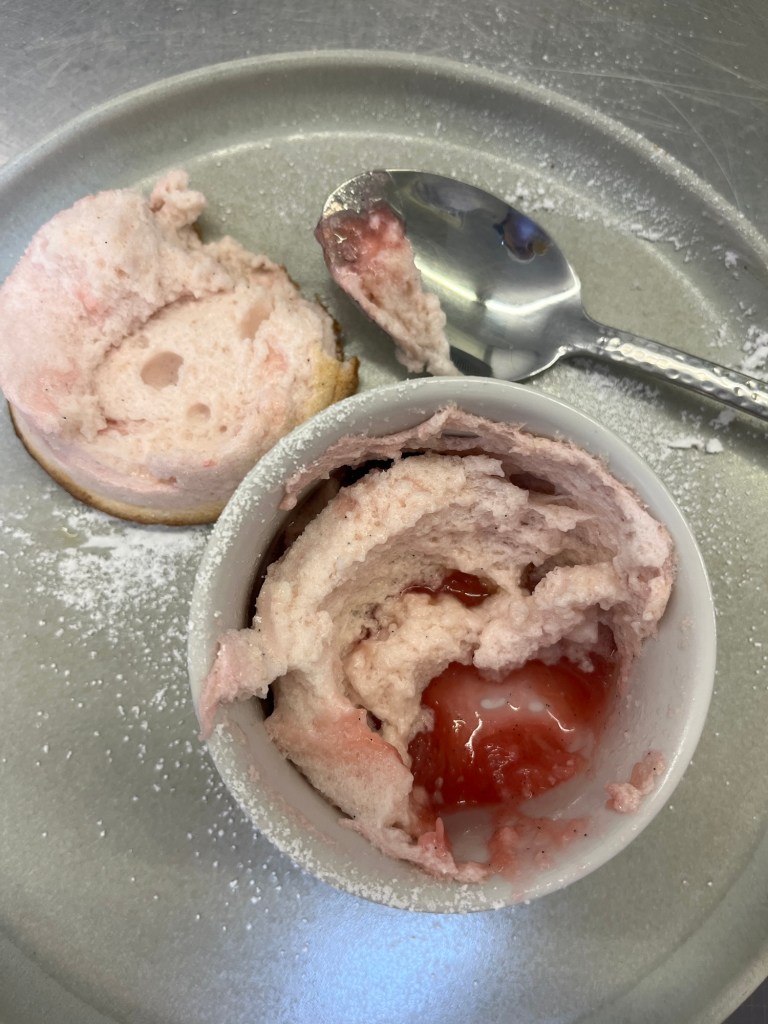
    Somehow we achieved the 12.30 service for our beautiful, light soufflés with hidden rhubarb puree nestled at their base. The perfect pre-lunch snack to get us through the final few tasks before we could take a break. Back from that 30 minute lunch, we were focused on our next service time of 3pm for the pork. Lots of veg prep and knife skills for the accompaniments of a caramelised peanut and chilli sauce and a carrot, mouli and coriander salad. We continued to skim our stock, and progress the seemingly never-ending stages of making focaccia. We also squeezed in preparing, soaking and first cooking of the triple cook chips we would finish the following day. The pace did not let up! Such a fantastic day with delicious food and a vast array of techniques and skills for us to hone and elevate. I was exhausted by the end but very happy.

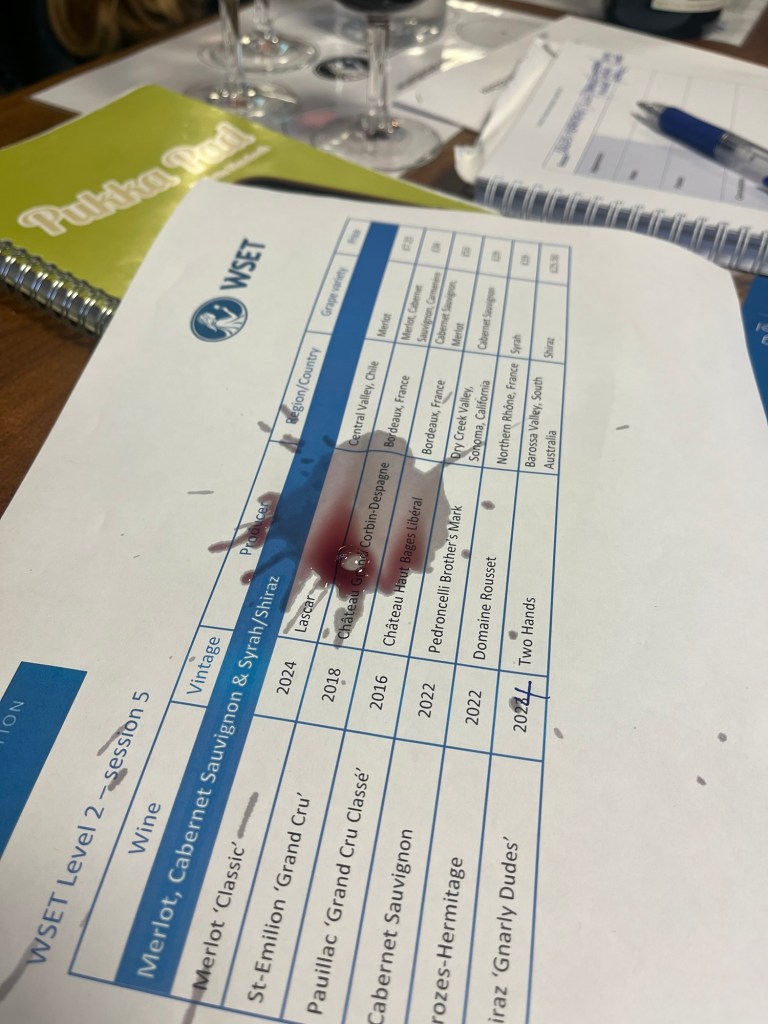
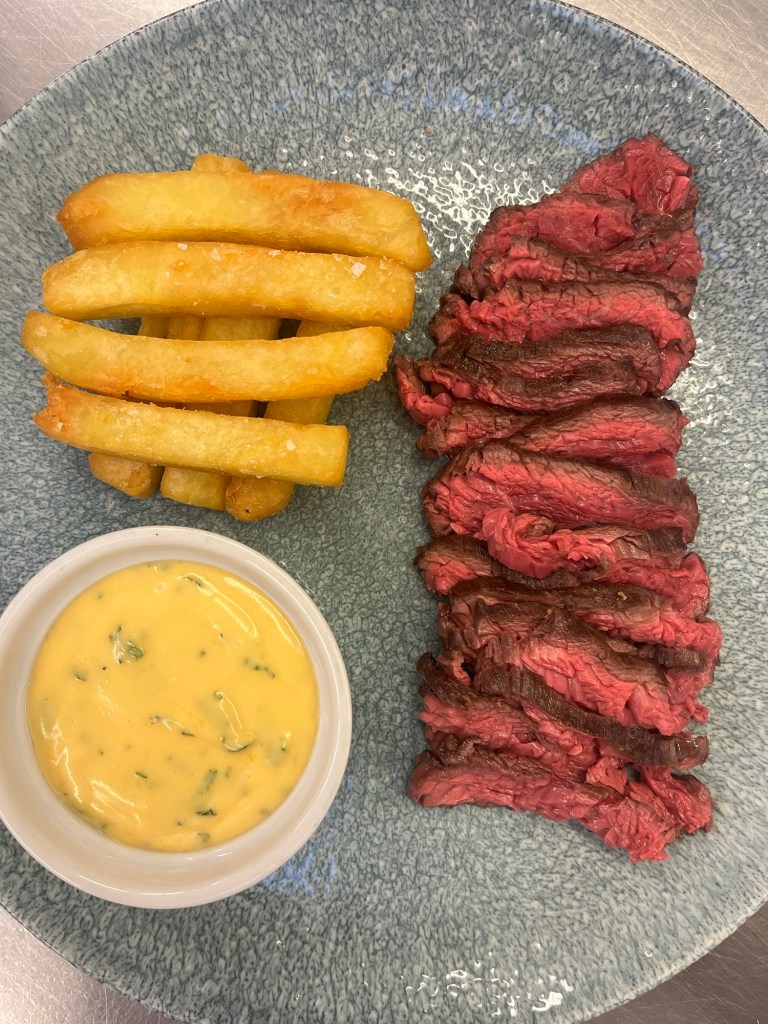
    The week had started with a dem on tender cuts of meat including bavette and pork tenderloin. On Friday afternoon, after a morning of red wine with Marjory (6 bottles to taste before 12.30), we tackled the bavette plus béarnaise sauce and triple cooked chips. Revision of skills of hollandaise sauce and then creating the daughter sauce, béarnaise, with the addition of tarragon and chervil to both the reduction and the final sauce. The chips were cooked twice more, the final time to a golden crisp. And we charred and caramelised our bavette to medium red and sliced thinly against the grain. ‘Gorgeous’ was how my teacher described my chips. I’ll take that! A super end to a packed and enriching week.

  • Another week and another looooong list of skills practiced and dishes executed: pate sucree, soufflé by creme pat method, slow egg cooking, fish stock making, liver prep and cook and round fish gutting, filleting and de-boning. Plus a delicious soporific bread dem, offal and fish dems and two afternoon wine sessions covering white, sweet and rose wine.

    Kitchen-wise we started the week sweet and ended savoury. Monday was a relaxed and mindful prep session. Revision of pate sucree, this time with the easier task of lining a large fluted tin (the small tins are so fiddly!). I made a lot of creme anglais over Christmas (mostly with large slugs of brandy added) but no creme patisserie. So it was good to be reminded of the method and to not be alarmed by the initial lumpiness of the sauce when it is cooking out. The creme pat was to be the base for a praline soufflé which we would make on Tuesday. The praline paste added to the creme pat smelt divine. I was day-dreaming about eating it slathered on toast for the rest of the day. The final prep job to concentrate on (whilst thinking of melting praline) was the filling for our lemon tart. A not too tricky combining of elements but again doing it carefully and with attention being paid to measuring out the exact quantities and not scrambling the eggs.

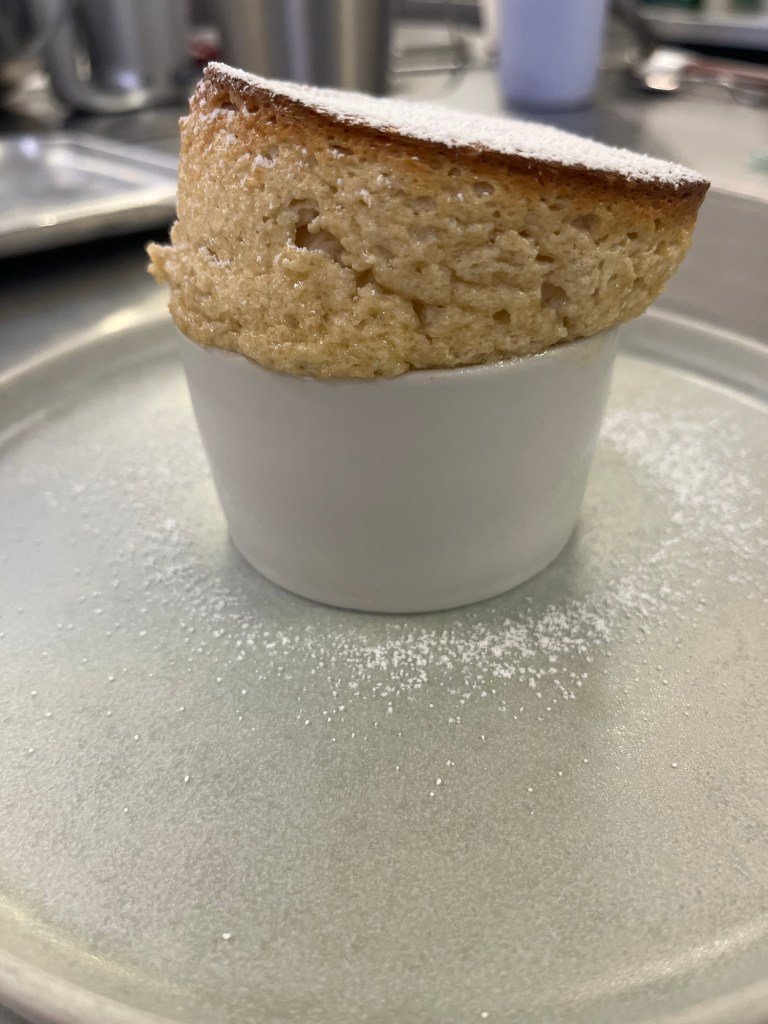
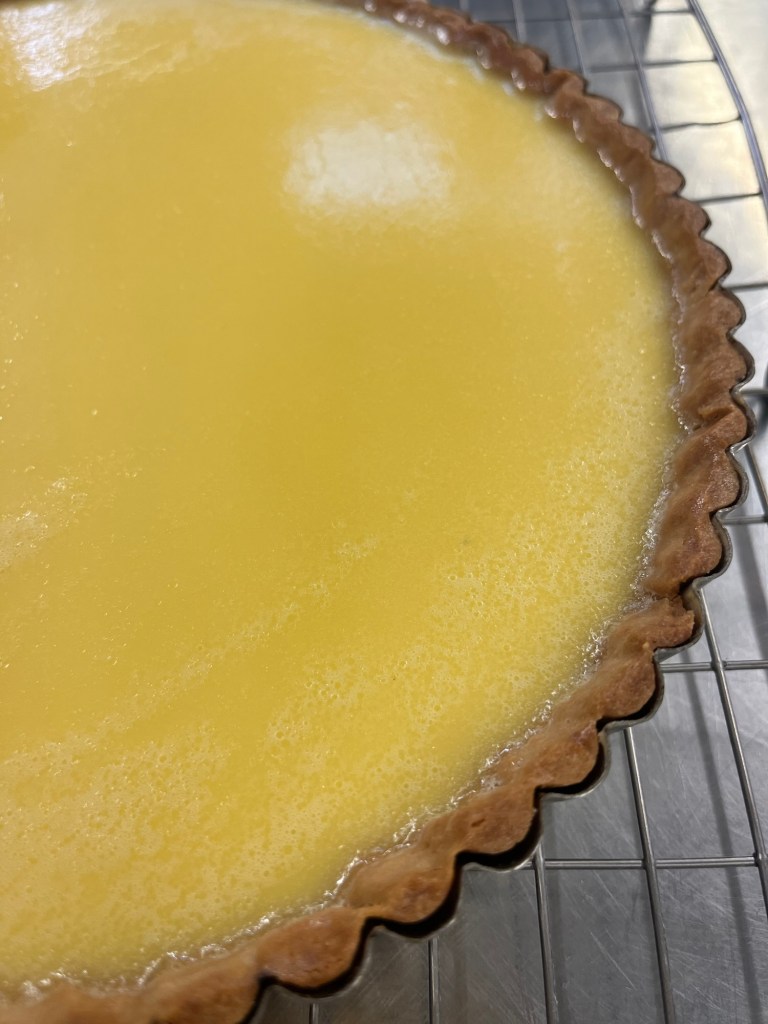
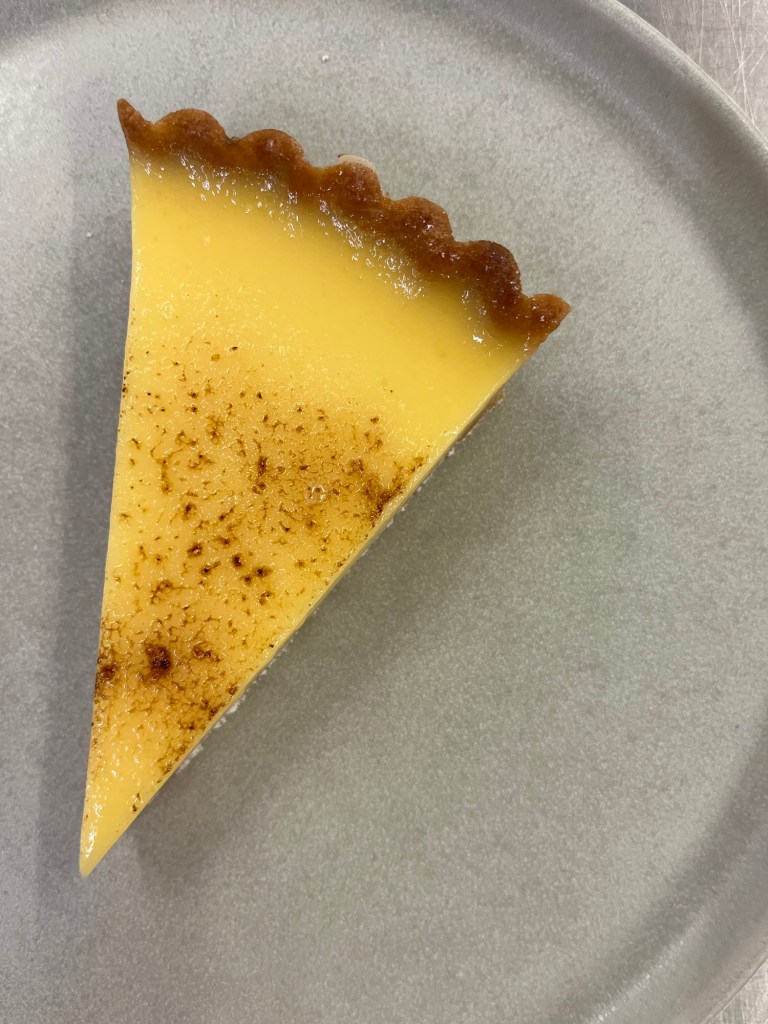
    The earlier start to the kitchen session on Tuesday befuddled us: all we had to do was cook our tart and finish and cook our soufflé. Little did we expect the low and slow cook of the lemon tart would take over an hour, and for some nearly two. Vastly different oven temps for the soufflé versus the tart also slowed things down. But boy were they both worth waiting for! The soufflé ramekin was painstakingly lined, chilled, lined, chilled with melted butter and crunchy demerara sugar. The soufflé was light as air, and almost savoury in its nuttiness. As the spoon plunged to reach the now melted butter this was offset by the softened grains of brown sugar which provided a heady richness and sweet hit. A luxurious balance. Spooning the raw mixture into the ramekins was a somewhat less splendid experience; and one that requires practice. My ramekins were covered in soft egg mix and with hands the same getting the ramekins cleaned up was something of a trial, but I got there. Apparently previous students have been known to inhale three cooked soufflés immediately out of the oven. I can’t claim to have achieved such a feat but I did thoroughly enjoy devouring one as an entirely unnecessary pre-lunch treat. On to the tart…half-way through blind-baking my tart case revealed an irritating crack on one side. In some ways though this was fortuitous as I learnt how to patch and melt over the crack with some leftover raw pastry. This, together with filling the case with the lemon mixture, managed to conceal the crack entirely. A final blow-torching to brûlée the top resulted in a pleasingly professional finish.

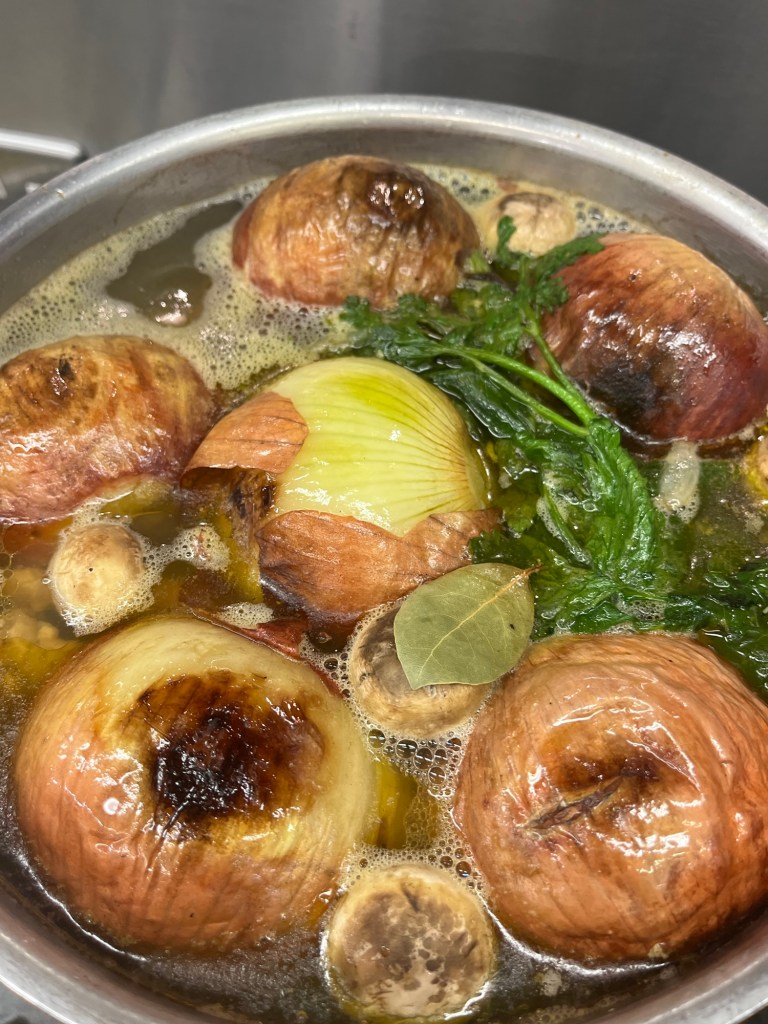
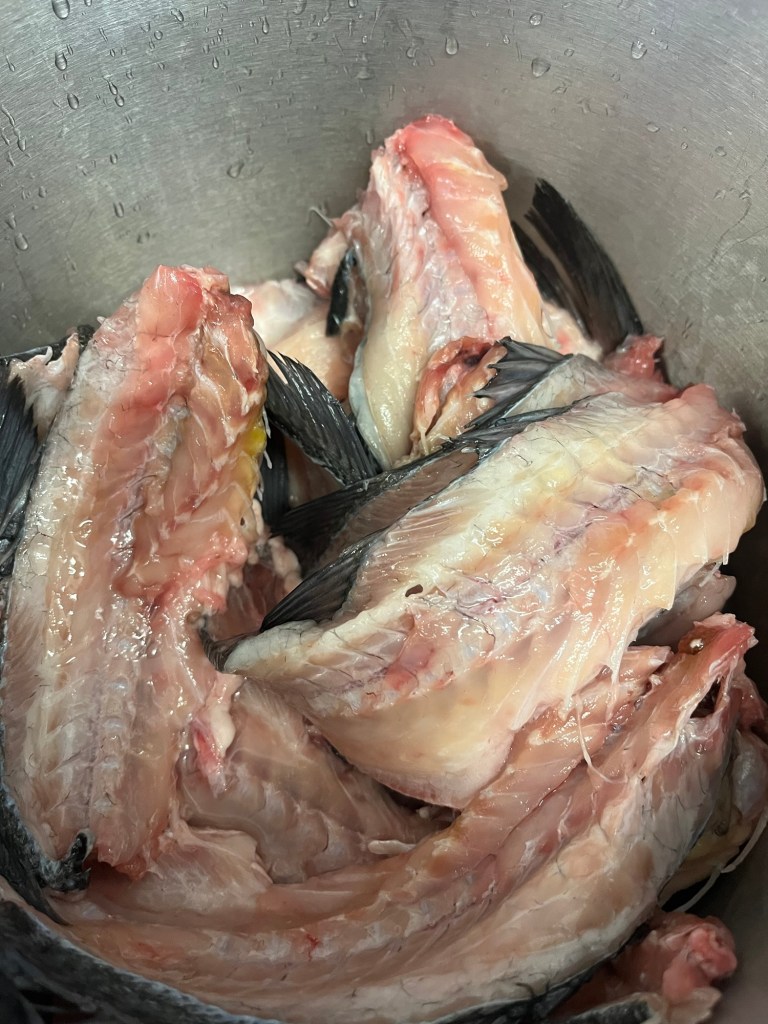
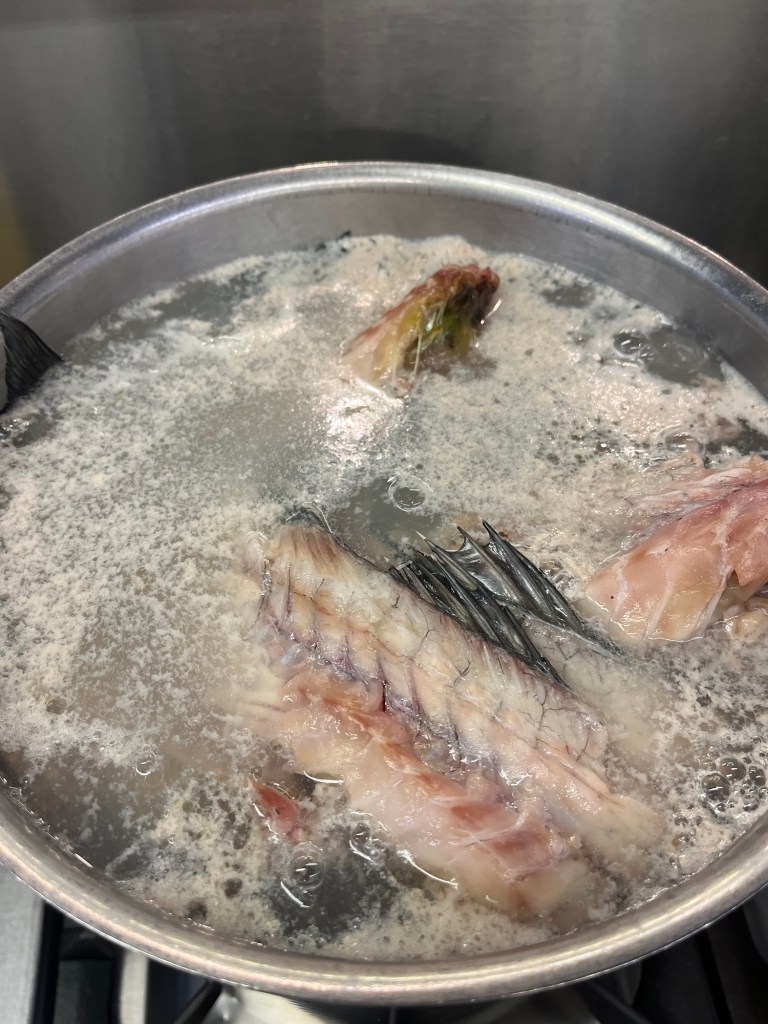
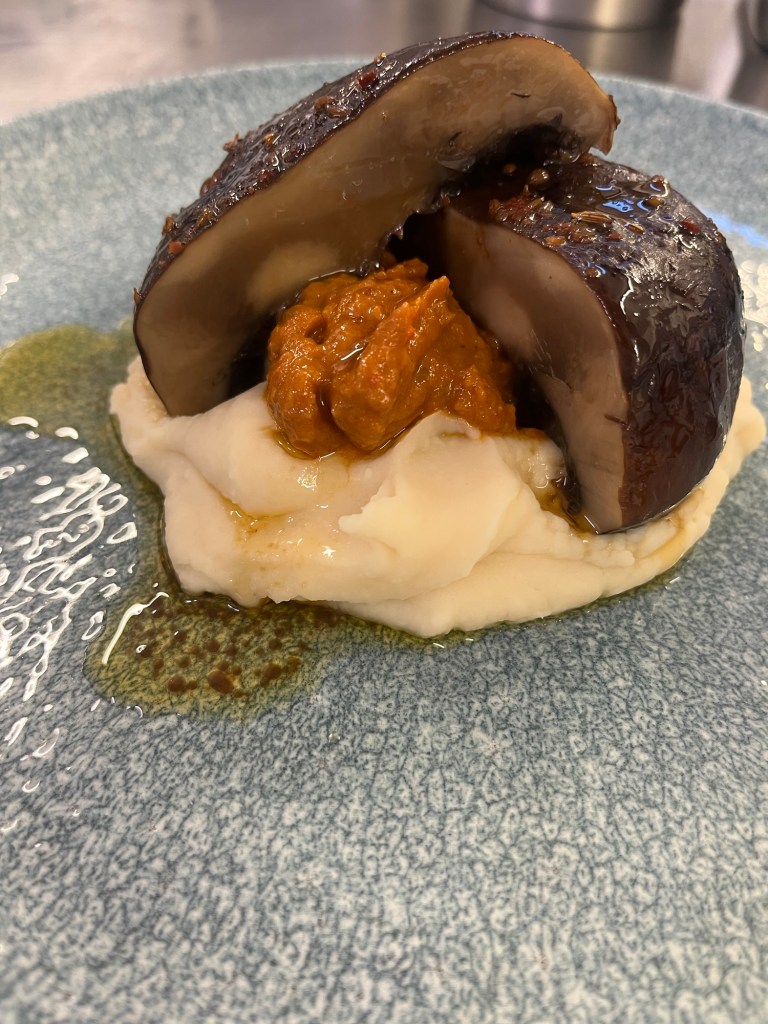
    Wednesday marked the switch to savoury: slow-cooked portobello mushroom and separately fish stock for use on Friday. The aroma in the kitchen was rather pungent. The mushrooms were nestled in an aromatic selection of spices which was later blitzed to create a pungent, chunky sauce and separate liquor to drizzle. A butterbean mash provided a creamy foil to the punch and heat from the sauce. Meanwhile, it was our first time making fish stock. It was quite something to be presented with the frames of eels and various fish at 9.30am. 3kg of frames were washed and pushed into a large stock pot together with veg and aromatics. Cooking time for a fish stock is shorter than for a meat one so we also had time to strain and reduce it down to a usable concentration.

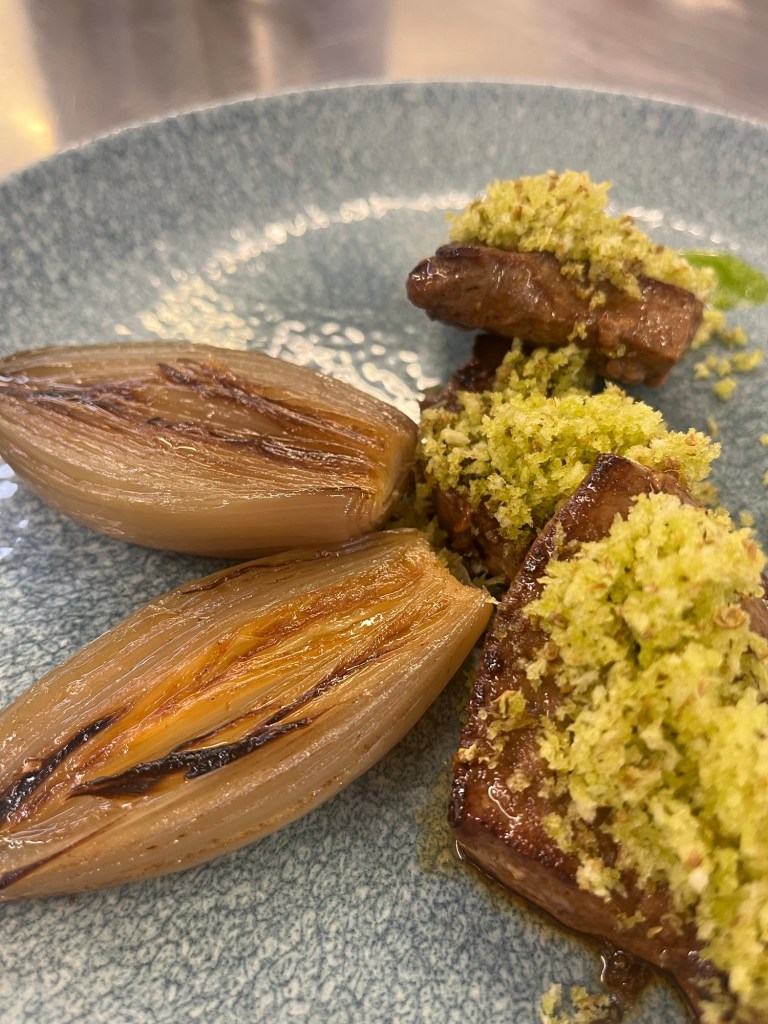
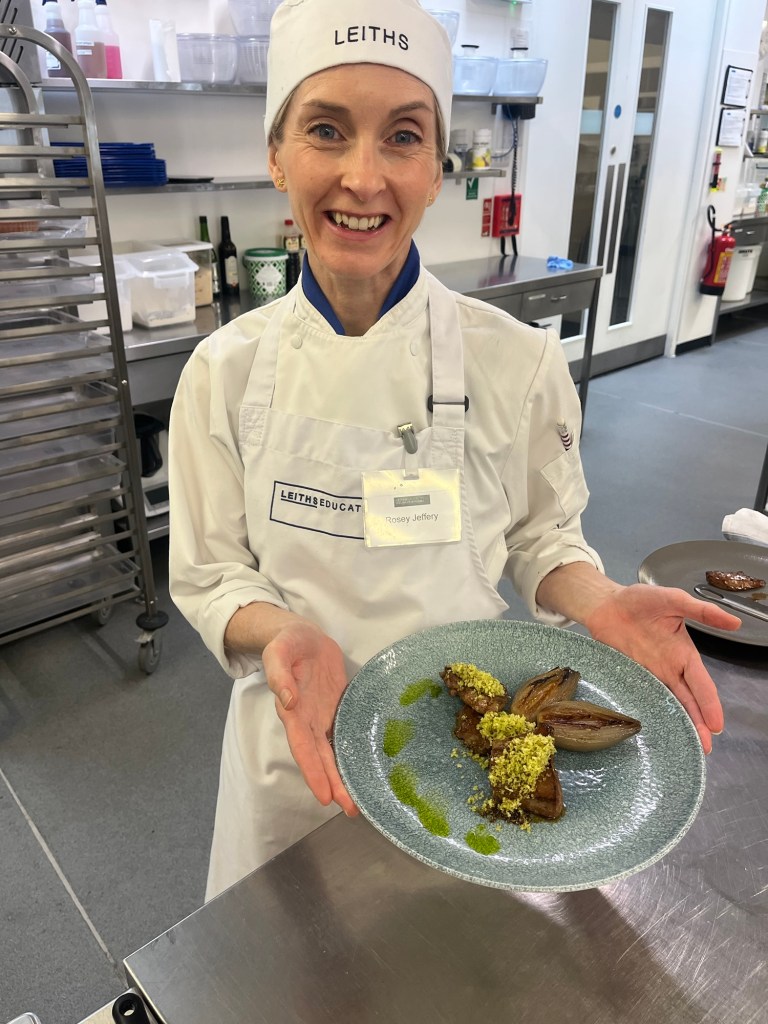
    It’s fair to say there was limited enthusiasm for Thursday’s calves’ liver cook. However, I was very pleasantly surprised. I really enjoyed the cooking session and the resulting plate of food was well balanced with an array of salty, sweet and savoury flavours. The liver was also considerably more palatable than anticipated. In part thanks to the tare sauce which was brushed liberally on the cooked meat. Tare sauce is a savoury-sweet Japanese glaze made by reducing soy, mirin, sake and sugar with shallots, garlic and ginger. It is often used to provide umami to ramen, and will be delicious brushed on salmon or chicken. As a table we also made a vibrant coriander crumb. First we created a coriander oil with a blanched bunch of coriander plunged into ice water to set the colour and then whizzed in a Thermomix with rapeseed oil. We combined the oil with freshly toasted and crushed coriander seeds and panko. It provided a shock of colour and texture to an otherwise soft and brown dish.

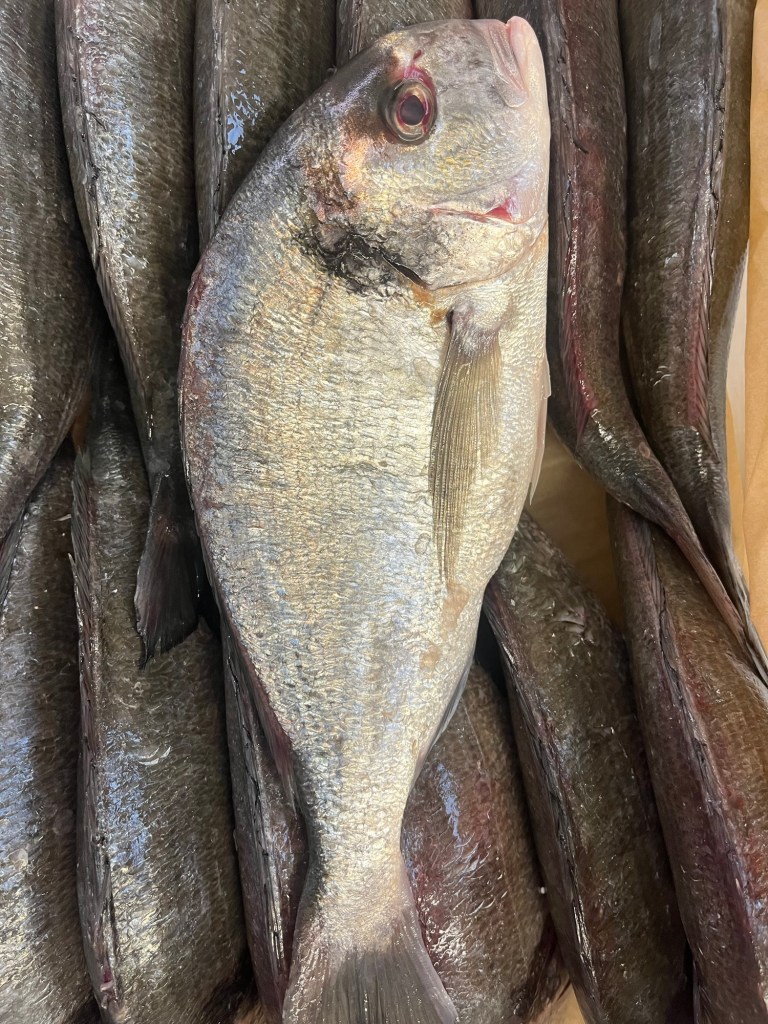
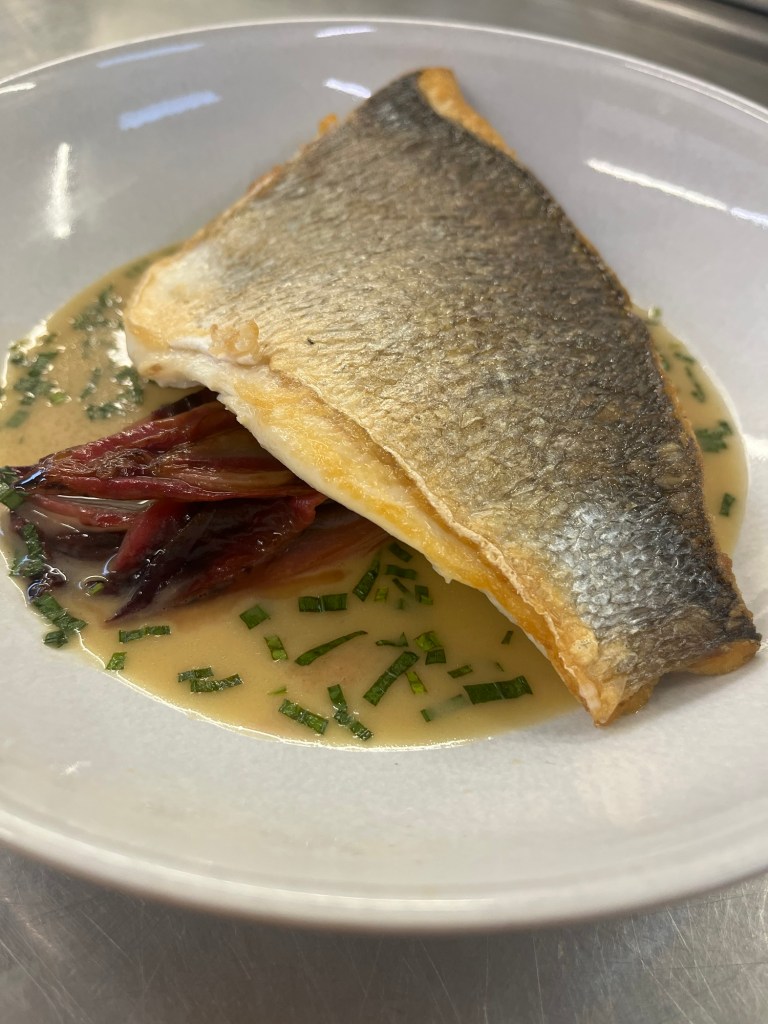
    Fish on Friday and it was a sea bream to fillet for the first time. Blue protective gloves were definitely advised for the gutting stage. I found filleting a round fish slightly trickier than a flat fish with the shape of the rib-cage more difficult to navigate without damaging some of the flesh. We served the bream with an intense white wine, cream and tarragon sauce, with our fish stock from earlier in the week providing a real depth of flavour. Also on the plate was chicory braised in butter, verjus and lemon thyme. Cooking the fish with juicy flesh and crispy skin was the final task. My test piece was over-crisp and my service piece was not crisp enough. Practice makes perfect!

    The most enjoyable dem of the week was bread with Grace. Some revision of bread-making technique from foundation but for three new breads: focaccia, potato bread and a walnut and raisin loaf. The potato bread was brioche-like in its softness but without the sweetness. And the fruit and nut loaf was incredibly more-ish served with whipped butter and a drizzle of honey. We’ll be attempting the focaccia next week including the new technique of creating a biga in advance.

    I ended the week tired but exhilarated; full to the brim with new techniques and flavours. On the horizon for week 4, our first formal assessment of the term and our first all day cook with an alarmingly long (and delicious) list of dishes to produce in a 6 hour window. Leith’s keeps pushing and we keep learning 🙂

  • Inspiring, daunting, intense yet light. Week two had lots of different things going on eliciting a range of feelings.

    A highlight of the week was a careers day organised for us by Leith’s List Connect careers service. All of us felt nervous about the ‘room of opportunities’; fearing voicing our ill-formed plans of what we want to do post-Leith’s bubble to potential employers. Following an insightful talk from Hello Fresh, I felt spurred on to venture towards the employer stands. I was inspired by the ladies from Nourish Hub: a social enterprise which brings food and company to anyone needing subsidised sustenance of mind, body and soul. Every day the Hub creates a 3 course lunch from ingredients that would otherwise go to waste, for a minimum donation of £3. They also offer cooking workshops for children and adults teaching important skills for life. My interest was also piqued by a talk from ex-Leith’s student/teacher, Megan Coker, who now works for Dinner Ladies. What began as a supper club founded by two women is now a well-established large caterer of dinners and events in venues such as the Apothecaries’ Hall in the City of London. Key take-aways from the day: get the CV updated to be relevant for my new world and start reaching out for work experience.

    Our cooking sessions this week were very much focused on nailing specific skills, some of which were revisions of technique from foundation term being taken to the next level. Monday was Hollandaise sauce. A similar sort of technique to mayonnaise by hand i.e. continuous whisking with one hand whilst slowly dripping in fat with the other in order to create an emulsion. As per usual Leith’s teaching methods, we were starting with the by hand rather than machine method, known as sabayon. Egg yolks (flavoured with a reduction of bay, mace and peppercorn) are whisked over a Bain marie until thickened. The Bain marie can’t get too hot or you’ll have scrambled egg; not hot enough and nothing will happen. Once thickened, the eggs are removed from the heat and melted butter (don’t ask how much!) is slowly drizzled in to make, what is known as, an unstable emulsion (unlike mayonnaise which is stable). It can hold for around half an hour before starting to separate so long as it’s kept warm. That left just enough time to poach some eggs, snip some chives and toast a muffin. It would have made the perfect lunch but alas we were afternoon kitchen and most of it ended up in the bin 😦

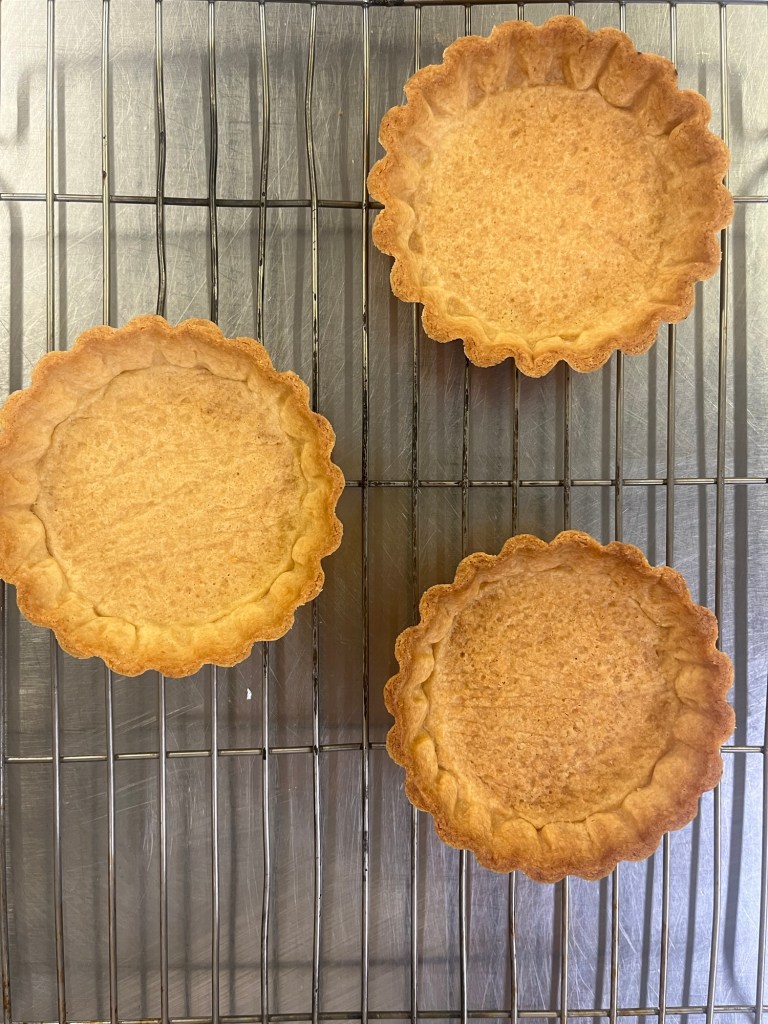
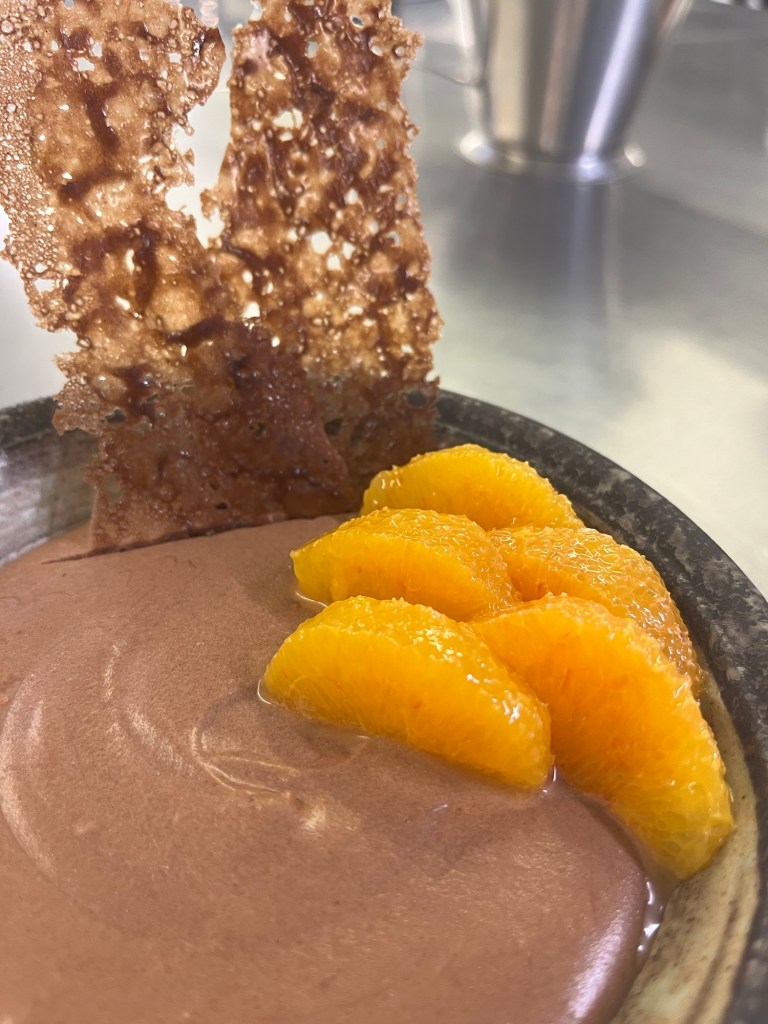
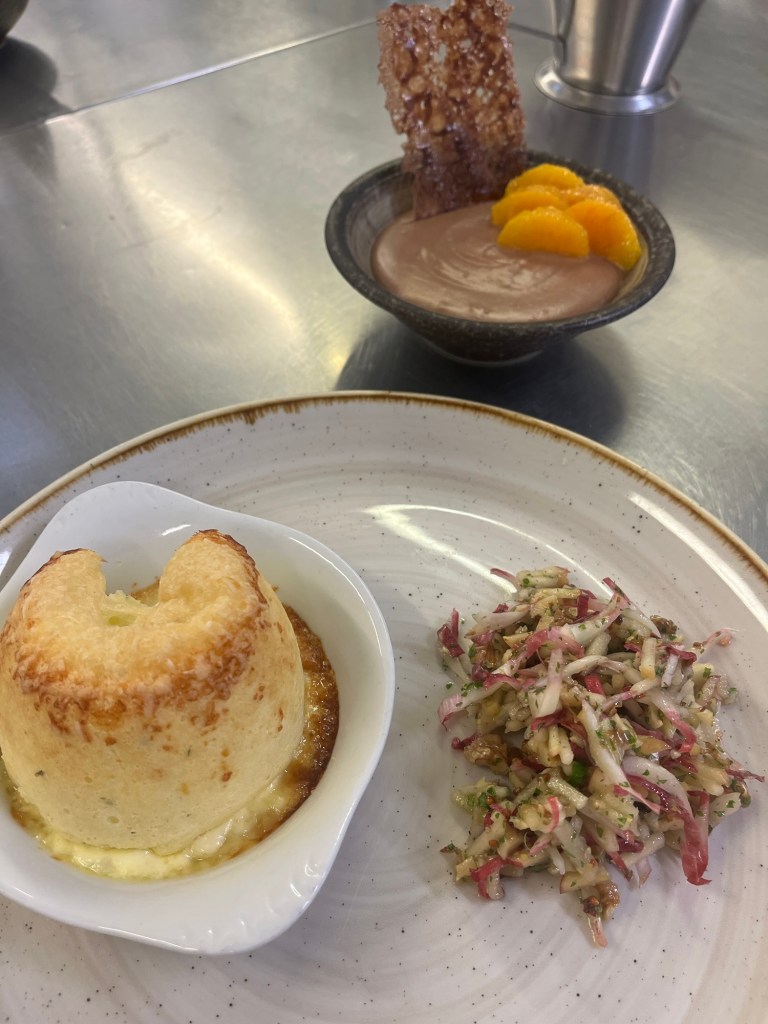
    Some serious patisserie was on the menu later in the week. Practicing pate sucree and lining small fluted tart cases; a chocolate mousse using the pate a bombe method; a thin and crispy chocolate tuile biscuit; and lightly poached blood oranges to cut through the richness. The pate sucree tart cases remained unfilled but made the perfect biscuit accompaniment to a cup of tea so didn’t go to waste. We were also taught Paris Brest and chocolate truffles which we’ll attempt later this term.

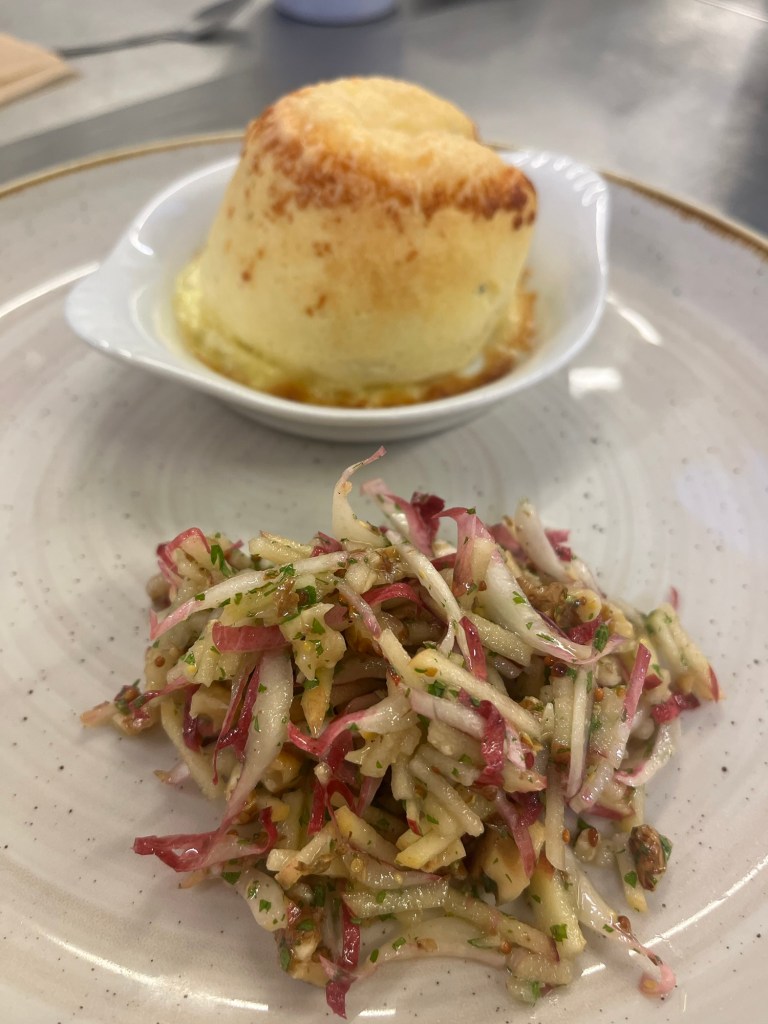
    Friday was our first go at a soufflé: twice-baked goat’s cheese and thyme. Light, yet rich and flavoursome served with a fresh and crunchy apple, walnut and chicory salad. This, followed by the mousse, made for a crowd-pleasing start to the weekend.


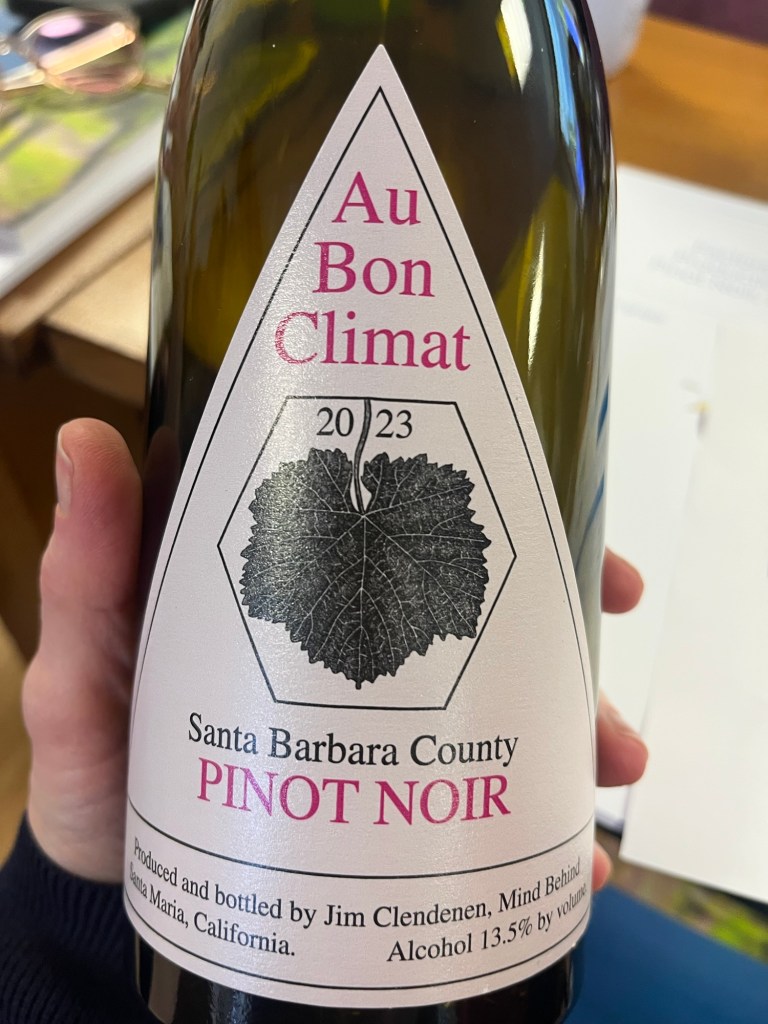
    WSET Level 2 kicked off in earnest with 5 wines to taste on Monday before 12 noon and 3 more on Friday morning. Thank goodness for the spittoons! I don’t drink red wine but the Zinfandel from Sonoma County could be the wine that breaks me. Also good was a Pinot Noir from Santa Barbara and a Gerwurtzraminer from Cave de Turckheim in Alsace. This final wine led to a small day dream about a road trip to the cool yet sunny climbs of Alsace….one for post-graduation perhaps.

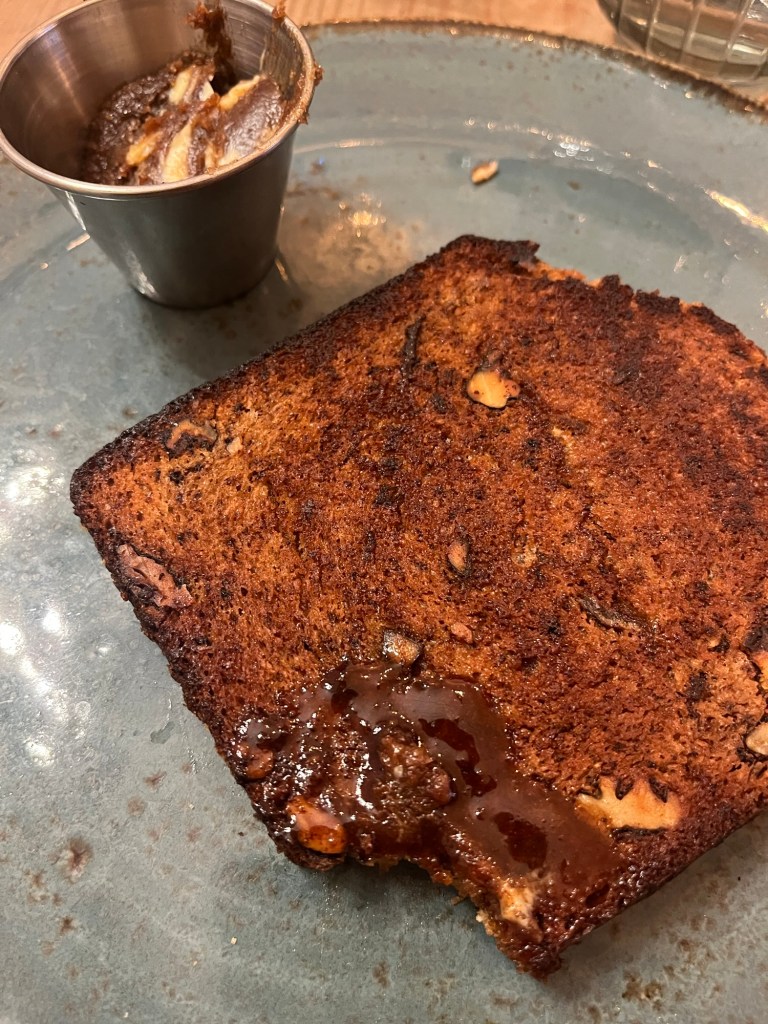
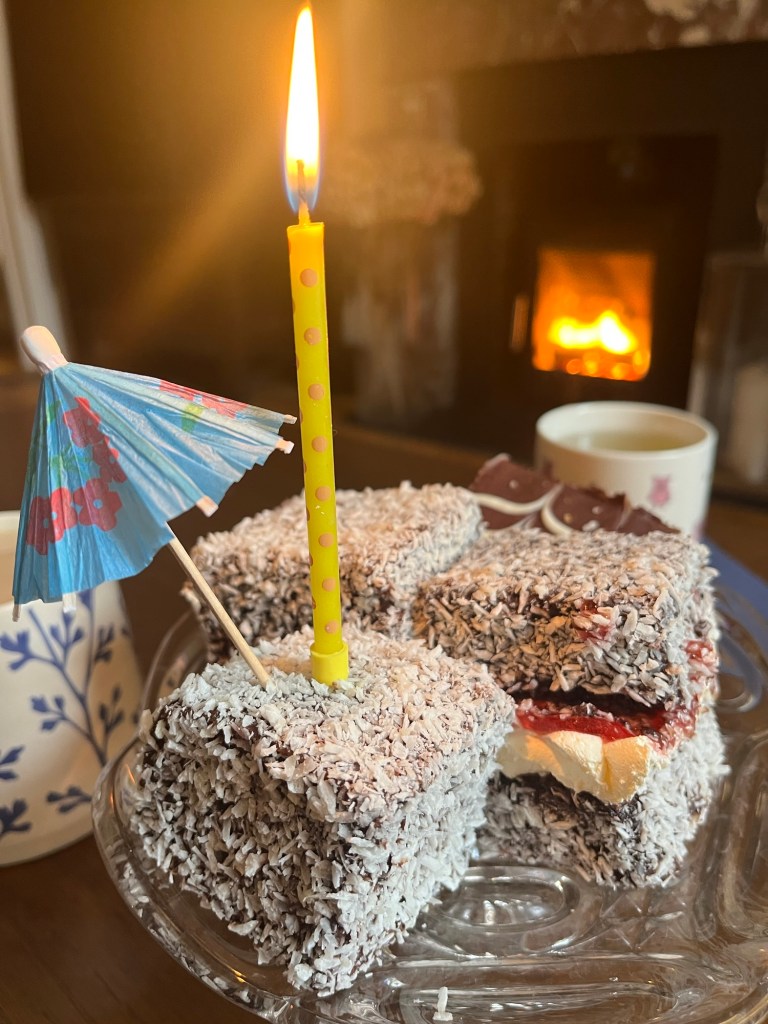
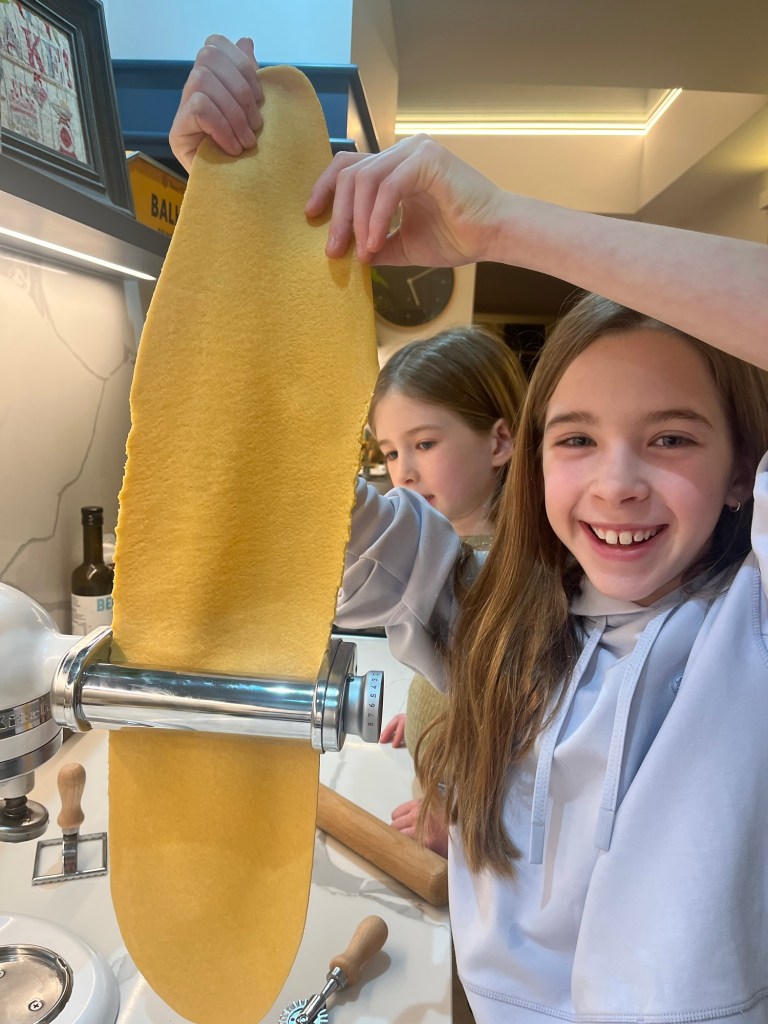
    At the weekend it was my birthday, and we had great fun making pasta and turning it into ravioli with a ricotta, lemon and nutmeg filling. Other foodie highlights were the Lamingtons from the local New Zealand bakery and toasted banana bread with cinnamon butter for breakfast.

  • Back to school and I couldn’t be happier. After a very long break, the anticipation had been building as we received the recipe pack and draft curriculum for the term. Frightening and exciting in equal measure.

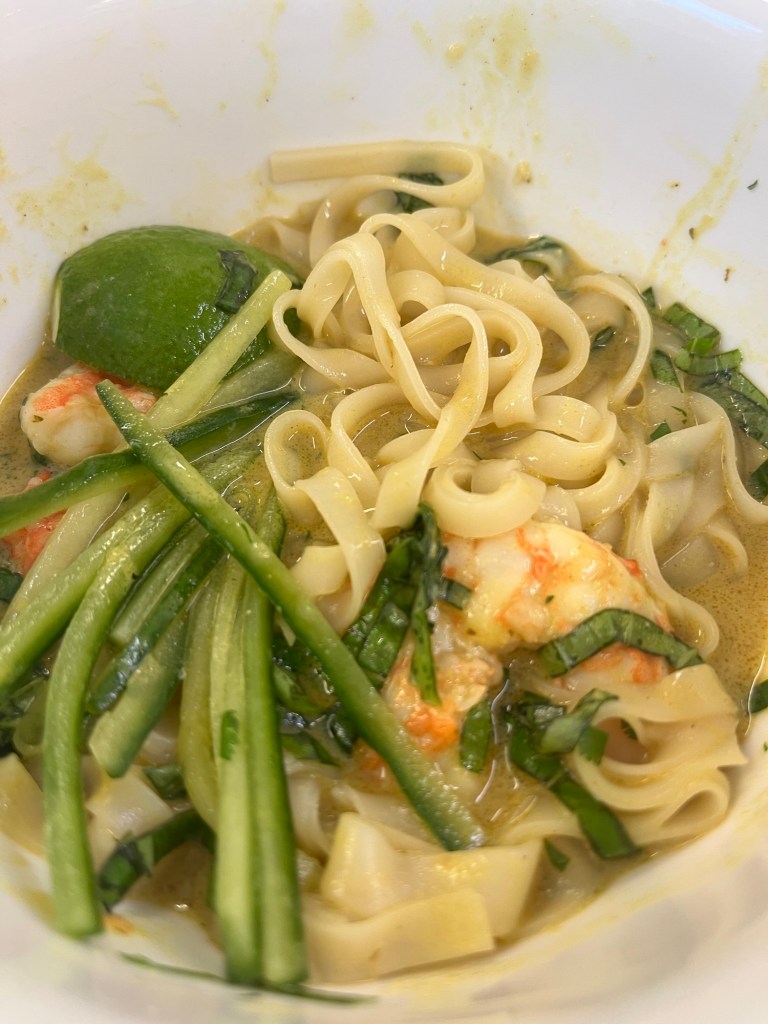
    Straight back into the kitchens on Tuesday morning. And there was a subtle yet definite shift in expectation from the teachers. So long chatty vibes of fountain term; hello focused elevating of skills and technique. We were, however, eased in gently with a prawn laksa. Revision of prawn prep and cook and a reminder of julienning. The aroma as we whizzed the spice paste in the blender was pungent and aromatic. Adding coconut milk resulted in a broth that yielded a gentle warmth. A perfect foil to the cold, wet January day. When I served it to my daughters for supper, the eldest immediately exclaimed: ‘Mummy, I’m so glad you’re back at Leith’s!’. I’m not sure what this says about my cooking over the holiday but better not to dwell I suspect! In the afternoon, we were reunited with our fabulous Frenchie, Marjorie, for a revision of Level 1 Wine. Anyone hoping to do Dry January would need cast-iron will-power to resist Marjorie’s tastings.

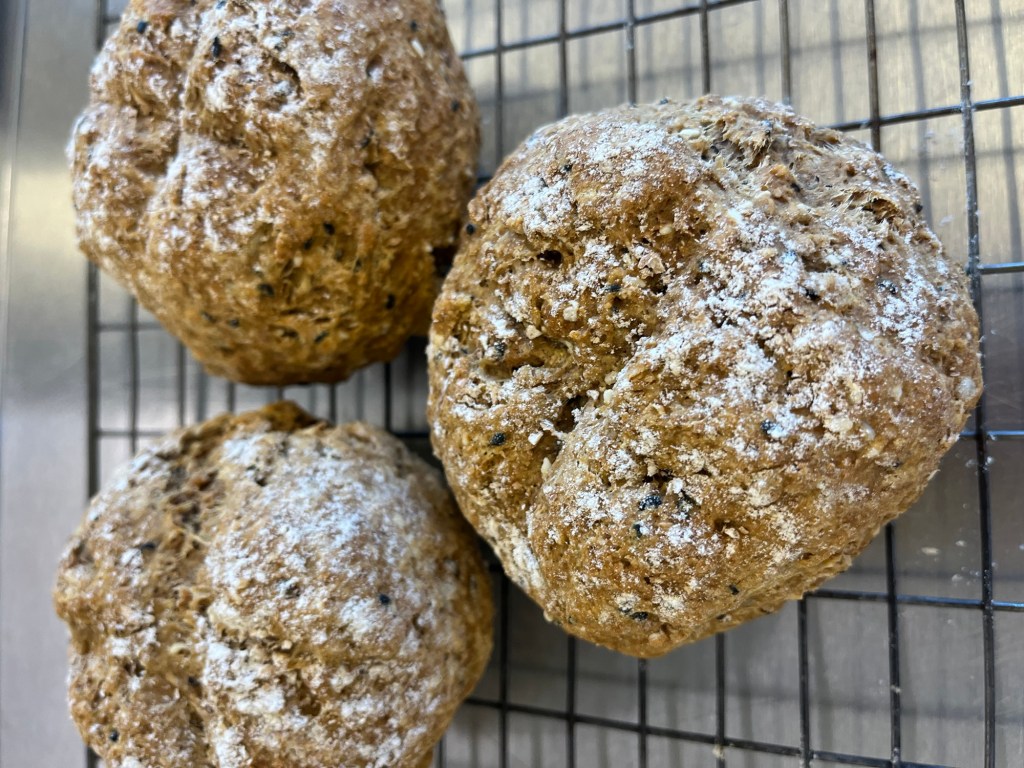
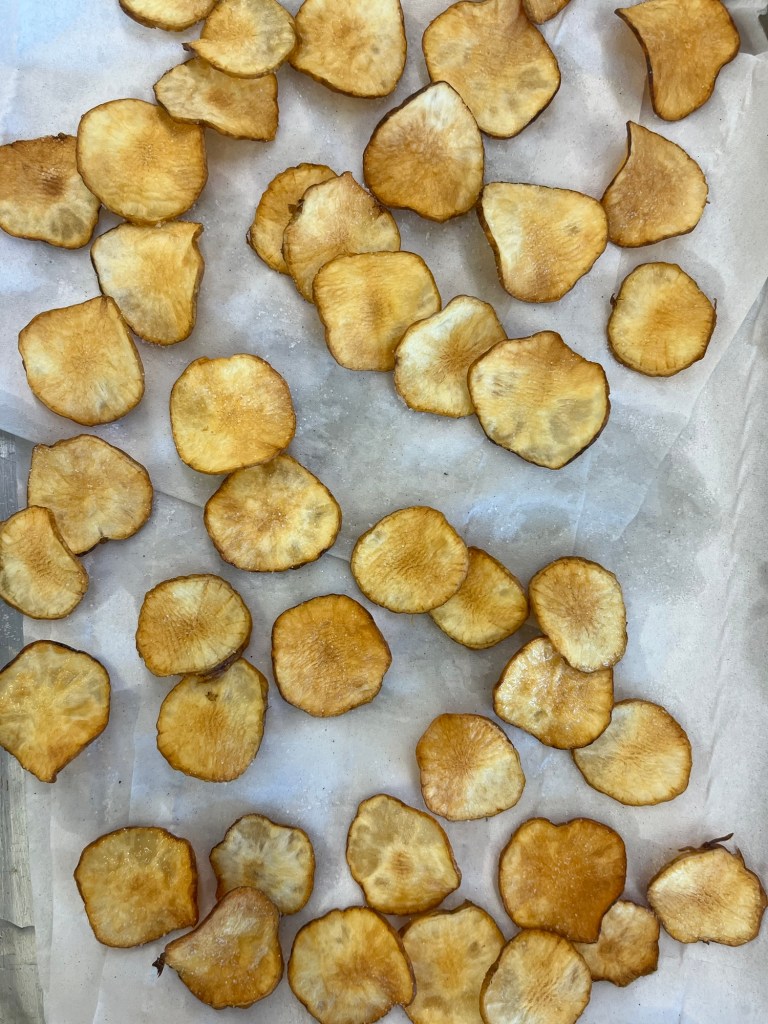
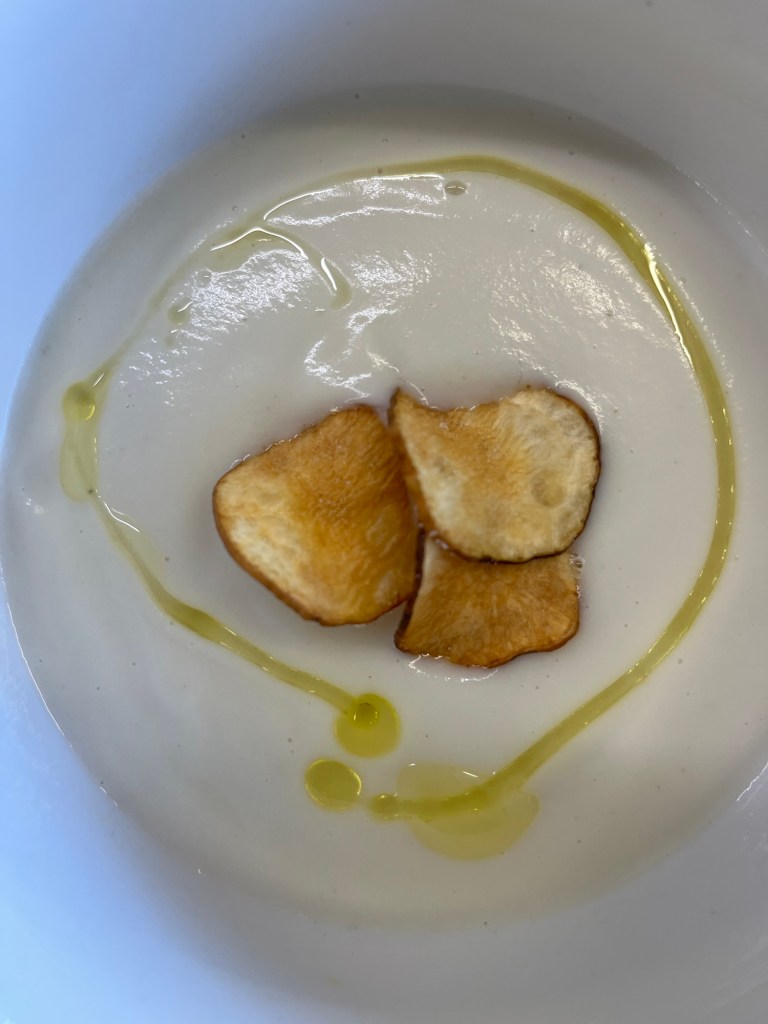
    Jerusalem artichokes and soda bread were our focus for Wednesday morning.. First, sweated slowly to make a creamy soup and secondly, finely sliced on the mandolin and shallow fried to crisps. I had eaten most of those before we had left the kitchen. Soft, flavoursome soda bread rolls studded with an array of seeds filled the kitchens with an appetising aroma and have formed the basis of many a light supper this week. The afternoon dem was a total treat: pate sucree as the base for an indulgent chocolate tart with honeycomb and a zingy yet mellow tarte au citron. Three hours of first aid training felt daunting after a full day but it was so engaging and practical the time whizzed by and I left feeling evangelical about mandatory first aid for all.

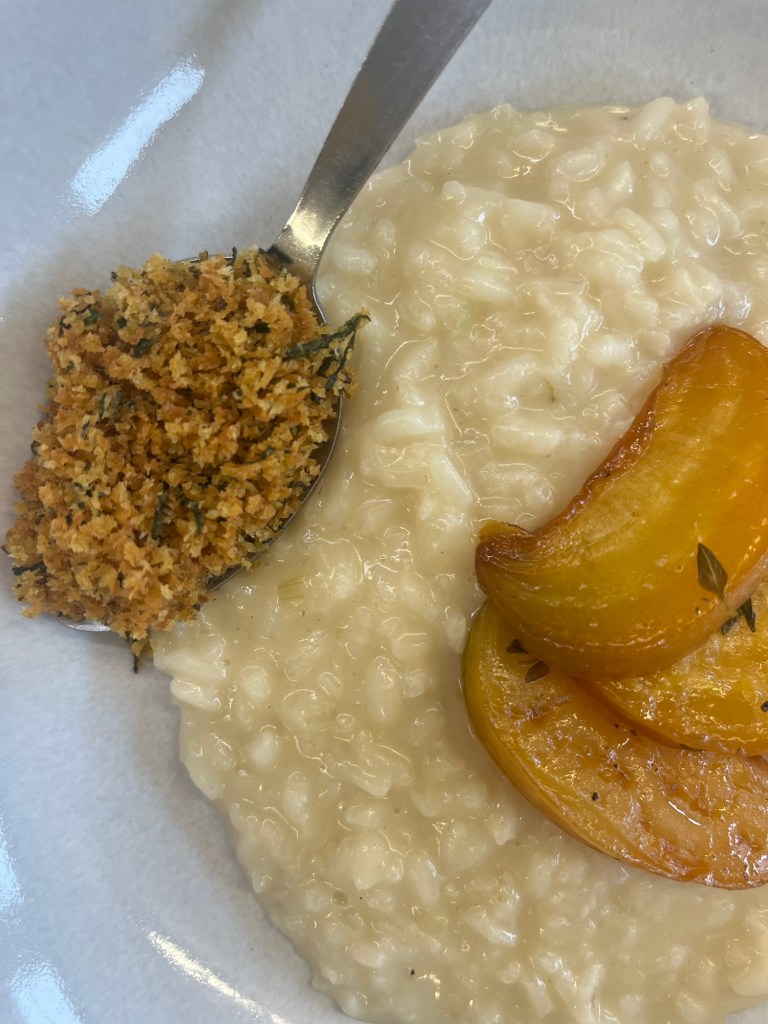
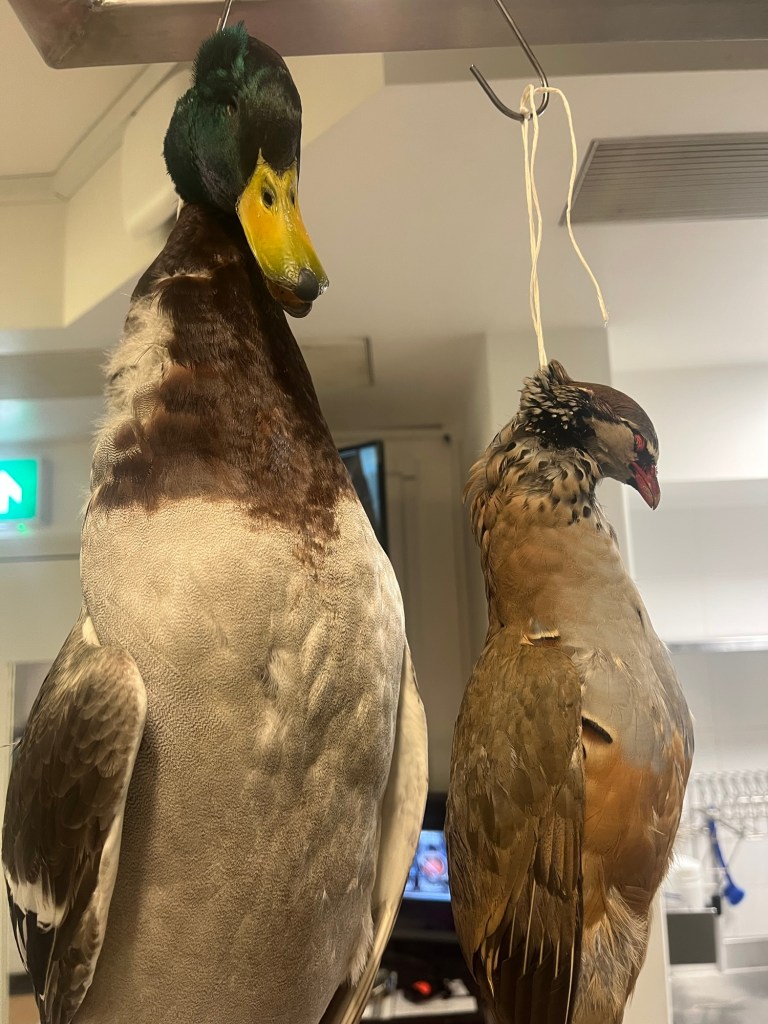
    Further skills revision on Thursday with risotto, and a reminder that the expected 20-25 minute cooking time is something of a fantasy. Yet, stirring a risotto is meditative, and happily provided some catching up time with fellow students. We served our ‘sighing’ risottos with thyme-roasted golden beets and a pangrattato – the perfect herbaceous crunch against the soft, unctuousness of the rice. A hanging mallard and a partridge greeted us in the dem room that afternoon. A prelude to an afternoon of roast partridge, wild mallard ramen and wild boar rags. Big, bold flavours and (apart from the partridge) long, slow cooks.

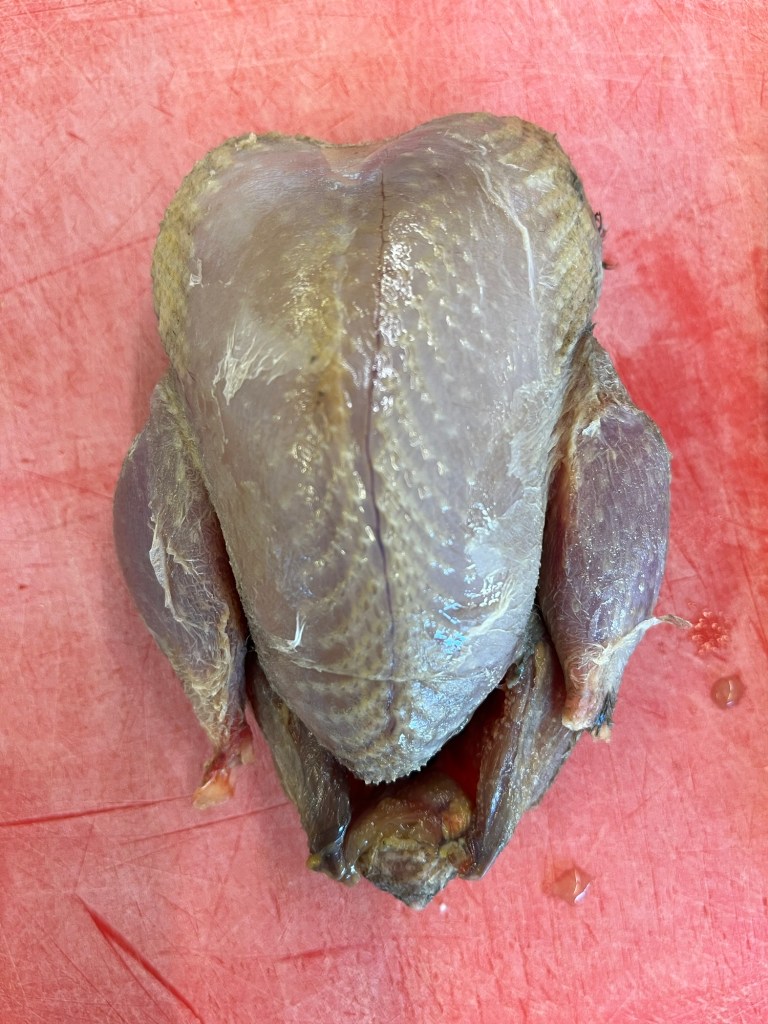
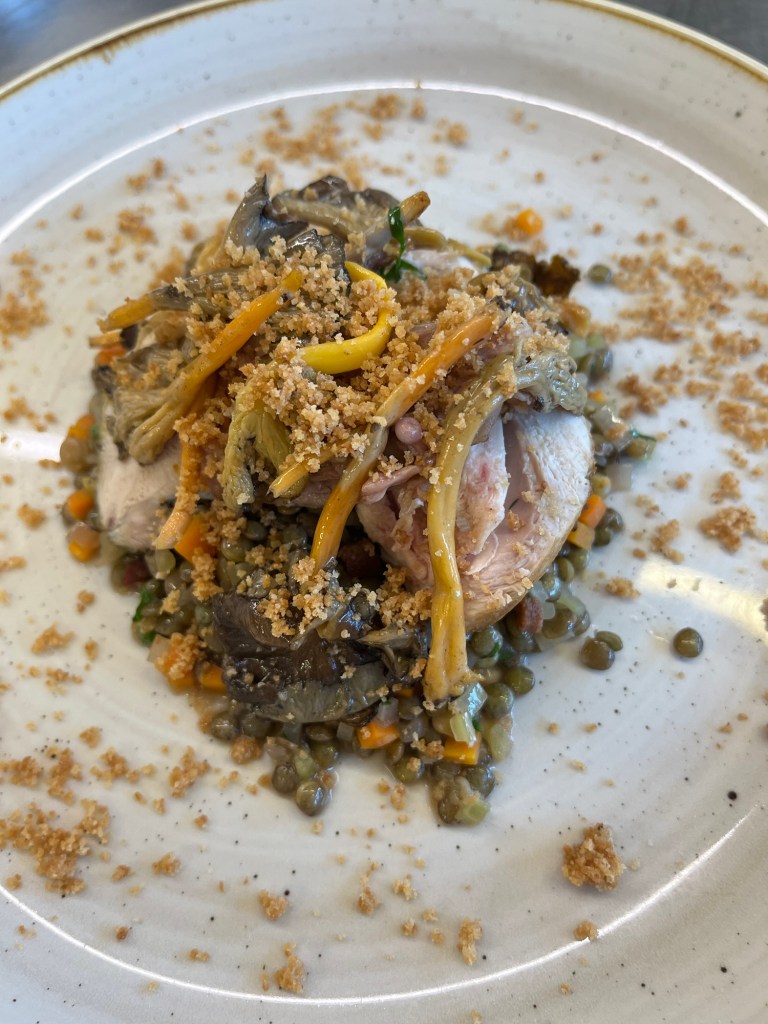
    The partridge was ours to roast on Friday. And what a dinky little bird it is. Thankfully provided to us ‘oven-ready’ with just the wish-bone to remove to ease carving later. The dish had a number of elements that required plenty of mise en place and multi-tasking. Several pans on the go simultaneously to sweat mirepoix, render pancetta fat and flash fry chanterelles. There was also a duck fat crumb with a shocking ratio of dense white fat to panko. And that’s before we basted the partridge in a hefty wodge of butter. This was French cooking at its finest! The indulgence continued in the afternoon with a soufflé dem: twice baked goat’s cheese, rhubarb and praline. All with slightly varying methods. And all of which we will tackle ourselves in the coming weeks.

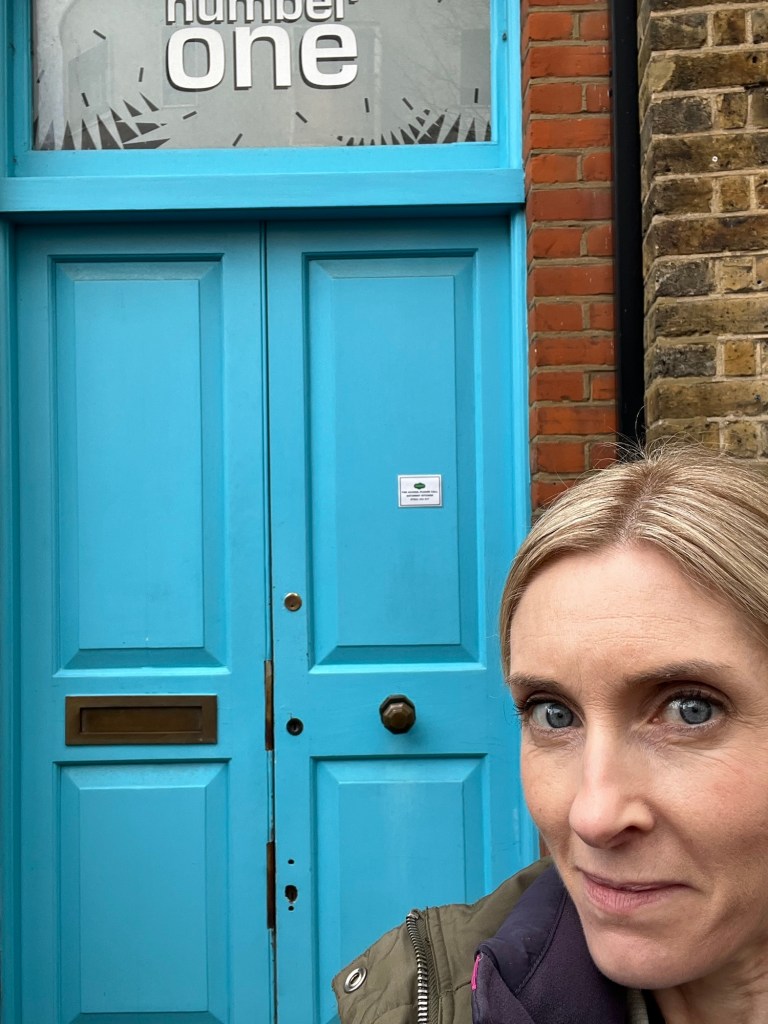
    What a treat the week has been. And a powerful reminder of how lucky I am to be at Leith’s. The fun continued into the weekend with the opportunity to help the home ec team (one person!) on Saturday Kitchen. A 5.50am cab to Cactus Studios and a fascinating yet somewhat surreal morning prepping veg, fruit and pastry in a tiny kitchen which then appeared live on TV. Tired and only mildly star-struck I returned home to the familiar washing pile of chef’s whites and a pastry case blind-bake to practice.

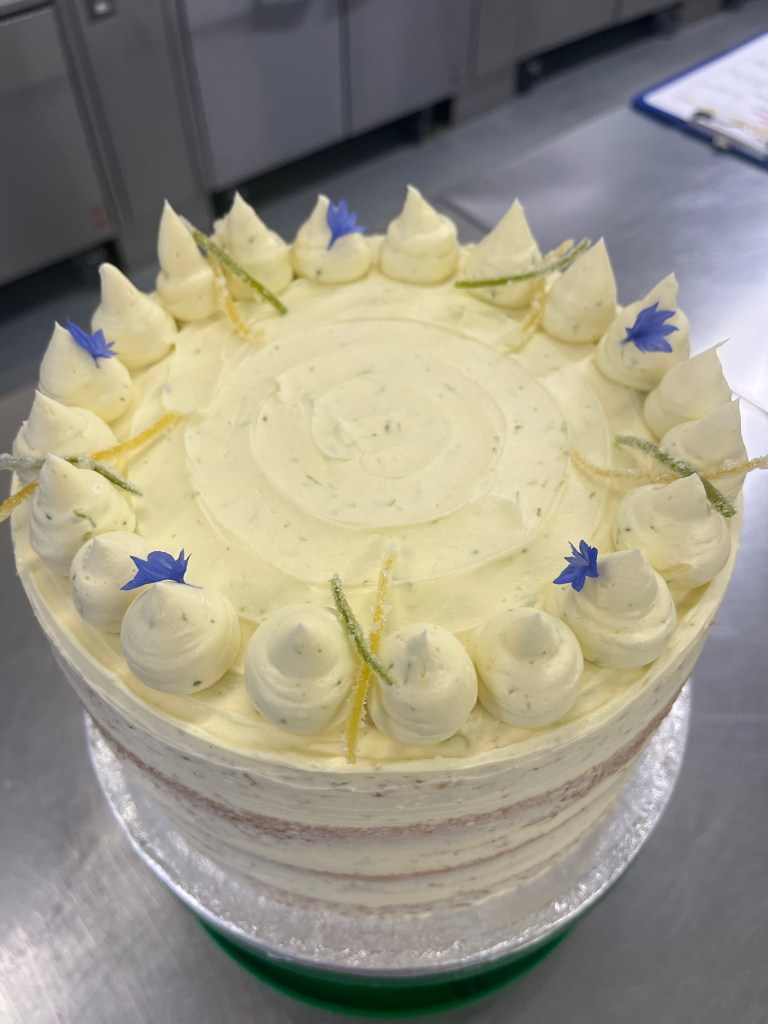
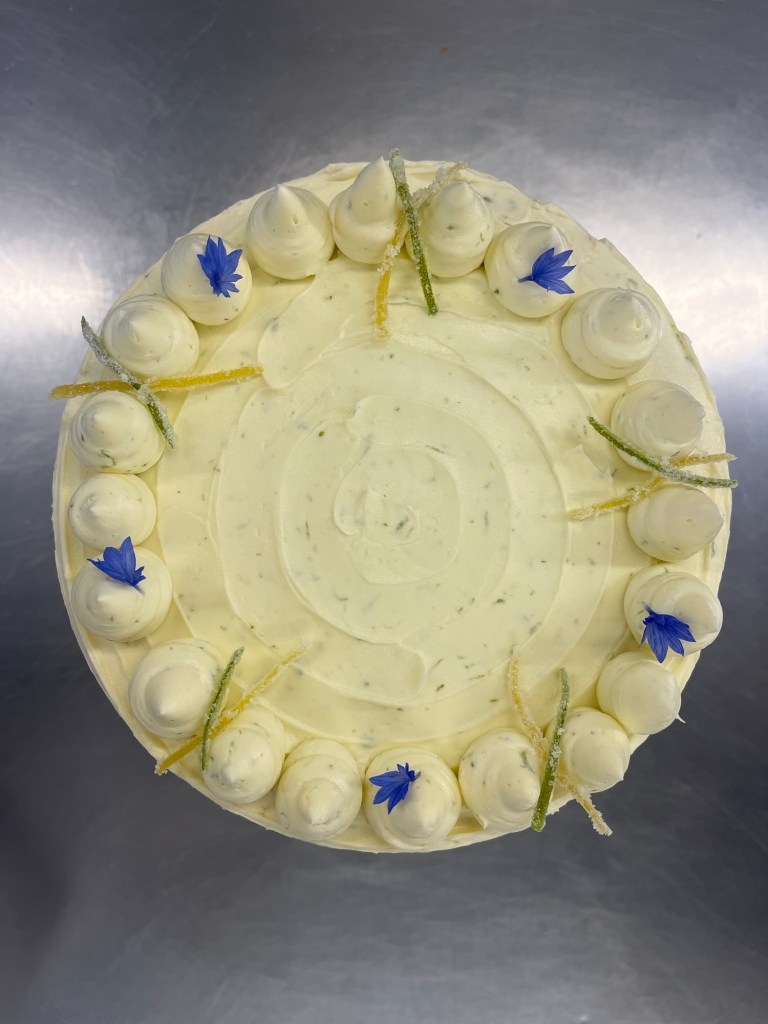
  • The final week of the foundation term. And it didn’t disappoint. Skills practice, a Christmas lunch to beat all that came before, and the final flourish: a four layer white chocolate and lime celebration cake with lemon and lime needle shreds.

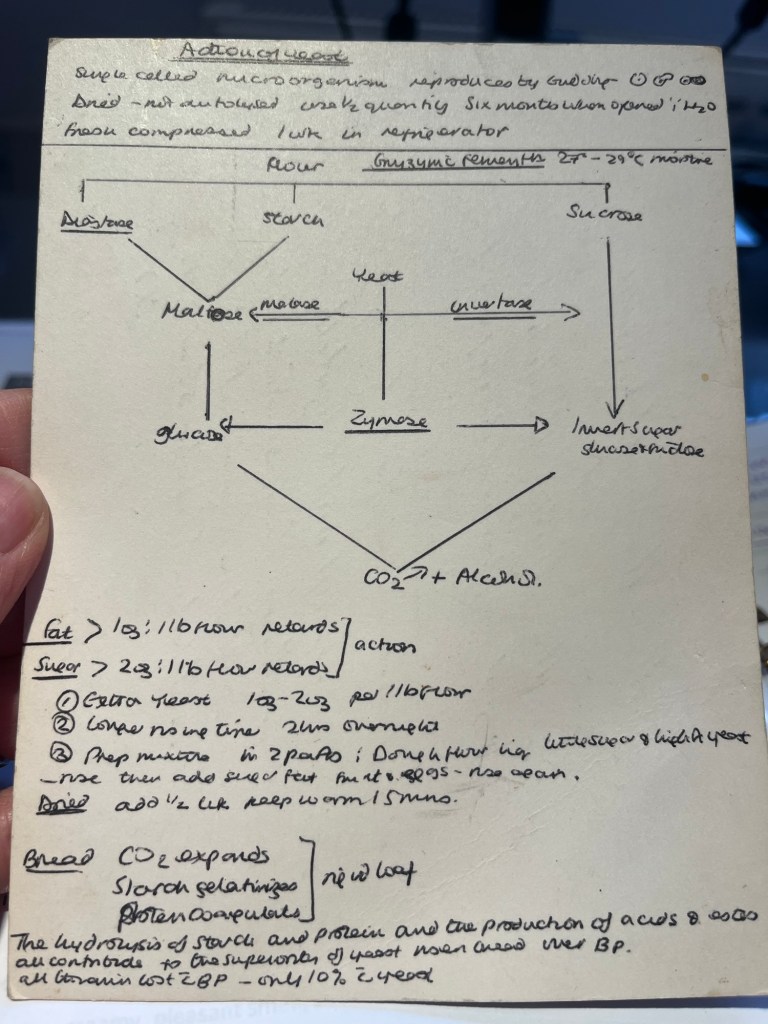
    Before all that: the much anticipated theory assessment. The preceding weekend had been spent learning the cuts and cooking times of beef, pork and lamb; memorising terms like starch gelatinisation, dextinisation and coagulation; and the reasons why my bread might not rise or my pastry could be greasy. Mid-revision marathon, I discovered my mum’s notes on yeast from her own exams at college 50 years ago. They might have been useful if I could read her handwriting! The 90 minute exam included all of the above and more plus an ingredients identification test. Twenty ingredients in little pots for us to smell, taste and name. Somehow I couldn’t place the smell of Marmite despite its constant presence since my early childhood. As soon as I tasted it I knew. There was a chilly spice mix that potentially foxed me but overall the assessment was fair and I had learned the right things – phew! Then it was home to prep my time plan for our skills practice session on Tuesday.

    A short talk from Valerie Berry, food stylist and writer, kicked off Tuesday. Valerie has styled recipe books, supplements and magazines. She talked us through the must-have skills of a food stylist. I was delighted to discover that you don’t need to be a photographer. However, you do need to be meticulously organised, adaptable, able to troubleshoot and to smile sweetly when your client or photographer suggests something you hadn’t expected. Twenty years at the Bank of England feel like good training!

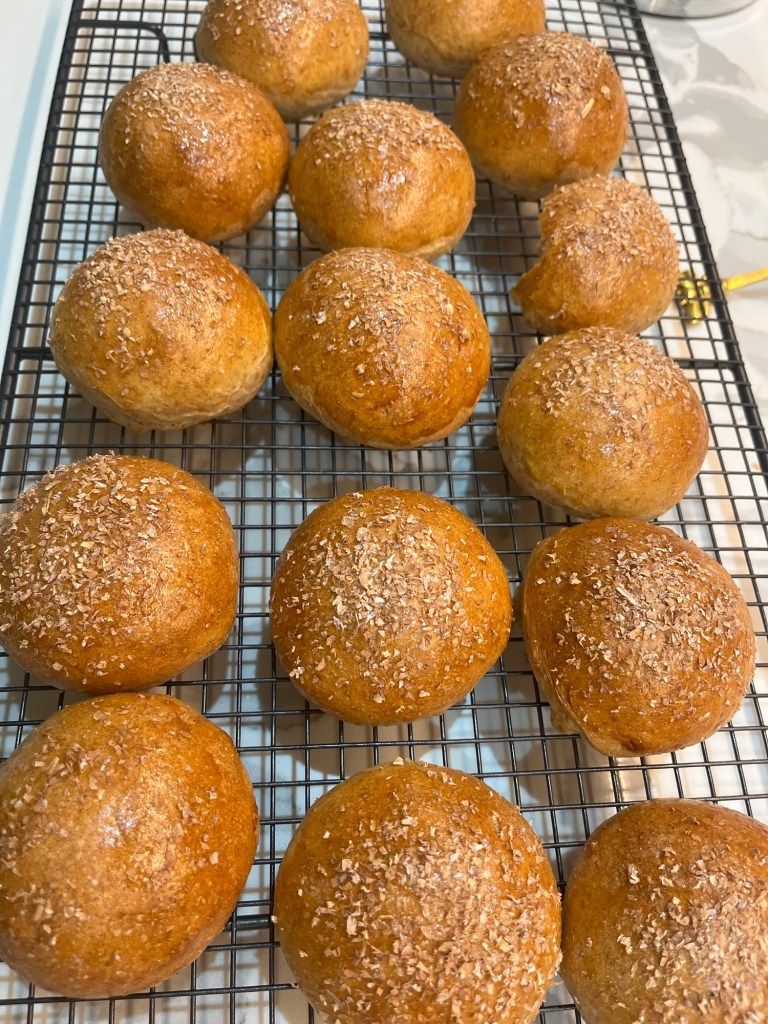
    For the skills practice session, I had selected to make wholemeal rolls, choux buns and creme patisserie. Rather a lot to get through in three hours. My family were delighted when I returned home for the second time with choux buns and creme pat. And my nanny has a particular penchant for the rolls so I’ve kept her on side for a few weeks.

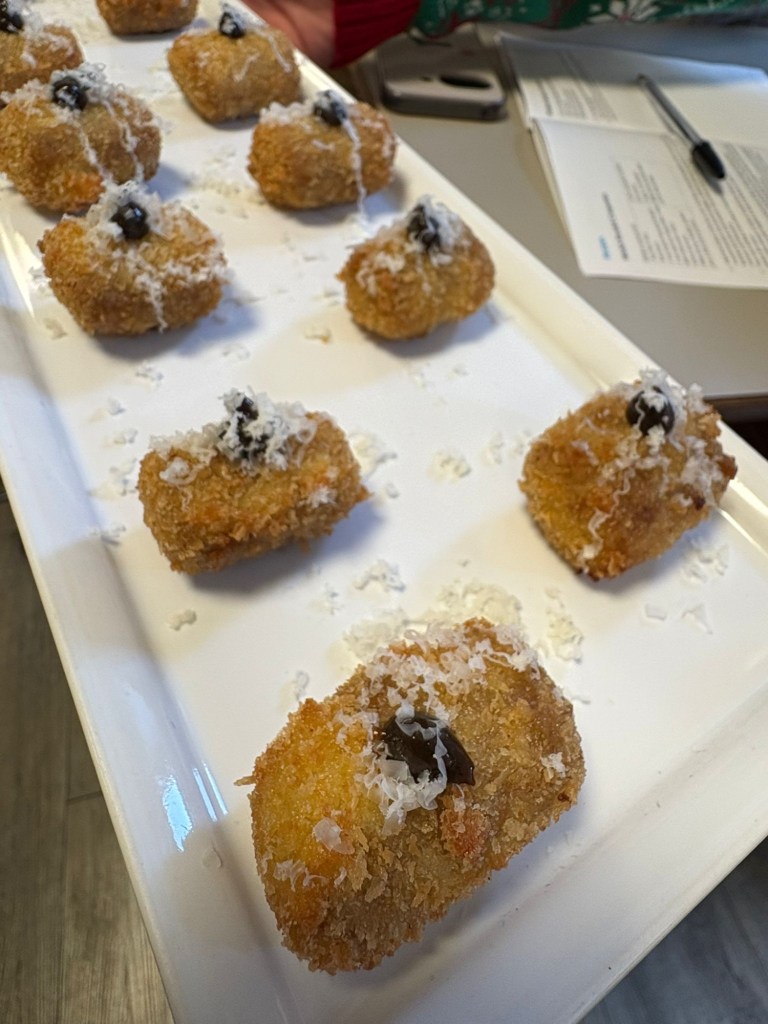
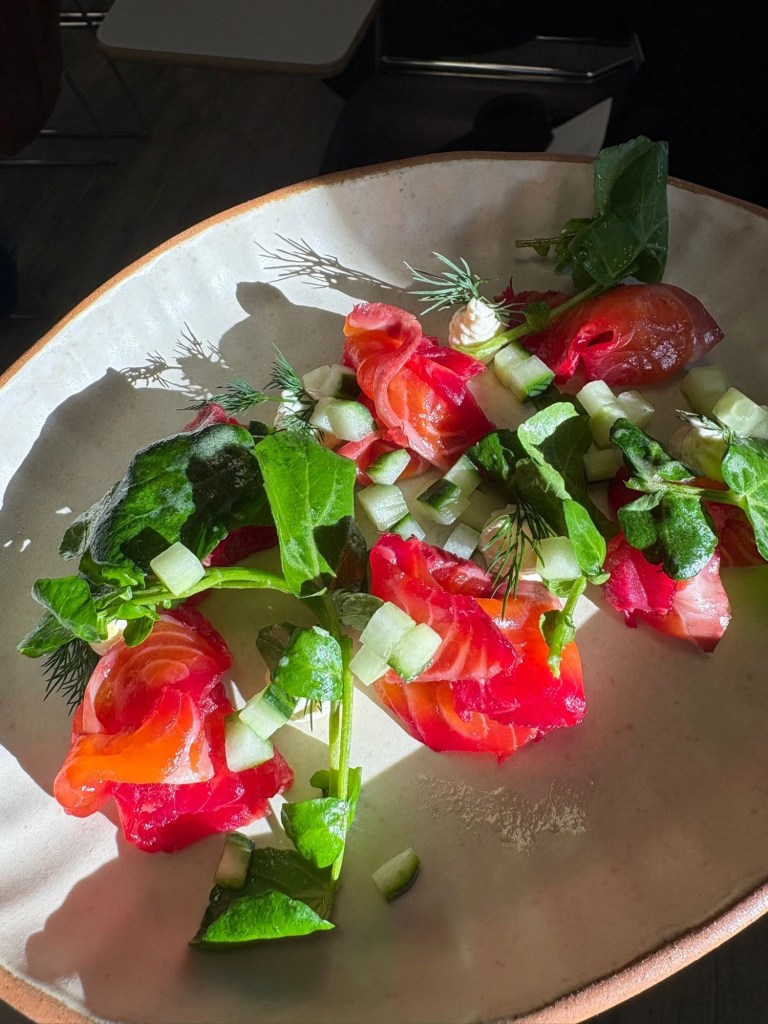
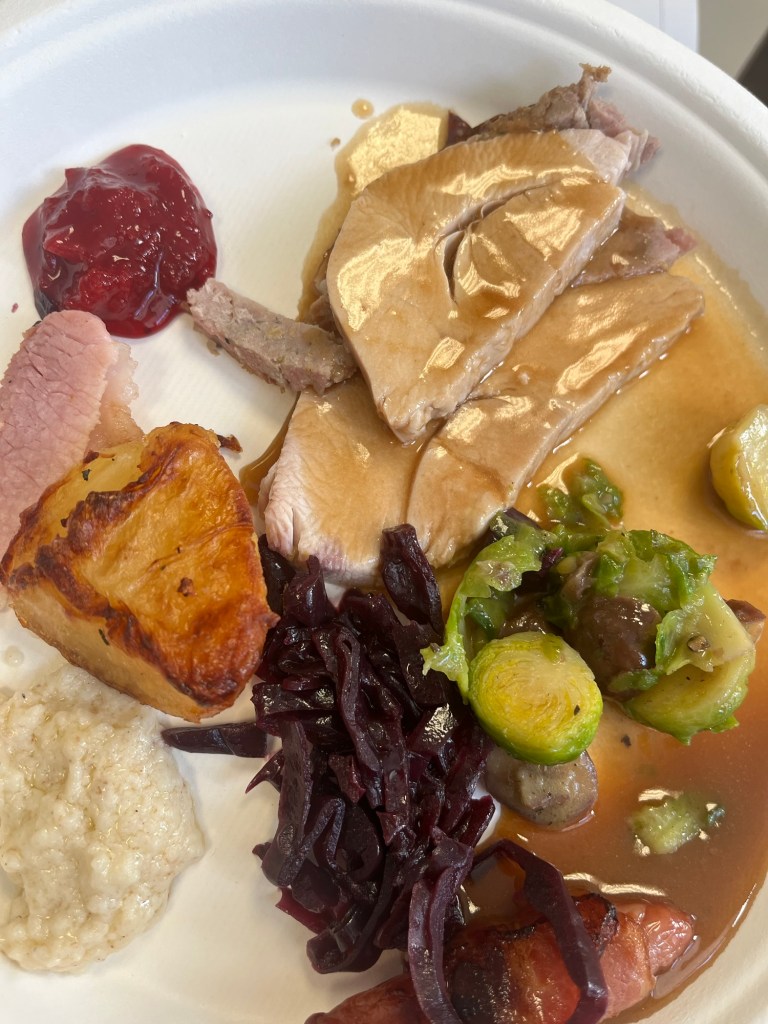
    Wednesday was a standout day of the foundation term. Our teachers, Ryan and Mark had been preparing for some weeks in advance to wow us with Christmas lunch Leith’s-stylee. And wow-zer it most definitely was. We ate the finest Christmas fare from 10.30am until 3pm. The menu began with Welsh rarebit croquettas adorned with walnut ketchup: crunchy, soft, savoury yet sweet. Up next a beetroot and orange cured trout on seeded soda bread served with a cucumber, dill and horseradish salad. The teachers oozed tips and tricks for the main event: roast turkey, onion gravy, pork, sage and onion stuffing, honey and mustard glazed gammon, roast potatoes, pigs in blankets, bread sauce, cranberry sauce, nut roast, red cabbage and roasted carrots. A real showcase of how to nail it without losing it. To finish: a light Christmas pudding with no added fat or sugar making it less rich and more moist than the traditional variety. Eggnog ice cream was the creamy and spiced accompaniment to the pud. We left stuffed and content, and for once the washing up was not our job.

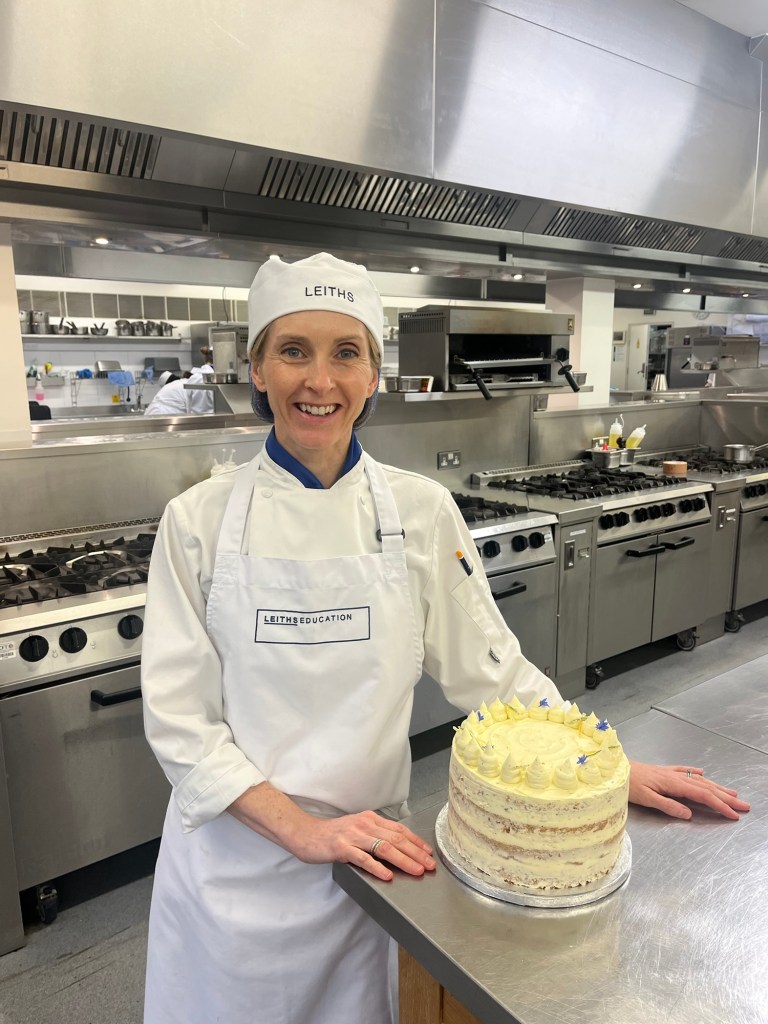
    Thursday marked our final day in the kitchen as Blue Group B. A fun and fitting end to our journey. Our naked celebration cakes took all day to create. We iced them to perfection, prettily dotted with cornflower petals and daintily draped with lemon and lime shreds. A quick change into our civvies and back to the kitchen for farewell mulled wine and a speech from Lou, head of school. Emotional to say the least to bid adieu to those with whom we have shared this transformative experience. We’ve made friends for life bonding over shared passions, kitchen disasters and triumphs, and washing up marathons.

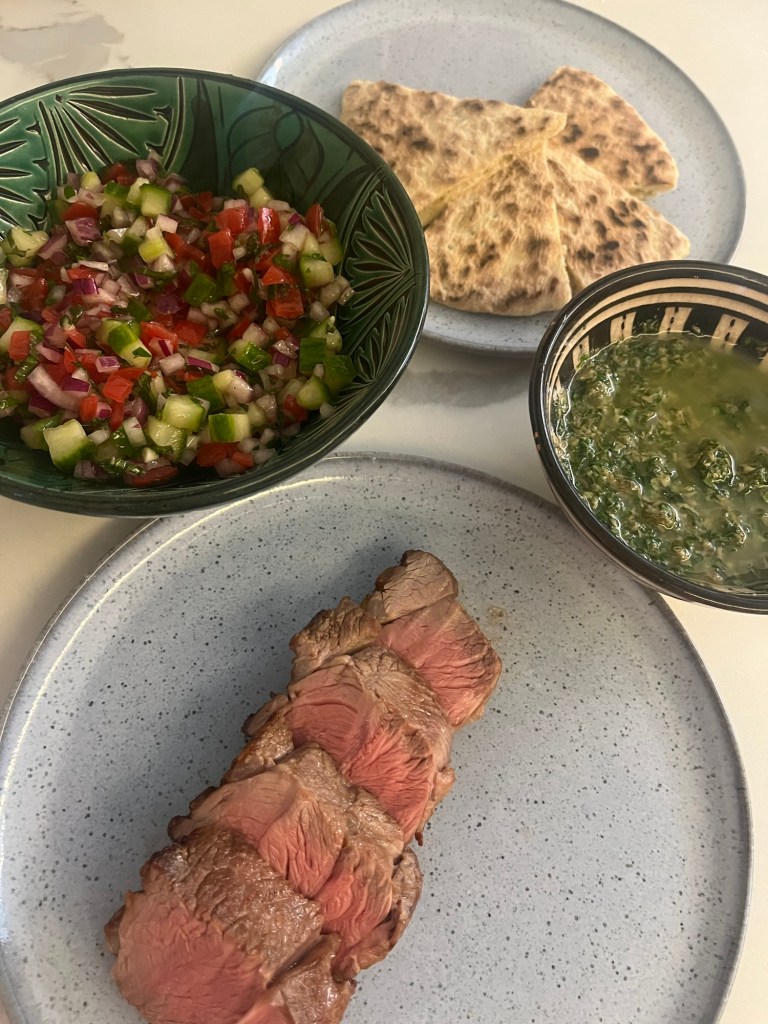
    My final practical assessment of the term was six days later allowing me some time to practice and get nervous! In 3.5 hours we had to serve: a lamb rump cooked to medium rare, a salsa verde sharp enough to cut through the fattiness of the lamb, a cucumber and tomato salsa, 6 spiced chickpea flatbreads and 2 lemon and poppy seed drizzle cakes. Intense. Exhausting. Stressful. I started off relatively calm and ahead of my time plan: cakes in the oven, dough proving, lamb tempering. The salsa making scuppered me with its exacting requirement for knife skills, expert palate for balanced seasoning and steady finger on the magi mix for correct texture. By the time I got to my dough, a new life-form seemed to have developed in the tuppaware. It was huge, but also soft and moist and the spices smelling appetising. I was against the clock though. Two pans on the go simultaneously to get the breads cooked. One skidded to the floor mid transfer between stove and bench. A quick check that no-one had seen and I hurried on. I served everything with one minute to spare in the 20 minute service window. I was absolutely spent. But as always the washing up, clearing down and stove clean still needed to be done. By now, it was gone two o’clock and I was starving. By the time I got home at 4, I was only capable of boiling the kettle and eating a large slice (or two) of the cake. A few weeks’ rest now (alongside Christmas) before embarking on the intermediate term, about which we have been primed to expect a considerable stepping up. For now though, thanks for reading and sharing my journey so far. Merry Christmas and see you in the new year!